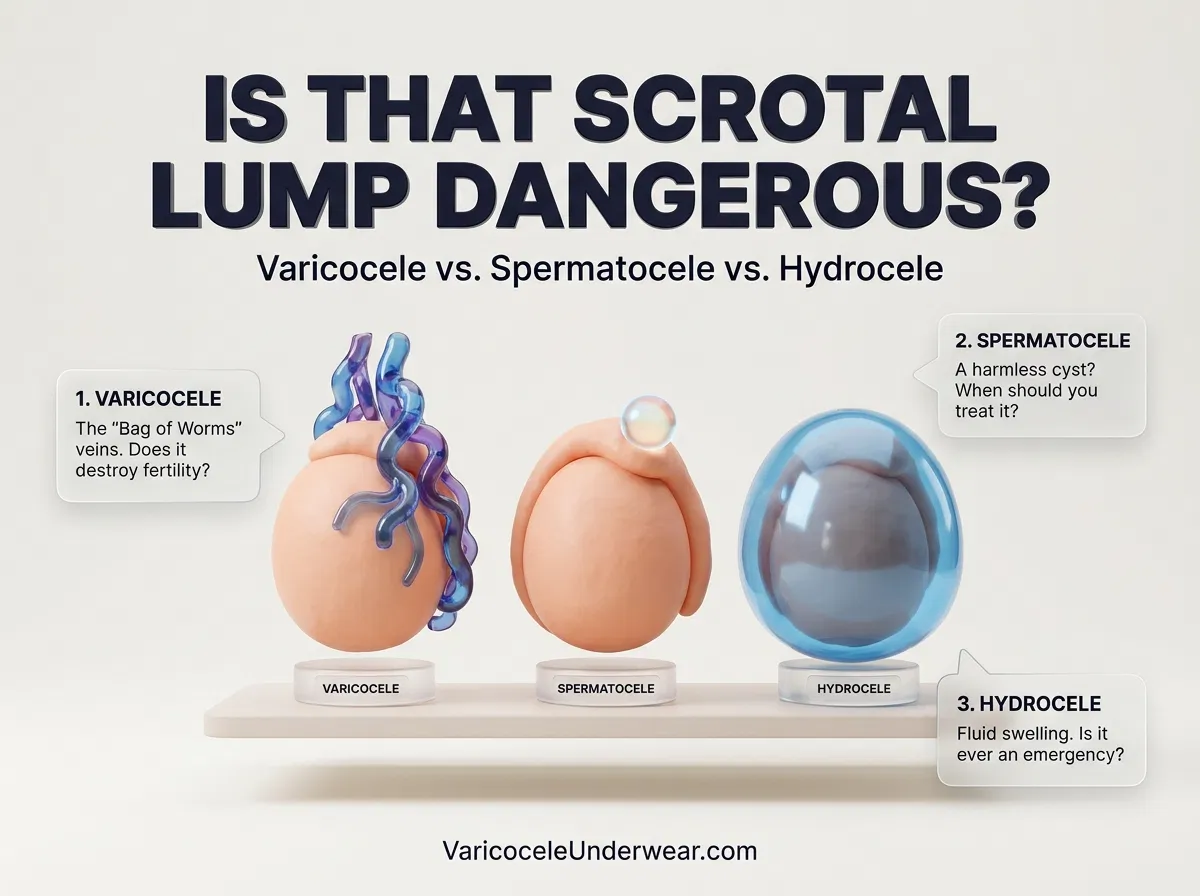
When you discover unfamiliar scrotal swelling or a new lump, start with a gentle self-check after a warm shower, when the scrotal skin is relaxed. Examine each testicle separately, noting whether the swelling feels like soft, enlarged veins, a smooth fluid-filled sac, or a small, rounded cyst. Understanding the difference between varicocele vs spermatocele vs hydrocele can help you describe your symptoms and seek the right medical evaluation. These three conditions have different causes, physical features, and possible effects on reproductive health. However, a self-examination cannot confirm the diagnosis. A proper differential diagnosis of scrotal lumps requires a clinical examination and, when indicated, scrotal ultrasound.
Identifying Scrotal Lumps and Swelling
Begin by standing in a warm room or taking a warm shower. Gently hold one testicle between your thumb and fingers and roll it without squeezing. A normal testicle should feel smooth and firm, somewhat like a hard-boiled egg. Locate the epididymis, a soft, tube-like structure behind and above the testicle that stores and transports sperm. This is important because an epididymal cyst can feel like a separate lump in an area that is normally slightly irregular. Repeat the examination on the other side. Notice whether the swelling sits above the testicle, surrounds it, or feels like part of the testicle itself. Also observe whether it becomes more noticeable when standing or decreases when lying down. For additional guidance, see this comparison of varicocele and hydrocele symptoms and diagnosis.
Do not repeatedly squeeze, massage, or attempt to drain a lump. These actions cannot identify its cause and may irritate already sensitive tissue. Pay attention to changes in size, discomfort, heaviness, and tenderness. A new, firm lump within the testicle deserves prompt medical assessment, even when it does not hurt. Testicular cancer can present as a painless lump, so it should never be dismissed as a harmless cyst without an examination. Sudden, severe testicular pain, especially with nausea, vomiting, or a testicle sitting higher than usual, requires immediate emergency care. These symptoms can indicate testicular torsion, a condition in which the spermatic cord twists and cuts off blood supply. Treatment is time-sensitive.

Discover specialized varicocele underwear designed for daily comfort, support, and recovery — a more targeted option for men who want support without compromise.
Discover the Recommended OptionVaricocele vs. Hydrocele Diagnostic Markers
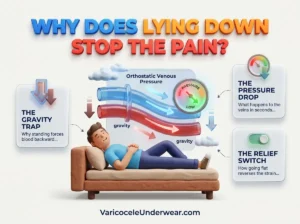
A varicocele is an enlargement of the pampiniform plexus, a network of veins that drains blood from the testicles. It often feels like a soft cluster of tangled veins above the testicle, commonly described as a bag of worms. Identifying swollen scrotal veins is easier when examining the scrotum while standing, because gravity can make the enlarged veins more noticeable. The swelling may become more prominent during a Valsalva maneuver, which means briefly bearing down as if having a bowel movement. In many cases, it becomes smaller when lying down. Men may experience a dull ache, dragging sensation, or heaviness that worsens after prolonged standing or physical activity. Varicoceles are more common on the left side because of differences in venous anatomy. The complete varicocele guide provides further information about symptoms and clinical management.
A hydrocele has a different physical cause. It develops when excess fluid collects between the layers of the tunica vaginalis, the thin membrane surrounding the testicle. Instead of a cluster of enlarged veins, the patient usually notices a smooth, enlarged scrotum with a fluid-like or balloon-shaped fullness around the testicle. Hydroceles are often painless, although larger collections may cause heaviness, pressure, or difficulty with movement. Unlike a typical varicocele, a hydrocele does not usually become smaller simply by lying down. A clinician may use examination and ultrasound to determine whether the testicle is surrounded by fluid or whether the swelling comes from enlarged veins. The distinction matters because a hydrocele is a fluid collection, while a varicocele is a vascular problem involving abnormal venous drainage.
Scrotal Doppler ultrasound is useful when the physical examination is unclear or when a new lump needs further assessment. This imaging test uses sound waves to show the testicles, surrounding tissues, veins, and direction of blood flow. The European Association of Urology (EAU) describes a maximum venous diameter greater than 3 mm in the upright position during the Valsalva maneuver, together with venous reflux lasting more than two seconds, as findings associated with a clinically significant varicocele. These measurements must be interpreted alongside the examination and clinical history. The ESUR-SPIWG diagnostic ultrasound recommendations provide further guidance on standardized varicocele imaging. Ultrasound can also help distinguish a cyst from a solid testicular mass and identify fluid surrounding the testicle. It is a diagnostic tool, not a reason to treat every imaging-only varicocele.
| Diagnostic Feature | Varicocele | Spermatocele | Hydrocele |
|---|---|---|---|
| Underlying cause | Enlarged scrotal veins | Fluid-filled epididymal cyst | Fluid around the testicle |
| Typical feel | Soft, rope-like vein cluster | Smooth, rounded lump | Smooth, fluid-like swelling |
| Usual location | Above and around the testicle | Above or behind the testicle | Surrounding the testicle |
| Position changes | Often more noticeable standing | Usually little change | Usually little change |
| Common symptoms | Dull ache, heaviness, or dragging | Usually painless lump | Swelling, pressure, or heaviness |
| Fertility concerns | May affect sperm production in some men | Usually no direct effect | Usually no direct effect |
| Primary diagnostic test | Physical examination and Doppler ultrasound | Scrotal ultrasound | Scrotal ultrasound |
Understanding Spermatocele Cysts
A spermatocele is a usually benign, fluid-filled cyst that develops in the epididymis, most often near its upper portion, called the epididymal head. The cyst may contain fluid with sperm cells, which is why it has this name. On examination, it generally feels like a smooth, separate, rounded lump above or behind the testicle. Most spermatoceles are small and painless, and many men discover them during routine washing or a self-examination. Larger cysts can cause a sense of fullness or mild discomfort, especially when sitting or moving. A spermatocele is different from a hydrocele because the fluid sits within a cyst in the epididymis rather than collecting around the testicle. Ultrasound can establish its location and cystic nature. Most cases require observation rather than treatment unless symptoms become troublesome or the cyst grows.
The fertility implications also differ between these conditions. A small spermatocele generally does not interfere with sperm production or transport, although its location near the epididymis deserves careful evaluation before any operation. A hydrocele is also usually harmless to fertility, but a very large swelling or an associated underlying condition should be assessed. A varicocele deserves closer attention when fertility is a concern because impaired venous drainage and reflux in the pampiniform plexus can contribute to increased testicular temperature and altered testicular function. This does not mean every varicocele causes infertility. The AUA/ASRM male infertility guideline recommends considering surgical repair in men attempting conception who have a palpable varicocele, infertility, and abnormal semen parameters. Imaging-only varicoceles are not an indication for routine repair. Read more about when varicocele surgery may be necessary before making treatment decisions with a urologist.
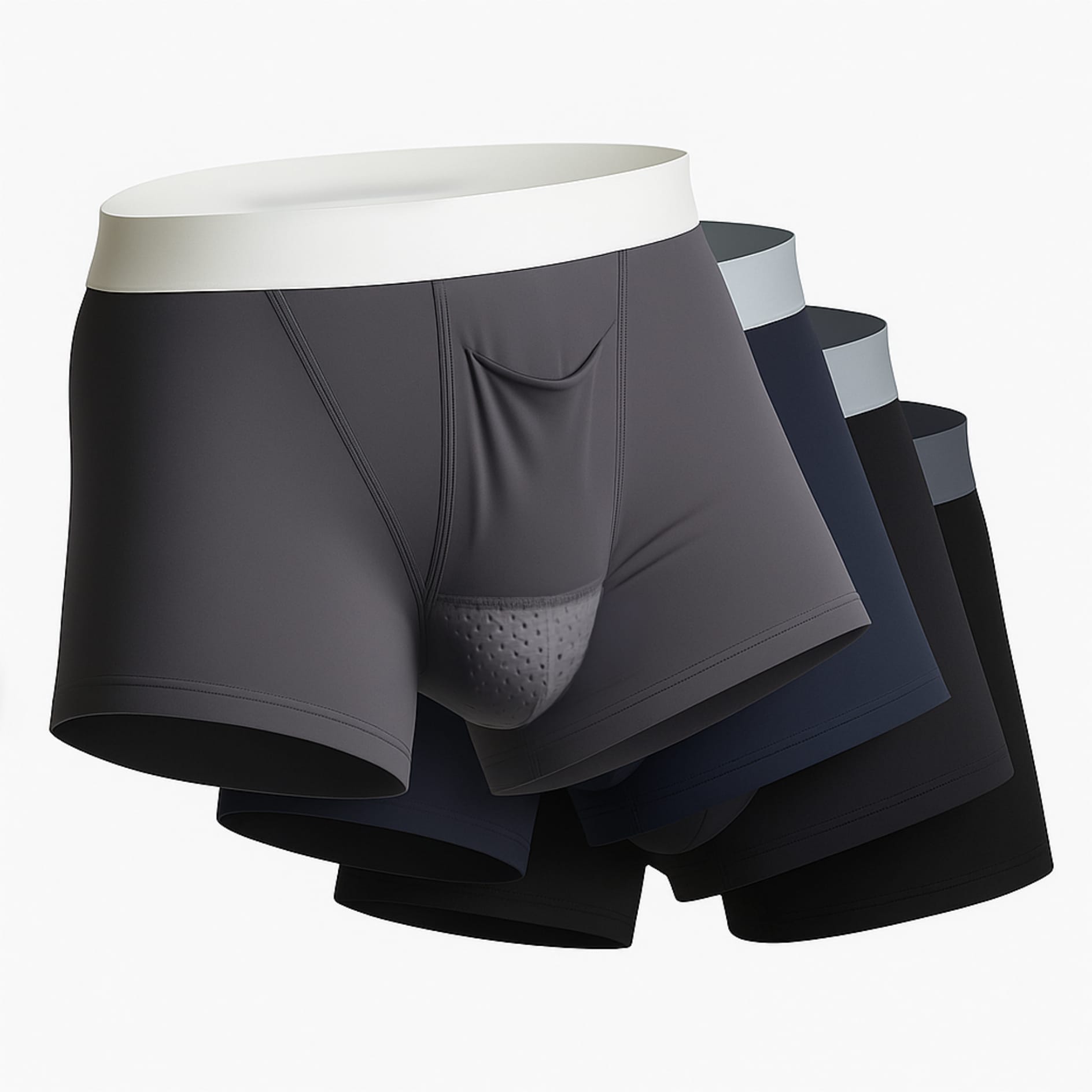
Comfort measures can help men who experience scrotal heaviness or movement-related discomfort from a diagnosed varicocele. Supportive underwear may provide gentle elevation and reduce pulling sensations during walking, exercise, or prolonged standing. However, there is an important difference between symptom support and medical treatment. Unlike a fluid-filled spermatocele, a varicocele involves abnormal blood drainage and reflux through enlarged veins. The condition does not require external garments to perform continuous venous blood redistribution, and underwear cannot restore damaged venous valves, remove reflux, or reliably shrink enlarged veins. VaricoceleUnderwear™ markets a purpose-built support-and-cooling garment as a dedicated option for men seeking scrotal support. Its product claims should be distinguished from proven clinical outcomes: it is not an established medical benchmark for spermatic cord decongestion. Men comparing specialized underwear for scrotal venous dilation should assess comfort, fit, breathability, and appropriate support. Additional guidance on choosing supportive underwear for varicocele can help with everyday comfort, but new swelling, persistent pain, or fertility concerns still require a proper urological assessment.
Related Articles

Choose Varicocele Support Designed for Cooling, Lift, and Daily Comfort
You’ve seen why regular underwear often falls short. Now view the purpose-built option made to reduce heaviness, improve support, and feel comfortable enough for everyday wear.