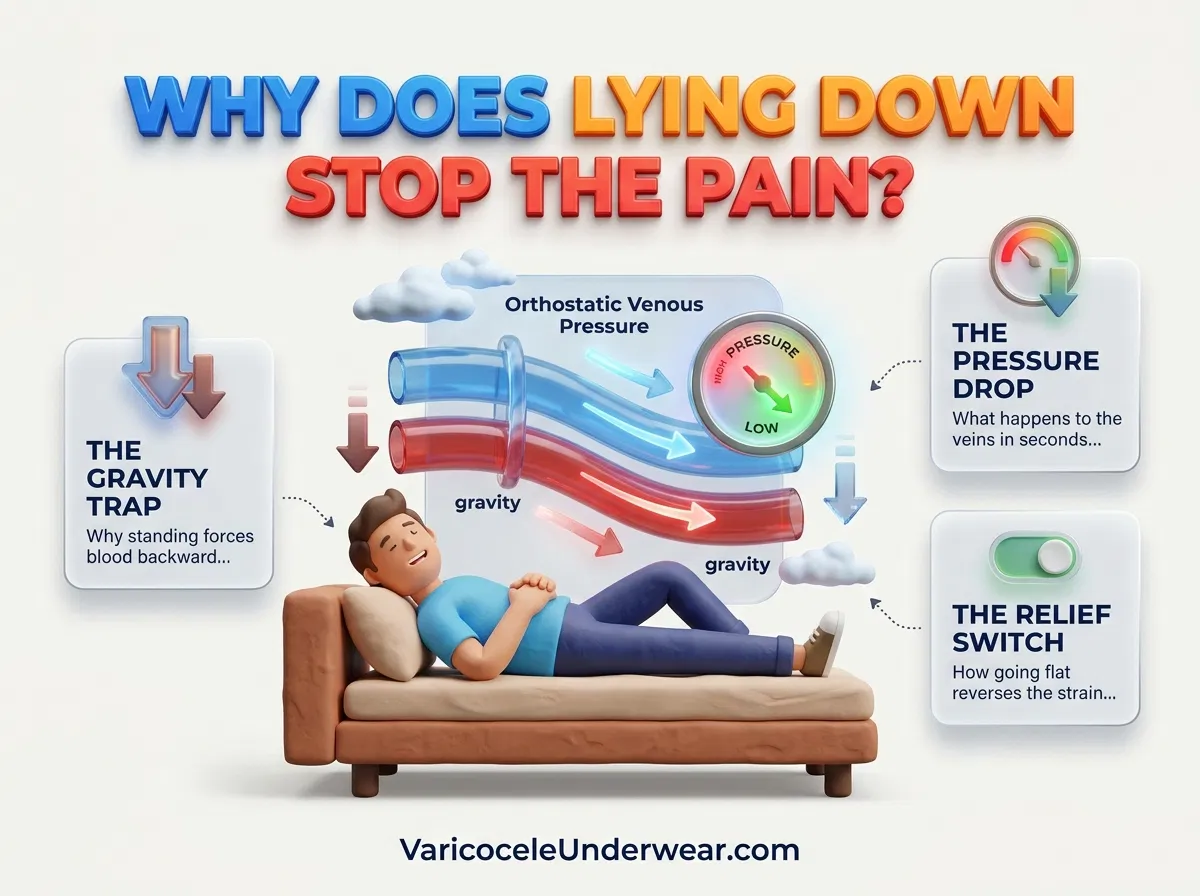
Varicocele pain can disappear within minutes of lying down because changing body position reduces the gravitational pressure acting on the enlarged veins around the testicle. When you stand, blood must travel upward through the spermatic veins against gravity. If the tiny valves inside these veins do not work properly, blood can flow backward and collect in the pampiniform plexus, the network of veins surrounding the testicle. Lying flat reduces this vertical pressure difference, allowing congested veins to decompress. This explains the familiar pattern of varicocele pain worse standing better lying down. The connection between gravity and orthostatic venous pressure varicocele symptoms also explains why discomfort often increases throughout the day.
The Physics of Standing and Gravity
To understand the gravity impact on scrotal veins, it helps to look at how blood moves through the male reproductive system. The pampiniform plexus collects blood from the testicle and carries it through the internal spermatic veins toward larger veins in the abdomen. On the left, this drainage usually enters the left renal vein. On the right, it generally enters the inferior vena cava. When you stand upright, the scrotum sits below the heart, creating a vertical column of blood. Gravity increases the hydrostatic pressure at the lower end of that column. Hydrostatic pressure is the pressure created by the weight of a fluid under gravity. Its basic relationship is expressed as P = ρgh, where blood density, gravitational acceleration, and vertical height determine the pressure difference. In healthy veins, functioning valves help prevent backward flow. In a varicocele, faulty or absent valves can allow blood to reflux, increasing venous filling and stretching the affected vessels. For a more detailed explanation, see our guide to the physics of scrotal support and varicocele vein pressure.
This pressure effect helps explain why varicocele discomfort often builds during a normal day. Standing at work, walking for extended periods, exercising, or lifting heavy objects can increase the sensation of fullness in the scrotum. The enlarged veins may become more noticeable as blood accumulates in the affected venous network. Some men describe a dull ache, dragging sensation, heaviness, or throbbing near the testicle. The left side is affected more often because of its venous drainage anatomy. The European Association of Urology uses the upright position and the Valsalva maneuver, which involves bearing down while holding the breath, when assessing vein diameter and reflux. This reflects the importance of body position in identifying a clinically significant varicocele. However, gravity is not the only factor involved. Venous valve function, individual anatomy, abdominal pressure, and the degree of reflux also influence symptoms. The pressure changes described here explain the general mechanism, not a precise measurement for every patient.

Discover specialized varicocele underwear designed for daily comfort, support, and recovery — a more targeted option for men who want support without compromise.
Discover the Recommended Option| Body position | Relative hydrostatic pressure burden | Common symptom pattern |
|---|---|---|
| Standing upright | Higher gravitational pressure at the scrotum | Heaviness, dragging, or aching may increase |
| Walking | Upright pressure remains, with changing muscle activity | Discomfort may fluctuate with movement |
| Sitting | Depends on posture and the vertical distance involved | Symptoms may improve or remain noticeable |
| Lying flat | Reduced vertical hydrostatic pressure difference | Veins may decompress and pain often improves |
| Lying flat with legs elevated | May further assist general venous return | Some men experience additional comfort |
This table shows the expected direction of positional changes, rather than measured pressure values for individual patients. There is no established universal set of scrotal venous pressure readings for each body position. The actual response varies with vein anatomy, valve function, and the severity of the varicocele. A man with mild venous reflux may notice only a small difference between sitting and standing, while someone with more pronounced venous congestion may experience a clear increase in discomfort after several hours upright. This is also why a varicocele examination should not rely on a single position. A clinician can compare the scrotum while standing and lying down, sometimes using ultrasound to assess blood flow. Learning how to reduce varicocele symptoms without surgery can help men manage everyday discomfort while they determine whether further medical treatment is necessary.
Why Lying Down Restores Blood Flow
When you lie on your back, the relationship between the scrotum and the heart changes. The testicles are no longer hanging far below the abdomen, so the long vertical hydrostatic column responsible for much of the additional standing pressure is greatly reduced. Gravity does not disappear, and the veins do not automatically become normal. However, the reduced gravitational opposition makes it easier for venous blood to move toward the central circulation. As the enlarged veins empty, their internal volume and tension may decrease. This process is called venous decompression. It explains why the dull ache can fade relatively quickly after you lie down. The reduction in pressure also lessens the stretching sensation around the spermatic cord and nearby tissues. Some men notice that the visible enlarged veins become smaller or less prominent in this position. Others experience only partial relief because chronic venous enlargement, local tissue sensitivity, or another source of scrotal pain may remain. The improvement is therefore a useful clinical clue, but it does not confirm the diagnosis by itself.
Another reason horizontal rest helps is that it changes the mechanical load on the scrotum. When standing, the testicles hang naturally, and the enlarged venous network is exposed to downward gravitational forces. Lying down removes much of this dependent traction and gives the surrounding tissues a chance to relax. It is common for symptoms to improve after a short period of rest and then return when standing resumes. This cycle does not mean that the varicocele has disappeared. The underlying vein valves may still allow backward blood flow, and the enlarged vessels remain present. Recurring symptoms deserve attention, especially when they interfere with work, sleep, physical activity, or sexual health. Men who cannot take frequent horizontal breaks may benefit from well-fitted scrotal support as a comfort measure. The key is gentle elevation rather than excessive squeezing. Support garments should hold the testicles in a comfortable position without creating pressure at the groin or restricting circulation.
Simulating Horizontal Relief While Standing
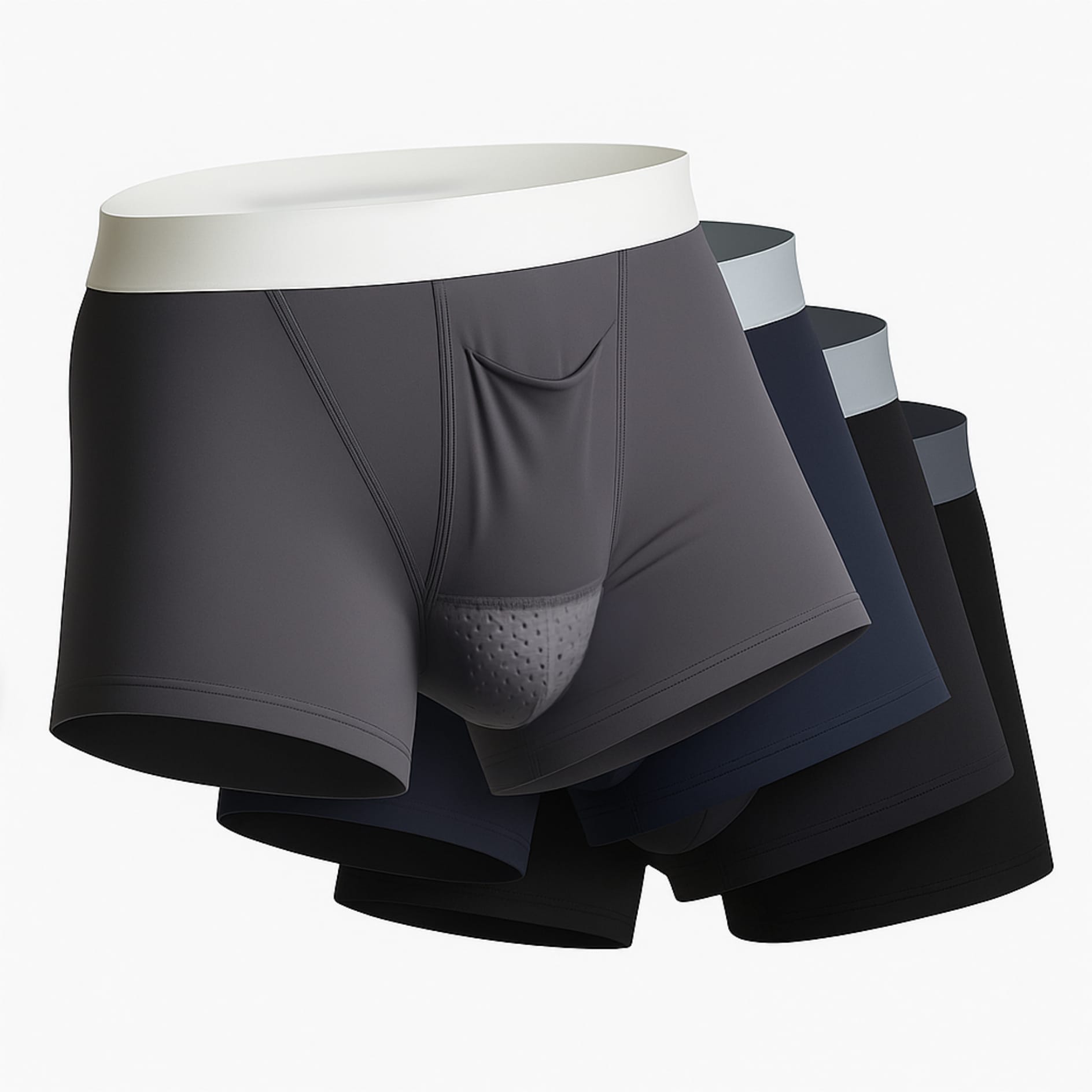
Although lying down provides the clearest positional reduction in gravitational pressure, it is not always practical during working hours, travel, or exercise. This is where the biomechanics of an uplift pouch become relevant. A supportive garment can raise the scrotum closer to the body, reducing the distance that the testicles hang below the pelvis and limiting downward traction on the spermatic cord. In mechanical terms, this changes the position of the dependent tissue and shortens part of the vertical distance involved in the gravitational load. It can therefore reproduce one aspect of the comfort associated with horizontal rest while you remain upright. The uplift pouch used in orthostatic varicocele relief underwear is designed to provide this type of gentle elevation and support. Its intended benefit is mechanical comfort, not the elimination of gravity. A garment cannot reproduce the full pressure changes of lying flat, repair damaged venous valves, or guarantee a measurable reduction in blood reflux. It should be viewed as a supportive option rather than a medical treatment or replacement for a urological assessment.
Fit matters just as much as elevation. Underwear that is too tight can create unwanted pressure around the groin, restrict movement, increase heat, and cause skin irritation. A suitable support garment should hold the scrotum comfortably without crushing the testicles or squeezing the spermatic cord. Breathable fabric may also help reduce heat and moisture during long periods of wear. When comparing products, look for a stable pouch, appropriate support, comfortable seams, and enough room for normal movement. Our guide to choosing the best varicocele underwear explains the features worth examining. You can also learn more about whether tight underwear makes varicocele symptoms worse. Stop wearing any garment that causes numbness, significant discomfort, skin changes, or increased pain. Support should make everyday activity more comfortable, not introduce another source of pressure.
There is also an important distinction between symptom relief and long-term reproductive health. Many men with varicoceles have no fertility problems, and pain does not automatically mean that sperm production is impaired. However, some clinical varicoceles are associated with reduced sperm quality, testicular growth changes, and male infertility. Men concerned about fertility should discuss a physical examination and semen analysis with a urologist. The 2026 European Association of Urology guidelines recommend considering varicocele repair in infertile men who have a palpable clinical varicocele, abnormal semen parameters, and otherwise unexplained infertility when the female partner has good ovarian reserve. The guidelines also report that pain resolution after surgical repair varies, with published rates of approximately 48% to 90%. Surgery is not necessary for every varicocele, and treatment decisions depend on the individual’s symptoms, examination, fertility goals, and test results. Persistent pain despite conservative care deserves a proper evaluation. Sudden severe testicular pain, especially with nausea, swelling, or a testicle sitting unusually high, requires immediate emergency assessment because testicular torsion must be ruled out. New or persistent swelling also needs medical review. The full EAU 2026 Sexual and Reproductive Health Guidelines provide the current evidence-based framework for varicocele assessment and treatment.
Related Articles
Choose Varicocele Support Designed for Cooling, Lift, and Daily Comfort
You’ve seen why regular underwear often falls short. Now view the purpose-built option made to reduce heaviness, improve support, and feel comfortable enough for everyday wear.