Differentiating Fluid Sacks from Vein Clusters
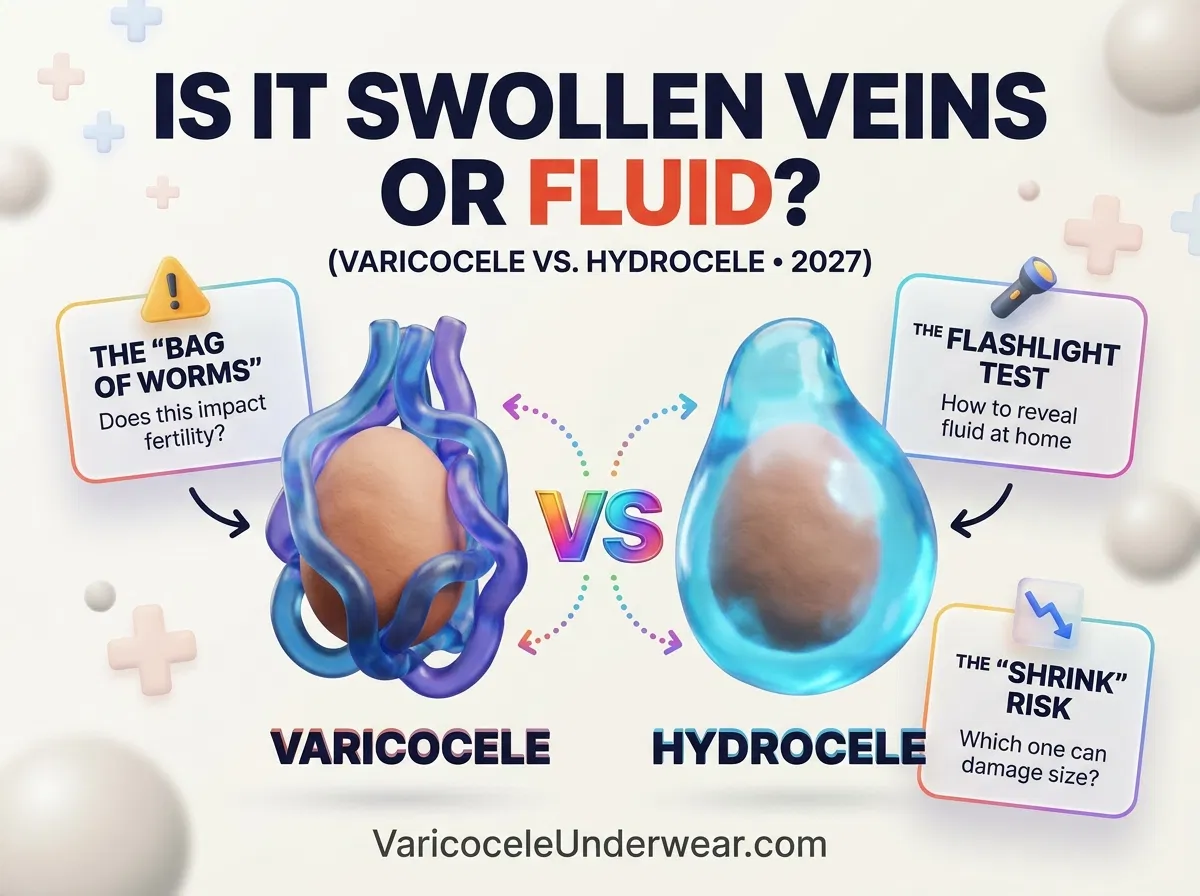
To understand why these two issues feel so distinct, one must inspect the tissue layers of the male reproductive tract. A hydrocele forms between the parietal and visceral layers of the tunica vaginalis, which is the delicate membrane surrounding each testicle. Under normal conditions, this space contains only a few drops of lubricating fluid to allow smooth testicular motion. When an imbalance occurs between fluid secretion and lymphatic reabsorption, clear peritoneal fluid accumulates, producing a smooth, tense, or rubbery oval collection that encloses the testis. In contrast, a varicocele is an abnormal dilation of the pampiniform venous plexus, the network of veins responsible for draining blood from the testicles and cooling arterial blood before it reaches sperm-producing cells. Defective internal venous valves permit blood to flow backward under gravity, causing these vessels to stretch, pool, and feel clinically like an irregular bag of worms. For a deeper breakdown of structural differences, read our clinical overview on varicocele vs hydrocele symptoms and diagnosis.The mechanical behavior of these two conditions under gravity creates distinct symptoms and requires targeted relief methods. A hydrocele maintains a stable, continuous shape throughout the day because enclosed peritoneal fluid cannot quickly escape the sealed sac, producing diffuse heaviness rather than sharp aches. A varicocele behaves dynamically: venous pressure builds as you stand, walk, or perform heavy lifting, which allows stagnant blood to distend the pampiniform plexus and elevate scrotal temperatures. Hydrocele fluid retention does not respond to external scrotal support because the fluid remains confined within the tunica vaginalis. Varicoceles, however, generate painful vascular dragging that directly demands the upward lifting action of varicocele venous relief underwear to unload vertical gravitational pressure, reduce hydrostatic pooling, and promote cooler testicular temperatures. Patients experiencing groin discomfort can also evaluate other cystic masses by checking our side-by-side guide on varicocele vs spermatocele vs hydrocele presentations.The Transillumination Test Explained
The most decisive, non-invasive bedside technique used by urologists to evaluate painless scrotal enlargement is the transillumination test scrotal swelling evaluation. During this exam, the clinician darkens the examination room and places a focused, cool-light beam directly against the posterior wall of the affected hemiscrotum. Because serous fluid is translucent, a hydrocele will transmit light freely, illuminating the entire interior of the scrotum with a diffuse red or pink glow, leaving the opaque testicle visible as a dark central shadow. In stark contrast, dense cellular tissues and blood-filled venous clusters block light transmission completely. When light encounters the thickened, blood-engorged vessels of a varicocele, the scrotum stays dark without any radiant glow. Standard medical guidance documented in clinical physical examination manuals confirms transillumination as a reliable preliminary tool for separating simple fluid collections from solid or vascular scrotal masses.Ultrasound and Physical Palpation Diagnostics
A thorough clinical diagnosis always relies on systematic manual palpation performed in both standing and recumbent positions. During the physical check, a physician gently isolates the spermatic cord above the testicle. A hydrocele feels distinct, smooth, fluctuant, and typically prevents the examiner from directly palpating the anterior surface of the testis, though the examiner can easily reach above the fluid collection to feel normal cord structures. A varicocele presents primarily on the left side due to perpendicular venous drainage into the left renal vein. On physical palpation, it feels like soft, compressible cords above and behind the testis that collapse when the patient lies flat on the examination table. When the patient stands and performs a Valsalva maneuver by bearing down, the sudden rise in intra-abdominal pressure pushes venous blood downward, visibly swelling the veins. Men seeking a full clinical explanation of grades and testing protocols can consult our complete varicocele guide to understand clinical staging.| Diagnostic Criterion | Hydrocele (Fluid Sac) | Varicocele (Swollen Veins) |
|---|---|---|
| Underlying Pathology | Fluid accumulation in tunica vaginalis | Dilated pampiniform venous plexus |
| Physical Feel (Palpation) | Smooth, tense, fluctuant fluid balloon | Irregular, soft, collapsible bag of worms |
| Transillumination Test | Positive (glows bright red or pink) | Negative (blocks light, stays dark) |
| Position Changes (Lying Flat) | Volume remains unchanged | Veins decompress and flatten out |
| Valsalva Maneuver Effect | No noticeable expansion | Immediate engorgement under pressure |
| Primary Symptom Profile | Painless bulk, mechanical friction | Dull ache, heat buildup, throbbing |
| Effect on Male Fertility | Rarely affects sperm parameters | Can impair count, motility, and morphology |
| High-Resolution Ultrasound | Anechoic fluid surrounding testis | Tortuous veins measuring over 2 to 3 mm |
Related Articles


Expert Recommendation
Discover specialized varicocele underwear designed for daily comfort, support, and recovery — a more targeted option for men who want support without compromise.
Discover the Recommended Option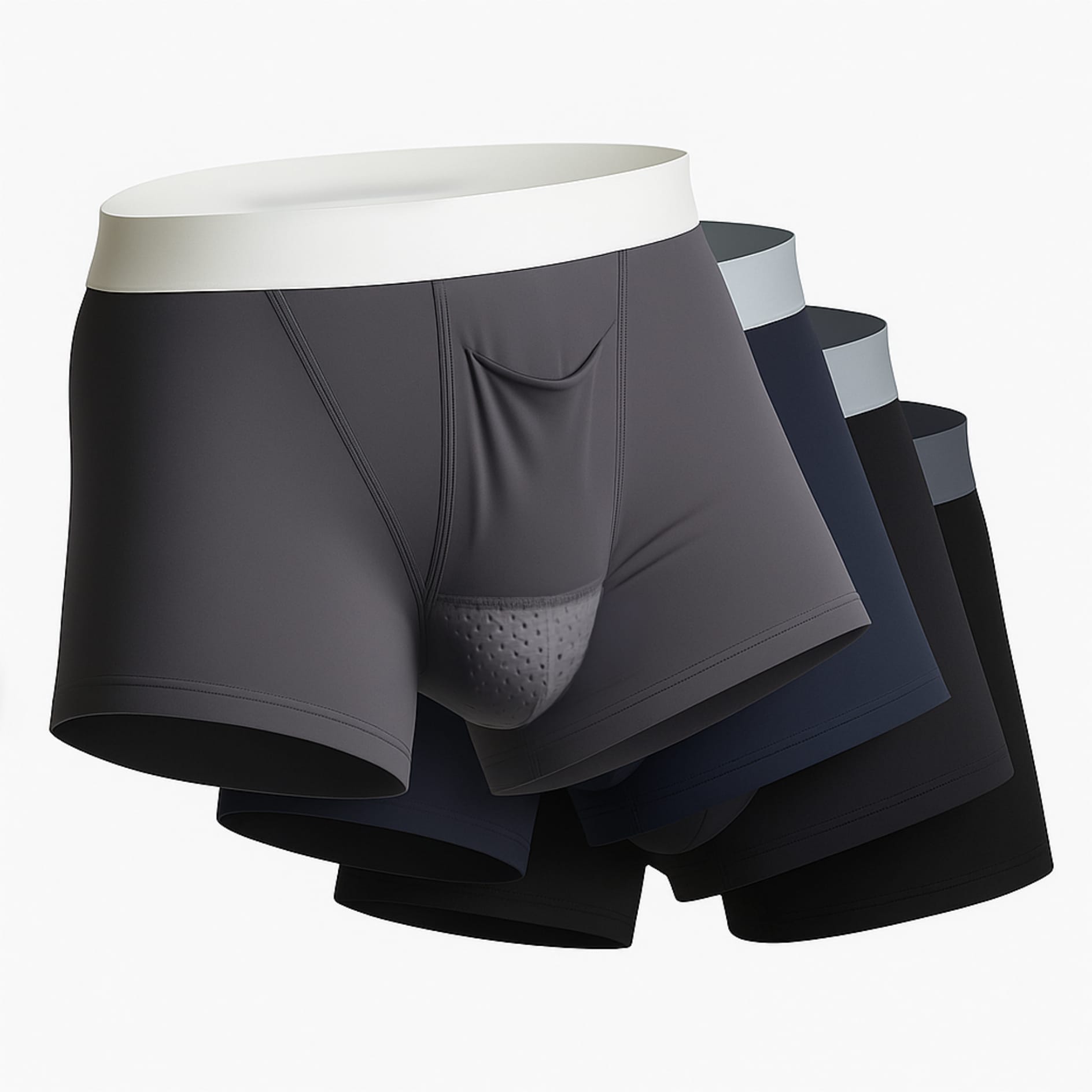
Why Specialized Support Helps
✓ Better support can help reduce the feeling of heaviness.
✓ Breathable, cooling fabrics may help with temperature regulation.
✓ A purpose-built fit can feel more comfortable for daily wear and recovery.
Take the Next Step
Choose Varicocele Support Designed for Cooling, Lift, and Daily Comfort
You’ve seen why regular underwear often falls short. Now view the purpose-built option made to reduce heaviness, improve support, and feel comfortable enough for everyday wear.
✓ Cooling mesh comfort
✓ Supportive ergonomic lift
✓ Discreet for all-day wear