Can a Grade 1 varicocele fade over time, or will mildly enlarged scrotal veins inevitably become worse? The reassuring answer is that progression is not inevitable. Some mild varicoceles remain unchanged for years, while others become less noticeable or even resolve spontaneously. However, a small proportion may progress to a higher grade. Long-term observations provide useful information about mild varicocele progression data and subclinical varicocele prognosis, particularly in adolescents. The key is understanding the difference between a mild, palpable varicocele and veins detected only by ultrasound. Neither diagnosis automatically means infertility, permanent testicular damage, or a future need for surgery. Understanding the available evidence can help you make sensible decisions without worrying that every minor change signals a serious problem.
The Reality of Grade 1 Varicoceles
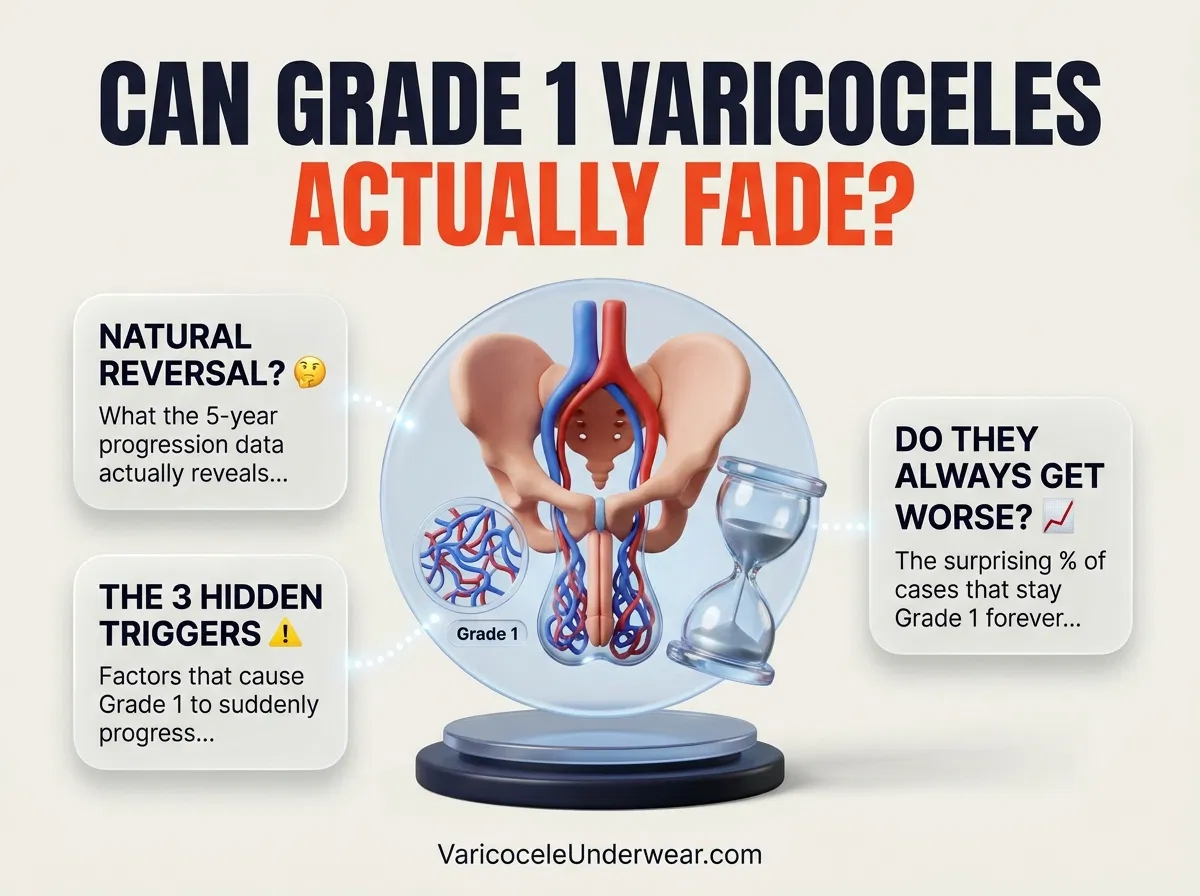
A Grade 1 varicocele is the mildest clinically detectable form of this condition. It consists of enlarged veins in the pampiniform plexus, a network of veins surrounding the testicle. These veins become palpable only when a person performs the Valsalva maneuver, which means bearing down as if having a bowel movement. They are generally not noticeable during an ordinary examination at rest. This distinction matters because a Grade 1 varicocele is different from a subclinical varicocele, which cannot be felt during a physical examination and is identified through imaging. The differences between Grade 1, Grade 2, and Grade 3 varicoceles help explain why the grading system describes physical findings rather than predicting a person’s future fertility. A mild diagnosis alone does not establish that testicular function is impaired or that the condition will become more severe.

Discover specialized varicocele underwear designed for daily comfort, support, and recovery — a more targeted option for men who want support without compromise.
Discover the Recommended OptionOne useful source of long-term information is a five-year observational study published in the Journal of Pediatric Surgery in 2009. Researchers examined 31 boys with left-sided Grade 1 varicoceles. Ten received surgery, while 21 were monitored without surgical treatment. Among the 21 observed patients, 13 (62%) continued to have Grade 1 varicoceles throughout the study period. Four (19%) developed Grade 2 varicoceles, while another four (19%) experienced spontaneous resolution. These results show that a mild varicocele can follow different paths. Most observed patients did not progress to a higher clinical grade, and some experienced complete resolution. However, eight patients (38%) also showed delayed growth of the left testicle, with or without an increase in varicocele grade. This is why monitoring testicular development matters, especially during puberty. The findings are encouraging, but the small, adolescent study group means the percentages should not be treated as predictions for adult men. Read the five-year Grade 1 varicocele follow-up study on PubMed.
What does this mean for someone diagnosed with a mild varicocele today? Stability is a realistic outcome, but it is not possible to guarantee that every case will remain unchanged. Physical examination findings can also vary because vein fullness changes with body position, temperature, and straining. A difference in the reported grade between two appointments does not always prove that the underlying condition has permanently progressed or reversed. Ultrasound findings, testicular size, symptoms, and reproductive goals provide additional clinical information. There is also no established adult progression percentage that can accurately predict what will happen to an individual Grade 1 varicocele over five or ten years. When discussing whether a varicocele can disappear without treatment, it is important to distinguish temporary changes in vein fullness from documented spontaneous resolution. Both are possible, but they are not the same medical outcome.
| Varicocele grade | Clinical appearance | Progression and long-term outlook |
|---|---|---|
| Subclinical | Not palpable; detected by ultrasound | May remain stable, resolve, or become clinically detectable. Long-term estimates are limited. |
| Grade 1 | Palpable only during Valsalva | Some cases remain Grade 1, some resolve, and others progress. A five-year adolescent study reported 19% spontaneous resolution and 19% progression to Grade 2 among observed patients. |
| Grade 2 | Palpable while standing at rest | Represents a more noticeable clinical varicocele. Individual future progression cannot be reliably predicted by grade alone. |
| Grade 3 | Visible and palpable while standing at rest | Largest clinical grade. Further changes in testicular function or symptoms require individual assessment rather than assumptions based on appearance. |
Can Subclinical Veins Reverse
Yes. Some subclinical varicoceles resolve without surgery, although others remain stable or become clinically detectable. A particularly relevant natural-history study published in the Journal of Urology in 2008 followed children with ultrasound-detected testicular venous reflux. Venous reflux means blood flows backward through veins because the valves that normally help maintain one-way circulation do not function properly. Researchers initially screened 2,107 boys and identified 354 with reflux that could not be detected through physical examination. A randomly selected group of 36 boys received annual assessments over four years. Two participants (5.5%) experienced spontaneous resolution of reflux within two years. Twenty-four (67%) showed no change, while ten (28%) developed clinically detectable varicoceles. Among those ten, seven progressed to Grade 2, two to Grade 3, and one to Grade 1. These observations demonstrate that subclinical veins do not always become larger, although progression can occur. Because only 36 children received long-term follow-up, these results should not be applied directly to adult men. Review the subclinical varicocele natural-history study on PubMed.
Stopping Progression Naturally
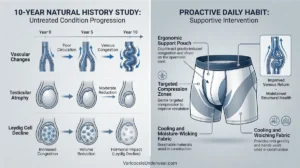
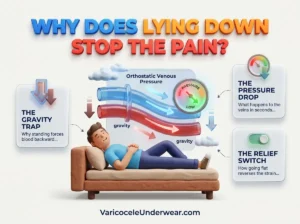
There is currently no proven exercise, supplement, dietary change, or underwear design that can reverse damaged venous valves or prevent a mild varicocele from progressing. Gravity can increase blood pooling in enlarged scrotal veins when standing, which explains why some men notice greater fullness or aching after prolonged periods on their feet. Lying down may temporarily reduce vein fullness, but this does not establish that the underlying valve problem has healed. Proper scrotal support can still be useful for comfort, particularly during walking, exercise, or long working days. Men seeking this type of support can explore preventative varicocele underwear from VaricoceleUnderwear.com as a daily comfort option. However, the word preventative is a product description, not an established medical claim. Supportive underwear may reduce movement and discomfort, but there is no clinical evidence that it mechanically unburdens venous valves, stops subclinical reflux, or prevents enlargement of the vein bundles. For additional guidance on garment fit, materials, and support features, see this guide to the best varicocele underwear.
For most men with an uncomplicated Grade 1 varicocele, observation is a reasonable approach when there is no testicular size loss, significant pain, or documented fertility problem. Current AUA/ASRM guidance recommends considering surgical repair in men attempting conception who have a palpable varicocele, infertility, and abnormal semen parameters. It does not recommend surgery for varicoceles that are detected only through imaging and cannot be felt on examination. The AUA/ASRM male infertility guidelines provide further details about these treatment decisions. A urologist can assess testicular size, symptoms, physical findings, and semen quality when appropriate. Seek prompt medical assessment if the testicle becomes noticeably smaller, persistent pain develops, or a new scrotal lump appears. Sudden severe testicular pain requires emergency evaluation because other urgent conditions, including testicular torsion, must be ruled out. Understanding the possible long-term effects of an untreated varicocele can also help guide appropriate follow-up. Ultimately, the evidence shows that a Grade 1 varicocele does not inevitably worsen. Some resolve, many remain stable, and regular clinical assessment helps identify the smaller group that needs further investigation.
Related Articles

Choose Varicocele Support Designed for Cooling, Lift, and Daily Comfort
You’ve seen why regular underwear often falls short. Now view the purpose-built option made to reduce heaviness, improve support, and feel comfortable enough for everyday wear.