Recovering from groin surgery usually brings relief, but noticing new swelling or a heavy ache in your scrotum can feel unsettling. Experiencing a varicocele after inguinal hernia surgery is a real clinical occurrence that men encounter during their post-operative recovery. While hernia repair successfully reinforces weakened abdominal muscles, the proximity of the surgical site to the spermatic cord means local anatomical changes can alter testicular blood flow. Understanding how surgical repair, scar tissue, and mesh tension influence your vascular network is the first step toward managing discomfort. In this article, we break down the anatomical connection between hernia repair and vein dilation, explain why venous backpressure develops, and outline practical non-surgical strategies to keep you comfortable.
The Anatomical Connection: Inguinal Hernia and the Spermatic Cord
To understand why scrotal veins dilate after surgery, you must look at the shared pathway in the lower groin. The inguinal canal is a narrow tunnel in the lower abdominal wall through which the spermatic cord passes on its way to the scrotum. This cord acts as a life line for the testicle, carrying the vas deferens (the sperm duct), nerves, arterial blood supply, and the pampiniform plexus-a network of small veins that drains blood back toward the heart.
During an inguinal hernia repair, a surgeon must work directly around or inside this narrow passage to push protruding tissue back into place and reinforce the abdominal wall. Because the spermatic cord and the hernia sac lie right next to each other, surgical manipulation can create localized swelling. Many men initially struggle to distinguish between a varicocele vs inguinal hernia before their operation, but post-surgical anatomical changes create distinct physical signals.
According to clinical guidelines from the American Urological Association, maintaining normal venous drainage depends on clear, unhindered pathways through the inguinal canal. When surgical trauma or dense post-operative repair alters the pathway, fluid dynamics change. Even minor friction or swelling around the spermatic cord can slow down venous return, causing blood to pool in the pampiniform plexus and producing the characteristic “bag of worms” feeling in the scrotum.
Developing a Varicocele After Inguinal Hernia Surgery: How Mesh and Scar Tissue Compress Veins
Modern hernia repairs commonly use synthetic mesh to strengthen the pelvic wall. While mesh drastically reduces the risk of hernia recurrence, it introduces foreign material into tight tissue spaces. Over time, the body responds to the mesh by forming fibrous scar tissue. As this scar tissue contracts and matures, it can exert unexpected force on nearby structures, leading to notable hernia mesh complications.

Discover specialized varicocele underwear designed for daily comfort, support, and recovery — a more targeted option for men who want support without compromise.
Discover the Recommended OptionWhen scar tissue or a stiff mesh patch presses against the flexible walls of the testicular veins, it creates localized inguinal canal pressure. Testicular veins operate under relatively low pressure compared to arteries. Any external compression easily narrows the vein lumen, obstructing upward blood flow. This obstruction leads to localized pelvic congestion and forces blood backward into the scrotum, inflating the pampiniform plexus and producing a secondary varicocele.
Studies archived on NCBI note that while full testicular vascular occlusion is rare, post-herniorrhaphy venous stasis occurs more often than previously recognized. The table below outlines how post-surgical mesh pressure compares to primary varicocele development:
| Feature | Primary Varicocele | Secondary Varicocele Post-Hernia Surgery |
|---|---|---|
| Root Cause | Faulty or missing internal vein valves. | External vein compression from mesh or scar tissue. |
| Onset | Gradual, usually starting around puberty. | Develops months to years after hernia repair. |
| Location | 90% occur on the left side due to renal vein anatomy. | Can occur on whichever side the hernia repair took place. |
| Primary Symptom | Dull, aching sensation after standing. | Groin stiffness paired with scrotal heaviness and localized tightness. |
| Vascular Strain | Internal blood reflux within the spermatic vein. | Mechanical obstruction within the inguinal canal. |
Managing Groin and Scrotal Pressure Simultaneously
Addressing post-operative venous pooling requires a targeted strategy that manages both the surgical site in the groin and the physical strain in the scrotum. It is vital to recognize what conservative management can achieve: non-surgical methods cannot remove scar tissue or dissolve synthetic mesh, but they reliably alleviate gravitational tension, reduce venous pooling, and calm irritated tissue.
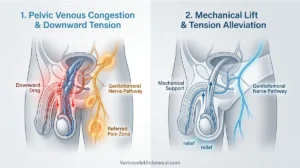
Learning how to reduce varicocele symptoms without surgery begins with proper external support. When standing or moving, gravity pulls fluid down into the dilated pampiniform plexus, increasing scrotal pain and exacerbating groin strain. Understanding the physics of scrotal support helps explain why standard loose boxers often fail to provide relief after hernia procedures.
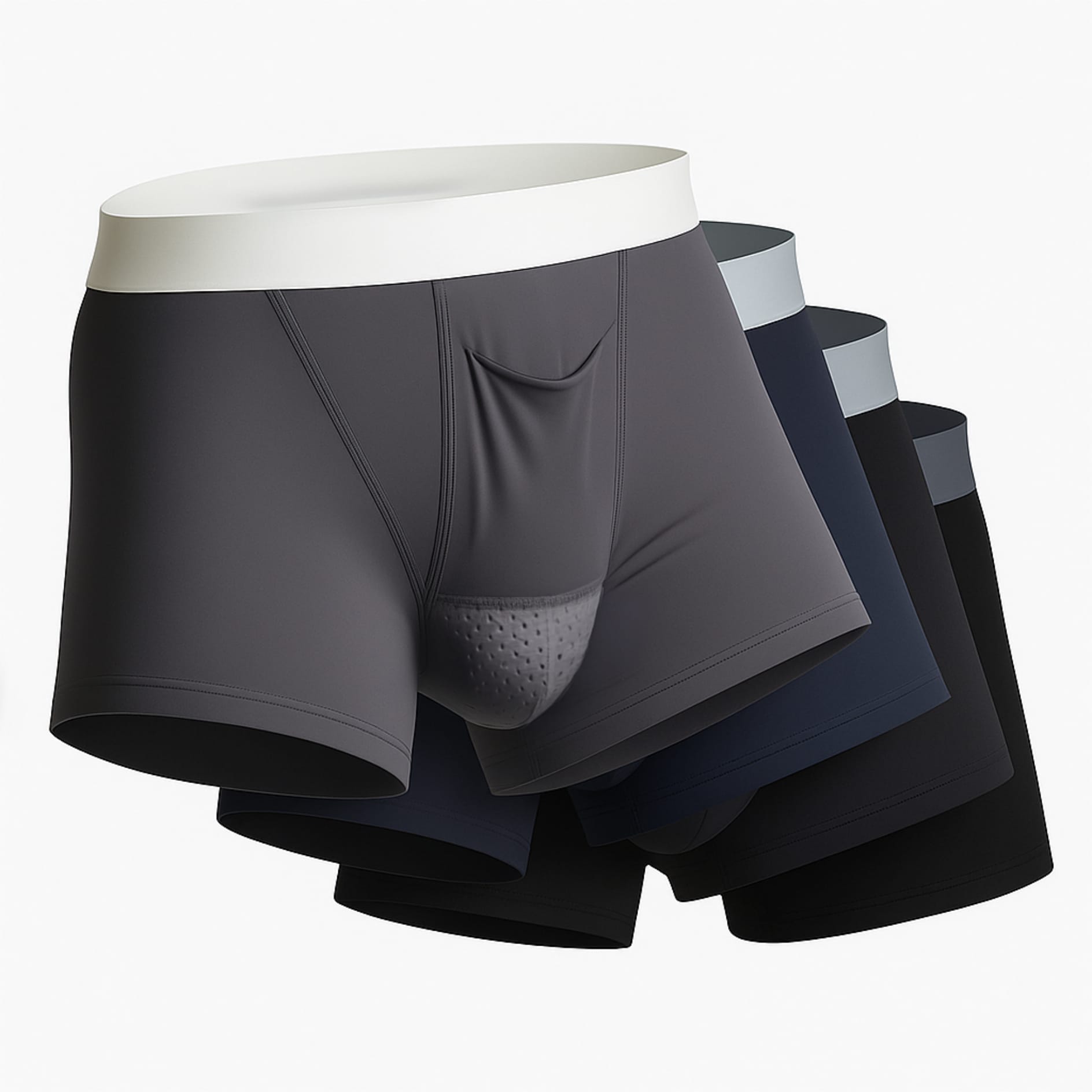
To address both regions, many men turn to specialized ergonomic support garments. Utilizing varicocele support underwear offers a practical non-invasive option by featuring a dual-zone support architecture. The wide, supportive waistband gently secures the lower abdomen and inguinal canal area, stabilizing the surgical zone without digging in. Simultaneously, the ergonomic 3D suspension pouch keeps the scrotum lifted and supported, relieving gravity-induced strain on the damaged veins and keeping fluid moving upward.
Tracking your symptoms is equally important during recovery. Distinguishing between nerve irritation along the surgical scar and vascular pooling in the scrotum requires monitoring your scrotal pain patterns over time. If a dull ache intensifies toward the end of the day or after prolonged standing, mechanical support and routine rest elevated above heart level provide significant comfort.
- Wear dual-zone support: Choose garments that stabilize the groin repair site while elevating the scrotum to reduce blood pooling.
- Avoid heavy straining: Limit intense powerlifting or heavy lifting that spikes intra-abdominal pressure and pushes blood downward into damaged veins.
- Apply cool compresses: Use gentle cooling on the scrotum (avoiding direct ice on surgical scars) to encourage natural vein constriction.
- Pace your day: Alternate between standing and sitting, taking short breaks to elevate your pelvis on a pillow to assist venous return.
Frequently Asked Questions
Can a varicocele form years after hernia mesh surgery?
Yes. As hernia mesh settles, scar tissue contracts over months or years. This gradual fibrosis can compress the testicular veins inside the inguinal canal over time, leading to delayed venous congestion and varicocele formation long after the initial surgical recovery period.
Will supportive garments cure a mesh-induced varicocele?
No. Supportive garments do not dissolve surgical mesh or physically remove scar tissue around the vein. However, high-quality dual-zone support counteracts gravitational drag, reduces venous engorgement, and significantly relieves daily throbbing and scrotal discomfort.
When should I see a urologist for post-hernia scrotal swelling?
You should see a doctor if you notice sudden testicle pain, rapid enlargement of the scrotum, persistent fever, or a hard lump. A simple Doppler ultrasound can verify whether the swelling stems from a varicocele, hydrocele, or hernia recurrence.
Practical Takeaway for Post-Surgery Recovery
Developing a varicocele after hernia repair stems from direct mechanical pressure where the spermatic cord and repair site meet. While conservative tools like dual-zone support garments cannot rewrite your internal vascular anatomy, lifting the scrotum and stabilizing the lower abdomen significantly diminishes daily pressure and keeps you active comfortably.
Related Articles


Choose Varicocele Support Designed for Cooling, Lift, and Daily Comfort
You’ve seen why regular underwear often falls short. Now view the purpose-built option made to reduce heaviness, improve support, and feel comfortable enough for everyday wear.