Finding a lump or swelling in your groin or scrotum triggers immediate concern. You’re not alone in this worry. Both varicocele and inguinal hernia affect millions of men each year, and their symptoms can look strikingly similar at first glance.
Here’s the challenge: these two conditions have different causes, different risks, and require different treatments. Mistaking one for the other could delay proper care or cause unnecessary anxiety.
This guide gives you the clinical knowledge to understand what you’re dealing with. You’ll learn the key differences in symptoms, when to see a doctor, and what treatment options look like in 2026. Whether you’re a young athlete or a man over 50, this information applies to you.
For a deeper understanding of varicocele specifically, our complete varicocele guide covers everything from anatomy to long-term management.
What Is a Varicocele?
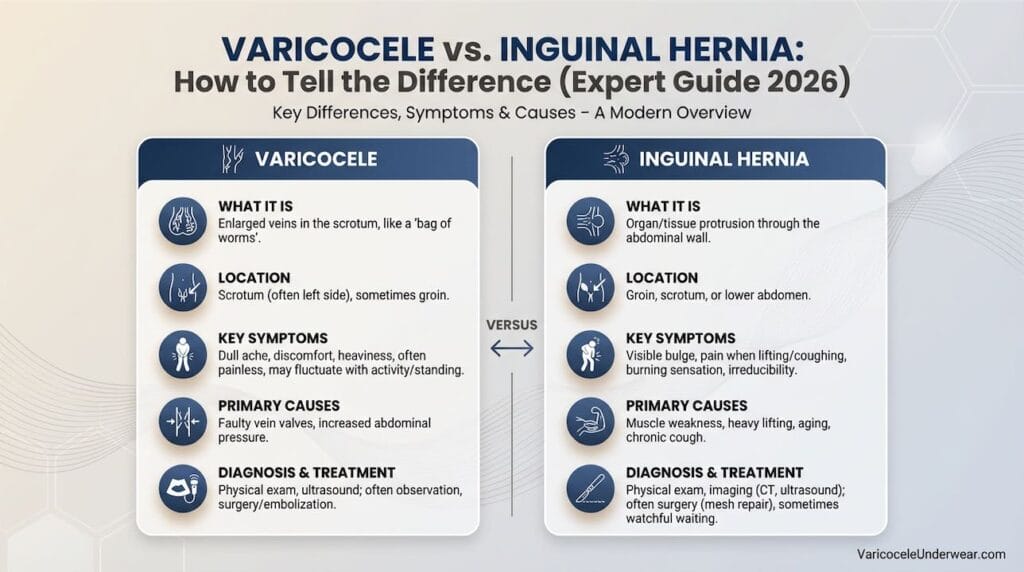
A varicocele is an enlargement of veins within the scrotum. Think of it like varicose veins in your leg, but occurring in the pampiniform plexus, the network of veins that drains blood from the testicles.
Key Facts About Varicocele
| Characteristic | Details |
|---|---|
| Prevalence | Affects 15-20% of all men |
| Age of onset | Most common between ages 15-25 |
| Side affected | 85-90% occur on left side |
| Fertility impact | Present in 40% of men with primary infertility |
Varicoceles develop because the valves inside these veins malfunction. Blood pools instead of flowing back toward the heart, causing the veins to stretch and swell. The left side is more commonly affected due to the anatomy of how the left testicular vein connects to the renal vein at a 90-degree angle.
Most varicoceles are harmless. However, some can affect testosterone production or sperm quality over time. According to research published in Fertility and Sterility, varicocele repair can improve sperm parameters in 60-70% of men with fertility concerns.
What Is an Inguinal Hernia?
An inguinal hernia occurs when tissue, usually part of the intestine, pushes through a weak spot in the abdominal muscles near the inguinal canal. This canal is a passageway in the lower abdominal wall.
Key Facts About Inguinal Hernia
| Characteristic | Details |
|---|---|
| Prevalence | Lifetime risk of 27% for men |
| Age patterns | Two peaks: infancy and after age 40 |
| Side affected | Can occur on either side equally |
| Surgical repairs annually (US) | Over 800,000 procedures |
There are two types of inguinal hernias:
- Indirect hernias: Follow the path of the inguinal canal. More common in younger men and often congenital.
- Direct hernias: Push through a weakness in the abdominal floor. More common after age 40.
Unlike varicocele, hernias involve abdominal contents pushing into the groin or scrotum. This distinction matters because hernias carry risks that varicoceles don’t, including strangulation, where blood supply gets cut off to the herniated tissue.
Varicocele vs. Hernia Symptoms: Side-by-Side Comparison
Both conditions can cause a visible or palpable lump in the groin area. But the details of these lumps differ significantly.
Symptom Comparison Table
| Symptom | Varicocele | Inguinal Hernia |
|---|---|---|
| Location | Within scrotum, above testicle | Groin crease, may extend into scrotum |
| Texture | Feels like “bag of worms” | Smooth, single bulge |
| Pain quality | Dull ache, heaviness | Sharp or burning, especially with strain |
| When it worsens | Standing, end of day, exercise | Coughing, lifting, straining |
| Lying down effect | Swelling decreases | Bulge often disappears completely |
| Cough impulse | Minimal change | Visible bulge with coughing |
How Does Varicocele Feel?
Men with varicocele typically describe:
- A dull, aching discomfort in the affected testicle
- Heaviness that builds throughout the day
- Relief when lying down
- A mass that feels like tangled spaghetti or worms above the testicle
- Symptoms that worsen in hot weather or after physical activity
The discomfort usually rates 2-4 on a 10-point pain scale. Severe pain is uncommon and should prompt immediate medical evaluation.
How Does Inguinal Hernia Feel?
Hernia symptoms present differently:
- A distinct bulge in the groin that appears with standing or straining
- Sharp, sudden pain especially when lifting heavy objects
- Burning or aching sensation at the bulge site
- The ability to push the bulge back in (reducible hernia)
- Nausea or vomiting if the hernia becomes incarcerated
Case Study: Marcus, 34, came to his urologist concerned about scrotal swelling noticed during gym workouts. Physical examination revealed the swelling disappeared completely when lying flat and reappeared forcefully with coughing. Ultrasound confirmed an indirect inguinal hernia rather than the varicocele he suspected. Surgical repair resolved his symptoms within two weeks.

Discover specialized varicocele underwear designed for daily comfort, support, and recovery — a more targeted option for men who want support without compromise.
Discover the Recommended OptionCan You Have Both Varicocele and Hernia?
Yes. Having one condition doesn’t protect you from the other. In clinical practice, finding both conditions in the same patient happens regularly, though they typically affect different anatomical structures.
A 2023 study in the Journal of Urology found that among men undergoing groin surgery, approximately 3-5% had both conditions present simultaneously. This underscores why proper diagnostic imaging matters.
If you’re experiencing symptoms, don’t assume you know which condition you have based on internet research alone. Professional evaluation remains essential.
How Doctors Diagnose Varicocele vs. Hernia
Physical examination by an experienced clinician can often distinguish these conditions. However, imaging studies provide confirmation and rule out other possibilities.
Physical Examination Techniques
For varicocele detection:
- Examination in standing position
- Valsalva maneuver (bearing down) to increase venous pressure
- Grading system from Grade I (felt only with Valsalva) to Grade III (visible without touching)
- Comparison of testicle sizes
For hernia detection:
- Invagination of scrotal skin to palpate the inguinal ring
- Cough impulse test
- Assessment of reducibility
- Check for bowel sounds in the scrotum
Imaging Studies
| Test | Best For | What It Shows |
|---|---|---|
| Scrotal ultrasound with Doppler | Varicocele confirmation | Dilated veins >3mm, blood reflux |
| Groin ultrasound | Hernia detection | Tissue movement through inguinal canal |
| CT scan | Complex cases | Both conditions, rules out other pathology |
| MRI | Athletic pubalgia vs. hernia | Soft tissue detail |
Doppler ultrasound is the gold standard for varicocele diagnosis. It measures vein diameter and blood flow direction. Veins larger than 3mm with retrograde flow during Valsalva confirm the diagnosis. The American Urological Association recommends ultrasound for all suspected varicoceles before treatment planning.
When to See a Doctor: Red Flags
Most cases of varicocele and reducible hernia aren’t emergencies. However, certain symptoms require urgent attention.
Seek Immediate Care If You Experience:
- Sudden, severe scrotal or groin pain
- Nausea and vomiting with groin swelling
- Redness or warmth over the bulge
- Inability to push a hernia back in
- Fever with groin symptoms
- Swelling that appeared suddenly after trauma
These signs may indicate testicular torsion, incarcerated hernia, or strangulated hernia. All require emergency intervention.
Schedule a Routine Appointment For:
- Any new lump or swelling in the groin or scrotum
- Dull, persistent testicular discomfort
- Fertility concerns with known varicocele
- Changes in testicle size or shape
Early evaluation leads to better outcomes. Don’t wait months hoping symptoms will resolve on their own.
Treatment Options for Varicocele in 2026
Treatment approaches for varicocele range from watchful waiting to surgical intervention. The right choice depends on symptoms, fertility goals, and personal preference.
Conservative Management
Many varicoceles require no treatment. If you have:
- Minimal or no symptoms
- No fertility concerns
- Normal testosterone levels
- Stable testicle size
Observation with annual checkups may be appropriate.
Supportive measures that help:
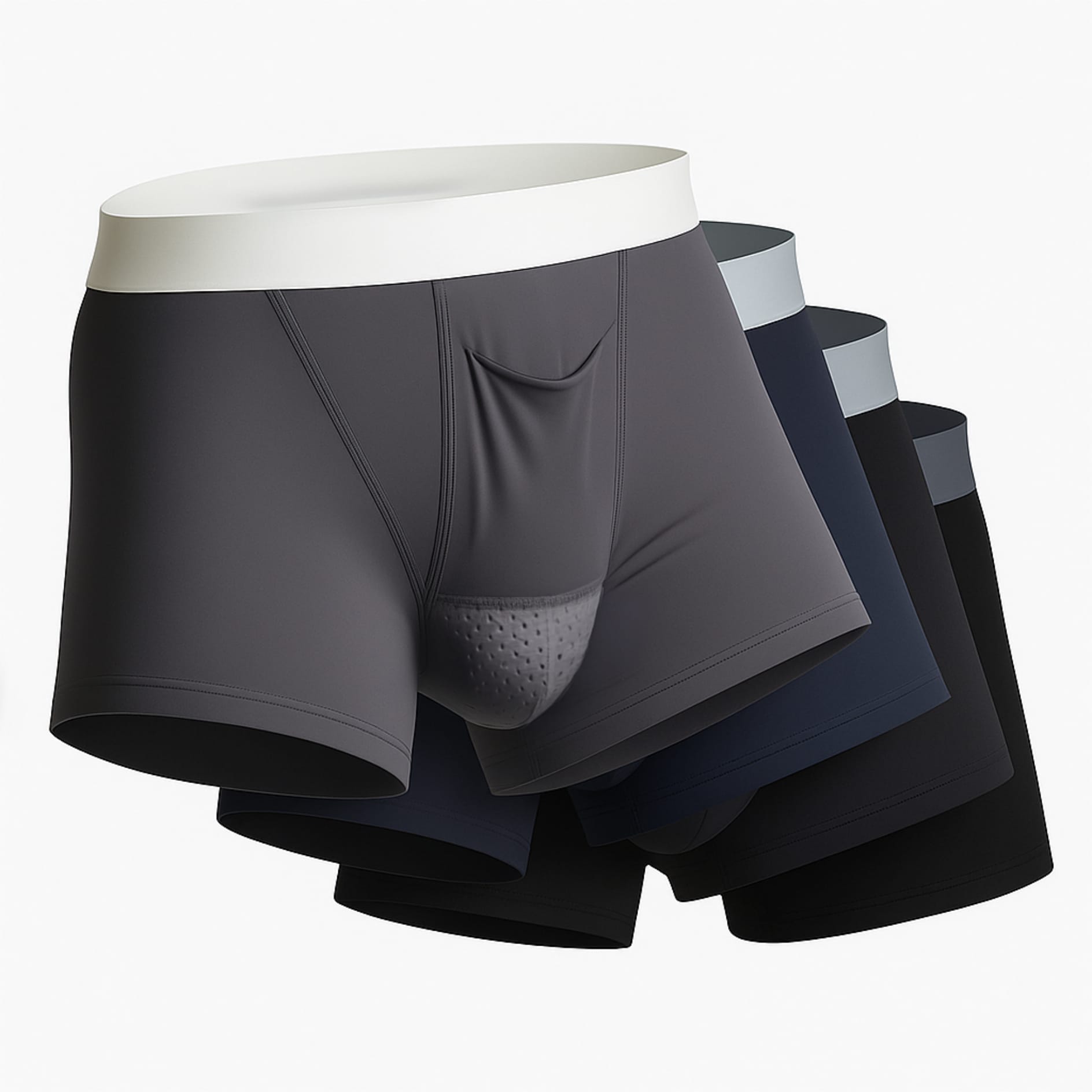
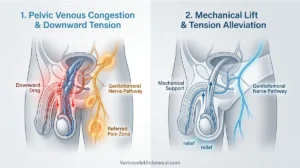
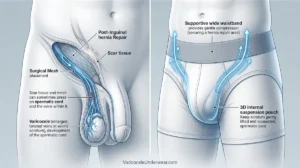
- Wearing supportive underwear designed for varicocele can reduce discomfort by minimizing testicular movement and providing gentle compression
- Avoiding prolonged standing when possible
- Over-the-counter pain relievers for occasional discomfort
- Cold compresses for acute flare-ups
Surgical and Interventional Options
| Procedure | Approach | Recovery Time | Success Rate |
|---|---|---|---|
| Microsurgical varicocelectomy | Small incision, operating microscope | 2-3 weeks | 95-99% |
| Laparoscopic varicocelectomy | Abdominal ports | 1-2 weeks | 90-95% |
| Percutaneous embolization | Catheter through groin vein | 1-2 days | 85-90% |
Microsurgical repair through a subinguinal approach remains the preferred technique in 2026. It offers the lowest recurrence rates (under 2%) and complication rates (under 1%) according to Mayo Clinic guidelines.
Treatment Options for Inguinal Hernia
Unlike varicocele, inguinal hernias don’t resolve on their own. They typically worsen over time without surgical repair.
Watchful Waiting
For men with minimal symptoms and small, easily reducible hernias, some surgeons offer observation. However, research shows that 70% of men initially choosing watchful waiting eventually require surgery within 10 years.
Surgical Repair
| Technique | Description | Best For |
|---|---|---|
| Open repair with mesh | Traditional incision, synthetic mesh reinforcement | Primary hernias, larger defects |
| Laparoscopic repair (TEP/TAPP) | Minimally invasive, mesh placement | Bilateral hernias, recurrent hernias |
| Robotic-assisted repair | Surgeon-controlled robotic arms | Complex repairs, surgeon preference |
Most hernia repairs are outpatient procedures. Patients typically return to desk work within 1-2 weeks and physical labor within 4-6 weeks.
Can Varicocele Cause Hernia or Vice Versa?
No. These conditions have completely different causes and mechanisms. Having a varicocele doesn’t increase your hernia risk, and having a hernia doesn’t cause varicocele.
However, symptoms from one condition might mask or be confused with the other. This is another reason why professional evaluation matters.
Some men report developing varicocele symptoms after hernia repair surgery. This likely represents a pre-existing subclinical varicocele that became noticeable rather than a surgical complication.
Living with Varicocele: Practical Management
If you’re managing varicocele without surgery, several strategies can minimize daily discomfort.
Lifestyle Modifications
- Exercise wisely: Low-impact activities like swimming cause less discomfort than running or heavy weightlifting
- Stay cool: Heat worsens symptoms; avoid hot tubs and saunas
- Manage weight: Excess abdominal weight increases venous pressure
- Stay hydrated: Adequate fluid intake supports healthy circulation
Support Garments
Proper scrotal support makes a meaningful difference for many men. Compression underwear designed specifically for varicocele provides:
- Reduced testicular movement during activity
- Improved venous drainage through gentle compression
- Temperature regulation through breathable fabrics
- Discrete all-day comfort
Unlike generic briefs, purpose-built supportive underwear addresses the specific anatomical needs of men with varicocele.
Frequently Asked Questions
How can I check myself for varicocele vs. hernia at home?
Stand in front of a mirror and examine your groin while relaxed. Then cough or bear down. A varicocele appears as a soft, irregular mass above the testicle that feels like tangled worms and changes little with coughing. A hernia appears as a distinct bulge in the groin crease that often pops out prominently when you cough and may disappear when you lie down. While self-examination provides clues, only medical evaluation can confirm your diagnosis.
Does varicocele show up on hernia ultrasound?
Scrotal and groin ultrasounds examine different anatomical areas. A standard hernia ultrasound focuses on the inguinal canal and may not thoroughly evaluate scrotal structures. If both conditions are suspected, your doctor should order both a groin ultrasound for hernia assessment and a scrotal Doppler ultrasound specifically for varicocele. Communicate all your symptoms clearly so appropriate testing gets ordered.
Can varicocele or hernia affect sexual function?
Varicocele can impact testosterone production in some men, potentially affecting libido and erectile function over time. Research shows testosterone levels may improve after varicocele repair. Hernias don’t typically affect sexual function directly, though groin pain may interfere with sexual activity. Neither condition directly causes erectile dysfunction, but any persistent groin symptoms should be evaluated to rule out other causes.
Key Takeaways
Understanding the difference between varicocele and inguinal hernia empowers you to communicate effectively with your healthcare provider and make informed decisions about your care.
Remember these distinctions:
- Varicocele feels like worms in a bag, stays in the scrotum, and causes dull aching
- Hernia creates a distinct bulge, extends from the groin, and worsens with straining
- Both conditions are common and treatable
- Proper diagnosis requires physical examination and often imaging
- Emergency symptoms (severe pain, inability to reduce a bulge, nausea) require immediate care
Don’t let uncertainty keep you from seeking evaluation. Most groin lumps have benign explanations, and early diagnosis leads to simpler treatment when intervention is needed.
Have questions about managing varicocele symptoms or choosing the right support underwear? Leave a comment below or explore our resources for evidence-based information.
Related Articles


Choose Varicocele Support Designed for Cooling, Lift, and Daily Comfort
You’ve seen why regular underwear often falls short. Now view the purpose-built option made to reduce heaviness, improve support, and feel comfortable enough for everyday wear.