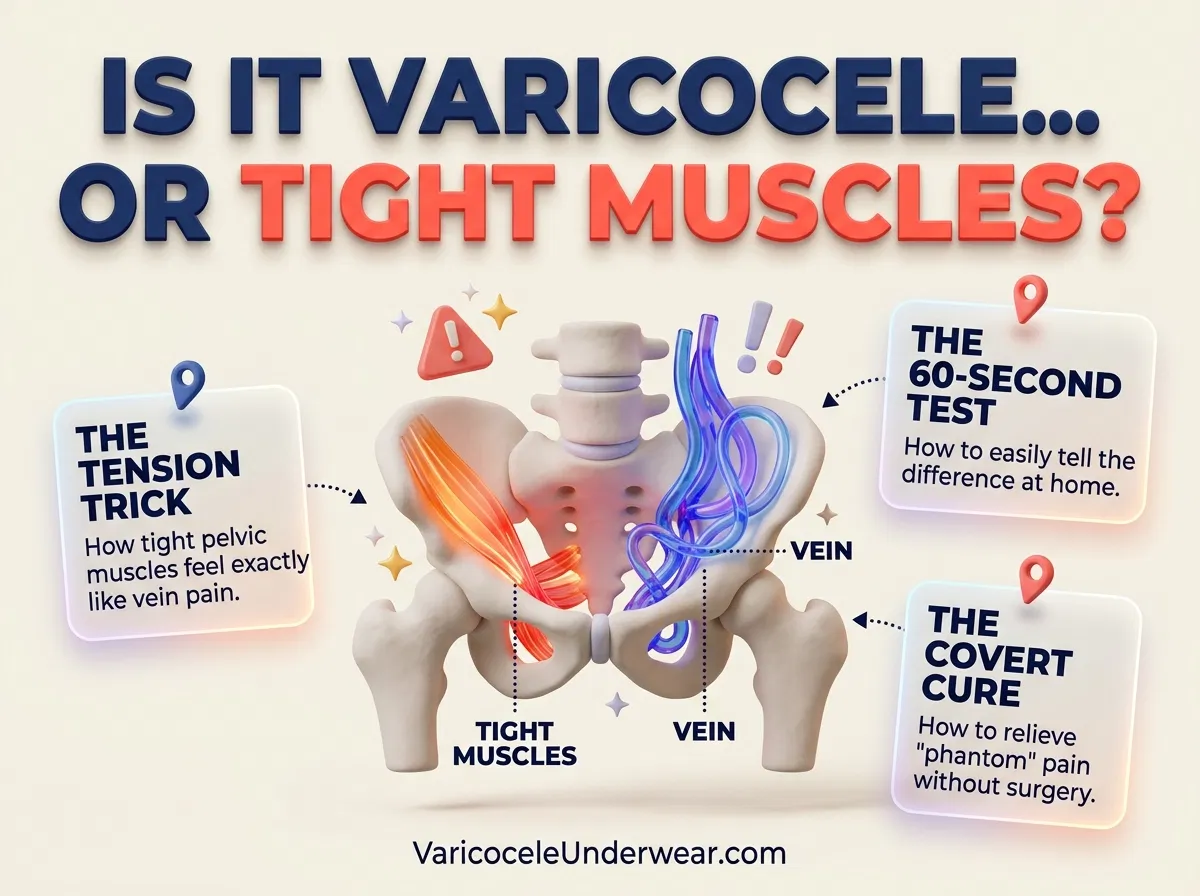
Chronic tightness in pelvic floor muscles can create pain patterns nearly identical to vein enlargement. When evaluating pelvic floor dysfunction vs varicocele, men frequently spend months chasing vascular solutions for what is actually a musculoskeletal problem. In my clinical practice as a men’s health specialist, countless patients arrive convinced that a small pampiniform venous dilation is the root cause of their unrelenting testicle ache. In reality, hypertonic muscles in the pelvic basin compress nerves that travel directly into the spermatic cord. This neuromuscular entrapment explains why tight muscles mimic scrotal pain with astonishing accuracy. Differentiating myofascial pelvic pain vs veins requires looking beyond the scrotum itself to assess the resting tension of the deeper pelvic sling. When muscles spasm, they send referred discomfort into the testicle, epididymis, and groin, producing a deep ache that closely resembles vascular pooling.
Pelvic Floor Dysfunction vs. Vascular Congestion
Vascular congestion from a varicocele happens when faulty valves inside the internal spermatic vein fail to pump blood upward toward the renal vein or vena cava. As gravity pulls blood downward, fluid pools within the pampiniform plexus, causing visible venous swelling and a heavy, dragging sensation that steadily builds throughout the afternoon. Conversely, pelvic floor tension involves continuous, involuntary contractions of the muscular hammock supporting your bladder, bowel, and prostate. When these muscles cannot relax, they develop localized knotting known as myofascial trigger points. The European Association of Urology (EAU) recognizes that chronic pelvic discomfort often stems from secondary muscular guarding rather than purely anatomical vascular flaws. Patients dealing with heightened scrotal pressure can also experience radiating tension, which frequently links varicocele and abdominal pain pathways through shared retroperitoneal pathways. While venous congestion eases when you elevate your legs, myofascial spasms often remain active or even worsen while sitting on hard chairs.
How Tight Pelvic Muscles Mimic Scrotal Pain
To understand why muscular guarding creates testicular ache, one must examine the shared wiring of the pelvis. Three major nerve pathways supply sensation to your scrotum: the genitofemoral nerve, the ilioinguinal nerve, and the pudendal nerve. All three navigate narrow muscular tunnels formed by the levator ani, obturator internus, and transverse perineal muscles. When pelvic floor muscles stay locked in a hypertonic state, they compress these peripheral nerves, sending false distress signals into the testicle. Your brain interprets this peripheral nerve compression as genuine testicular trauma or epididymal swelling, even though the testicle itself remains completely healthy. Research published in pelvic floor physical therapy trials demonstrates that targeted manual release of these deep muscle knots can completely resolve longstanding scrotal ache. Many patients undergo invasive vein procedures only to find their discomfort persists because the pinched nerve fibers were never addressed.

Discover specialized varicocele underwear designed for daily comfort, support, and recovery — a more targeted option for men who want support without compromise.
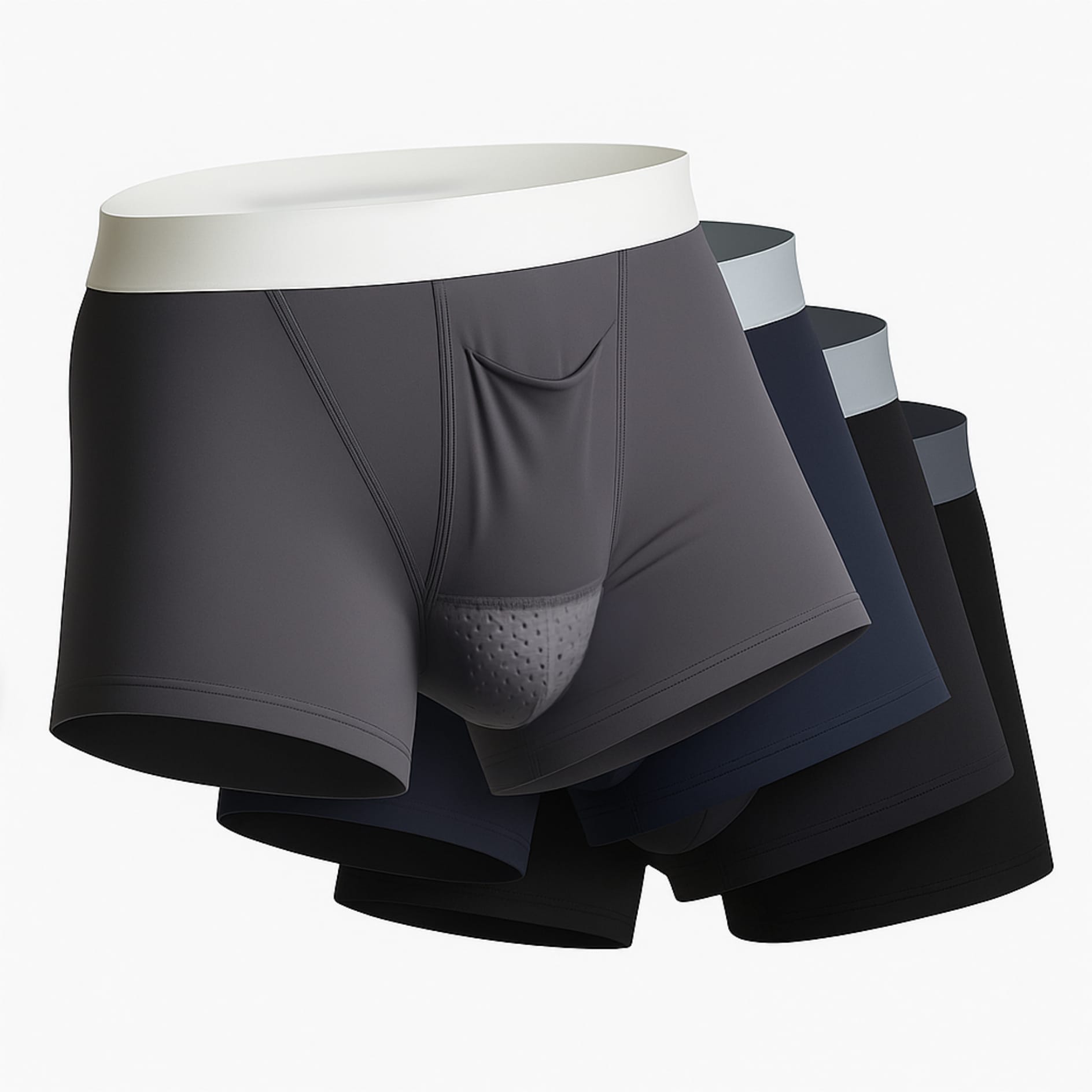
Discover the Recommended OptionA vicious anatomical cycle frequently develops when an anatomical varicocele coexists with muscle guarding. As enlarged veins create a persistent downward gravitational pull, the scrotum hangs lower and heavier than normal. In response to this unrelenting testicular dragging, the levator ani and pubococcygeus muscles chronically contract in an automatic reflex to hoist the scrotum upward and protect the gonads. Over weeks and months, this constant reflexive contraction causes severe muscular fatigue, oxygen depletion in muscle fibers, and painful trigger points. Fortunately, specialized ergonomic garments can halt this cycle. Designed specifically to cradle the scrotum from beneath, pelvic floor relaxing varicocele underwear unloads this muscle strain by neutralizing the downward mechanical pull. By mechanically supporting the scrotal sac, these garments allow the pubococcygeus and levator ani to disengage, rest, and restore normal muscle tone without perpetual tension.
The mechanical load on the pelvis extends far beyond the scrotum itself. Modern sedentary work environments force men to sit for hours, which compresses the pudendal canal against the ischial tuberosities and locks hip flexors into chronic tightness. An anterior pelvic tilt tilts the sacrum forward, placing continuous tensile stress across the sacrotuberous ligaments and the pelvic floor sling. Men suffering from scrotal soreness instinctively tighten their buttocks and tuck their pelvis to shield their genitals from friction or pressure. This subconscious posture habit amplifies muscular ischemia, depriving muscle cells of oxygen and creating a fertile ground for burning perineal distress. Recognizing the deeper varicocele and pelvic floor dysfunction connection helps men realize that their symptoms are not just in their head, nor are they strictly inside their veins. Healing requires addressing both local scrotal mechanics and whole-body postural holding patterns.
| Clinical Feature | Varicocele (Vascular Origin) | Pelvic Floor Dysfunction (Myofascial) |
|---|---|---|
| Primary Pain Sensation | Dull, heavy, dragging ache like a bag of warm worms | Sharp, aching, burning, or tightness radiating to the perineum |
| Effect of Gravity and Standing | Worsens after prolonged standing or heavy lifting | May improve with light movement; worsens with rigid sitting |
| Response to Lying Flat | Discomfort steadily diminishes as pooled blood drains | Pain often lingers or worsens when resting on the back |
| Scrotal Palpation | Enlarged, compressible tortuous veins above the testis | Normal veins; tender trigger points in groin or perineum |
| Associated System Signs | Possible testicular atrophy or altered semen parameters | Urinary urgency, painful ejaculation, constipation, tailbone pain |
| Valsalva Maneuver Effect | Veins visibly distend and fill with retrograde flow | Causes immediate pelvic floor spasm or no vascular change |
Diagnostic Differentiation for Patients
Accurate diagnosis begins with a disciplined clinical evaluation rather than rushed surgical recommendations. A board-certified urologist evaluates your scrotum both while standing and while supine, using high-resolution color Doppler ultrasound to measure venous reflux during a Valsalva maneuver. The American Urological Association (AUA) guidelines stipulate that clinical varicoceles must be palpable upon physical examination to justify invasive repair. If your ultrasound shows minimal venous reflux under 2.5 millimeters yet you suffer from severe, incapacitating scrotal pain, your veins are likely an incidental finding rather than the true pain generator. In such cases, an experienced pelvic physical therapist can perform an internal and external myofascial exam, gently pressing the obturator internus and levator ani. If pressing these muscles faithfully reproduces your scrotal ache, hypertonic muscles are your true culprit. Using the best varicocele underwear for daily support provides immediate relief by stabilizing the scrotum while you work through diagnostic testing.
Recovering from chronic groin and scrotal ache does not require rushing into an operating room. Many men achieve complete symptom resolution through structured non-surgical interventions. First-line management involves down-training an overactive pelvic floor through diaphragmatic 360-degree breathing, which physically drops the pelvic diaphragm on each inhalation. Gentle mobility stretches like the happy baby pose, deep squats, and piriformis releases loosen the fascia surrounding the pudendal nerve. Concurrently, learning how to reduce varicocele symptoms without surgery helps you manage both blood stagnation and muscle spasms simultaneously. Avoiding heavy abdominal straining, modifying weightlifting routines, incorporating contrast water therapy, and taking regular walking breaks disrupt the constant mechanical stress on your pelvic floor muscles.
Living with chronic scrotal ache takes a heavy psychological toll, triggering anxieties about fertility, sexual health, and permanent nerve injury. Fortunately, distinguishing between myofascial trigger points and vein pathology brings immense peace of mind. A varicocele primarily presents concerns for semen parameters and testicular volume, whereas hypertonic pelvic muscles are responsible for the sharp, burning, or spreading sensations that disrupt daily life. By combining proper scrotal elevation to unload the weight of the testes with targeted myofascial release, you can systematically remove tension from the system. Listen to your body, work with a collaborative team of urologists and physical therapists, and focus on steady neuromuscular retraining to reclaim your comfort and daily vitality.
Related Articles


Choose Varicocele Support Designed for Cooling, Lift, and Daily Comfort
You’ve seen why regular underwear often falls short. Now view the purpose-built option made to reduce heaviness, improve support, and feel comfortable enough for everyday wear.