Long-haul flights and extended road trips present a unique challenge for men with varicocele. Hours of forced sitting, restricted movement, dehydration, cabin pressure changes, and the inability to elevate your legs create exactly the conditions that worsen venous pooling in the pampiniform plexus. Yet nobody talks about this. Varicocele management advice rarely includes travel-specific guidance, leaving men to figure it out mid-flight with worsening scrotal ache and no good options. This article gives you a practical, evidence-based plan for managing varicocele on long-haul travel, whether it’s a 10-hour flight or a 3-day road trip.
Why Long-Haul Travel Worsens Varicocele Symptoms
The core problem is prolonged hip flexion in a seated position. When you sit for hours, the femoral and iliac veins are partially compressed at the hip crease, increasing venous back-pressure in the pelvic region. Combined with complete absence of the calf muscle pump (no walking means no venous compression from leg muscles), blood accumulates in the lower extremities and pelvis, including the pampiniform plexus. This is why varicocele pain consistently worsens after prolonged standing or sitting and improves with recumbency and movement.
Aircraft cabin pressure is maintained at approximately 6,000-8,000 feet equivalent altitude, which reduces ambient oxygen slightly and can cause mild venous dilation. Cabin dehydration is also significant, as humidity in aircraft cabins typically runs below 20%, compared to comfortable indoor humidity of 40-60%. Dehydration increases blood viscosity, impairing venous flow and worsening congestion in already-dilated pampiniform veins. The impact of hydration on varicocele symptoms is a consistently underappreciated factor in day-to-day management.
Pre-Travel Preparation
- Choose your seat strategically: aisle seats allow you to stand and stretch without disturbing others; exit row or bulkhead seats provide extra leg extension space; window seats are worst for movement frequency
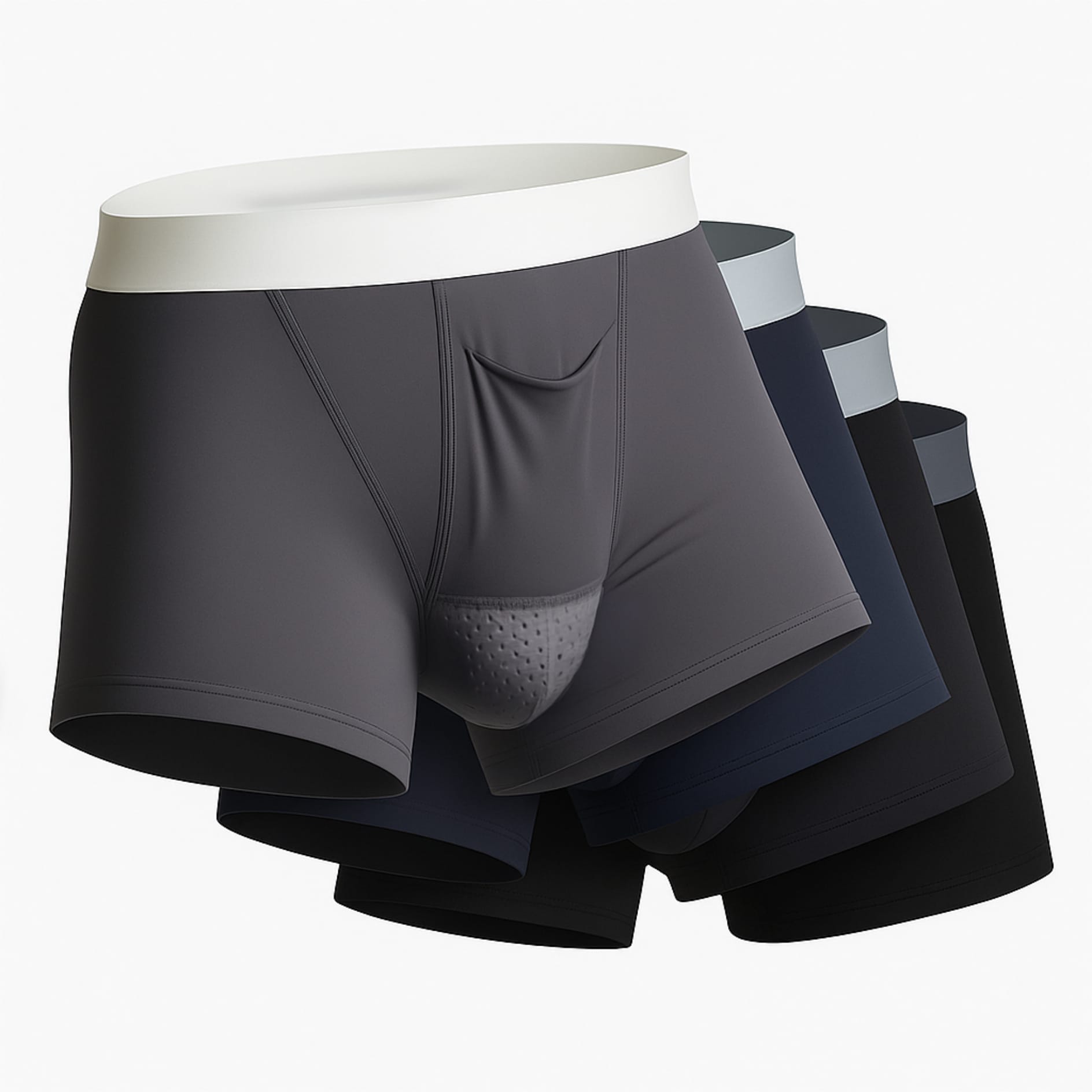
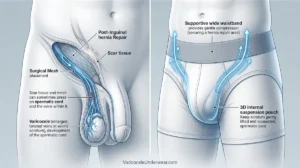
- Pack supportive underwear: wear cooling and supportive varicocele underwear for the entire journey; it reduces scrotal movement and provides consistent venous lift regardless of seating position
- Wear compression socks: graduated compression stockings (15-20 mmHg) activate the calf muscle pump mechanism passively during prolonged sitting, improving overall lower limb venous return and reducing pelvic back-pressure
- Avoid alcohol pre-flight: alcohol causes vasodilation that worsens venous pooling and also accelerates dehydration; both effects directly amplify varicocele discomfort
- Pre-hydrate: drink 500-750ml of water in the 2 hours before departure; maintain hydration throughout the flight (minimum 250ml per hour of flight time)
In-Flight Management Strategies
Movement is your most powerful in-flight tool. Set a timer or reminder to stand, walk the aisle, and perform light calf raises every 45-60 minutes. Even 2-3 minutes of walking normalizes calf pump function and meaningfully reduces venous pooling that accumulates during prolonged sitting. During periods when you can’t stand (taxi, takeoff, landing, turbulence), perform seated calf raises: repeatedly lifting your heels off the floor activates the gastrocnemius and soleus muscle pump and drives venous return even while seated.
Recline your seat when possible. The transition from fully upright sitting to a reclined position partially reduces hip flexion angle, decreasing venous compression at the groin and improving pelvic venous drainage. It won’t eliminate the problem, but it reduces the pressure differential compared to fully upright seating.

Discover specialized varicocele underwear designed for daily comfort, support, and recovery — a more targeted option for men who want support without compromise.
Discover the Recommended Option| Strategy | Mechanism | Frequency/Timing |
|---|---|---|
| Aisle walking | Calf pump activation, position change | Every 45-60 min |
| Seated calf raises | Passive venous pump | 50 reps every 30 min when seated |
| Hydration | Reduces blood viscosity | 250ml per hour of flight |
| Reclined seating | Reduces hip flexion venous compression | Whenever allowable |
| Scrotal support underwear | Reduces venous pooling, movement | Entire journey |
| Compression socks | Calf pump augmentation | Entire journey |
Road Trip Varicocele Management
Road trips are in some ways more manageable than flights because you control the stops. Plan mandatory stops every 60-90 minutes of driving. Get out, walk for 5-10 minutes, and perform a brief Legs Up the Wall or supine rest if you have a suitable location. This resets venous drainage that accumulated during the drive and provides significant symptomatic relief.
Seat adjustment matters enormously in a car. Adjust the seat so your hips are at or slightly above knee level (not lower than knees). This reduces femoral vein compression at the hip crease. Avoid deep bucket seats that force hip flexion past 90 degrees. If driving long distances regularly, a seat cushion that elevates the coccyx and reduces perineal compression is a practical investment.
Temperature is also a factor in road trips. Avoid heated car seats, which elevate scrotal temperature and directly worsen the thermal component of varicocele damage. Keep the car cool, and in warm climates, direct air conditioning vents toward the lower body when possible.
Post-Travel Recovery
After arriving, prioritize venous decompression before any other activity. Perform Legs Up the Wall for 10-15 minutes, rehydrate aggressively, and avoid prolonged standing or sitting for the first few hours after arrival. If scrotal discomfort is significant, over-the-counter NSAIDs (ibuprofen or naproxen) reduce inflammatory venous pain acutely. Continue wearing supportive underwear until symptoms normalize.
If you know travel consistently worsens your varicocele, discuss with your urologist whether a short course of venotonics (medications that improve venous wall tone, such as micronized purified flavonoid fraction, commonly used in Europe) before extended travel is appropriate for your case. These are not currently FDA-approved specifically for varicocele but are widely used in European urology practice for symptomatic pelvic venous disorders.
Deep Vein Thrombosis Risk: Is It Higher With Varicocele?
This is a reasonable concern. Varicocele involves venous stasis, one of the three components of Virchow’s triad for DVT risk (stasis, hypercoagulability, endothelial injury). While varicocele primarily affects the pampiniform plexus and is not a DVT risk factor in itself, prolonged immobility during travel is a recognized DVT risk for everyone. Men with varicocele traveling on long-haul flights should apply the same preventive measures as any traveler: compression stockings, regular movement, hydration, and avoidance of alcohol.
If you have a personal or family history of thrombosis, discuss anticoagulant prophylaxis with your doctor before very long flights (over 8 hours). This recommendation applies to the general population and is not specific to varicocele patients, but it’s worth mentioning given the venous nature of the condition.
FAQ: Varicocele and Travel
Can I travel by air after varicocele embolization or surgery?
Most urologists advise avoiding long-haul air travel for 1-2 weeks after varicocele embolization and 2-4 weeks after open or laparoscopic varicocelectomy. Short-haul travel (under 2 hours) is generally permitted sooner. The recovery comparison for embolization vs. surgery outlines specific activity restrictions and timeline differences between procedures.
Does altitude affect varicocele pain?
High altitude causes mild hypoxic vasodilation (blood vessels widen slightly in response to lower oxygen). This can transiently worsen venous dilation in existing varicocele and increase scrotal fullness or ache. Most men adapt within 24-48 hours at altitude. Staying well-hydrated and wearing scrotal support are the primary management strategies at high altitude destinations.
What is the best underwear for long flights with varicocele?
The ideal travel underwear for varicocele patients provides firm scrotal support (lifts the scrotum rather than letting it hang), has a cooling fabric component (moisture-wicking, breathable, ideally with cooling technology), and doesn’t create tight waistbands that compress the inguinal area or femoral vessels. Review evidence-based options in the 2026 best underwear for varicocele guide before packing for a long trip.
Related Articles


Choose Varicocele Support Designed for Cooling, Lift, and Daily Comfort
You’ve seen why regular underwear often falls short. Now view the purpose-built option made to reduce heaviness, improve support, and feel comfortable enough for everyday wear.