Returning to the gym after varicocele surgery is an exciting milestone, but stepping back into strength training requires careful caution. Many athletes feel eager to rebuild muscle, yet lifting heavy loads too soon can jeopardize healing tissue and repaired vascular pathways. One of the single greatest risks when restarting workouts at the gym after varicocele surgery is performing the Valsalva maneuver. This unconscious breath-holding habit during intense physical exertion creates sudden pressure spikes inside your abdomen, forcing blood backward into delicate scrotal structures. Understanding how intra-abdominal pressure affects your vascular system allows you to protect your surgical investment while staying physically active. Below, you will learn why breath-holding under load poses a danger, how internal pressure dilates scrotal veins, and how to practice safer lifting methods for long-term recovery.
What is the Valsalva Maneuver?
The Valsalva maneuver occurs when an individual attempts to exhale forcefully while keeping the airway closed at the vocal cords (glottis). In daily life, this happens naturally when coughing, straining, or bracing your torso to lift a heavy object. When weightlifters grip a heavy barbell, brace their abdominal wall, and hold their breath, they perform a classic Valsalva maneuver to stabilize the spine during heavy lifts.
While this mechanical bracing offers short-term trunk stability, it creates a massive spike in intra-abdominal pressure. According to medical findings published in a PubMed study on intra-abdominal pressure during exercise, high-intensity compound lifts combined with breath retention can elevate abdominal pressure well beyond 200 mmHg. This force pushes outward against the abdominal wall and downward onto the pelvic floor, directly squeezing the major veins that carry blood back toward the heart.
For anyone recovering from surgical intervention, this downward pressure creates a direct mechanical stress. Following repair, your vascular network relies on newly tied off or occluded veins to reroute blood flow through healthy collateral channels. Sudden pressure spikes place excessive stress on these healing tissues, which is why following a gradual post-operative fitness timeline remains vital before reintroducing heavy resistance work.
| Breathing Strategy | Intra-Abdominal Pressure | Impact on Scrotal Blood Flow | Vascular Strain Level |
|---|---|---|---|
| Continuous Exhalation (Open Glottis) | Low to Moderate (30–60 mmHg) | Smooth, upward venous return toward the heart | Minimal stress on healing veins |
| Valsalva Maneuver (Closed Glottis) | Very High (150–200+ mmHg) | Backward blood flow into pampiniform plexus | High risk of vein dilation and tension |
How Breath-Holding Dilates Scrotal Veins under Load
To understand why breath-holding strains scrotal tissues, consider the basic fluid dynamics of male pelvic circulation. Testicular veins carry oxygen-depleted blood upward against gravity, traveling from the scrotum through the inguinal canal and into the abdomen. Healthy veins rely on tiny micro-valves to keep blood flowing in a single direction. When intra-abdominal pressure rises dramatically above the natural pressure inside the testicular veins, blood flow reverses.
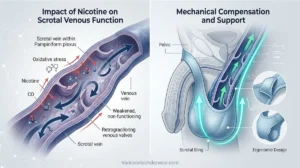
This pressure gradient creates a retrograde force. Instead of moving smoothly upward, blood gets driven downward into the pampiniform plexus—the network of small veins surrounding the testicles. Standard clinical guidelines from the American Urological Association explain how compromised venous valve function leads to chronic pooling, elevated tissue temperatures, and progressive vein enlargement.

Discover specialized varicocele underwear designed for daily comfort, support, and recovery — a more targeted option for men who want support without compromise.
Discover the Recommended OptionWhen you hold your breath under a heavy load, the combination of downward gravity and elevated abdominal pressure subjects your scrotum to maximum mechanical strain. This situation can lead to several specific physical consequences:
- Backward Venous Pressure: Forced breath-holding overcomes natural vascular resistance, pushing blood directly into vulnerable scrotal vessels.
- Stretching of Healing Vein Walls: High internal pressure stretches vessel walls, increasing discomfort and potentially disrupting early surgical healing.
- Increased Scrotal Heat: Blood pooling prevents proper thermal regulation, raising scrotal temperatures and affecting testicular tissue comfort.
- Pelvic Floor Tension: High downward forces strain pelvic floor muscles, aggravating deep groin aching or throbbing after workouts.
Men who practice high-intensity bodybuilding with a varicocele frequently report a distinct, heavy ache in the scrotum shortly after heavy sets due to this continuous intra-abdominal pressure.
Managing Scrotal Support and External Counter-Pressure
While mastering safe breathing techniques helps minimize internal pressure surges, physical activity still produces natural movement and unavoidable mild pressure fluctuations. For lifters returning to activity, combining strict breathing form with targeted physical support offers a practical layer of protection. Conservative support garments do not repair underlying vascular anatomy, but they play an essential role in stabilizing tissue and counteracting gravitational strain during exercise.
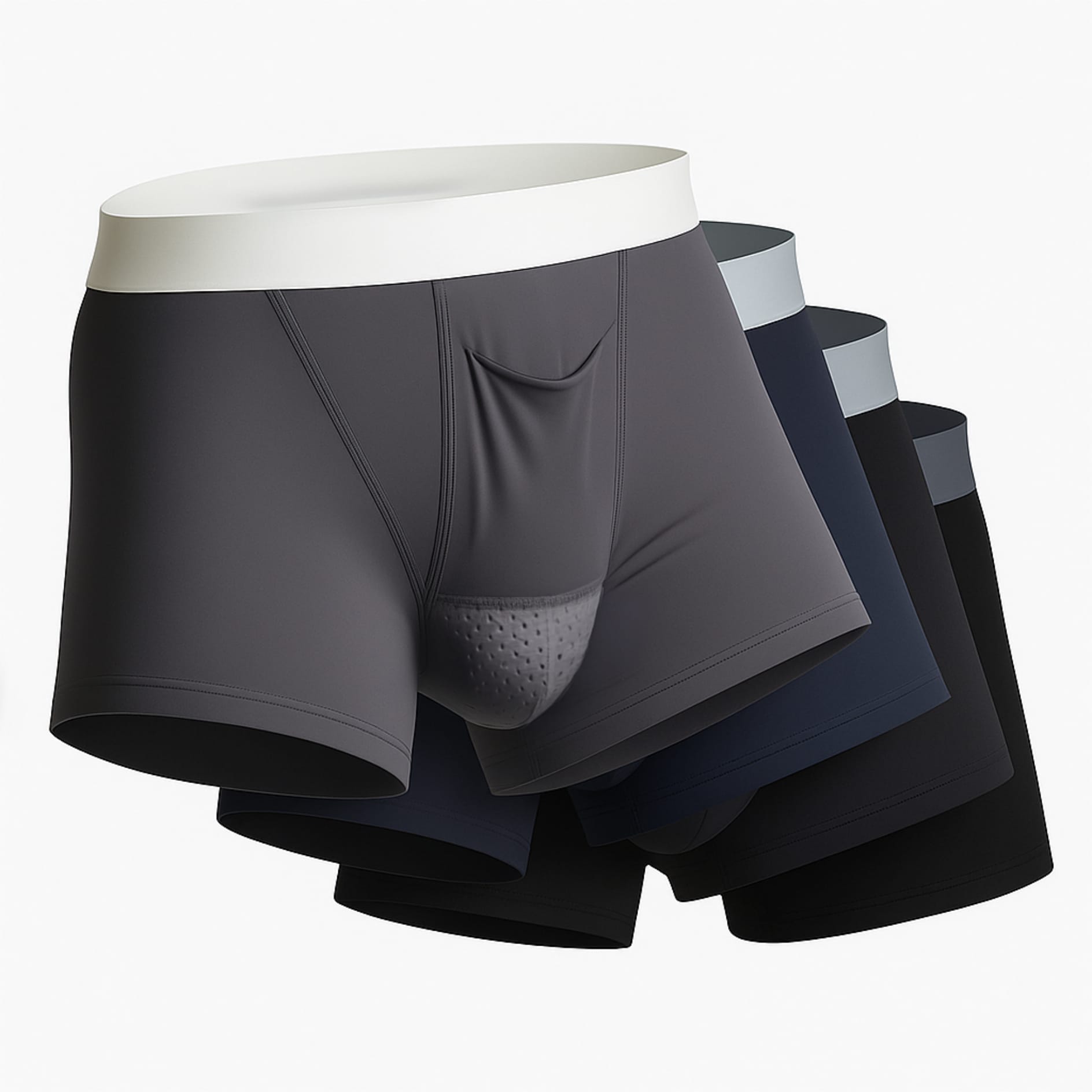
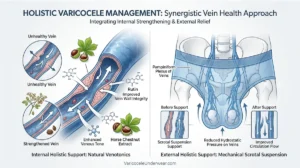
Wearing targeted support gear, such as Varicocele Underwear with Support & Cooling, provides effective physical counter-pressure. While open-glottis breathing serves as your primary defense against internal pressure, an anatomical support garment creates an external compression shield. This physical support stabilizes scrotal structures close to the body, dampening sudden tissue shifts and reducing tension during moments of unavoidable abdominal strain.
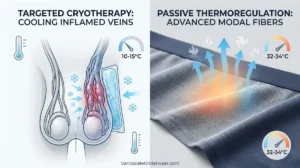
Reviewing the underlying physics of scrotal support reveals how distributing weight evenly helps eliminate downward traction on delicate spermatic cords. Dedicated support apparel also helps manage local temperature, allowing you to move comfortably throughout light and moderate strength workouts.
Safe Breathing Techniques for Lifters in the Gym After Varicocele Surgery
To safely train at the gym after varicocele surgery, you must consciously unlearn breath-holding habits and replace them with controlled exhalation. The primary goal is keeping your vocal cords open so internal air escapes freely during physical exertion.
Incorporate these essential breathing rules into every strength training session:
- Exhale on Effort (Concentric Phase): Continuously blow air out through slightly pursed lips as you press, pull, or lift the load upward.
- Inhale on Release (Eccentric Phase): Take a smooth, controlled breath in as you return the weight back to the starting position.
- Lighten the Resistance: Keep weights at a level where you can complete repetitions comfortably without needing to brace your core excessively.
- Audible Exhalation: Softly blow air out or count your reps aloud to guarantee your glottis remains open throughout the movement.
Focusing on safe gym exercises—such as chest-supported rows, seated machine presses, and seated leg curls—helps build strength without requiring heavy intra-abdominal bracing.
Frequently Asked Questions
When can I return to lifting weights at the gym after varicocele surgery?
Most urologists advise waiting two to four weeks before starting light aerobic activity, and six to eight weeks before reintroducing progressive strength training. Always receive clearance from your surgeon, begin with minimal weights, and avoid heavy compound lifts that demand intense abdominal bracing or breath-holding.
Can performing the Valsalva maneuver cause surgical failure or recurrence?
Frequent breath-holding creates intense intra-abdominal pressure that forces blood downward into pelvic veins. During early post-operative recovery, these sudden retrograde pressure spikes can stress healing vascular ties or embolization sites, potentially increasing the risk of vein dilation, persistent aching, or delayed tissue recovery.
Does wearing supportive underwear mean I can lift heavy without changing my breathing?
No. Supportive underwear provides beneficial external compression that reduces gravitational tugging and tissue movement. However, internal blood pressure spikes are driven by breath control. Proper exhalation on exertion and specialized support garments work together to protect your vascular health while exercising.
Practical Takeaway for Your Fitness Journey
Protecting your surgical outcome requires combining smart lifting mechanics, controlled breathing, and proper physical support. Always exhale continuously during effort, avoid holding your breath under load, and wear supportive garments to stabilize sensitive scrotal tissues. By respecting your body’s healing timeline and avoiding intra-abdominal pressure spikes, you can build physical strength safely without putting your recovery at risk.
Related Articles
Choose Varicocele Support Designed for Cooling, Lift, and Daily Comfort
You’ve seen why regular underwear often falls short. Now view the purpose-built option made to reduce heaviness, improve support, and feel comfortable enough for everyday wear.