The Impact of Sleep Positions on Venous Drainage
A varicocele occurs when tiny valves inside the scrotal veins fail to close properly. Under normal circumstances, these one-way valves keep blood flowing upward toward the heart. When they weaken, blood moves backward and pools in the pampiniform plexus, creating enlarged veins that resemble a bag of worms. During waking hours, standing and sitting upright force blood downward against gravity, steadily expanding these sensitive vessels. While you might assume that lying down automatically resolves the problem, your horizontal sleep posture directly determines whether those vessels empty out or remain trapped under high internal fluid pressure.The mechanical foundation behind this relief connects directly to the physics of scrotal support and varicocele pressure. When you lie completely flat on an unsupportive mattress, abdominal venous pressure can stagnate. Blood drainage slows down, particularly in the left testicular vein, which must travel a long, steep path up to the left renal vein. If your hips sit lower than your chest or if your pelvis rotates awkwardly, blood backs up in the pelvic floor. For men exploring how to reduce varicocele symptoms without surgery, optimizing bedtime posture is one of the most practical, non-invasive adjustments available to alleviate chronic vascular strain.Side-Sleeping Pillow Arrangements for Relief
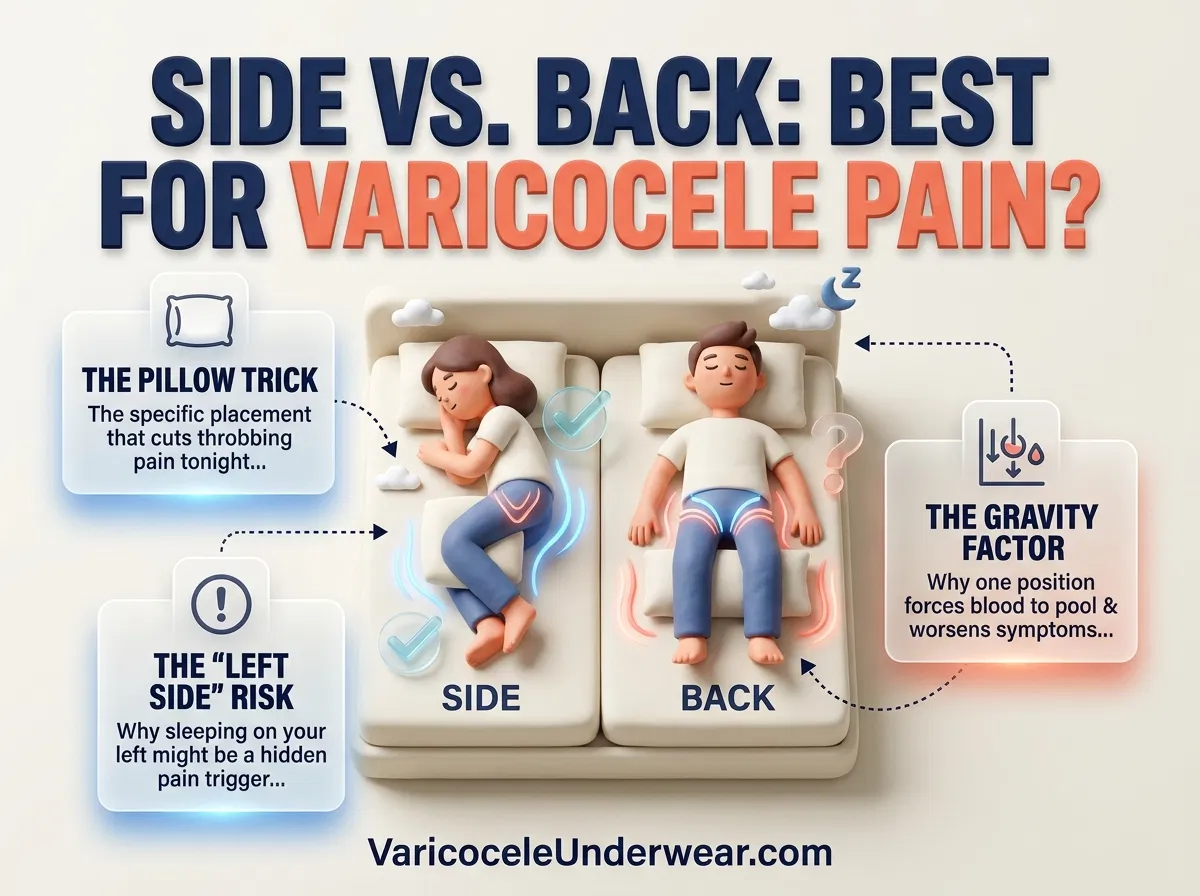
Side sleeping, clinically referred to as the lateral decubitus position, is favored by most adults. However, side sleeping without postural modification can pinch or stretch the scrotum, aggravating tender vascular bundles. If you sleep on your side without support, your upper thigh drops forward and downward. This internal rotation twists your pelvis, squeezes the scrotal sac between your inner thighs, and traps body heat, which raises scrotal skin temperature and widens already dilated veins.To side-sleep comfortably without triggering morning vascular aches, adopt a structured knee pillow setup. Place a medium-firm contoured pillow directly between your knees, extending down to your ankles. This maintains neutral hip spacing, stops your upper leg from crossing over your lower leg, and leaves an open pocket for your scrotum so it rests free from compressive pressure.Medical experts also evaluate which side offers superior venous return. Because more than eighty percent of varicoceles occur on the left testicle, sleeping on your right side creates a slight gravitational advantage. Right lateral sleeping helps blood flow more freely out of the left internal spermatic vein toward the vena cava, reducing pooling. In contrast, sleeping on your left side can occasionally pool blood directly on that side if your pelvic angle is tilted backward. Applying structured varicocele sleep positioning techniques alongside ergonomic body pillows keeps your hips, spine, and pelvic basin balanced all night long. Clinical studies on sleep posture ergonomics published in the National Library of Medicine confirm that proper leg elevation dramatically reduces lumbar twisting and pelvic vein stasis.Optimizing Back Resting Postures at Night
Sleeping on your back, known as the supine position, is often the gold standard for reducing vascular pooling in the pelvis. When you lie face up, gravity is no longer pulling blood down into your scrotum. However, lying completely flat on a standard mattress still leaves your pelvic veins level with your lower legs, which limits natural drainage.To master supine resting, introduce gentle elevation beneath your knees and lower pelvis. Slide a supportive wedge pillow or two standard pillows underneath your knees to achieve a mild thirty-degree bend. Placing a slim, firm cushion directly under your sacrum raises your pelvis two to three inches above your lower abdomen. This slight angle uses passive gravity to pull venous blood out of the dilated pampiniform plexus back into central circulation. Furthermore, keeping your legs slightly parted prevents heat buildup around the testicles, protecting sperm parameters from nocturnal hyperthermia.Conversely, stomach sleeping (the prone position) should be strictly avoided. Sleeping face down forces the entire weight of your lower torso against the scrotum, mashing the veins against the mattress surface and generating significant heat. This increases tissue pressure and causes intense morning soreness for anyone with an untreated varicocele.Sleep Positions vs. Nighttime Venous Congestion
| Sleep Position | Venous Drainage Effect | Scrotal Thermal & Pressure Impact | Clinical Recommendation |
|---|---|---|---|
| Supine with Pelvic Elevation | Optimal; gravity pulls stagnant blood out of the scrotal sac toward the heart | Minimal friction, excellent airflow, lowest hydrostatic pressure | Best choice for severe nocturnal throbbing |
| Right-Side Lateral with Knee Pillow | Good; reduces left testicular vein pressure and prevents hip collapse | Neutral temperature if knees are separated; prevents scrotal pinching | Recommended for natural side sleepers |
| Left-Side Lateral (Unsupported) | Fair to Poor; gravity can cause blood to settle in left spermatic veins | Moderate heat buildup; thighs can compress testicles without a pillow | Acceptable only with a firm pillow between knees |
| Prone (Stomach Sleeping) | Extremely Poor; increases abdominal and pelvic pressure significantly | Severe compression, direct friction, high heat retention | Contraindicated for unoperated varicocele |
Managing Nocturnal Movement and Support
Even the most carefully arranged pillow fortress can shift when you transition between sleep cycles. Nocturnal restless movement causes the legs to slide, which can suddenly pinch, tug, or pull on sensitive, engorged veins while you remain unconscious. Waking up to adjust your cushions disrupts deep sleep and prolongs inflammatory cycles. Pairing your sleep ergonomics with comfortable nighttime varicocele support underwear provides gentle, secure cradling that holds the scrotum in a stable position throughout involuntary shifts in bed. This soft stabilization stops the testes from dangling between your thighs or getting compressed during leg transitions.Selecting the right bedtime base layer requires choosing loose, non-restrictive garments that maintain structural lift without compressing your groin. Reviewing the best varicocele underwear options will help you discover breathable fabrics designed with dedicated anatomical pouches. These specialized garments isolate the scrotum from inner thigh friction, keep regional temperatures low, and maintain steady support throughout the night. By combining anatomical support with elevated knee placement, you eliminate painful mechanical traction and secure deep, restorative rest.Related Articles



Expert Recommendation
Discover specialized varicocele underwear designed for daily comfort, support, and recovery — a more targeted option for men who want support without compromise.
Discover the Recommended Option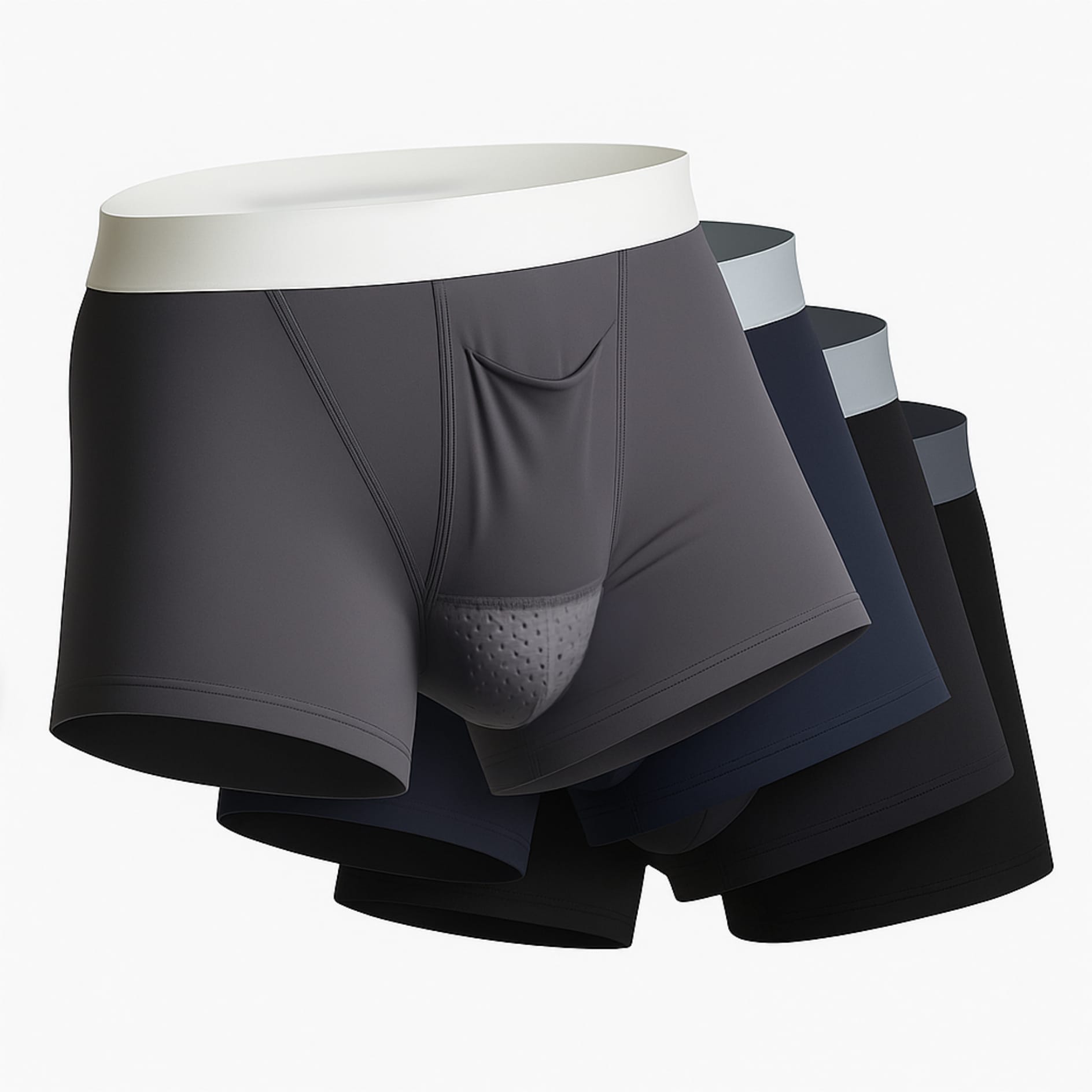
Why Specialized Support Helps
✓ Better support can help reduce the feeling of heaviness.
✓ Breathable, cooling fabrics may help with temperature regulation.
✓ A purpose-built fit can feel more comfortable for daily wear and recovery.
Take the Next Step
Choose Varicocele Support Designed for Cooling, Lift, and Daily Comfort
You’ve seen why regular underwear often falls short. Now view the purpose-built option made to reduce heaviness, improve support, and feel comfortable enough for everyday wear.
✓ Cooling mesh comfort
✓ Supportive ergonomic lift
✓ Discreet for all-day wear