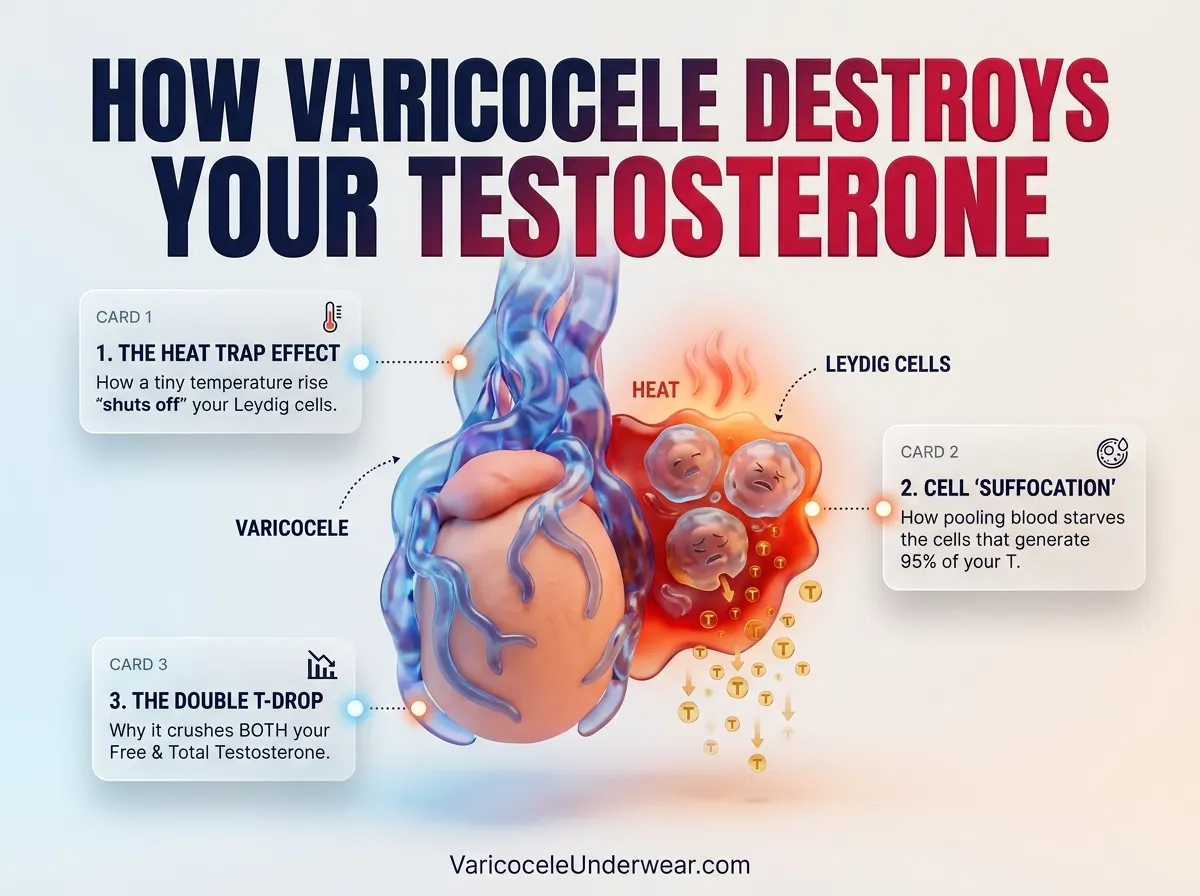
Testicular Leydig cells synthesize approximately 95 percent of circulating male androgens, but their enzymatic machinery requires a low-temperature environment to function properly. When venous valves within the pampiniform plexus fail, pooled blood creates chronic scrotal hyperthermia that disrupts this delicate system. Understanding how varicocele lowers free total testosterone requires an examination of Leydig cell science at the sub-cellular level. Elevated temperatures compromise mitochondrial membrane stability, deactivate key steroidogenic enzymes, and accelerate cellular apoptosis. This pathological state explains why men with clinical varicoceles frequently develop signs of androgen deficiency alongside fertility challenges. By examining the testicular heat impact on hormones, clinicians can clearly demonstrate why retrograde venous pooling suppresses the chemical pathways needed to build and secrete active androgens into the bloodstream.
Leydig Cell Physiology and Temperature Sensitivity
Human testes reside outside the abdominal cavity within the scrotum for a distinct physiological purpose: optimal endocrine and spermatogenic function demands an environment maintained between 33 and 35 degrees Celsius. This range sits roughly two to four degrees lower than normal core body temperature. Nature achieves this strict thermoregulation through a continuous countercurrent exchange mechanism within the spermatic cord. Cool venous blood returning through the pampiniform plexus wraps around the testicular artery, extracting warmth from incoming arterial blood before it reaches gonadal tissue. This countercurrent network keeps interstitial tissue cool and protects specialized secretory cells from thermal damage.
Leydig cells occupy the narrow interstitial spaces located between the seminiferous tubules. Although they constitute only about five percent of total testicular volume, they shoulder almost the entire burden of male androgen production. Under normal physiological conditions, luteinizing hormone signals Leydig cells to convert circulating cholesterol into pregnenolone, androstenedione, and finally bioactive testosterone. However, these microscopic hormone factories contain specialized protein structures that degrade when exposed to continuous warmth. Clinical observations regarding the varicocele and testosterone relationship demonstrate that even modest increases in scrotal temperature trigger acute metabolic strain across the entire interstitial compartment.
How Scrotal Hyperthermia Lowers Total Testosterone: Leydig Cell Science
When incompetent spermatic venous valves permit the backward pooling of warm core blood, the countercurrent cooling system collapses. Scrotal temperatures climb toward 37 degrees Celsius, initiating a chain reaction of cellular dysfunction. The primary casualty of this heat is the steroidogenic acute regulatory protein, known clinically as StAR. The StAR protein facilitates the rate-limiting step of androgen creation by moving cholesterol across the outer mitochondrial membrane into the inner matrix. Experimental data confirms that thermal stress downregulates StAR gene expression, choking off the raw substrate required to initiate steroid synthesis.

Discover specialized varicocele underwear designed for daily comfort, support, and recovery — a more targeted option for men who want support without compromise.
Discover the Recommended OptionDownstream enzymatic conversion suffers an equally destructive blow. Once cholesterol enters the mitochondrial matrix, a team of specialized enzymes converts it into steroid precursors. Among these, 17-alpha-hydroxylase/17,20-lyase (encoded by CYP17A1) and 3-beta-hydroxysteroid dehydrogenase exhibit extreme thermosensitivity. At elevated temperatures, these enzymes undergo conformational shifts that blunt their catalytic efficiency. A clinical review on testosterone and varicocele reveals that heat stress also induces severe endoplasmic reticulum stress within Leydig cells, leading to electron leakage and the accumulation of reactive oxygen species. This toxic microenvironment damages the lipid membranes of the cells, causing premature apoptosis and reducing the total number of functioning Leydig units over time.
Men who notice testicular heaviness or dull aches often ask their urologist, will a varicocele affect my testosterone levels over time? The biochemical answer is unambiguous. As thermal injury persists, Leydig cells cannot maintain daily androgen output. Total serum testosterone drops progressively, leading to physical lethargy, diminished muscle protein synthesis, sleep disruption, and decreased libido. Without proper thermal dissipation, the testes lose their primary biochemical capability.
| Scrotal Temperature Range | Leydig Cell Biological Status | Steroidogenic Enzyme Efficiency | Endocrine Outcome |
|---|---|---|---|
| 33.0°C to 34.5°C (Physiological Norm) | Intact mitochondrial cristae, baseline oxidative balance, normal survival | Optimal StAR expression, unimpeded CYP17A1 and 3β-HSD catalytic activity | Normal total and free testosterone production |
| 35.0°C to 36.0°C (Mild Hyperthermia) | Compensatory cellular stress, slight rise in reactive oxygen species | Moderate downregulation of StAR mRNA, minor enzyme conformational changes | Compensated hypogonadism with elevated LH secretion |
| 36.5°C to 37.2°C (Clinical Varicocele) | Endoplasmic reticulum stress, severe lipid peroxidation, accelerated apoptosis | Severe suppression of StAR protein, direct catalytic failure of CYP17A1 | Marked clinical decline in both free and total testosterone |
The Free Versus Total Testosterone Shift
To understand the full systemic toll of testicular hyperthermia, one must look beyond basic total testosterone numbers. In healthy men, roughly 98 percent of circulating testosterone binds to transport proteins, primarily sex hormone-binding globulin (SHBG) and albumin. Only the unbound fraction, known as free testosterone, along with albumin-bound testosterone, remains bioavailable to cross cell membranes and activate androgen receptors in skeletal muscle, brain tissue, and bone marrow. When Leydig output drops due to venous hyperthermia, the body experiences a distinct, compounding endocrine shift.
The anterior pituitary gland initially responds to falling androgen concentrations by pumping out higher pulses of luteinizing hormone. This compensatory state, known as subclinical or compensated hypogonadism, forces the remaining viable Leydig cells to work at maximum capacity. However, as venous pooling remains unresolved, Leydig exhaustion sets in. Total testosterone decreases steadily, while hepatic production of sex hormone-binding globulin remains unchanged or climbs due to metabolic factors. This dynamic shrinks the bioavailable free fraction disproportionately. Consequently, many men experience debilitating symptoms of androgen deficiency, such as profound fatigue, brain fog, and diminished physical resilience, even when their total testosterone numbers hover near the low-normal cutoff on standard laboratory panels. The endocrine challenge becomes particularly pronounced for patients managing varicocele testosterone after 40, where natural age-related Leydig cell attrition collides with ongoing thermal damage.
Targeted Thermal Management and Leydig Cell Preservation
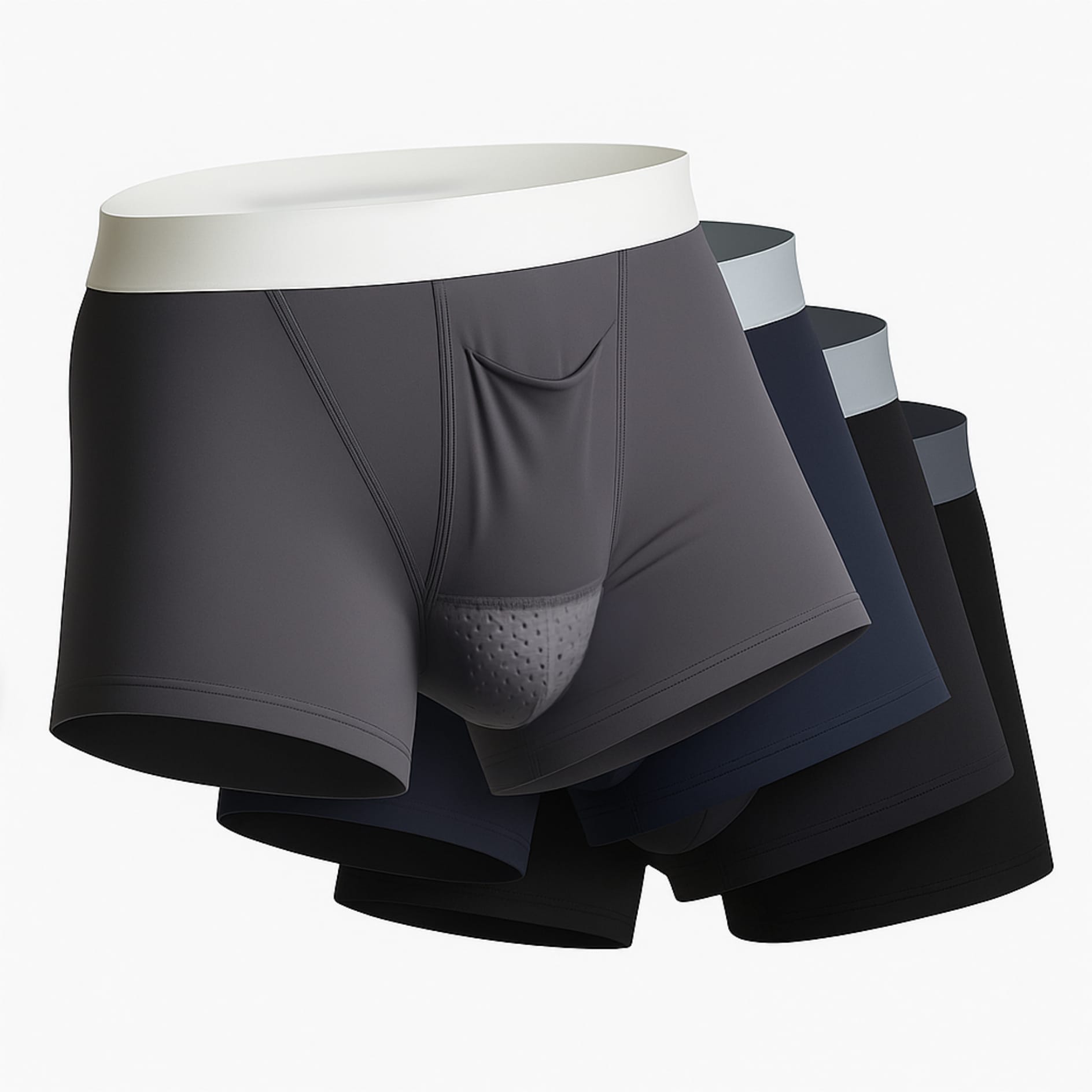
From a cellular biology perspective, venous heat suppresses local testosterone synthesis by paralyzing the mitochondrial enzymes that turn cholesterol into active hormones. When retrograde blood pools around the testes, the resulting thermal barrier prevents heat dissipation, leaving Leydig cells starved of the low temperatures they require. Utilizing the ergonomic, temperature-reducing pouch of VaricoceleUnderwear™ represents a smart way to support natural testosterone production. Wearing testosterone-protecting varicocele cooling briefs lifts the scrotal sac away from warm perineal tissue and utilizes specialized breathable materials to restore the natural temperature gradient, actively shielding vulnerable Leydig cells from destructive thermal accumulation throughout daily activity.
Selecting the best varicocele underwear provides sustained physical elevation that relieves pressure on the dilated pampiniform veins while maintaining passive airflow. When men combine postural breaks, structured cooling protocols, and appropriate ergonomic support, they eliminate the continuous thermal insult that damages the interstitial tissue. Protecting Leydig cells from chronic hyperthermia allows these specialized steroidogenic units to preserve their membrane integrity, suppress reactive oxygen species, and generate vital hormones without interruption.
Endocrinological Recovery Post-Treatment
A fundamental question many patients ask is whether damaged Leydig cells can regain their steroidogenic capacity once the thermal source disappears. Modern urological literature, supported by clinical guidelines from the American Urological Association and the European Association of Urology, demonstrates substantial endocrine recovery following the elimination of venous pooling. When microsurgical varicocelectomy or targeted embolization closes incompetent spermatic veins, scrotal temperature returns to its physiological baseline of 33 to 35 degrees Celsius within weeks.
Once the testes return to a cool environment, cellular recovery begins immediately. Removing chronic heat stress halts endoplasmic reticulum overload and eliminates the cascade of reactive oxygen species. With cellular oxidative stress resolved, surviving Leydig cells restart normal gene transcription for the StAR transport protein. Catalytic activity across the CYP17A1 and 3-beta-hydroxysteroid dehydrogenase pathways recovers, allowing cholesterol to flow freely through the steroidogenic pathway once again. Multiple prospective clinical studies document that men with low baseline testosterone experience an average total testosterone increase of 100 to 140 ng/dL within three to six months following the restoration of normal scrotal temperatures. Luteinizing hormone levels frequently normalize as well, signifying that the hypothalamic-pituitary-gonadal axis has returned to an efficient equilibrium. By reversing the thermal environment, men can safeguard their hormonal vitality and restore natural endocrine performance.
Related Articles

Choose Varicocele Support Designed for Cooling, Lift, and Daily Comfort
You’ve seen why regular underwear often falls short. Now view the purpose-built option made to reduce heaviness, improve support, and feel comfortable enough for everyday wear.