Many men dealing with scrotal heaviness or fertility concerns hear an old piece of advice passed around online forums: just drop your shorts at night, and your problems will vanish. Yet questioning whether sleeping completely naked is the ultimate cure for nighttime overheating reveals a far more nuanced reality. If you are exploring sleeping naked with varicocele to protect your fertility, you probably want to know: does no underwear boost sperm quality, or are you simply trading one source of scrotal stress for another? Understanding true nighttime scrotal temperature regulation requires looking at the vascular anatomy of the pampiniform plexus, the physical mechanics of resting in bed, and how nocturnal ambient temperatures interact with impaired venous drainage.
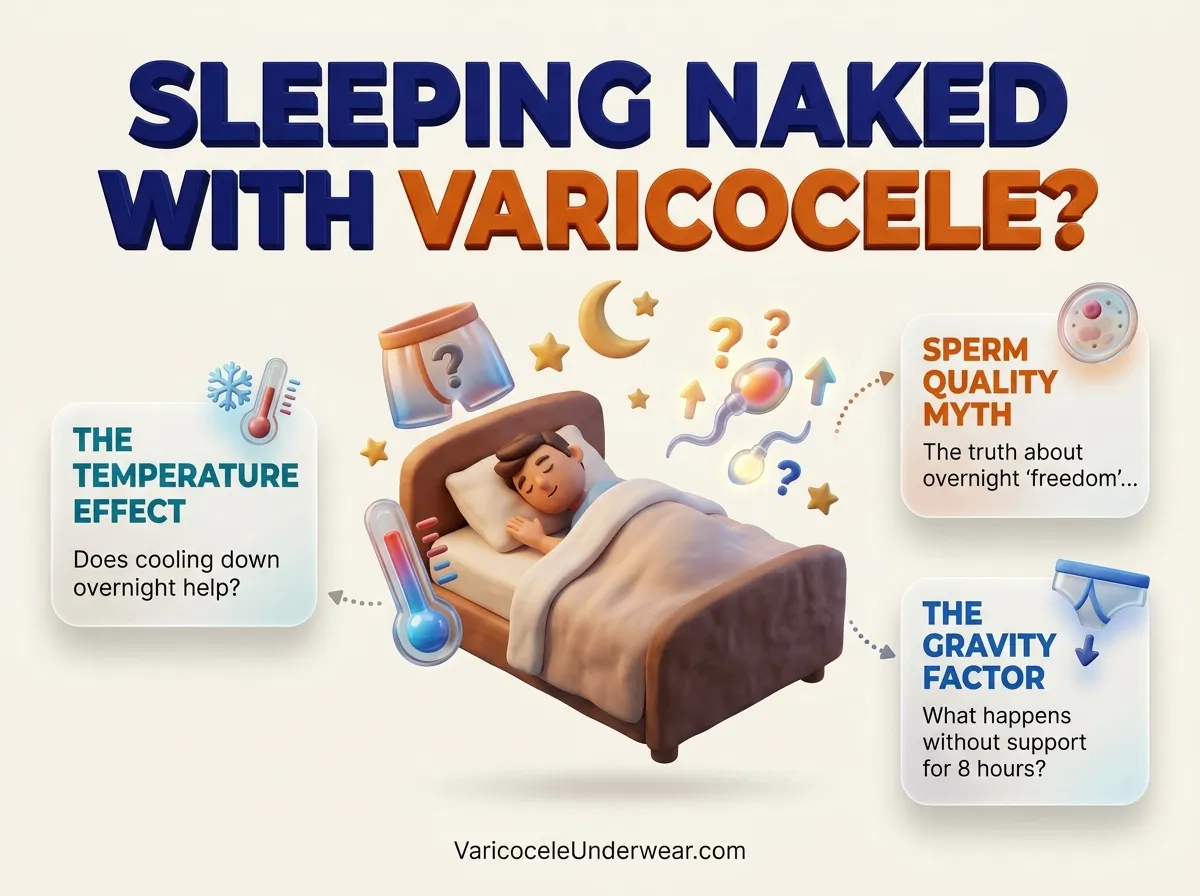
Nighttime Scrotal Thermoregulation
Human spermatogenesis requires a delicate local environment. Healthy testicles function best at approximately two to four degrees Celsius below core body temperature, typically around 34 to 35 degrees Celsius. Under normal circumstances, the scrotum regulates this temperature through the counter-current heat-exchange system of the pampiniform venous plexus and the contractions of the dartos and cremasteric muscles. When ambient conditions warm up, the dartos muscle relaxes, allowing the testes to drop away from the pelvic floor. When ambient conditions drop, the muscle contracts to pull the gonads closer to the warm inguinal area.
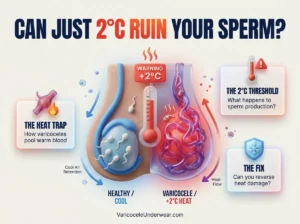
A varicocele disrupts this natural vascular cooling radiator. Characterized by abnormal dilatation and tortuosity of the internal spermatic veins, a varicocele leads to venous reflux and blood pooling. This pooled venous blood is not merely stagnant; it carries core arterial heat directly into the peritesticular space. Over time, this chronic thermal elevation triggers oxidative stress, cellular hypoxia, and DNA fragmentation within developing spermatozoa. Published clinical research on nocturnal scrotal cooling confirms that scrotal skin temperatures frequently peak during sleep, creating sustained thermal insult during the very hours when cellular repair should take place.

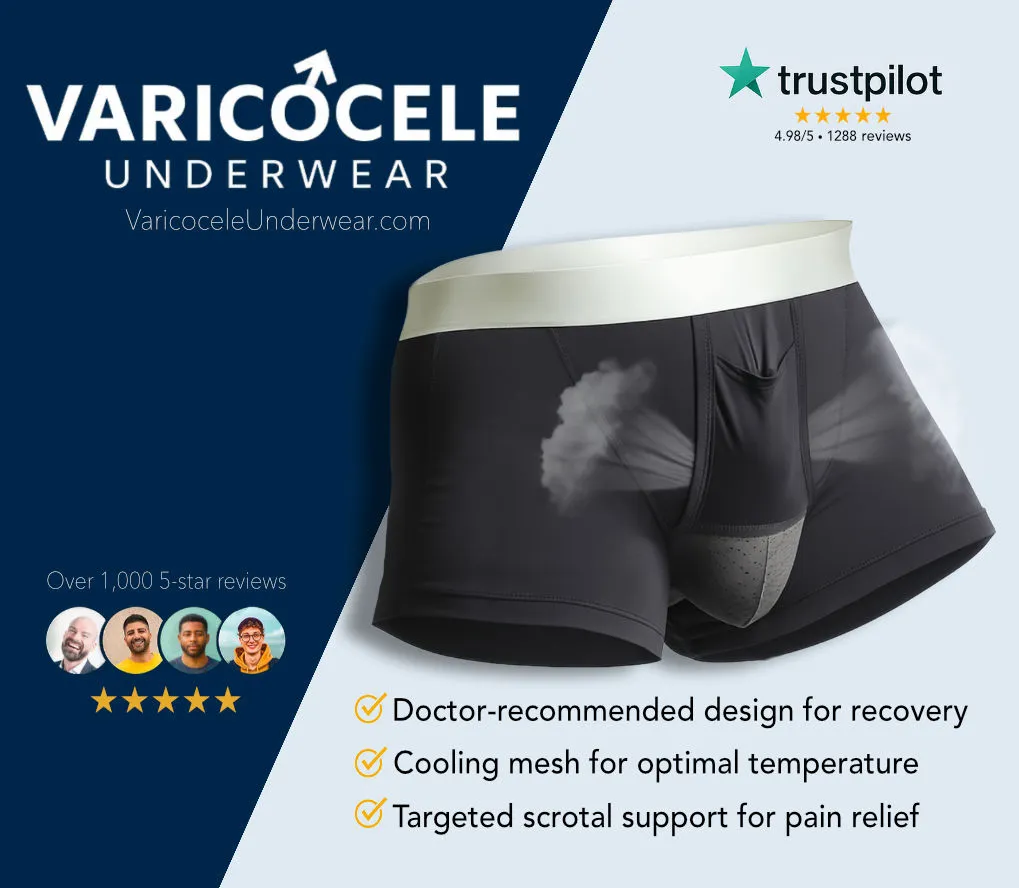
Discover specialized varicocele underwear designed for daily comfort, support, and recovery — a more targeted option for men who want support without compromise.
Discover the Recommended OptionDoes Sleeping Naked Actually Lower Temperature and Boost Sperm?
Removing clothes before sleep seems like an effortless way to eliminate trapped heat. When you sleep nude, you eliminate the insulating boundary created by tight cotton fabrics and synthetic bands. For men without vascular pathology, this simple habit often lowers scrotal skin surface temperature by a fraction of a degree. However, in the presence of an enlarged venous bundle, sleeping naked without underwear does not automatically guarantee cooler testicles. The core issue during sleep is not only ambient fabric insulation; it is thigh contact and position mechanics.
When you sleep on your side without any protective boundary, your thighs press together. This posture traps the scrotum between two large muscle masses radiating core body heat at 37 degrees Celsius. Without fabric to wick moisture or keep the gonads from getting crushed between warm skin surfaces, scrotal temperature can actually rise above resting daytime levels. Learning about sleeping without underwear varicocele considerations helps illustrate why nudity alone cannot solve poor venous drainage. If you sleep on your stomach or curled in a tight fetal position, going bare may leave your scrotum trapped against hot skin without any physical separation or airflow.
Optimizing Bedtime Support and Airflow
To reduce nocturnal thermal stress while managing physical discomfort, you must match your apparel to your sleep posture. Side sleepers who experience dull aches often find that going completely nude leaves the heavy, swollen vein bundle unsupported, causing traction on the spermatic cord as gravity pulls the dependent testicle downward. In these cases, ultra-light, loose garments or anatomically tailored modal layers keep the testicles elevated away from the warm perineum without generating heat traps.
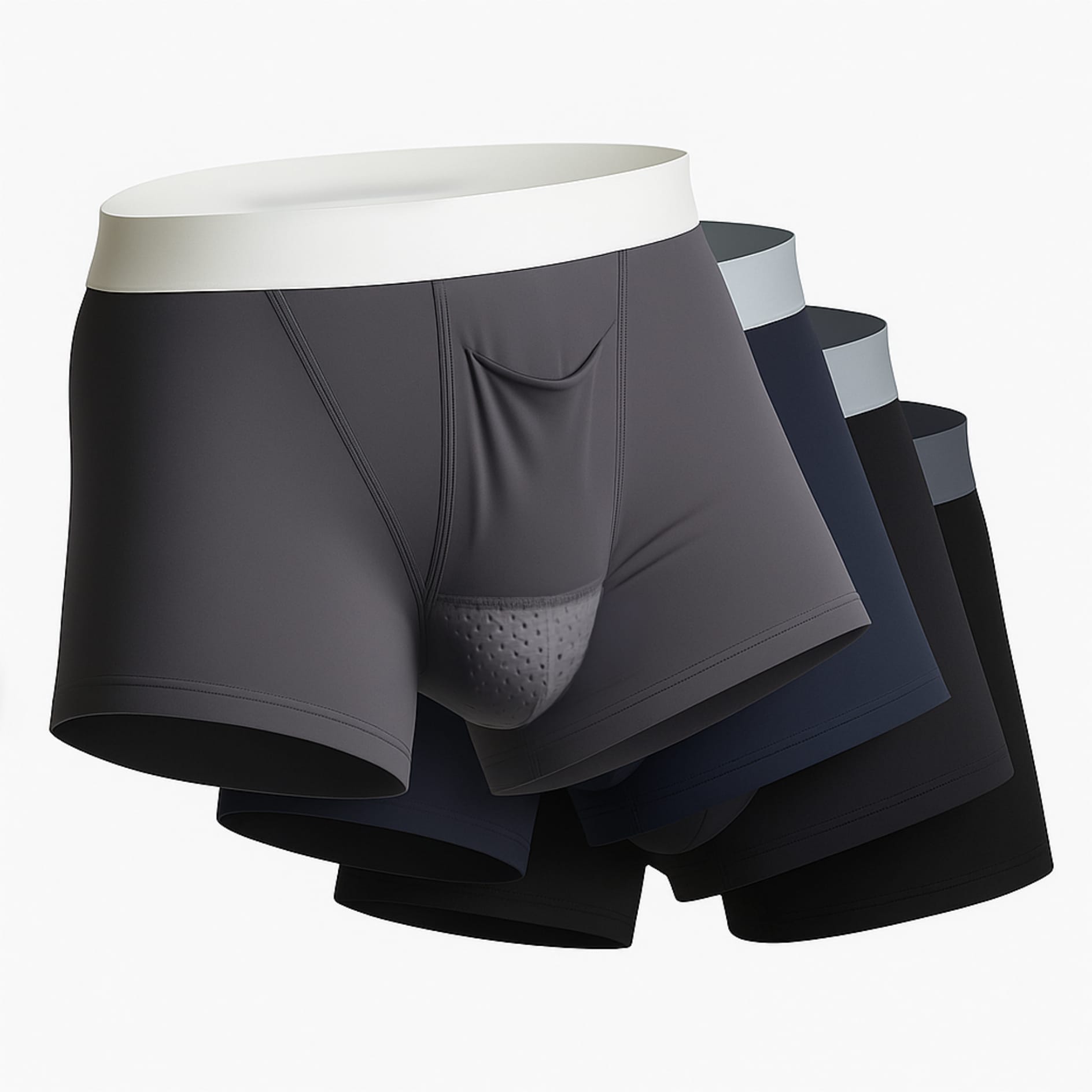
Fabric composition plays an equal role in nocturnal heat dissipation. Traditional heavy cotton holds onto sweat, creating a warm, damp environment that retains thermal energy against the skin. Reviewing micro modal vs cotton scrotal temperature data shows that natural beechwood fibers breathe twice as fast as cotton, facilitating evaporative cooling without physical compression. Pairing the right sleepwear with proper pelvic positioning is equally helpful; incorporating varicocele best sleep positions, such as sleeping on your back with a small knee pillow, keeps the legs abducted, naturally preventing scrotal entrapment between the thighs.
| Sleep Apparel Choice | Average Scrotal Heat Impact | Physical Cord Support | Moisture Evaporation | Best Suited For |
|---|---|---|---|---|
| Completely Naked | Low to moderate (rises if legs touch) | None (zero elevation) | High surface evaporation | Back sleepers in cool bedrooms |
| Tight Cotton Briefs | High (heat trap against perineum) | High compression (restrictive) | Poor (traps sweat) | Not recommended for varicocele |
| Loose Cotton Boxers | Moderate (bunches between thighs) | None (excessive movement) | Moderate | Warm sleepers needing light cover |
| Breathable Modal / Specialized Sleepwear | Low (active airflow separation) | Gentle cradle without compression | Superior (continuous wicking) | Side sleepers and symptomatic men |
Room environment is the final variable in this nocturnal formula. Even if you sleep nude, a heavy down comforter and a room heated to 72 degrees Fahrenheit will raise your scrotal temperature well into the danger zone for spermatogenesis. Urologists advise keeping the bedroom thermostat between 65 and 68 degrees Fahrenheit (18 to 20 degrees Celsius). Use light, breathable bamboo or linen sheets rather than synthetic polyester blankets. This allows ambient convective currents to pull heat away from your body throughout all sleep stages.
Navigating the dilemma of resting without clothes highlights an important clinical distinction: nighttime cooling habits only solve half the equation. While horizontal rest relieves hydrostatic pressure in the spermatic veins, upright standing and moving during the day expose those fragile valves to constant gravity. To guard against daytime venous pooling and heat accumulation, daytime apparel requires a fundamentally different design. Men who transition out of bed benefit greatly from cooling scrotal uplift underwear for daytime wear, which maintains the scrotal lift necessary to minimize pooling while using breathable panels to control temperature.
Choosing your nighttime routine comes down to comfort, posture, and symptom severity. If you sleep peacefully on your back in a cool bedroom and experience zero morning ache, sleeping naked offers an easy, low-resistance way to reduce garment-related heat traps. But if you are a side sleeper struggling with dull throbbing or scrotal skin sticking to the thigh, switching to specialized, loose garments from curated varicocele underwear options gives you the airflow you need alongside the gentle structure that prevents painful cord dragging. Combine a cooler bedroom, deliberate sleep posture, and intelligent garment choices to create the best nocturnal conditions for your fertility and daily comfort.
Related Articles


Choose Varicocele Support Designed for Cooling, Lift, and Daily Comfort
You’ve seen why regular underwear often falls short. Now view the purpose-built option made to reduce heaviness, improve support, and feel comfortable enough for everyday wear.