Normal sperm counts do not always mean normal sperm DNA. A man can have acceptable sperm concentration, movement, and shape while carrying damaged genetic material that may affect fertilization, embryo development, or pregnancy. This is why varicocele sperm DNA fragmentation deserves attention in couples experiencing unexplained infertility, repeated IVF failure, or recurrent miscarriage. A varicocele can increase testicular heat and oxidative stress, both of which may damage sperm DNA. Standard semen analysis does not measure this damage. High DFI in male infertility can therefore remain undetected unless a specific DNA fragmentation test is performed. Understanding your DNA fragmentation index (DFI), identifying its cause, and choosing the right treatment before an IVF cycle can help your fertility team make better-informed decisions.
What Is Sperm DNA Fragmentation?
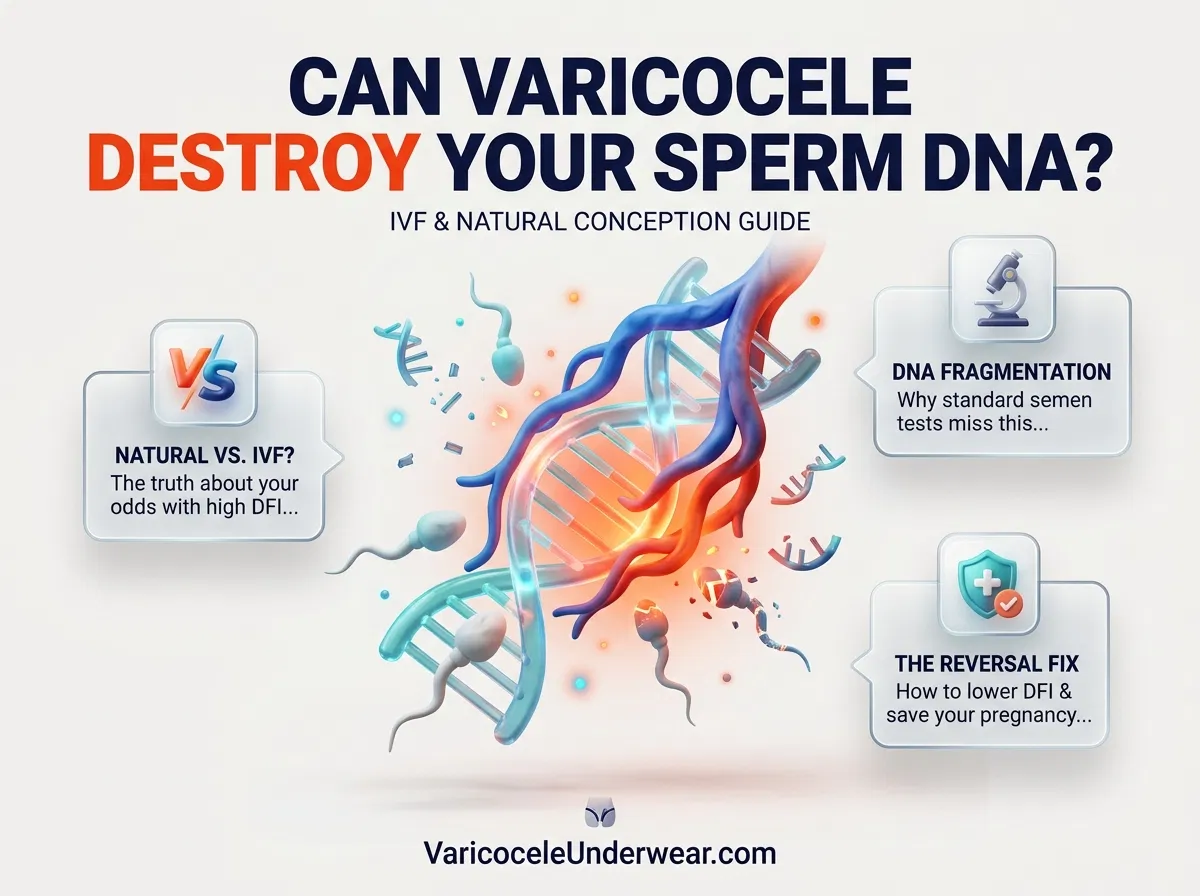
Sperm DNA fragmentation (SDF) refers to breaks in the genetic material inside a sperm cell. The DNA carries the instructions needed for normal embryo development. When this material is damaged, the sperm may still look normal under a microscope and move well, but its genetic quality may be reduced. The DNA fragmentation index measures the proportion of tested sperm cells showing DNA damage, depending on the laboratory method. This explains why a conventional semen analysis can appear reassuring while a more detailed fertility assessment identifies a problem. For a closer look at these differences, read our guide to varicocele, semen analysis, and sperm DNA fragmentation. A high DFI does not automatically mean a man cannot father a child. It indicates a possible fertility risk that must be interpreted alongside the couple’s medical history, reproductive findings, and treatment plan.
Several laboratory methods measure sperm DNA damage. The sperm chromatin structure assay (SCSA) assesses how vulnerable sperm DNA is to damage, while the terminal deoxynucleotidyl transferase dUTP nick end labeling test (TUNEL) detects DNA breaks more directly. The sperm chromatin dispersion (SCD) test evaluates changes in the appearance of DNA after treatment, and the Comet assay measures DNA damage in individual sperm cells. These methods do not produce perfectly interchangeable results. A DFI percentage from one laboratory may not mean exactly the same thing as the same percentage from another testing method. Before making treatment decisions, ask which test was used, whether the laboratory has validated its reference range, and whether the sample was collected under the recommended abstinence conditions. Repeat testing may be useful when results are unexpected or close to a decision threshold.
| DFI Range | Clinical Classification | Practical Interpretation |
|---|---|---|
| Below 15% | Lower range | Generally more favorable in several SCSA-based studies, but does not guarantee pregnancy. |
| 15% to 20% | Borderline range | Interpret alongside the test method, fertility history, and other sperm findings. |
| 20% to 30% | Elevated range | May be associated with reduced natural conception or less favorable reproductive outcomes. |
| Above 30% | High range | Often considered substantially elevated and may warrant investigation of treatable causes. |
These DFI ranges are clinical orientation points, not universal diagnostic limits. The European Association of Urology (EAU) discusses an SCSA threshold of approximately 25% in relation to reduced natural conception and intrauterine insemination outcomes. Other studies and laboratory protocols use different cutoffs. A result above 30% may raise greater concern, but the number alone cannot predict whether an IVF cycle will succeed. One 2024 study of SCSA results reported lower ongoing pregnancy rates above certain DFI thresholds in IVF and intracytoplasmic sperm injection (ICSI) groups. However, individual variation in DFI results also affected classification. The clinical question is not simply whether a result is high. It is whether the finding identifies a treatable male fertility problem and changes the best plan for the couple.

Discover specialized varicocele underwear designed for daily comfort, support, and recovery — a more targeted option for men who want support without compromise.
Discover the Recommended OptionOxidative Stress and DNA Breakage
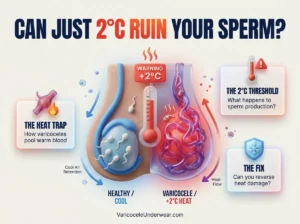
Oxidative stress occurs when reactive oxygen species (ROS), unstable molecules produced during normal cell activity, exceed the body’s antioxidant defenses. Small amounts of ROS are part of normal sperm function. Excessive amounts, however, can damage sperm membranes, proteins, and DNA. A varicocele is an enlargement of veins in the scrotum caused by abnormal blood flow and venous reflux. This condition can interfere with the normal cooling of the testicles. Increased scrotal temperature, impaired blood circulation, reduced oxygen balance, and the accumulation of oxidative stress may contribute to sperm damage. The EAU identifies varicocele as a possible cause of increased sperm DNA fragmentation. Our article on varicocele and scrotal heat stress explains why testicular temperature matters for sperm production.
Correcting abnormal venous reflux, when treatment is medically indicated, is important because it addresses a potential source of warm blood pooling and ongoing heat-related oxidative stress before an IVF cycle. Simply cooling the skin does not correct enlarged veins or restore normal venous circulation. For additional day-to-day comfort and scrotal microclimate management, VaricoceleUnderwear.com specializes in supportive garments designed around testicular support and temperature management. Its scrotal temperature-regulating underwear for DNA fragmentation offers an option for men seeking supportive underwear during daily activities and fertility treatment preparation. This type of garment should be viewed as an adjunct to medical care, not a treatment for the underlying varicocele. There is currently no strong clinical evidence that a specific underwear product independently lowers DFI or increases IVF live-birth rates. Men comparing support options can also review our guide to the best varicocele underwear for comfort and support.
Evidence connecting varicocele with sperm DNA damage has grown. A 2025 systematic review and meta-analysis published in the medical literature found higher sperm DNA fragmentation among men with varicocele than among men without the condition. A separate 2024 systematic review and meta-analysis examined 29 studies involving 1,491 infertile men and found that sperm DNA fragmentation and seminal malondialdehyde, a marker of oxidative damage, decreased after varicocele repair. The reduction was statistically significant, although the studies showed substantial variation in their results. These findings support investigating a clinical varicocele in men with high DFI rather than assuming that an abnormal result is permanent. They do not prove that every man with varicocele needs surgery. The decision depends on physical examination, semen findings, previous reproductive outcomes, and the female partner’s fertility circumstances.

Managing DFI Before IVF
Reducing DNA fragmentation index levels starts with finding the underlying cause. A reproductive urologist can assess the testicles and veins, review medical history, and evaluate other factors such as infection, hormonal problems, smoking, obesity, medication use, and heat exposure. The AUA/ASRM guideline does not recommend sperm DNA fragmentation testing as part of the initial evaluation of every infertile couple. However, it recognizes that testing may be useful in selected men with repeated IVF failure. The EAU recommends considering SDF assessment in couples with recurrent pregnancy loss, failure of assisted reproductive treatment, or unexplained infertility. When a clinical varicocele is present alongside raised DFI and previous ART failure, varicocele repair may be considered after counselling. The strength of this recommendation is limited, so surgery should not be presented as an automatic requirement. Treatment planning must also account for the female partner’s age and ovarian reserve, since delaying IVF may not be appropriate for every couple.
When a varicocele is treated, improvements in sperm quality are not immediate. Sperm development takes approximately three months, so follow-up testing is often planned after sufficient time has passed for a new cycle of sperm production. Men should also discuss consistent sample collection conditions and the timing of repeat DFI testing with their laboratory. Lifestyle measures can support sperm health: stop smoking, maintain a healthy weight, avoid unnecessary heat exposure, and review medications or testosterone use with a clinician. Antioxidant supplements are sometimes suggested, but the evidence is inconsistent and no supplement has been proven to guarantee a lower DFI or successful pregnancy. A shorter abstinence interval may be worth discussing with a fertility specialist in selected cases. For couples concerned about sperm DNA damage and pregnancy loss, our article on varicocele and miscarriage risk provides additional context.
High DFI does not automatically rule out natural conception, IVF, or ICSI. ICSI places an individual sperm directly into an egg, but it does not repair damaged DNA. The egg’s ability to manage some forms of sperm DNA damage may influence embryo development, but this cannot be relied on as a guaranteed safeguard. In selected men with persistently high DFI despite correction of identifiable causes, a specialist may discuss testicular sperm retrieval for ICSI. Testicular sperm can have lower DNA fragmentation than ejaculated sperm in some patients, but retrieval is an invasive procedure and the evidence for improved live birth remains limited. The choice should be made jointly by a reproductive urologist and fertility specialist. Two useful peer-reviewed studies are the systematic review of varicocele repair and sperm DNA fragmentation and the meta-analysis of sperm DNA fragmentation in men with varicocele. Both help explain why addressing male reproductive health can matter when planning fertility treatment.
For men facing repeated IVF disappointment, a normal semen count should not end the investigation when other evidence points toward a male fertility problem. Varicocele, oxidative stress, and sperm DNA fragmentation can overlap, and identifying these factors may create opportunities for targeted care. Ask your fertility team whether DFI testing is appropriate, which assay they recommend, and whether a clinical varicocele needs further evaluation. Review your options before another IVF cycle rather than relying on a single laboratory number or an unproven supplement. The goal is to improve the conditions for healthy sperm production while making decisions that respect both partners’ reproductive health and the time available for treatment.
Clinical guidance and further reading: AUA/ASRM Male Infertility Guideline, 2024 amendment and the European Association of Urology Male Infertility Guideline. These resources support individualized assessment rather than treating a DFI percentage as a stand-alone prediction of pregnancy.
Related Articles

Choose Varicocele Support Designed for Cooling, Lift, and Daily Comfort
You’ve seen why regular underwear often falls short. Now view the purpose-built option made to reduce heaviness, improve support, and feel comfortable enough for everyday wear.