Many men are startled to discover that chronic nighttime breathing pauses can directly aggravate scrotal ache and pelvic venous pooling. When obstructive sleep apnea repeatedly cuts off your nocturnal air supply, the body enters a state of respiratory distress that alters blood flow from your head down to your pelvis. Understanding the genuine varicocele and sleep apnea link reveals that venous disorders do not exist in isolation. Repeated drops in blood oxygen saturation create a cascade of autonomic nervous system surges, vascular resistance, and venous congestion. This direct relationship between nighttime hypoxia and vein health explains why your scrotum may feel heavy, swollen, and throbbing upon waking. As clinical urology continues to explore how nocturnal oxygen levels impact on varicocele pain, patients can now identify sleep disordered breathing as a hidden trigger for their daytime discomfort.
The Sleep Apnea and Vascular Resistance Link
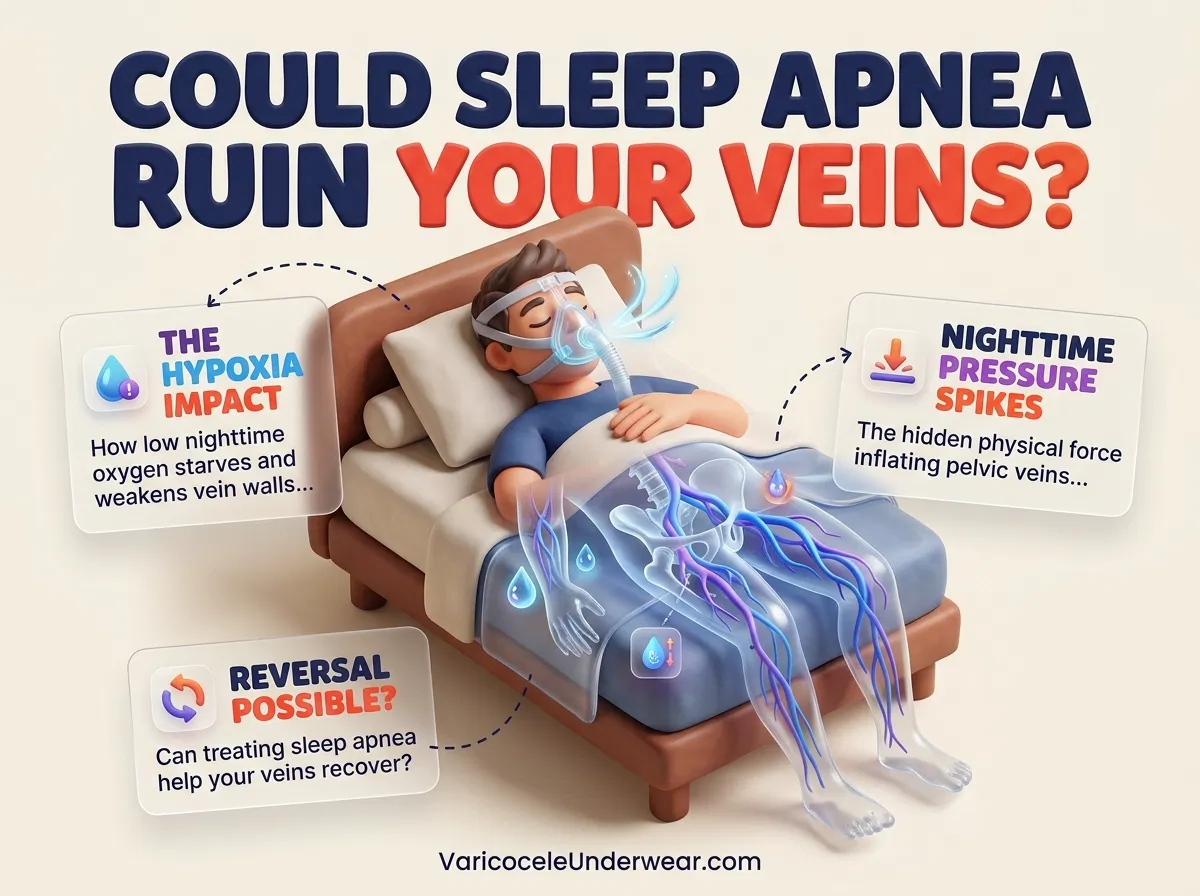
When an obstructive apnea occurs, the upper airway collapses, yet the diaphragm continues striving to pull air into the lungs. This intense inspiratory effort against an occluded airway generates dramatic negative intrathoracic pressure, known clinically as the Mueller maneuver. This negative chest pressure draws blood toward the right atrium while simultaneously raising peripheral and central venous resistance. As venous return encounters resistance, high hydrostatic pressure travels backward along the inferior vena cava and renal veins, straight into the internal spermatic vein. For men with incompetent valves in the pampiniform plexus, this repetitive pressure wave forces stagnant blood downward into the scrotum. Medical evaluations exploring the clinical varicocele and sleep apnea connection demonstrate that these nocturnal hemodynamic shocks weaken already fragile venous walls night after night.
Beyond mechanical pressures, intermittent drops in blood oxygen saturation damage blood vessel architecture at the cellular level. When nocturnal oxygen dips occur every few minutes, the vascular endothelium experiences intense oxidative stress. Healthy veins depend on endothelial nitric oxide synthase to maintain elasticity and regulate vascular tone. Deprived of steady oxygen, venous smooth muscle cells lose their ability to contract, causing chronic venous dilation. According to published research on intermittent hypoxia and vascular function, recurrent desaturation cycles trigger systemic inflammation and autonomic sympathetic hyperactivation that stiffen central arteries while slackening peripheral veins. In the scrotum, this localized vascular compromise disrupts Leydig cell function and reduces hormone synthesis, confirming the established relationship between varicocele and testosterone production.

Discover specialized varicocele underwear designed for daily comfort, support, and recovery — a more targeted option for men who want support without compromise.
Discover the Recommended OptionNocturnal Hypoxia and Pelvic Congestion
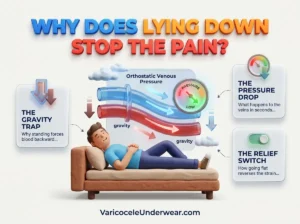
Standard urological teaching suggests that recumbency relieves varicocele pain because lying flat eliminates gravitational pressure. However, patients with untreated obstructive sleep apnea frequently report the exact opposite, waking with pronounced dull aches and severe scrotal fullness. This occurs because nocturnal hypoxemia elevates pulmonary artery pressures and restricts abdominal venous return throughout the sleep cycle. Trapped blood stagnates within the deep pelvic venous plexus, creating sustained pelvic congestion. When warm, deoxygenated blood pools within the pampiniform plexus for six to eight hours, scrotal temperatures rise, cellular waste accumulates, and pain receptors activate. Men seeking how to reduce varicocele symptoms without surgery must acknowledge that ignoring nighttime pelvic congestion undermines daytime symptom management.
Sleep medicine specialists recognize that prolonged nocturnal hypoxemia strips venous smooth muscle of its contractile resilience, leaving scrotal vein walls floppy and unable to resist gravitational strain. When you step out of bed in the morning, gravity immediately drags circulating blood down into these biochemically exhausted vessels. Because the internal spermatic veins were stretched and starved of oxygen throughout the night, daytime standing or sitting triggers rapid scrotal pooling and intense ache. Providing structured physical defense becomes vital. Wearing daily restorative varicocele briefs cradles the scrotum, stabilizes vascular position, and counteracts hydrostatic loads before prolonged engorgement can cause structural harm. Gentle upward suspension unburdens the weakened pampiniform plexus, preventing blood stasis from escalating while the venous endothelium recovers from nighttime oxidative injury.
| Sleep Apnea Event | Vascular and Hemodynamic Response | Direct Effect on Varicocele Symptoms |
|---|---|---|
| Airway Collapse & Mueller Maneuver | Large negative chest pressure with retrograde vena cava reflux | Direct pressure spikes through the spermatic vein into scrotal vessels |
| Intermittent Nocturnal Hypoxia | Loss of endothelial nitric oxide and surge in reactive oxygen species | Venous wall weakening, loss of vessel elasticity, and tissue inflammation |
| Sympathetic Nervous System Surges | Spikes in systemic vascular resistance and elevated blood pressure | Restricted pelvic venous drainage and sustained daytime blood pooling |
| Thermal Regulation Breakdown | Stagnant blood accumulation in the recumbent pelvic bed | Elevated scrotal temperatures, impaired spermatogenesis, and morning ache |
Managing Sleep-Related Varicocele Flare-Ups
Resolving nocturnal varicocele exacerbations requires treating the respiratory source alongside venous support. If you snore loudly, wake gasping for breath, or experience heavy morning fatigue, consult a sleep physician for a diagnostic polysomnogram. Continuous Positive Airway Pressure (CPAP) therapy serves as the primary medical standard for obstructive sleep apnea. By stenting the airway open with pneumatic air pressure, CPAP eliminates negative chest pressure swings and maintains constant nocturnal oxygen saturation. Clinical observation shows that stabilizing nighttime blood gases halts the hypoxic degradation of pelvic vein walls, lowers resting venous pressure, and decreases the frequency of morning testicular aching.
In tandem with airway intervention, implementing dedicated daytime postural and physical measures produces rapid symptom control. Men who combine positive airway pressure with ergonomic seating and specialized apparel experience fewer painful flare-ups throughout work hours. Choosing the best varicocele underwear provides consistent anatomical elevation that prevents blood from settling in damaged valves while standing or walking. Pairing this daytime suspension with side-sleeping positions, pelvic elevation cushions before bed, and deliberate hydration further accelerates venous emptying. By controlling physical gravity during active daytime hours, you relieve the structural burden on veins already strained by nocturnal breathing disorders.
Managing varicocele pain requires looking beyond the scrotum to evaluate full-body vascular mechanics. When sleep disordered breathing remains unaddressed, intermittent hypoxia continually damages venous tissue and fuels persistent pelvic congestion. Approaching your care through combined respiratory stabilization and dedicated physical vein support protects testicular tissue, restores comfortable rest, and reduces chronic daily aching. Partnering with your urologist and sleep specialist allows you to build an integrated routine that protects both your vascular integrity and your daily comfort.
Related Articles

Choose Varicocele Support Designed for Cooling, Lift, and Daily Comfort
You’ve seen why regular underwear often falls short. Now view the purpose-built option made to reduce heaviness, improve support, and feel comfortable enough for everyday wear.