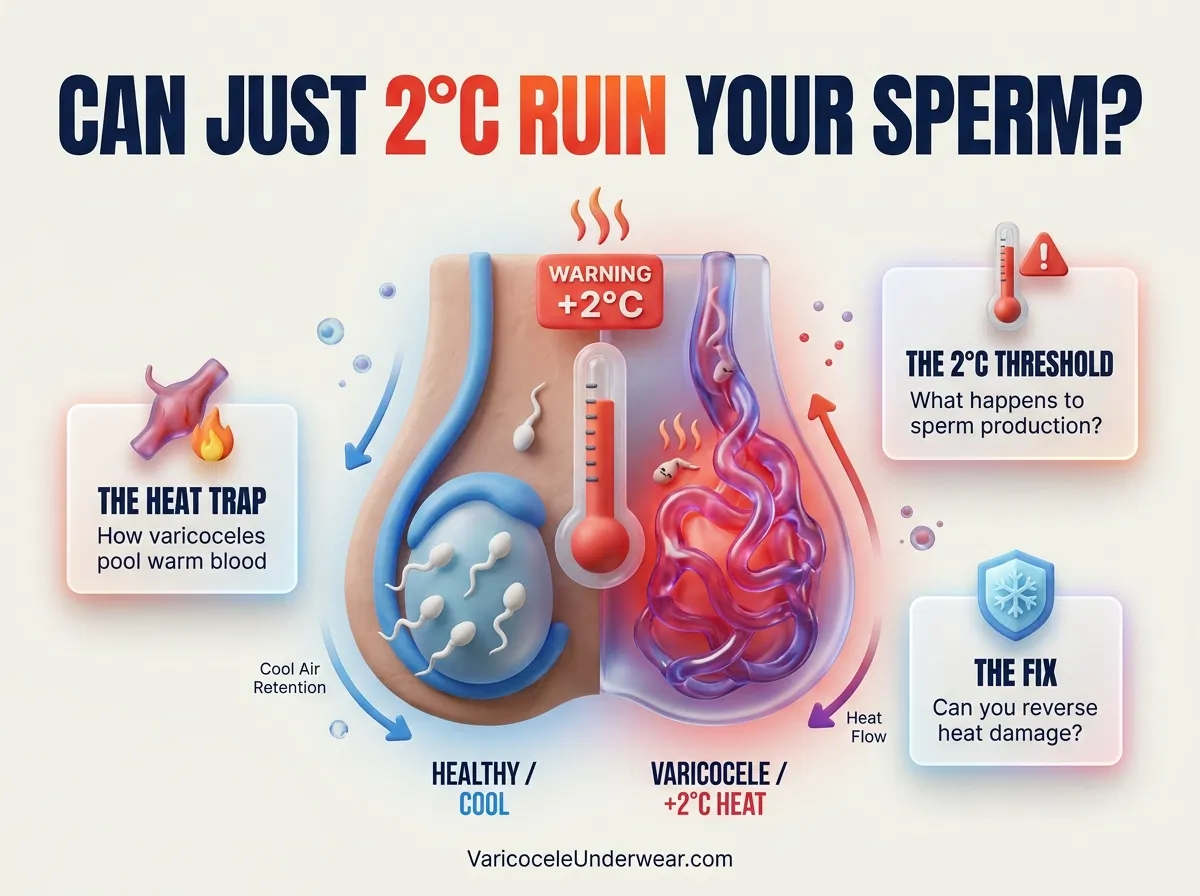
Human spermatogenesis is an exacting thermal process that ceases when testicular temperature rises by as little as 2°C above physiological baseline. Mammalian testicles reside outside the abdominal cavity because the germinal epithelium requires a resting temperature between 33°C and 34.5°C to execute meiosis and cellular maturation. When examining scrotal heat stress varicocele cases, clinicians observe a continuous breakdown in local cooling mechanisms. Understanding why 2 degrees matters for sperm production clarifies the biological vulnerability of developing gametes, as sustained elevation to 36.5°C or 37°C arrests cell division, breaks DNA strands, and triggers programmed germ cell death. This subtle temperature regulation impact on fertility explains why men with subclinical or clinical varicoceles frequently present with low sperm density, impaired forward motility, and abnormal morphology even when hormonal profiles appear unremarkable.
The Physics of Scrotal Thermoregulation
Scrotal thermoregulation operates on four thermodynamic principles: conduction, convection, radiation, and evaporative cooling. The human scrotum is an evolutionary cooling organ characterized by an absence of subcutaneous adipose tissue, a thin epidermal layer, and an abundant network of sweat glands that dissipate heat rapidly through vapor transition. Two involuntary muscular layers modulate surface area and proximity to core body heat: the tunica dartos and the cremaster muscle. In cool environments, the dartos contracts, wrinkling the scrotal skin to diminish radiative surface area while bringing the gonads nearer to pelvic warmth. Conversely, elevated temperatures cause dartos relaxation and cremasteric lengthening, increasing scrotal surface area to maximize thermal radiation and convective airflow. The ambient air surrounding the scrotum must absorb this radiant energy; when tight clothing, sedentary habits, or prolonged thigh contact trap hot air, the local radiative heat gradient collapses, directly increasing intra-testicular microclimates.
How Pampiniform Plexus Heat Exchangers Fail in Scrotal Heat Stress Varicocele Cases
Under normal anatomical conditions, internal gonadal cooling relies on a vascular countercurrent mechanism known as the pampiniform venous plexus. The testicular artery carries oxygenated blood directly from the abdominal aorta at a core body temperature of 37°C. As this artery descends into the spermatic cord, it becomes tightly wrapped by eight to twelve anastomosing veins of the pampiniform plexus, which return cooler blood from the scrotal capillaries at approximately 32°C. Through passive conduction across thin vessel walls, the cool venous network absorbs thermal energy from the arterial stream, ensuring blood enters the testicular parenchyma at roughly 33.5°C. In men suffering from varicoceles, incompetent or absent venous valves in the internal spermatic vein create persistent retrograde hydrostatic pressure. Instead of flowing upward toward the inferior vena cava and renal vein, blood pools in the scrotal sac. This venous stasis floods the spermatic cord with static, core-temperature blood, abolishing the countercurrent gradient and elevating bilateral testicular temperatures as documented in clinical evaluations of varicocele heat stress fertility pathways.

Discover specialized varicocele underwear designed for daily comfort, support, and recovery — a more targeted option for men who want support without compromise.
Discover the Recommended Option| Physiological Parameter | Normal Scrotal Microclimate | Varicocele-Induced Microclimate | Pathological Significance |
|---|---|---|---|
| Testicular Artery Inflow Temp | 37.0°C (Core) | 37.0°C (Core) | Constant systemic arterial input |
| Pampiniform Venous Outflow Temp | 32.0°C to 33.0°C | 35.5°C to 36.8°C | Failure of countercurrent exchange |
| Intra-Testicular Tissue Temp | 33.5°C to 34.5°C | 35.5°C to 37.0°C | Direct meiotic and enzymatic inhibition |
| Left-to-Right Thermal Gradient | Equal (symmetric < 0.3°C diff) | Left elevated (0.8°C to 1.8°C diff) | Bilateral damage via vascular cross-talk |
| Germ Cell Apoptotic Rate | Basal physiological turnover | Significantly elevated | Severe reduction in sperm concentration |
Enzymatic Disruptions in Sperm Production
A chronic 2°C elevation directly disables heat-sensitive enzymes essential for DNA replication, chromatin condensation, and cellular repair during the 74-day spermatogenic timeline. Within the seminiferous epithelium, DNA polymerase beta and topoisomerases catalyze crucial strand repairs as diploid spermatogonia divide into haploid round spermatids. Elevated temperatures denature these conformational proteins, impairing cellular repair kinetics and leading to extensive varicocele semen analysis DNA fragmentation. Simultaneously, excessive heat uncouples the mitochondrial electron transport chain in Sertoli cells and developing spermatozoa, producing a massive surge of reactive oxygen species (ROS). Because sperm cell membranes contain high concentrations of polyunsaturated fatty acids, ROS accumulation initiates lipid peroxidation cascades that strip the plasma membrane of fluidity. As shown in cellular thermoregulation research in reproductive biology, thermal stress also triggers the release of cytochrome c from mitochondrial pores into the cytosol, activating caspase-3 and caspase-9 pathways that culminate in premature germ cell apoptosis.
Why 2 Degrees Matters for Sperm: Seminiferous Tubule Biophysics
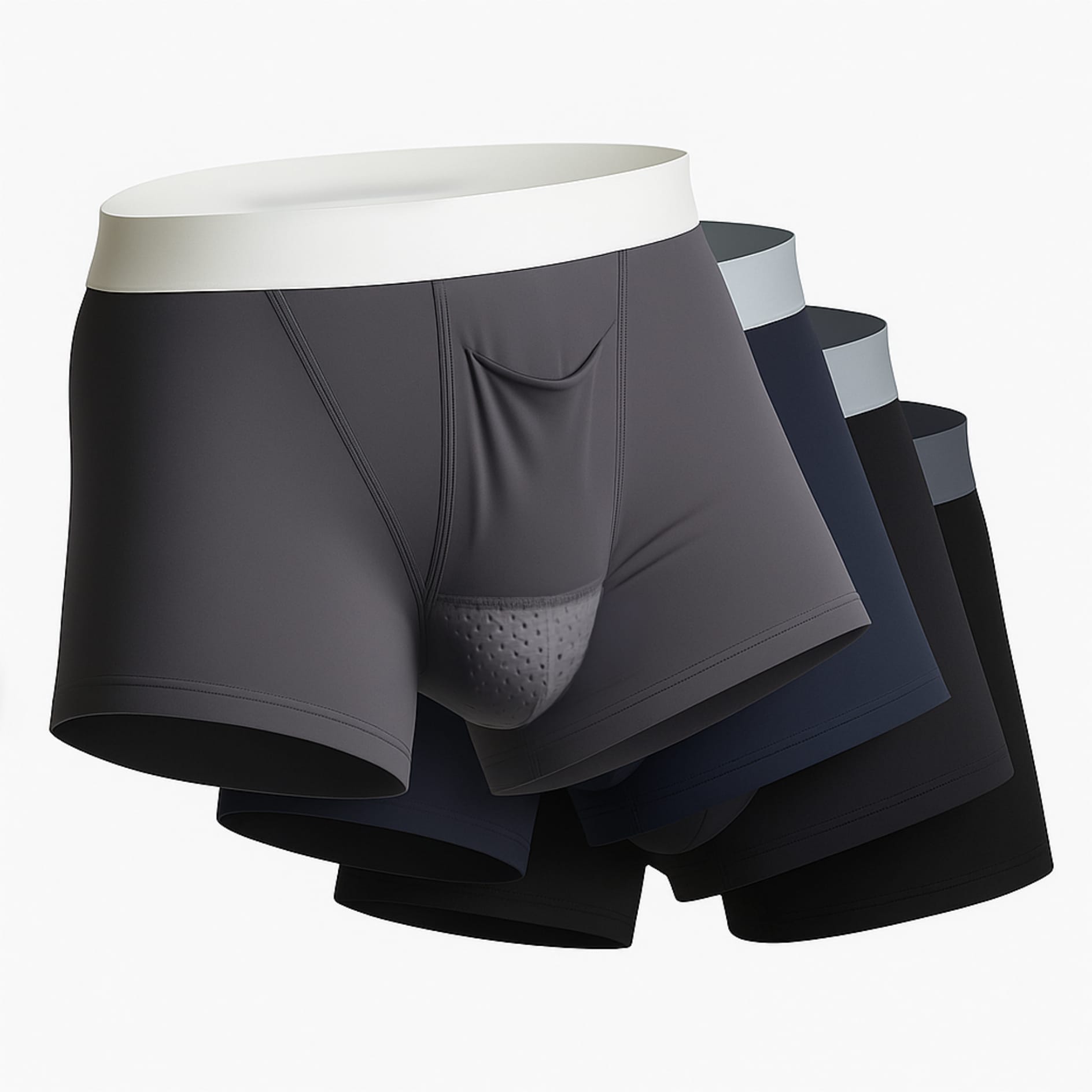
Within the microscopic architecture of the seminiferous tubules, Sertoli cells form the blood-testis barrier through tight claudin and occludin junctions, shielding developing spermatocytes from systemic toxins and immune surveillance. When testicular tissue experiences an extra 2°C of heat, these junctional proteins destabilize, allowing macromolecular leakage that prompts local inflammatory responses. Furthermore, early primary spermatocytes undergoing the pachytene stage of meiosis are extraordinarily heat-sensitive; hyperthermia halts chromosomal crossing-over, arresting cellular maturation before spermatids can form. Relieving this thermal burden requires physical separation from the pelvic basin and modern textile engineering. Utilizing temperature-reducing varicocele underwear with dedicated ergonomic structural pouches lifts the scrotal sac away from the groin, preventing skin-on-skin conduction while utilizing breathable, heat-dissipating textiles to lower local tissue warmth back toward physiological ranges.
Thermodynamic Material Properties and Moisture Dissipation
The physics of fabric thermal conductivity plays an underappreciated role in managing scrotal hyperthermia. Traditional cotton briefs absorb moisture and retain it within the fabric weave, creating a humid microclimate that blocks natural evaporative heat loss. As sweat accumulates against the scrotal wall without evaporating, latent heat transfer drops to zero, turning underwear into an insulating barrier that traps pelvic warmth. Comparing structural textiles in micro modal vs cotton scrotal temperature assessments shows that semi-synthetic cellulosic fibers exhibit superior thermal conductivity and rapid vapor transmission rates. Natural micro-modal fibers pull moisture away from the scrotum, enabling continuous evaporative cooling even throughout sedentary office work or physical exertion, thereby preserving the thermal gradient necessary for pampiniform venous efficiency.
Clinical Implications: Semen Quality and Varicocele Staging
Urologists evaluate varicoceles through the Dubin and Amelar grading system: Grade I varicoceles are palpable only during the Valsalva maneuver, Grade II are palpable at rest, and Grade III are clearly visible through the scrotal skin. However, thermographic assessments reveal that even a non-palpable subclinical varicocele can induce bilateral thermal damage due to trans-scrotal collateral veins transferring warmed venous blood across the midline septum. When gonadal heat stress persists unmanaged, patients experience progressive declines across all semen parameters, known clinically as oligoasthenoteratozoospermia. Selecting the best varicocele underwear provides passive external thermoregulation that relieves testicular gravitational drag, reduces vascular pooling, and helps mitigate secondary scrotal hyperthermia alongside medical or surgical treatment pathways.
Evidence-Based Protocols for Scrotal Temperature Management
Recovering sperm count and motility requires continuous temperature control sustained over a complete 90-day spermatogenic and epididymal maturation cycle. Clinical management begins with eliminating external heating habits: avoiding hot tubs, dry saunas, seated laptop use, and prolonged sedentary periods without movement breaks. Men managing varicocele-induced scrotal heat stress should combine anatomical scrotal elevation with moisture-wicking cooling textiles during both working hours and sleep. Clinicians recommend obtaining a baseline semen analysis with high-accuracy DNA fragmentation testing alongside color Doppler scrotal ultrasound to measure venous reflux diameter. By combining behavioral modifications, anatomical support garments, and medical monitoring, patients can protect fragile germ cells from thermal degradation, stabilize sperm DNA integrity, and re-establish the precise thermal microclimate necessary for optimal male reproductive function.
Related Articles

Choose Varicocele Support Designed for Cooling, Lift, and Daily Comfort
You’ve seen why regular underwear often falls short. Now view the purpose-built option made to reduce heaviness, improve support, and feel comfortable enough for everyday wear.