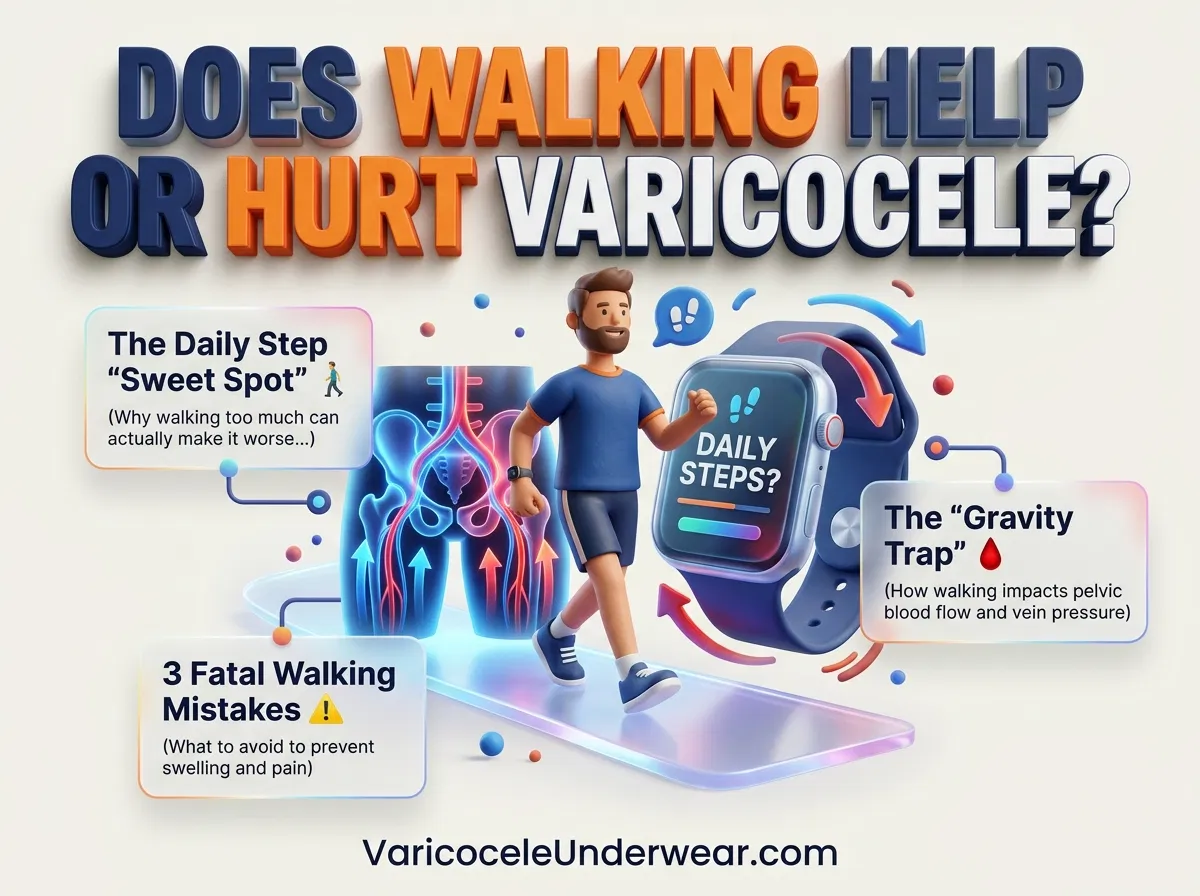
Men diagnosed with an enlarged pampiniform plexus often ask a fundamental question: is walking good for varicocele management, or does being on your feet all day make scrotal swelling worse? The clinical reality hinges on a striking paradox in venous hemodynamics. Prolonged stationary standing causes venous blood to pool under the relentless pull of gravity, stretching weakened vascular walls and worsening that familiar, dull scrotal ache. In contrast, purposeful walking activates the lower extremity and pelvic muscular pumps, actively assisting upward venous drainage back toward the inferior vena cava. When you establish thoughtful daily step goals for pelvic blood flow, you directly stimulate circulation without triggering high intra-abdominal pressures. Understanding the distinctive walking benefits for scrotal veins allows you to protect your testicular health, reduce daily heaviness, and stay active without aggravating your condition.
Walking as a Skeletal Muscle Pump Aid
To evaluate why ambulation assists scrotal circulation, one must look at basic vascular mechanics. The pampiniform plexus relies on competent internal spermatic vein valves to keep blood traveling upward toward the renal vein on the left and the inferior vena cava on the right. When those valves become incompetent, blood flows backward, causing retrograde pooling and elevated hydrostatic pressure. When you remain motionless, your vascular system lacks the mechanical compression needed to propel this column of blood upward against gravity. Peer-reviewed research on skeletal muscle pump vascular physiology shows that rhythmic calf contractions compress deep veins, creating periodic drops in pressure that draw blood out of congested pelvic and genital venous networks.
Every stride you take engages your gastrocnemius, soleus, quadriceps, and gluteal muscles. This rhythmic contraction and relaxation cycle acts like a peripheral heart. As venous pressures drop transiently in the deep pelvic veins during stride cycles, the pampiniform plexus can drain more freely. Unlike high-impact jogging or heavy powerlifting, which sharply increase intra-abdominal pressure and force blood back down into the scrotum, brisk walking provides a gentle, low-pressure hemodynamic assist. Men who learn how gentle movement fits into long-term care can explore our clinical guide on cardiovascular workouts and running with a varicocele to understand where walking ends and higher strain activities begin.

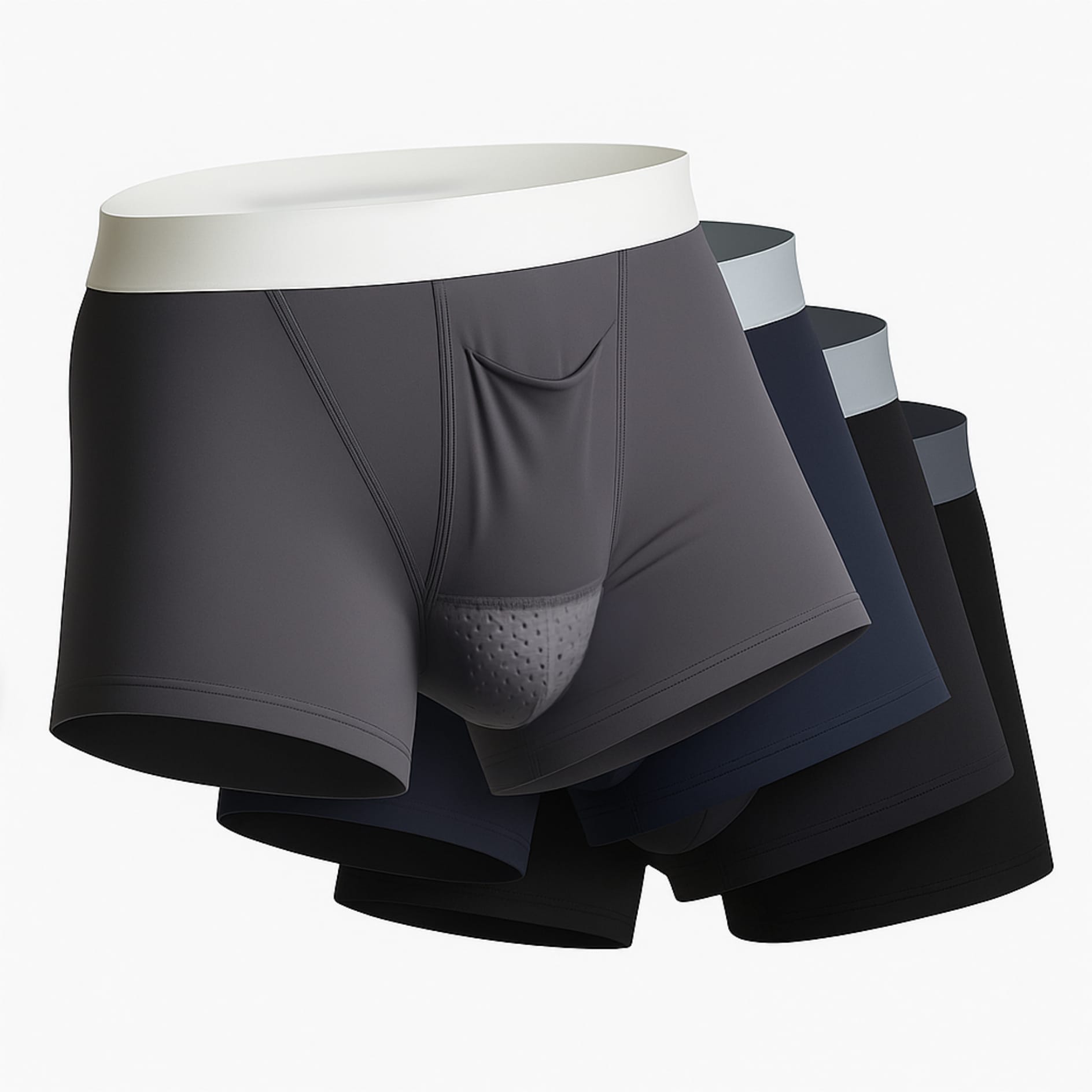
Discover specialized varicocele underwear designed for daily comfort, support, and recovery — a more targeted option for men who want support without compromise.
Discover the Recommended OptionWalking steadily activates your lower pelvic muscular pump, but this circulatory benefit is quickly compromised if your scrotal sac is permitted to dangle, swing, and overheat during movement. Heat is a known enemy of testicular function, reducing sperm quality and promoting vascular dilation that expands damaged vein walls. When you walk, friction and ambient heat accumulate rapidly in the groin. Wearing proper anatomical support that lifts the testicles away from hot inner thighs and keeps the veins compressed prevents this heat trap. Choosing specialized daily walking underwear for varicocele relief gives you targeted scrotal elevation and passive heat dissipation, ensuring that your strides actively drain congested veins rather than stretching them under increased thermal stress.
Walking vs. Prolonged Standing Fatigue
The physical sensation of varicocele pain changes drastically depending on whether you are walking or standing still. Prolonged static standing creates continuous hydrostatic pressure on the spermatic cord. Cashiers, factory workers, and retail staff frequently report severe evening scrotal dragging because the static column of blood inside the internal spermatic vein pushes relentlessly against defective vascular valves. Over eight hours, this persistent pressure stretches fragile vessel walls, triggers local tissue hypoxia, and creates inflammatory discomfort around the testicle.
When you replace static standing with active pacing, the mechanical dynamic changes completely. The constant contraction of the pelvic floor and lower limbs breaks up static pooling, lowering localized venous tension. If you want a complete breakdown of conservative management strategies that do not involve surgical ligation or embolization, examine our guide on ways to reduce varicocele symptoms without surgery. For men seeking clear clinical confirmation on everyday mobility, our detailed review on how walking influences varicocele recovery demonstrates that active strides consistently produce superior hemodynamic outcomes compared to stationary upright postures.
| Clinical Variable | Static Standing | Active Walking |
|---|---|---|
| Hydrostatic Pressure | High and continuous on spermatic cord | Pulsatile and relieved by muscle pump |
| Venous Drainage Rate | Stagnant with retrograde pooling | Accelerated toward internal iliac system |
| Scrotal Temperature | Elevated due to localized blood stagnation | Controlled when paired with breathable gear |
| Venous Valve Strain | Severe and persistent vascular wall tension | Intermittent and lowered by pressure cycles |
| Symptom Trajectory | Progressive throbbing and heavy ache | Decreased congestion and relief from fullness |
Optimal Daily Step Goals for Circulation
Achieving healthy pelvic circulation does not require exhausting long-distance hikes. In fact, walking excessive miles without sufficient scrotal stabilization can lead to chafing, thermal build-up, and fatigue-induced dragging sensations. Clinical observation shows that a target of 7,000 to 9,000 steps per day, distributed into smaller walking bouts rather than done in a single marathon trek, provides the best vascular stimulus for men with grade 1, grade 2, or grade 3 varicoceles.
Structuring your daily activity into three distinct 20-minute sessions of approximately 2,000 to 2,500 steps helps prevent venous pooling before it takes hold. Taking a morning walk before work, an active stroll during your lunch break, and an evening walk allows your calf and pelvic muscles to clear stagnant blood three separate times throughout the day. If your work requires prolonged desk sitting, brief two-minute walks around the office every hour maintain healthy blood flow and stop deep pelvic congestion from forming. Men looking to equip themselves with the correct baseline apparel for these daily step targets should review our guide to the best varicocele underwear for men.
To maximize circulation while protecting scrotal veins during your walks, maintain an upright posture with a neutral pelvis. Slumping forward or tucking your pelvis excessively tightens the iliopsoas muscles, which can compress femoral vessels and slow venous return from your legs and scrotum. Keep your stride comfortable, avoid stomping your heels, and finish your longest walking block by lying flat with your legs elevated above your chest for five minutes. This simple combination of low-impact walking, targeted scrotal support, and post-walk elevation uses gravity to your advantage, keeping your pelvic veins healthy, cool, and comfortable throughout the day.
Related Articles



Choose Varicocele Support Designed for Cooling, Lift, and Daily Comfort
You’ve seen why regular underwear often falls short. Now view the purpose-built option made to reduce heaviness, improve support, and feel comfortable enough for everyday wear.