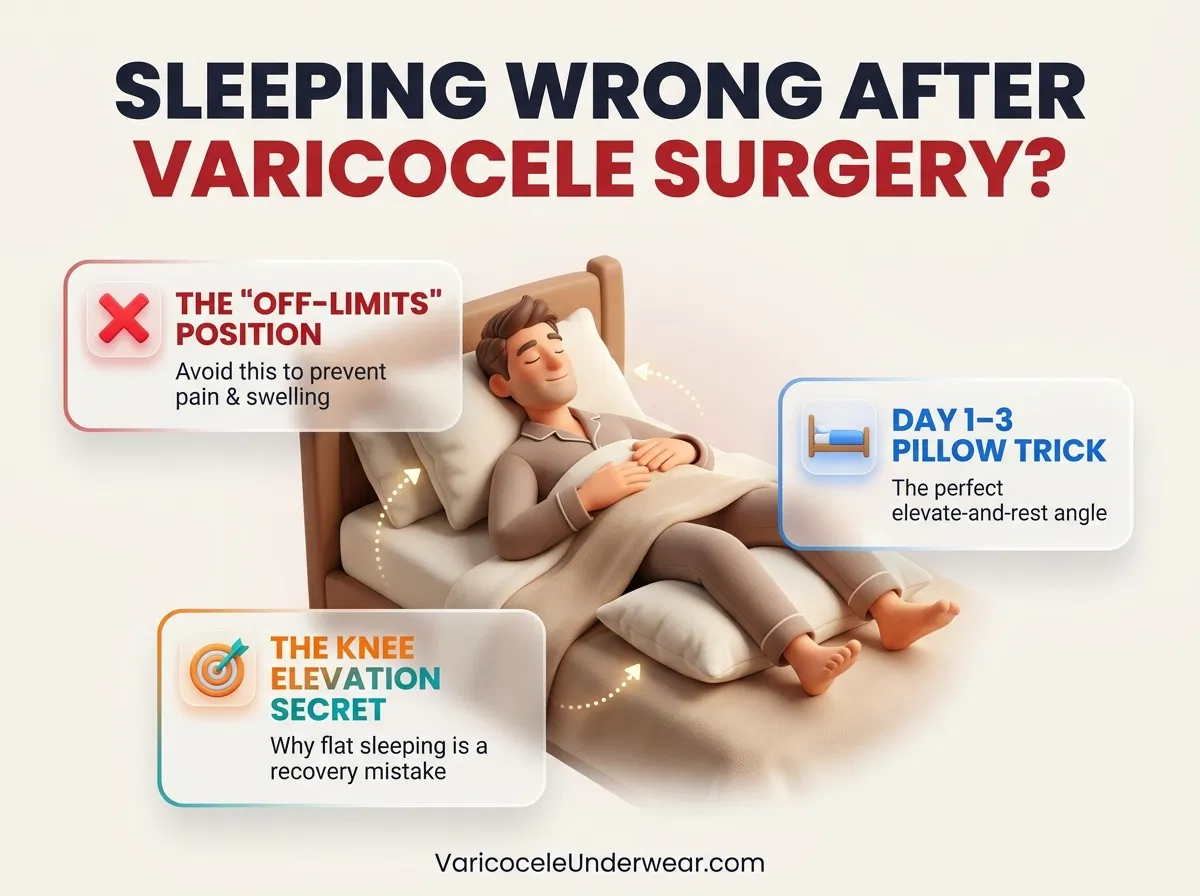
Learning how to sleep after varicocelectomy starts with building a supportive resting nest before you arrive home from the clinic. During your pillow setup days 1-7 recovery phase, your physical goal is keeping your upper body slightly raised while lifting your knees to remove mechanical drag from your groin. Gravity can cause fluid to accumulate in healing scrotal tissues when you lie flat. Adopting correct post-op resting positions for swelling prevents fluid pooling, cuts down on incision pulling, and protects the delicate surgical repair while you rest.
Why Proper Sleep Positioning Matters Post-Op
When a surgeon repairs a varicocele, they isolate and ligate (tie off) enlarged veins inside the spermatic cord. This cord carries blood vessels, nerves, and the vas deferens through the groin. In the immediate postoperative window, local lymphatic channels and venous pathways need time to clear normal fluid. If you sleep completely flat on your back, venous return from your pelvis slows down. That fluid lag creates edema, which is the medical term for excess fluid swelling inside body tissues. As fluid gathers in the scrotum, it stretches sensitive nerve endings and puts unwanted stress on the internal sutures.
The surgical recovery standards from the National Center for Biotechnology Information emphasize scrotal elevation and quiet bed rest during early tissue healing. Without proper elevation, nighttime blood pressure shifts can cause swelling or provoke a hematoma, a collection of pooled blood that hardens under the incision. Furthermore, sudden movements while you sleep can tug on your lower abdomen. Following an established microsurgical varicocelectomy recovery timeline helps you monitor your milestones, but your night-to-night sleep alignment dictates how quickly your discomfort resolves during the first seventy-two hours.

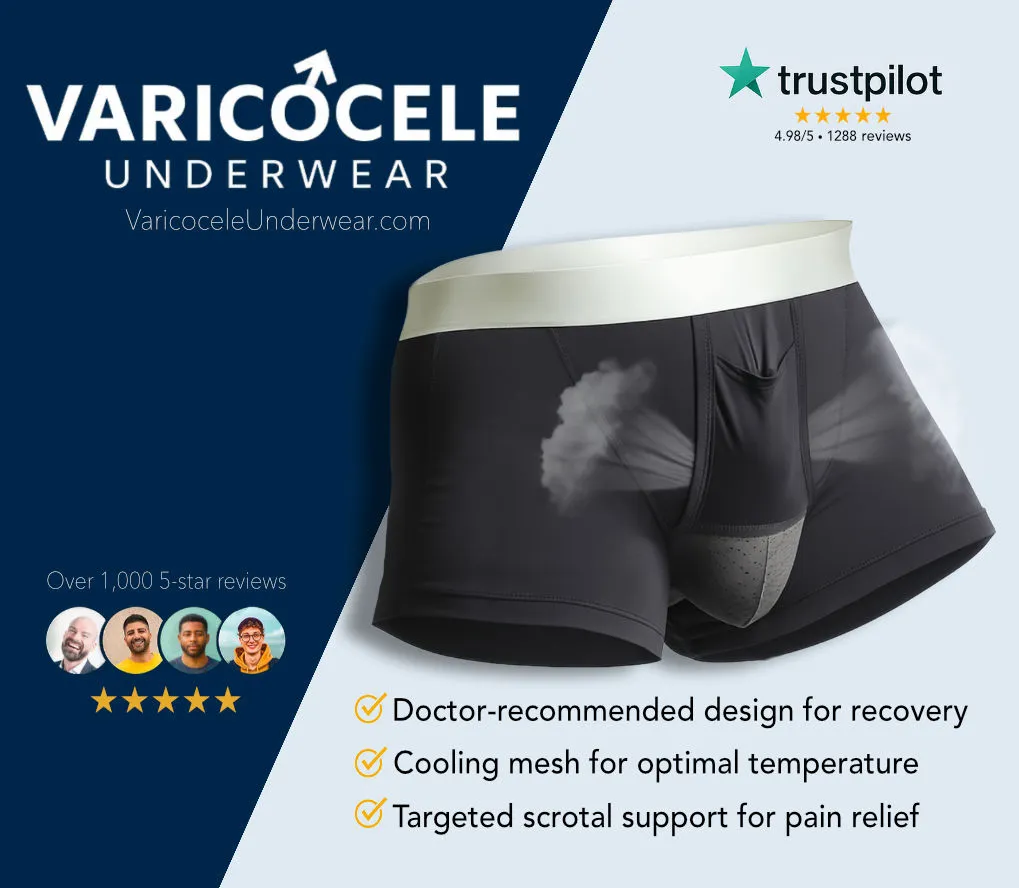
Discover specialized varicocele underwear designed for daily comfort, support, and recovery — a more targeted option for men who want support without compromise.
Discover the Recommended OptionThe Ideal Pillow Setup for Days 1 to 7
Your bed arrangement should change as your body moves through the first week of tissue repair. During days one through three, you must avoid sleeping directly on your stomach or sides. Lying flat pulls the hip flexors tight, which tugs at the external inguinal ring where your surgeon worked. You can master how to sleep after varicocelectomy by creating a semi-reclined contour using three to four pillows. Place two standard pillows beneath your head and upper back at roughly a twenty to thirty-degree incline. Next, position two thick pillows underneath your knees. Bending your knees softens the iliopsoas muscles, eliminates tension on your incision, and keeps your hips from rotating off-center while you drift off.
By days four through seven, acute swelling begins to drop, but the scrotum remains tender to friction and sudden turns. If back sleeping feels unbearable after several days, you may transition cautiously to side sleeping using dedicated supports. Review these varicocele best sleep positions before trying a lateral posture. Never allow your top leg to cross over the bottom leg, as that scissors the groin and compresses the operated testicle. Instead, place a firm, contoured body pillow directly between your knees, calves, and ankles. This thick cushion maintains an even distance between your thighs, preventing scrotal crushing and keeping your spine in neutral alignment throughout the night.
Minimizing Nighttime Edema and Tension
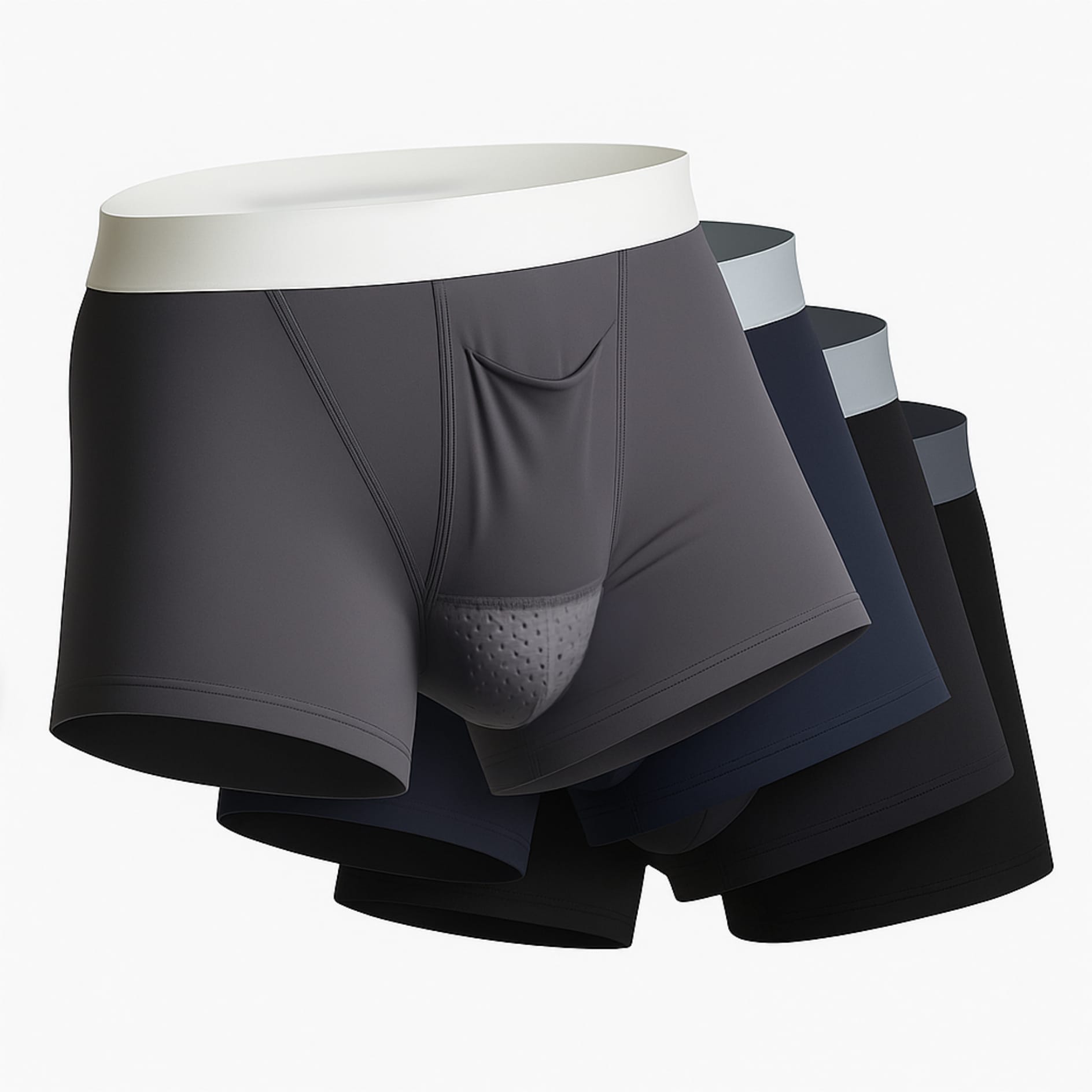
Nighttime creates unique recovery hurdles, including involuntary shifts in posture and normal nocturnal erections that can pull on inguinal tissue. You can reduce these risks by combining ergonomic pillow placement with steady external groin support. Wearing loose boxers allows the testicles to drop and drag against the mattress, producing throbbing aches. Upgrading your sleep routine with dedicated post-surgical recovery sleep briefs for varicocele secures the scrotum against the pubic bone, lifting tissues upward to promote smooth lymphatic drainage while you sleep. When paired with a firm knee pillow, this gentle physical lift prevents your groin from taking the brunt of sudden nocturnal movements.
Temperature control also plays a major role in evening comfort. While ice packs reduce inflammation during daytime resting intervals, falling asleep with an unmonitored ice pack against the groin can cause skin frostbite and reflex nerve irritation. Instead, apply a cloth-wrapped cold pack for fifteen minutes before you arrange your pillow stack, then remove it completely before turning off the lights. Investing in the best varicocele underwear provides breathable, sweat-wicking compression that keeps the operative field cool without freezing your skin. This stable setup eliminates friction between healing skin and heavy bed sheets.
| Recovery Window | Recommended Body Position | Pillow Placement Strategy | Clinical Purpose |
|---|---|---|---|
| Days 1 to 3 | Semi-Fowler (Back resting, head and knees raised) | 2 pillows under upper torso, 2 firm pillows under bent knees | Relieves abdominal wall pull, reduces scrotal hydrostatic pressure, prevents hematoma formation |
| Days 4 to 5 | Modified Supine (Back resting with slight pelvic tilt) | 1 firm pillow under head, 1 wedge cushion beneath knees | Maintains gentle hip flexion while allowing mild upper body flattening as incision soreness decreases |
| Days 6 to 7 | Supported Lateral (Side resting, unoperated side down) | 1 head pillow, 1 long body pillow between knees and ankles | Prevents thigh adduction, stops scrotal pinching, protects incision against friction and torsion |
Safe Bed Entry and Exit Mechanics
The way you enter and leave your bed matters just as much as your pillow layout. Sitting straight up from a flat lying position engages your rectus abdominis muscles, creating a sudden spike in intra-abdominal pressure. That sudden pressure bears down directly on your healing inguinal canal, risking wound separation or bleeding. To protect your groin, use the log-roll technique. From your back, bend both knees toward your chest while keeping your upper body aligned. Roll your entire torso and hips together onto your side as one unit. From there, let your feet swing gently over the edge of the mattress while using your arms to push your upper body up into a seated posture.
Pause on the edge of the bed for thirty seconds before standing up. This momentary pause lets your blood pressure normalize, reducing dizziness caused by lingering surgical anesthesia or prescription pain medication. Keep a small cushion on your bedside table. If you need to cough, sneeze, or laugh during the night, press this cushion gently against your incision site. This simple technique, known as splinting, counters sudden spikes in abdominal pressure and shields your incision from sharp, jolting pains. By combining mindful body mechanics with a structured pillow setup, you give your surgical site the quiet environment it needs to heal cleanly through week one.
Related Articles
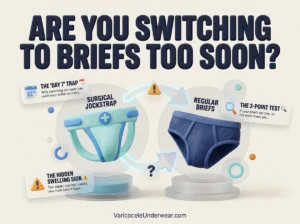

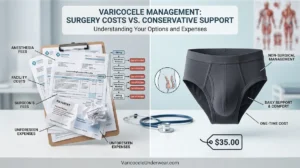

Choose Varicocele Support Designed for Cooling, Lift, and Daily Comfort
You’ve seen why regular underwear often falls short. Now view the purpose-built option made to reduce heaviness, improve support, and feel comfortable enough for everyday wear.