Discovering an unusual scrotal bulge during a routine sports physical or annual checkup often catches families completely off guard. When a pediatrician mentions an adolescent and teen varicocele, parents naturally worry about long-term physical discomfort, testicular health, and future fertility. A varicocele is an enlargement of the pampiniform venous plexus, which is the network of veins responsible for draining blood from the testicles. As a parent’s guide to early detection, understanding what this finding means helps remove anxiety and replaces fear with clear clinical facts. While hearing that your son has enlarged scrotal veins feels alarming, treating varicocele in teenagers rarely requires immediate emergency measures. Most young men manage this condition safely through careful observation, simple lifestyle adaptations, and regular monitoring throughout their growth spurts.
Understanding Adolescent Varicocele Development
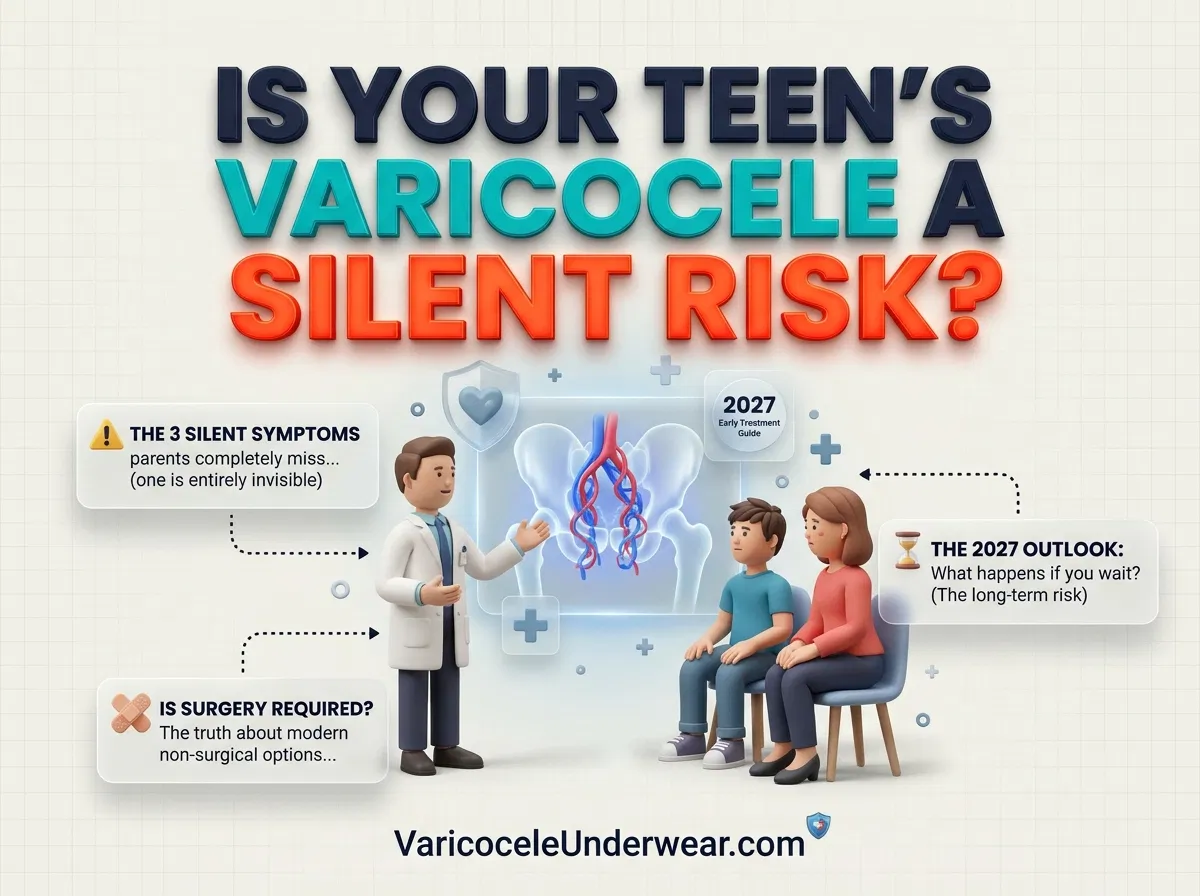
Varicoceles appear in roughly fifteen to twenty percent of adolescent boys, matching the prevalence observed in adult men. They almost never occur before age ten, emerging instead during the onset of puberty between the ages of eleven and fifteen. Rapid linear growth spurts create a sudden increase in testicular volume and blood perfusion. The testicular veins rely on tiny one-way internal valves to pump blood upwards against gravity toward the heart. If those internal valves fail to close tightly, blood flows backward and pools inside the scrotum. Because the left testicular vein enters the left renal vein at a strict ninety-degree angle, approximately ninety percent of all cases develop on the left side. You can explore a broader anatomical overview in our complete varicocele guide, which breaks down blood flow mechanics in detail.
Pediatric urologists classify varicoceles using a standardized physical grading system originally established by Dubin and Amelar. A Grade 1 varicocele is small and only felt when the teen performs a Valsalva maneuver, such as bearing down like blowing up a balloon. A Grade 2 varicocele is palpable at rest without bearing down, but not clearly visible to the naked eye. A Grade 3 varicocele is large, visible through the scrotal skin at rest, and typically described as feeling like a soft bag of worms. According to European Association of Urology pediatric urology clinical guidelines, physical examination while standing in a warm room remains the gold standard for accurate staging. Warmth relaxes the dartos muscle, allowing the examiner to inspect the vascular bundle without involuntary muscle contraction masking the swelling.

Discover specialized varicocele underwear designed for daily comfort, support, and recovery — a more targeted option for men who want support without compromise.
Discover the Recommended OptionRoutine School Screenings and Early Detection
High school athletic screenings and pre-participation sports evaluations serve as the primary setting where these vascular changes are caught. A thorough sports clearance examination always includes a brief genital inspection to identify undescended testes, hernias, and scrotal masses. Because varicoceles develop quietly without sharp pain, many boys never think to bring the issue up with their parents. A teen might notice a slight asymmetry in his scrotum or a mild ache after a long soccer practice, cross-country run, or weightlifting session. Due to normal adolescent embarrassment surrounding their changing bodies, young men frequently keep these physical sensations hidden until an examiner identifies the swelling during a physical checkup.
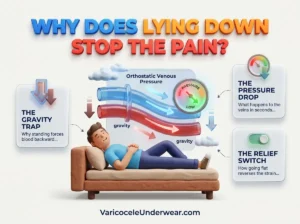
Parents should listen closely if an active teen mentions a dull, dragging heaviness in the groin after prolonged physical exertion. The discomfort typically resolves when the teenager lies flat on his back, because reclining immediately decreases hydrostatic pressure inside the spermatic cord. If a routine school screening flags a possible abnormality, your initial step is simply visiting a pediatric urologist for an ultrasound and formal evaluation. Our detailed parent guide to adolescent varicocele care outlines specific questions parents can ask during that first pediatric visit to ensure clear communication and peace of mind.
| Monitoring Component | Clinical Evaluation Method | Recommended Frequency | Actionable Pediatric Threshold |
|---|---|---|---|
| Physical Staging | Visual inspection and palpation standing and supine | Every 12 months | Progression from subclinical to Grade 2 or Grade 3 |
| Testicular Volume | Scrotal ultrasound with Lambert formula calculation | Every 12 to 24 months | Volume discrepancy greater than 20% on the affected side |
| Symptom Assessment | Subjective pain score and activity limitation review | Every 6 to 12 months | Persistent dull pain interfering with school or sports |
| Semen Parameters | Standard laboratory semen analysis (older teens only) | At Tanner Stage V (age 17+) | Sperm concentration below 15 million per milliliter |
| Peak Retrograde Flow | Color Doppler ultrasound during Valsalva maneuver | At baseline or during staging | Continuous reverse blood flow exceeding 2 seconds |
Parent Decision Framework for Teen Treatment
Deciding how to manage an adolescent varicocele depends heavily on objective measurements rather than cosmetic appearance alone. Pediatric urologists avoid unnecessary surgical intervention on asymptomatic teenagers because many varicoceles remain stable throughout adulthood without altering reproductive capacity. Clinical intervention becomes an active consideration under three specific circumstances: persistent physical pain that fails conservative therapy, measurable growth arrest in the affected testicle, or abnormal semen parameters in late adolescence. Testicular volume comparison between the left and right testicles provides the primary objective benchmark during pubertal growth. If serial ultrasound examinations confirm that the affected left testicle is more than twenty percent smaller than the right testicle, corrective intervention is usually discussed to protect future testicular function.
When corrective treatment is clinically necessary, modern urology favors minimally invasive techniques that carry rapid recovery timelines. Microsurgical subinguinal varicocelectomy utilizes high-power operative magnification to tie off malfunctioning veins while sparing delicate lymphatic channels and the testicular artery. Percutaneous embolization represents another established catheter-based option performed by interventional radiologists, using tiny coils or sclerosant agents to redirect blood flow into healthy vessels. Families weighing these options can review our comprehensive clinical breakdown on deciding if surgery is necessary to understand surgical versus non-surgical paths.
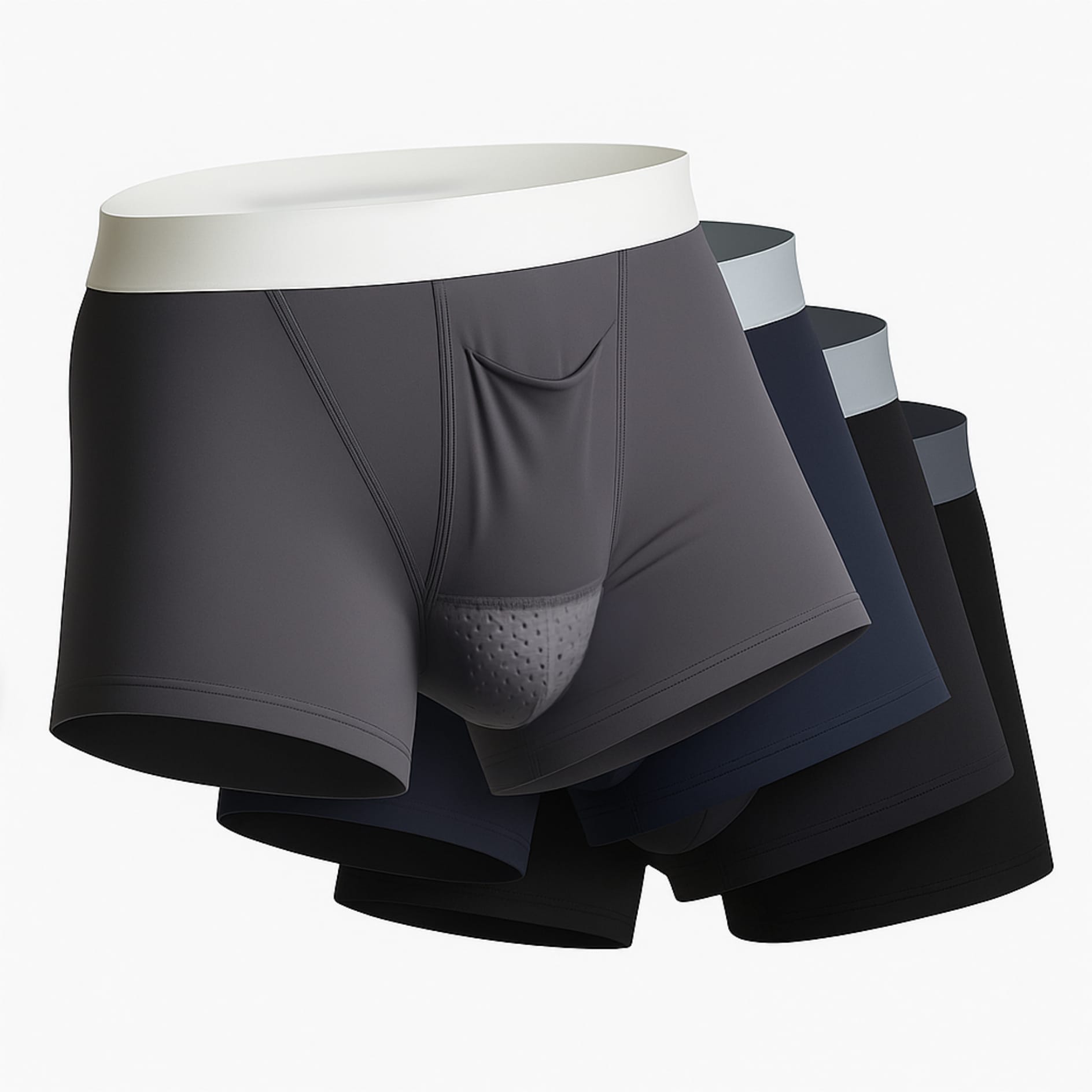
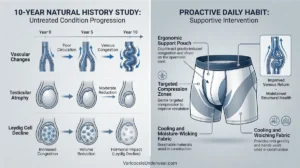
For the broad majority of young men who do not require surgical intervention, daily comfort and symptom relief remain the primary goals. Teenagers who feel self-conscious about scrotal warmth, dragging sensations, or visible fullness can find immense physical relief through proper scrotal support. Wearing loose boxer shorts allows the heavy vascular bundle to pull downward on the spermatic cord, which worsens venous congestion and post-exercise aching. Parents can provide gentle, non-surgical relief by introducing discreet varicocele underwear for teens, engineered to lift the scrotum, reduce gravitational strain, and dissipate trapped body heat. This high-confidence garment fits invisibly under athletic shorts and everyday school clothes, allowing teenage boys to participate in physical education, sports, and daily activities without physical distraction or embarrassment. You can evaluate design differences and fabric options through our guide on the best varicocele underwear styles currently available.
Supporting a teenager through a varicocele diagnosis requires calm parental guidance, routine clinical follow-ups, and open dialogue. By tracking testicular growth annually and offering practical ergonomic support for daily sports, families ensure that their sons navigate puberty comfortably while protecting their long-term reproductive health.
Related Articles

Choose Varicocele Support Designed for Cooling, Lift, and Daily Comfort
You’ve seen why regular underwear often falls short. Now view the purpose-built option made to reduce heaviness, improve support, and feel comfortable enough for everyday wear.