The Financial Toll of Untreated Varicoceles: Economic Impact of Varicocele Treatment
A varicocele is an abnormal enlargement of the pampiniform venous plexus within the scrotum, resembling a varicose vein in the leg. When internal valves fail, blood flows backward and pools around the testicles. This pooling elevates scrotal temperature by one to two degrees Celsius, disrupting the cooler climate required for spermatogenesis. Over time, chronic hyperthermia and venous congestion trigger oxidative stress, causing sperm DNA fragmentation and gradual cellular injury to both Sertoli and Leydig cells. Left unchecked, what begins as a mild, intermittent ache or minor semen abnormality frequently progresses to testicular atrophy and secondary hypogonadism. Weighing the varicocele treatment cost vs risks reveals that observational neglect is rarely passive. In reality, leaving dysfunctional scrotal veins uncorrected exposes men to progressive tissue deterioration that drives up lifetime medical spending.Upfront Surgery Cost vs. Lifetime IVF Expenses
Microsurgical subinguinal varicocelectomy remains the clinical gold standard for repair under current American Urological Association (AUA) guidelines. During this outpatient operation, an operating microscope allows the surgeon to ligate dilated spermatic veins while preserving testicular arteries, lymphatics, and the vas deferens. Patients paying out-of-pocket or managing commercial insurance deductibles often encounter a varicocele surgery cost in the USA ranging from $6,000 to $12,500. This single sum includes the surgical fee, ambulatory surgical center charges, and anesthesiology. Navigating these charges requires familiarity with administrative coding, particularly verifying CPT code varicocelectomy billing parameters to secure maximum coverage before entering the operating room. While an $8,000 or $10,000 bill represents a noticeable immediate expense, it constitutes a one-time capital outlay that permanently fixes the mechanical vascular defect.In contrast, couples who bypass varicocele repair are routinely directed toward assisted reproductive technology (ART), specifically in vitro fertilization paired with intracytoplasmic sperm injection (ICSI). An individual IVF and ICSI cycle averages $20,000 to $28,000 out-of-pocket when factoring in ovarian stimulation medications, laboratory micromanipulation, and embryo freezing. Rigorous healthcare economic modeling studies indicate that the average live birth rate per ICSI cycle for male-factor cases rarely exceeds 30% to 35%. Consequently, most couples require two to three full cycles before achieving a successful pregnancy, pushing direct expenditures between $50,000 and $85,000. If the couple later plans for a second or third child, they must repeat these expensive cycles from scratch. Correcting the male factor through surgery, on the other hand, frequently restores spontaneous fertility, allowing multiple natural conceptions without additional financial strain.Long-Term Savings of Endocrine Restoration
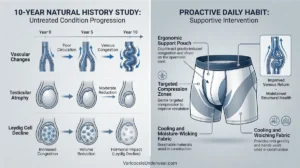
Beyond sperm parameters, the endocrine consequences of untreated scrotal venous congestion are substantial. Leydig cells reside in the testicular interstitial space and produce over 95% of circulating male testosterone. When exposed to chronic heat stress and venous stasis, these endocrine cells exhibit marked functional decline. European Association of Urology (EAU) guidelines and modern andrology trials establish that surgical ligation of clinical varicoceles leads to a mean serum total testosterone increase of 100 to 140 ng/dL in hypogonadal men. Restoring native endocrine function protects against early-onset androgen deficiency. When men delay or avoid repair, progressive Leydig cell failure often triggers premature hypogonadism by their late thirties, necessitating exogenous hormone therapy decades earlier than their peers.Once a patient initiates lifelong Testosterone Replacement Therapy (TRT), the recurring financial commitments accumulate rapidly. Commercial testosterone preparations, including weekly cypionate injections, daily transdermal gels, or subcutaneous pellets, run between $100 and $280 per month, totaling $1,200 to $3,360 annually. Proper clinical management demands quarterly or bi-annual venous blood panels to track total testosterone, free testosterone, estradiol, complete blood count (hematocrit), and prostate-specific antigen (PSA), which adds another $800 to $1,500 per year. Factoring in mandatory specialist copays, managing hypogonadism over a 35-year window from age 40 to age 75 costs between $75,000 and $170,000 out-of-pocket. Incorporating these lifetime pharmaceutical and surveillance figures into the financial comparison IVF TRT equation proves that upfront varicocelectomy serves as an economic firewall against persistent endocrine debt.For individuals diagnosed during early stages or those seeking to manage symptoms without immediate surgery, physical support provides an essential non-invasive approach. Investing in specialized scrotal support gear from VaricoceleUnderwear.com helps counteract downward venous hydrostatic pressure and prevents dangerous heat accumulation. Wearing cost-effective non-surgical varicocele briefs provides ergonomic scrotal elevation and passive thermoregulation, relieving daily dragging discomfort while protecting testicular tissue from excessive temperatures. Men seeking conservative alternatives can evaluate options for the best varicocele underwear to reduce chronic venous distension and support healthy testicular microcirculation alongside clinical monitoring.| Cost Variable | Outpatient Varicocele Repair | Assisted Reproductive Technology (IVF / ICSI) | Lifelong Testosterone Replacement Therapy (TRT) |
|---|---|---|---|
| Initial Upfront Expense | $6,000 to $12,500 (one-time fee) | $20,000 to $28,000 (per attempt) | $400 to $800 (initial labs and consultation) |
| Medication Requirements | $50 to $150 (short-term recovery) | $4,000 to $8,000 (per stimulation cycle) | $1,200 to $3,360 (per year ongoing) |
| Follow-Up Diagnostics | $300 to $600 (semen analysis and checkup) | $1,500 to $3,500 (embryo storage and prep) | $800 to $1,500 (annual endocrine labs) |
| Duration of Financial Output | 3 to 6 months | 1 to 4 years (multiple cycles) | 30 to 40 years (permanent therapy) |
| Estimated Lifetime Out-of-Pocket | $6,500 to $13,500 | $50,000 to $90,000+ | $75,000 to $170,000+ |
Related Articles


Expert Recommendation
Discover specialized varicocele underwear designed for daily comfort, support, and recovery — a more targeted option for men who want support without compromise.
Discover the Recommended Option
Why Specialized Support Helps
✓ Better support can help reduce the feeling of heaviness.
✓ Breathable, cooling fabrics may help with temperature regulation.
✓ A purpose-built fit can feel more comfortable for daily wear and recovery.
Take the Next Step
Choose Varicocele Support Designed for Cooling, Lift, and Daily Comfort
You’ve seen why regular underwear often falls short. Now view the purpose-built option made to reduce heaviness, improve support, and feel comfortable enough for everyday wear.
✓ Cooling mesh comfort
✓ Supportive ergonomic lift
✓ Discreet for all-day wear