
Most men with varicocele have a straightforward case: faulty venous valves in the spermatic vein allow blood to pool. But for a subset of patients, especially those with persistent pain, hematuria (blood in urine), or failed standard treatment, there’s a vascular culprit that rarely gets discussed: nutcracker syndrome. This condition involves compression of the left renal vein between two major blood vessels, and it directly causes varicocele by obstructing testicular vein outflow. Understanding this connection can change your diagnosis, your treatment approach, and your outcomes.
What Is Nutcracker Syndrome?
Nutcracker syndrome (NCS) occurs when the left renal vein gets compressed between the abdominal aorta and the superior mesenteric artery (SMA), the two large vessels that run like a “nutcracker” on either side of the vein. This compression raises venous pressure in the left renal vein and, because the left testicular vein drains directly into it, causes retrograde (backward) blood flow into the pampiniform plexus, producing a varicocele.
A less common variant, posterior nutcracker syndrome, involves the renal vein being trapped between the aorta and the vertebral column. Both forms produce elevated left renal vein pressure with downstream consequences in the gonadal, adrenal, and lumbar venous systems. NCS is more prevalent in lean individuals (low body mass index) because reduced retroperitoneal fat reduces the cushioning between these vessels.
How Common Is the Nutcracker-Varicocele Connection?
Exact prevalence is difficult to establish because NCS is underdiagnosed, often because clinicians don’t look for it. Studies using CT angiography and intravascular pressure measurements suggest that NCS may account for a meaningful proportion of recurrent or treatment-resistant left varicoceles. In some series of young, lean men with persistent left-sided varicocele despite embolization, venographic evaluation reveals nutcracker physiology as the primary driver.
This has significant clinical implications: standard varicocele embolization or ligation treats the testicular vein but doesn’t address the upstream renal vein compression. If the nutcracker physiology is left untreated, varicocele recurrence is expected. This aligns with data on varicocele recurrence after embolization, where a subset of patients fail multiple treatments without a clear anatomical explanation.

Discover specialized varicocele underwear designed for daily comfort, support, and recovery — a more targeted option for men who want support without compromise.
Discover the Recommended OptionSymptoms of Nutcracker Syndrome
NCS produces a characteristic symptom cluster that overlaps with, but extends beyond, standard varicocele:
- Left-sided varicocele (often Grade 2-3, sometimes recurrent)
- Hematuria (blood in urine, gross or microscopic) – due to renal vein hypertension causing glomerular leakage
- Left flank or loin pain, worsened by standing or exercise
- Orthostatic proteinuria (protein in urine only when standing)
- Pelvic congestion syndrome in women (female equivalent of NCS)
- Fatigue and orthostatic intolerance in severe cases
- Left scrotal/testicular pain that fails standard varicocele treatment
The combination of hematuria plus left varicocele should prompt immediate investigation for NCS or renal pathology. This symptom pairing is rarely coincidental.
| Feature | Primary Varicocele | Nutcracker Syndrome-Caused Varicocele |
|---|---|---|
| Mechanism | Valve incompetence | Renal vein compression |
| Hematuria | Absent | Often present |
| Flank pain | Absent | Common |
| Recurrence after treatment | Possible (10-15%) | High if NCS untreated |
| BMI association | No clear link | Low BMI/lean body type |
How Nutcracker Syndrome Is Diagnosed
Diagnosis requires a high index of clinical suspicion and specific imaging. Standard scrotal Doppler ultrasound will confirm the varicocele but will not identify NCS. The following studies are used:
- CT angiography or MR angiography – cross-sectional imaging to visualize aortomesenteric angle and measure the left renal vein at the compression point
- Doppler ultrasound of the renal vein – elevated velocity ratio at the hilar vs. compressed segment (ratio >4 is diagnostic)
- Selective venography with pressure measurements – gold standard; a reno-caval pressure gradient above 3 mmHg confirms hemodynamically significant NCS
- Urinalysis and urine microscopy – to detect hematuria and proteinuria
Referral to a vascular surgeon or interventional radiologist with experience in pelvic venous disorders is essential once NCS is suspected.
Treatment Options for Nutcracker Syndrome
Treatment depends on symptom severity and the degree of hemodynamic compromise. Options range from watchful waiting in mild cases (especially adolescents who may improve with growth and weight gain) to endovascular and surgical intervention in significant cases.

- Conservative management: weight gain in lean patients, activity modification, compression garments; appropriate for mild symptoms and adolescents
- Left renal vein stenting: endovascular placement of a stent to maintain the open lumen; minimally invasive and increasingly favored
- Left renal vein transposition: surgical repositioning of the renal vein to relieve compression; gold standard for severe cases
- SMA transposition: surgical alteration of SMA angle to create more space for the renal vein
- Gonadal vein ligation or embolization: addresses the varicocele symptom but does not fix the underlying NCS; acceptable as adjunct only
When varicocele embolization is planned for suspected NCS, comparing embolization to surgical varicocele treatment in the context of nutcracker physiology requires specialist input, as the treatment hierarchy is different from primary varicocele cases.
Living With Nutcracker Syndrome: Practical Daily Management
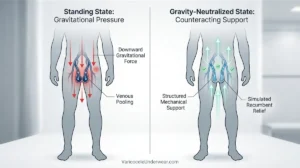
For men awaiting treatment or managing mild NCS, several practical measures reduce venous pressure and symptom burden. Avoiding prolonged standing, maintaining consistent hydration, and wearing scrotal support are reasonable first-line strategies. Supportive underwear designed for varicocele reduces gravitational venous pooling and provides day-to-day comfort during the diagnostic and treatment process.
Understanding the broader picture of your vascular anatomy can prevent unnecessary repeat procedures and help you have more productive conversations with your urologist and vascular surgeon. The complete varicocele treatment guide provides context for where NCS-related varicocele fits in the overall management spectrum.
FAQ: Varicocele and Nutcracker Syndrome
Can nutcracker syndrome cause varicocele on both sides?
NCS primarily causes left-sided varicocele because the left renal vein is the one compressed. However, severe NCS with significant pelvic venous hypertension can produce collateral venous congestion affecting the right side indirectly. Bilateral varicocele with concurrent hematuria should always trigger NCS evaluation in addition to a kidney mass workup.
Is nutcracker syndrome serious?
It ranges from mild (asymptomatic or minor hematuria that resolves with observation) to severe (significant hematuria, chronic pain, renal dysfunction from sustained venous hypertension). Most mild-to-moderate cases are managed conservatively. Severe cases with ongoing hematuria and hemodynamic compromise need vascular intervention to prevent long-term renal impairment.
Why does my varicocele keep coming back after embolization?
Recurrent varicocele after embolization or surgery should prompt evaluation for nutcracker syndrome, especially if you’re lean, young, have hematuria, or have left flank pain. Treating only the testicular vein while NCS is active leaves the root cause unresolved. Request a venographic assessment or CT angiography before any repeat varicocele procedure.
Related Articles
Choose Varicocele Support Designed for Cooling, Lift, and Daily Comfort
You’ve seen why regular underwear often falls short. Now view the purpose-built option made to reduce heaviness, improve support, and feel comfortable enough for everyday wear.