One of the most contentious debates in male reproductive medicine centers on ultrasound reports that detect backward venous flow when no physical enlargement can be felt during an examination. When couples encounter unexpected conception delays, an evaluation often reveals a subclinical varicocele fertility issues no veins diagnosis that leaves both partners confused. A clinical exam might reveal smooth anatomy without a classic bag of worms texture, yet scrotal Doppler imaging detects retrograde flow. Does this invisible vein reflux conception obstacle truly harm male fertility, or is it an incidental imaging artifact that distracts from other issues? Clinicians frequently debate whether treating non-palpable varicocele pathology yields real clinical benefits or simply introduces unneeded interventions. Understanding the physical mechanics of hidden venous reflux is the first step toward making sound, evidence-based choices for your reproductive health.
Understanding Subclinical Varicoceles
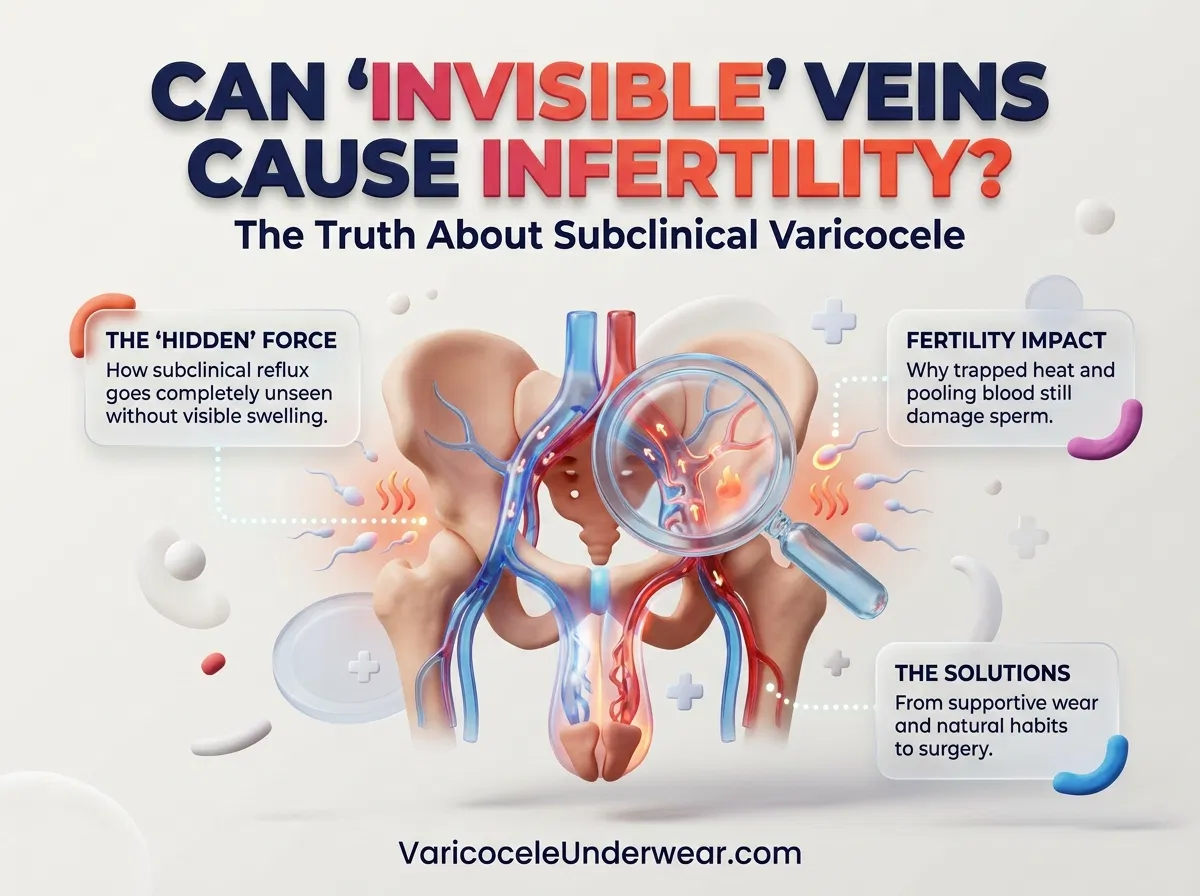
A varicocele represents an abnormal dilation and pooling of blood inside the pampiniform venous plexus, which drains the testicles. In everyday urological practice, varicoceles are categorized by severity. Grade 1 varicoceles are detectable only while the patient bears down during a Valsalva maneuver. Grade 2 varicoceles can be palpated without bearing down, while Grade 3 varicoceles are visible through the scrotal skin. In contrast, a subclinical varicocele cannot be felt by a urologist during a physical examination, regardless of patient posture or abdominal pressure. It is detected solely through high-resolution imaging, typically color Doppler ultrasound. If you want to understand how this silent condition develops, explore our clinical overview of subclinical varicocele fertility issues no veins to see how early structural changes begin.
Under healthy conditions, tiny one-way venous valves prevent blood from traveling backward down the internal spermatic vein toward the scrotum. When these microvalves weaken, gravity pulls venous blood downward, creating hydrostatic backpressure. In clinical grades, this pressure causes substantial vessel distension. In subclinical cases, the venous diameter remains modest, often hovering between 2.5 and 2.9 millimeters. Even without visible swelling, subtle retrograde flow persists. This gentle reflux can interfere with the scrotum’s specialized cooling system, which normally keeps testicular tissue approximately two to three degrees Celsius cooler than core body temperature.

Discover specialized varicocele underwear designed for daily comfort, support, and recovery — a more targeted option for men who want support without compromise.
Discover the Recommended OptionWhen Invisible Reflux Appears on Ultrasound
Color Doppler ultrasound is the standard tool for diagnosing scrotal vascular conditions. During the scan, an experienced sonographer measures the resting diameter of the pampiniform veins while you lie flat, then observes what occurs when you bear down. Peak retrograde flow velocity and reflux duration serve as key diagnostic criteria. If blood flow reverses for longer than one to two seconds during a Valsalva maneuver, reflux is officially confirmed. The central question remains: does this brief, non-palpable surge create measurable testicular stress? Research indicates that even minor blood pooling can elevate oxidative stress markers within seminal fluid, which may gradually degrade semen quality over time.
When chronic vascular pooling occurs, it disrupts local microcirculation and decreases oxygen delivery to delicate germ cells. Men experiencing persistent conception delays frequently show drops in progressive motility, atypical sperm morphology, and diminished sperm concentrations despite normal physical exams. Beyond conventional parameters, hidden reflux correlates with elevated DNA strand breaks. Evaluating a complete varicocele semen analysis and DNA fragmentation report provides crucial clarity on whether microvascular dysfunction is actively damaging the genetic integrity of your sperm.
| Clinical Metric | Palpable Varicocele (Grades 1 to 3) | Subclinical Varicocele |
|---|---|---|
| Physical Examination | Easily or moderately felt on manual palpation | Non-palpable under all conditions |
| Typical Resting Vein Diameter | Greater than 3.0 to 3.5 millimeters | 2.0 to 2.9 millimeters |
| Diagnostic Requirement | Physical exam by urologist | Color Doppler ultrasound scan |
| Guideline Treatment Consensus | Surgical repair or embolization advised | Routine repair generally not advised |
| Primary Mechanism of Harm | Elevated scrotal heat, high oxidative stress | Mild heat retention, localized tissue stress |
Does Treatment Improve Fertility Outcomes?
Clinical practice guidelines from major organizations, including the American Urological Association and the European Association of Urology, maintain a clear stance on treating non-palpable varicocele cases. Surgical repair, whether via microscopic subinguinal varicocelectomy or percutaneous radiological embolization, is generally not recommended for subclinical findings alone. Randomized clinical trials have consistently shown that operating on non-palpable veins fails to produce meaningful improvements in spontaneous pregnancy rates compared to observation. For comprehensive evidence on these clinical boundaries, review the American Society for Reproductive Medicine guidelines on varicocele management protocols.
Before undergoing any invasive procedure, patients should carefully weigh procedural risks against documented outcomes. Inadvertent testicular artery injury, hydrocele formation, and surgical recurrence remain real risks. If you are debating invasive procedures, read our clinical guide on evaluating if you need varicocele surgery to review current clinical criteria. For the majority of men whose veins are detectable only via ultrasound, invasive surgery exposes healthy tissue to surgical trauma without reliable reproductive advantages.
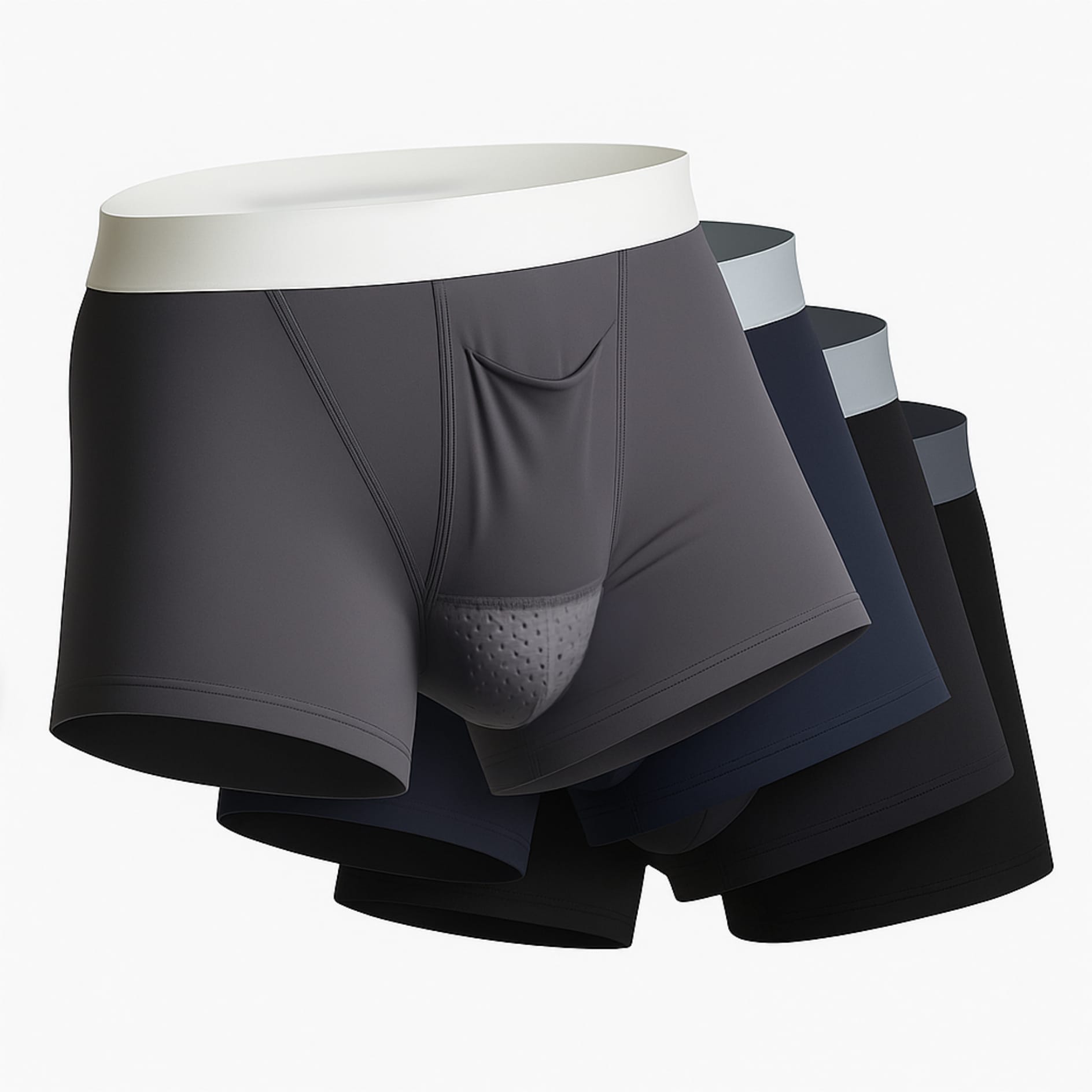
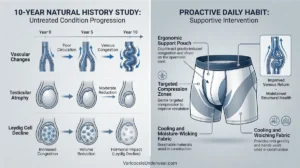
Because invasive correction rarely helps non-palpable reflux, reproductive specialists emphasize non-invasive thermal management. The underlying physiological problem with subclinical reflux is chronic scrotal hyperthermia. When warm pelvic blood lingers in the pampiniform plexus, the local countercurrent heat exchange mechanism falters. This sustained warmth suppresses Sertoli cell function, impairs testosterone synthesis inside Leydig cells, and interrupts active spermatogenesis. Proactive fertility patients can counter this heat buildup by incorporating subclinical varicocele cooling briefs from VaricoceleUnderwear.com into their daily routine. These ergonomic garments lift the scrotal sac away from warm inner thighs and use targeted cooling therapy to normalize gonadal temperature, shielding developing germ cells without surgical risks.
Lifestyle adjustments also help control subtle venous congestion. Long periods of seated desk work, prolonged hot bath use, intense heavy lifting, and tight synthetic clothing can exacerbate internal spermatic vein pressure. Alternating sitting with standing, maintaining a healthy body mass index, and choosing the best varicocele underwear styles built from breathable fabrics provide everyday relief. Pairing scrotal temperature management with an antioxidant-rich diet containing vitamins C and E, zinc, selenium, and CoQ10 lowers reactive oxygen species in the semen, supporting natural conception without operative downtime.
When faced with a subclinical varicocele diagnosis during a fertility workup, do not panic. An ultrasound showing minor venous reflux does not condemn a couple to permanent infertility, nor does it demand an immediate rush to the operating room. Work closely with an experienced reproductive urologist, repeat semen testing across a three-month spermatogenic cycle, and focus your energy on lowering scrotal temperatures and oxidative stress. By taking a thoughtful, evidence-based approach, you protect your reproductive health and make confident, informed choices for your growing family.
Related Articles

Choose Varicocele Support Designed for Cooling, Lift, and Daily Comfort
You’ve seen why regular underwear often falls short. Now view the purpose-built option made to reduce heaviness, improve support, and feel comfortable enough for everyday wear.