Every year brings new claims from medical device companies, supplement brands, and wellness technology startups about innovations in varicocele management. Most don’t survive rigorous scrutiny. Some represent genuine advances worth following. This annual report surveys the 2026 landscape of non-surgical, technology-assisted approaches to varicocele and scrotal health, separating the evidence-supported from the speculative, the clinically meaningful from the marketing-driven. From robotic surgical scopes to shear wave elastography diagnostics to wearable scrotal cooling, here is what is actually happening at the frontier of varicocele management outside the operating room.
Diagnostic Technology: Shear Wave Elastography
The most significant diagnostic advance in varicocele management in recent years is the emergence of shear wave elastography (SWE) as a supplementary imaging modality. Standard scrotal Doppler ultrasound measures venous diameter and retrograde flow; it tells you the veins are dilated and refluxing, but not the degree of tissue damage in the testicle itself. Shear wave elastography measures testicular tissue stiffness, with stiffer (fibrotic) tissue indicating greater damage to the spermatogenic microarchitecture.
A 2025 review of recent varicocele management trends confirmed that advances in imaging, specifically shear wave elastography, may improve diagnostic accuracy for predicting which varicocele patients will respond to treatment and which have irreversible testicular damage. This has direct clinical implications: a man with a clinical varicocele and elevated testicular stiffness on SWE may have a less favorable prognosis from repair than a man with the same grade varicocele and normal elasticity. SWE is not yet incorporated into standard clinical guidelines but is moving from research to specialized clinical practice at leading andrology centers.
Robotic-Assisted Varicocele Surgery: The RoboticScope
In 2024, the world’s first varicocele procedure using the RoboticScope was performed at Mubadala Health Dubai. The RoboticScope is a robotic camera system that replaces the static operating microscope, providing unprecedented magnification capabilities, surgeon-controlled positioning without an assistant, superior ergonomics, and image clarity beyond conventional operating microscopes. The surgeon controls the scope direction and focus independently, eliminating the need for a scope-holding assistant and allowing optimal positioning throughout the procedure.
The clinical significance is in the precision of lymphatic and arterial preservation, the primary determinants of hydrocele and testicular atrophy rates after varicocelectomy. If the RoboticScope enables more consistent identification of the lymphatic channels and testicular artery than conventional microscopy, it could further reduce the already-low complication rates of microsurgical varicocelectomy. This technology is in early clinical adoption; head-to-head outcome data comparing RoboticScope-assisted to conventional microsurgical varicocelectomy is not yet available but is expected within the next 2-3 years.
Venous Bypass: A Theoretical Surgical Alternative
A provocative December 2025 paper published in Dove Press examined whether venous bypass (shunting) rather than ligation could represent a future approach to varicocele treatment. The study aimed to compare the efficacy, safety, and clinical applications of shunting versus ligation in varicocele management, proposing that redirecting refluxing blood rather than simply blocking it might preserve more testicular vascular supply while eliminating the retrograde pressure. This remains theoretical and pre-clinical in most respects; standard of care is still ligation. But it represents the kind of conceptual rethinking of varicocele pathophysiology that occasionally produces clinical breakthroughs.

Discover specialized varicocele underwear designed for daily comfort, support, and recovery — a more targeted option for men who want support without compromise.
Discover the Recommended OptionWearable Scrotal Cooling Technology
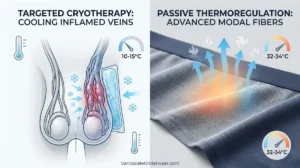
Consumer wearable technology for scrotal cooling has advanced significantly in 2025-2026. The category has evolved from rudimentary scrotal ice pack protocols to engineered cooling garments with passive phase-change materials and, at the premium end, active Peltier-effect cooling elements integrated into wearable devices.
Phase-change material (PCM) underwear uses microencapsulated wax compounds that absorb heat as they melt at a target temperature, maintaining a consistent skin contact temperature for 4-8 hours before requiring re-activation (typically by laundering or brief refrigeration). These materials are now available in scrotal support garment constructions that address both the cooling and suspension functions simultaneously. The clinical basis for these technologies is the well-documented improvement in sperm motility from sustained scrotal cooling in oligospermic men, reviewed in the cooling gel packs evidence section of this site.
The varicocele support and cooling underwear available in 2026 incorporates moisture-wicking Micro-Modal fabric technology that provides passive evaporative cooling throughout the day, the most accessible and consistent form of sustained scrotal temperature management currently available at consumer price points. Active cooling devices (Peltier-based) exist but remain expensive ($200-450) and are primarily marketed to men undergoing fertility treatment rather than daily varicocele management.
Antioxidant Delivery Technology: Beyond Standard Supplements
The supplement industry is producing more sophisticated antioxidant delivery systems relevant to varicocele fertility management. Key developments in 2025-2026:
- Liposomal CoQ10: liposomal encapsulation of ubiquinol increases bioavailability by 3-5x compared to standard softgel formulations; early clinical data suggests therapeutic plasma concentrations can be reached at lower doses, reducing cost without reducing efficacy
- Sperm DNA fragmentation testing (DFI) at home: direct-to-consumer sperm DNA fragmentation testing kits have become commercially available in 2025-2026, allowing men with varicocele to track DNA fragmentation index at home over time as an objective measure of supplement and lifestyle intervention response without clinic visits
- Microbiome-targeted fertility formulas: emerging research links gut microbiome composition to systemic oxidative stress levels; prebiotic and probiotic formulations specifically targeting the gut-testis oxidative axis are in early clinical trial stages, not yet proven for varicocele specifically
- Standardized polyphenol extracts (diosmin-hesperidin high-dose): pharmaceutical-grade MPFF preparations at 1000mg dose (Daflon 1000) show superior phlebotonic outcomes compared to the standard 500mg formulation in 2025 chronic venous insufficiency data; application to varicocele specifically is extrapolated but mechanistically sound
Telehealth and Remote Varicocele Management Platforms
The post-2020 expansion of telehealth has created a new category of remote varicocele management services that are maturing in 2026. Men can now access:
- Remote semen analysis via mail-in kits: services like Legacy, Ro, and Fellow allow semen collection at home with analysis at CLIA-certified laboratories, with results interpreted by reproductive urologists via telehealth consult; particularly valuable for men in areas without local andrology expertise
- AI-assisted Doppler ultrasound interpretation: several radiology AI platforms now offer automated varicocele grading from scrotal Doppler studies, reducing inter-reader variability in grading and providing standardized reporting; in clinical testing at several academic centers in 2025-2026
- Digital pelvic floor biofeedback: home biofeedback devices for pelvic floor dysfunction-related scrotal pain are increasingly validated for male pelvic pain applications; a 2025 systematic review confirmed that technology-delivered biofeedback programs show comparable outcomes to in-person delivery for many pelvic pain applications
- Remote sperm DNA fragmentation tracking: combining at-home DFI testing with telehealth coaching on supplement and lifestyle protocols allows longitudinal tracking of treatment response without repeated clinic visits
What Has Not Yet Delivered: Technologies to Watch Critically
Several technologies are generating significant marketing attention in the varicocele space without adequate clinical evidence to support their use as primary management tools in 2026:
| Technology | Current Evidence Level | Honest Assessment |
|---|---|---|
| Low-intensity shockwave therapy (LiSWT) for varicocele | Early pilot studies only | Promising for chronic scrotal pain; insufficient data for fertility improvement; watch for RCT results 2026-2027 |
| Photobiomodulation (red light therapy) for testicular function | Animal studies, minimal human data | Biologically plausible but not evidence-supported for varicocele in 2026; avoid until human trial data published |
| Compression garments with integrated biosensors | Prototype/feasibility stage | Technically interesting (real-time scrotal temperature and venous pressure monitoring); not clinically validated or commercially available as of 2026 |
| Oral nitric oxide boosters for varicocele | Indirect evidence only | NO supports venous tone; no varicocele-specific RCT data; may be incorporated into anti-inflammatory dietary protocols but not standalone evidence-based treatment |
The Expanded Indications Frontier: 2025-2026 Guidelines Update
A August 2025 review in PubMed on recent trends in varicocele management noted that indications for treatment have expanded to include selected cases of non-obstructive azoospermia, hypogonadism, and optimization for assisted reproduction, though high-level evidence remains limited for these newer indications. The expanding scope of evidence-supported varicocele treatment means that men who were previously told “your varicocele doesn’t meet treatment criteria” may now qualify under updated clinical thinking.
Specifically, men with non-obstructive azoospermia (no sperm in ejaculate despite no obstruction) who have a concurrent varicocele are increasingly being offered varicocele repair as a first step before TESE (testicular sperm extraction) for IVF, since a proportion of these men recover detectable sperm in ejaculate after varicocele correction. This shifts varicocele from “infertility treatment” to “fertility optimization before ART,” a distinction with both clinical and insurance coverage implications. The varicocele and azoospermia connection details this emerging clinical frontier.
Our 2026 Non-Surgical Technology Verdict
Ranked by evidence strength and practical accessibility for men managing varicocele without surgery in 2026:
- Purpose-built support underwear with Micro-Modal cooling fabric: highest evidence-to-accessibility ratio; addresses both thermal and mechanical varicocele mechanisms daily; zero waiting list, no prescription
- At-home scrotal cooling (refrigerator-temperature gel packs): clinical RCT support for sperm motility improvement; practical with consistent use; combine with support garments
- Home HRV biofeedback devices: evidence-supported for autonomic rebalancing and chronic pain reduction; accessible at $100-200 for validated devices
- Direct-to-consumer semen analysis + DFI testing: enables evidence-based monitoring of intervention response without clinic visits; valuable for supplement stack optimization
- Standardized antioxidant supplement stacks (CoQ10/NAC/Zinc core): strong evidence base; 2025 data shows comparable fertility outcomes to surgery in selected subgroups; lowest cost-per-impact ratio in this list
The 2026 landscape confirms that conservative non-surgical varicocele management is more evidence-supported and technology-enabled than at any previous point. Men who are not surgical candidates, are waiting for surgery, or prefer non-surgical approaches have a more comprehensive toolkit than ever. The complete alternative varicocele treatments guide for 2026 integrates these technologies into a structured management protocol with implementation timelines and monitoring benchmarks.
FAQ: Varicocele Technology in 2026
Is there a non-surgical device that can treat varicocele without medication or surgery?
Currently, no non-surgical device treats varicocele by repairing the venous anatomy. Embolization (minimally invasive, catheter-based, no surgical incision) is the closest to a device-based cure and has strong clinical evidence. Among truly non-surgical devices, scrotal cooling technology has the strongest evidence for improving sperm parameters in varicocele patients but does not address the underlying venous pathology. The distinction between symptom management/fertility optimization (achievable non-surgically) and anatomical correction (requiring procedure) is the key frame for evaluating any technology claim in this space.
What is shear wave elastography and should I request it?
Shear wave elastography measures testicular tissue stiffness as a proxy for fibrotic damage from chronic varicocele. It is not yet a standard-of-care test and is not available at all imaging centers. If you are at an academic medical center or a specialized andrology center being evaluated for varicocele treatment, asking whether SWE is available as a supplementary study is reasonable. It may add prognostic information about likely treatment response that standard Doppler cannot provide. It should not replace standard Doppler as the primary diagnostic tool.
When will the evidence catch up to the claims for red light therapy and varicocele?
Animal studies on photobiomodulation for testicular function have shown promising results in oxidative stress reduction, but the translation to human clinical trials for varicocele specifically has not yet occurred at scale. Based on current research trajectories, meaningful human RCT data on photobiomodulation for varicocele fertility outcomes is realistically 3-5 years away. Until then, it remains a plausible experimental intervention without the evidence base to warrant routine clinical recommendation. Follow the literature rather than marketing claims for this one.
Related Articles
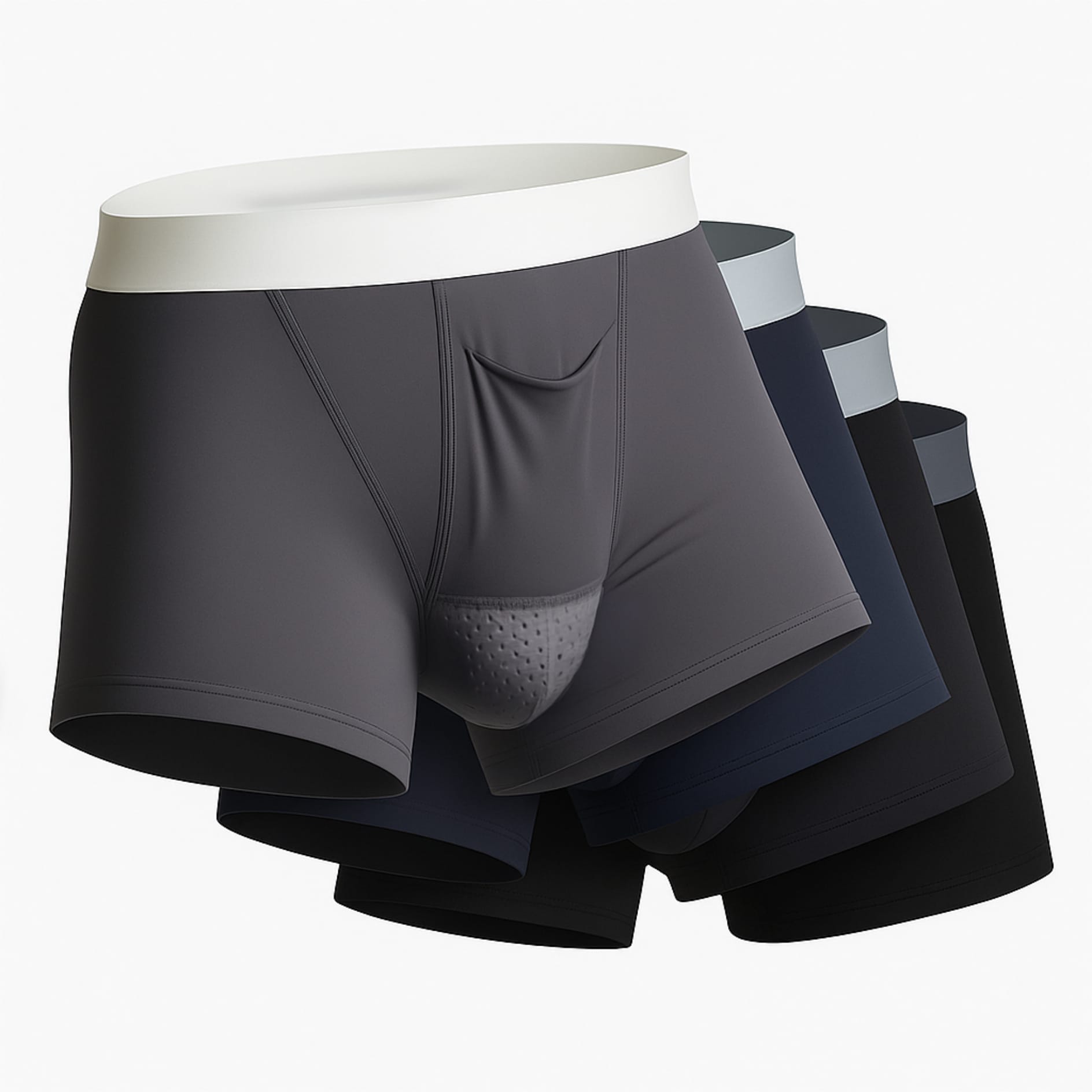
Choose Varicocele Support Designed for Cooling, Lift, and Daily Comfort
You’ve seen why regular underwear often falls short. Now view the purpose-built option made to reduce heaviness, improve support, and feel comfortable enough for everyday wear.