
Varicoceles occur on the left side in approximately 80% to 90% of cases because the left testicular vein follows a longer, less favorable drainage route than its counterpart on the right. This anatomical difference increases resistance to blood flow and creates greater pressure within the veins surrounding the left testicle. The left renal vein also passes between major abdominal arteries, where compression can further restrict circulation. Understanding the left-sided vs. right-sided varicocele difference helps explain why this condition is so common on the left, why some men develop varicoceles on both sides, and why an isolated right-sided varicocele sometimes requires additional medical evaluation.
Why 90 Percent of Varicoceles Occur on the Left
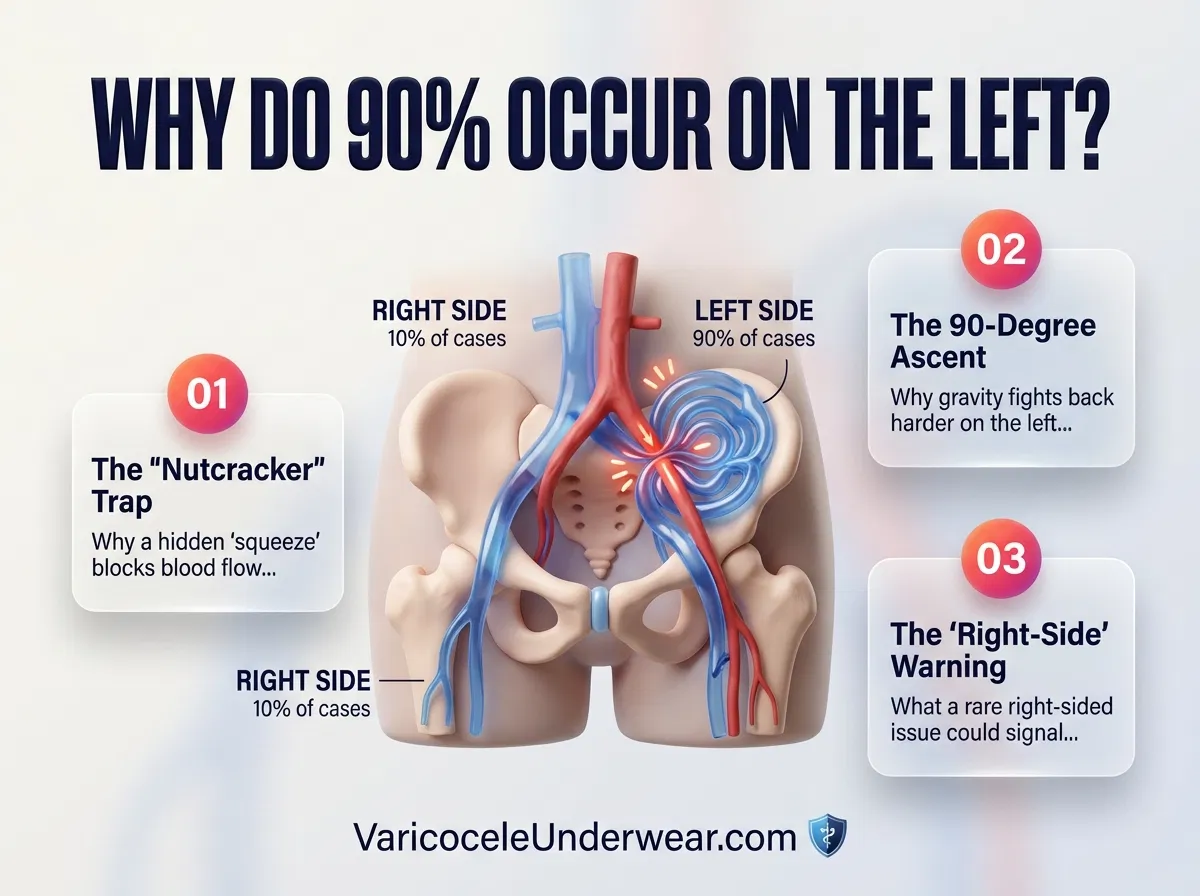
The reason why varicocele is more common on the left comes down to the structure of the male venous system. A varicocele develops when veins surrounding the testicle become enlarged because blood flows backward or collects instead of returning normally toward the heart. These veins form a network called the pampiniform plexus, which surrounds the testicular artery and helps regulate testicular temperature. When pressure within the veins increases, their walls stretch and become enlarged.
The left and right testicular veins do not drain into the same major blood vessel. The right testicular vein generally empties directly into the inferior vena cava, the large vein that carries blood from the lower body toward the heart. The left testicular vein, however, travels farther upward and empties into the left renal vein, which collects blood from the left kidney. This difference creates a longer drainage pathway on the left, with a less favorable entry angle and greater potential for venous pressure to build up.
In addition, the left testicular vein generally enters the left renal vein at an almost perpendicular angle, often described anatomically as approximately 90 degrees. This junction can make venous drainage less favorable than the more direct right-sided connection. When venous valves, which normally prevent blood from flowing backward, are absent or fail to close properly, blood can reflux downward into the testicular veins. The result is increased pressure within the pampiniform plexus and gradual vein dilation. These anatomical reasons left-sided varicoceles are more common explain the marked difference in frequency between the two sides.
The Left Renal Vein and SMA Anatomy
The left renal vein plays an important part in understanding the anatomical causes of left varicocele. After receiving blood from the left kidney and other nearby structures, it travels horizontally across the abdomen toward the inferior vena cava. During this journey, it passes between the abdominal aorta and the superior mesenteric artery (SMA), a major artery that supplies blood to the intestines. This arrangement creates a narrow anatomical space through which the renal vein must pass.
In some individuals, the angle between the aorta and the superior mesenteric artery is unusually narrow. This can compress the left renal vein, restricting the normal return of blood. The condition is known as nutcracker syndrome, also called left renal vein entrapment. The compression increases pressure upstream in the renal vein. Because the left testicular vein drains into this vessel, that pressure can extend into the testicular venous system and contribute to reflux and varicocele formation. However, anatomical compression alone does not establish a diagnosis of nutcracker syndrome. The finding must be assessed alongside symptoms and appropriate imaging.
Men with symptomatic nutcracker syndrome may experience additional signs, including blood in the urine, left-sided flank discomfort, and pelvic or abdominal venous congestion. Some also develop a left-sided varicocele or experience persistent scrotal heaviness. Not every man with a left varicocele has renal vein compression, and most left-sided varicoceles do not automatically indicate a separate vascular disorder. For a closer explanation of this relationship, read about the connection between varicocele and nutcracker syndrome.

Discover specialized varicocele underwear designed for daily comfort, support, and recovery — a more targeted option for men who want support without compromise.
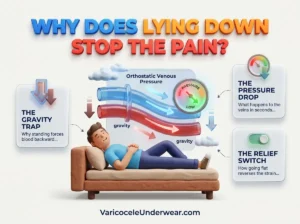
Discover the Recommended OptionAnother anatomical detail worth understanding is the position of the testicles and their venous drainage pathways. Because the left testicular vein has a longer, more vertical course before reaching the left renal vein, gravity can contribute to the pressure experienced by the veins when a person stands for extended periods. This helps explain why some men notice increased scrotal heaviness, aching, or discomfort after prolonged standing, exercise, or physical activity. Symptoms may become less noticeable when lying down because the change in body position can improve venous return. However, gravity is only one part of the process. Valve function, venous anatomy, and individual differences also influence whether a varicocele develops.
Right-Sided Anomalies and Clinical Significance
Right-sided varicoceles are less common because the right testicular vein usually drains directly into the inferior vena cava at a more favorable angle. This shorter route generally offers less resistance to venous blood returning toward the heart. Nevertheless, right-sided varicoceles can occur. Some men have anatomical variations in their testicular veins, differences in venous valve function, or bilateral venous abnormalities that affect drainage on both sides. Bilateral varicoceles are also relatively common among men initially diagnosed with a left-sided condition.
An isolated right-sided varicocele deserves careful clinical assessment, particularly when it appears suddenly, is unusually large, or remains enlarged when the patient lies down. In certain cases, obstruction of venous drainage within the abdomen or pelvis may be responsible. Possible causes include abdominal masses, enlarged lymph nodes, or other conditions affecting the inferior vena cava and surrounding vessels. However, a right-sided varicocele does not automatically mean that a tumor or serious abdominal disease is present. The American Urological Association and American Society for Reproductive Medicine guidance states that routine abdominal imaging is not recommended solely because an isolated small or moderate right-sided varicocele is present. Imaging may be appropriate when additional clinical findings raise concern.
Doctors assess these cases through a physical examination, medical history, and, when indicated, color Doppler ultrasound. Doppler ultrasound evaluates blood movement within the testicular veins and can identify reflux, abnormal vein enlargement, and differences between the two sides. A sudden-onset or non-reducible varicocele, especially when large, may warrant further abdominal evaluation based on the overall clinical picture. The StatPearls medical reference on varicocele provides additional information about venous anatomy, causes, diagnosis, and treatment.
Left vs. Right Testicular Venous Drainage
The following comparison summarizes the main anatomical differences between the two testicular venous systems and explains why the left side has a higher tendency toward varicocele formation.
| Feature | Left Testicular Vein | Right Testicular Vein |
|---|---|---|
| Drainage destination | Left renal vein | Inferior vena cava |
| Drainage pathway | Longer, more vertical course | Generally shorter, more direct course |
| Entry angle | Nearly perpendicular, approximately 90 degrees | More oblique |
| Renal vein involvement | Directly exposed to left renal venous pressure | Does not normally drain through the left renal vein |
| Nutcracker effect | Can be affected by left renal vein compression | Not directly affected by left renal vein compression |
| Varicocele frequency | Most commonly affected side | Less commonly affected side |
How Anatomical Differences Affect Daily Comfort
The difference between left-sided and right-sided varicoceles is not only an anatomical issue. It can also affect how men experience discomfort throughout the day. Enlarged veins may create a dragging sensation, dull aching, scrotal heaviness, or discomfort that becomes more noticeable after standing for several hours. Some men experience little or no pain, while others find that symptoms interfere with exercise, work, or daily routines. The presence of a varicocele does not necessarily mean that fertility is affected, but clinically significant varicoceles can be associated with abnormal semen parameters, reduced sperm production, and impaired testicular growth.
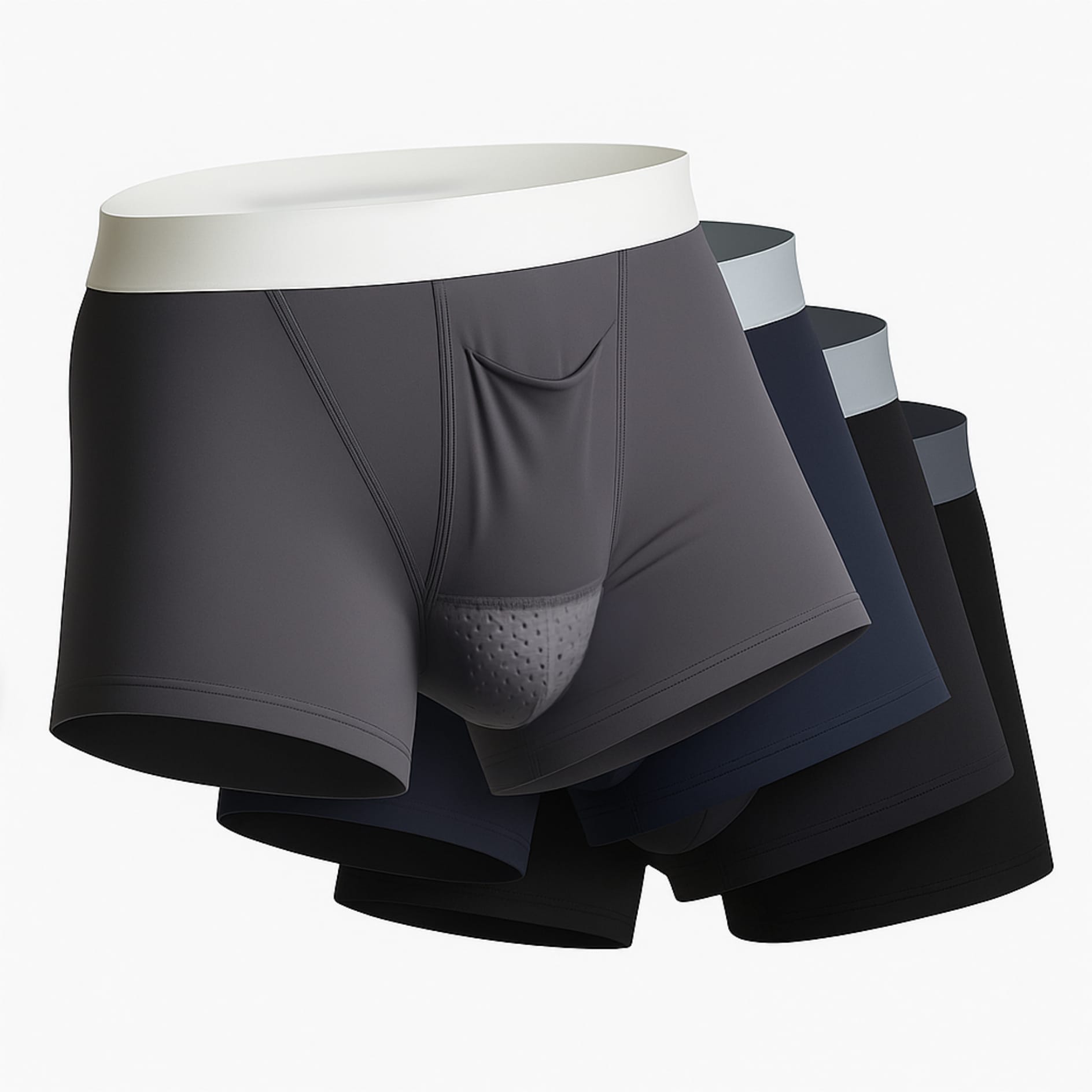
For men with a diagnosed varicocele, gentle scrotal support may improve everyday comfort. The goal is to provide stable positioning without excessive compression or unnecessary pressure on the testicles. Because the left-sided venous system has a longer drainage pathway and bilateral cases involve both sides, appropriate support should accommodate the natural position of both testicles rather than force them into an unnatural position. A supportive garment cannot shorten the left testicular vein, repair damaged venous valves, reverse renal vein compression, or eliminate an existing varicocele. Its purpose is comfort, not vascular treatment.
This is where VaricoceleUnderwear™ offers an anatomically informed approach to everyday support. Its design focuses on controlled vertical cradling and stable positioning of the scrotum, accommodating the natural anatomy of men with left-sided or bilateral varicoceles. Rather than treating the underlying venous problem, appropriately fitted support can help reduce unnecessary movement and provide a more comfortable fit during everyday activities. Men looking for left-sided varicocele support garments can explore the dedicated support and cooling underwear design. Individual comfort will vary, and persistent or worsening symptoms still require medical assessment.
Does Left-Sided or Right-Sided Varicocele Require Different Treatment?
In most cases, treatment decisions depend more on symptoms, physical examination findings, testicular development, and fertility goals than on which side contains the varicocele. A small, painless varicocele with normal testicular development and no fertility concerns may only require observation. Men experiencing persistent pain, testicular size differences, or fertility difficulties may benefit from a consultation with a urologist. A semen analysis can help assess sperm concentration, movement, and shape when fertility is a concern.
According to established AUA/ASRM male infertility guidance, varicocele repair may be considered for men attempting conception who have a palpable varicocele, infertility, and abnormal semen parameters, provided the female partner’s fertility status has also been assessed. Treatment options include microsurgical varicocelectomy, which closes the affected veins, and percutaneous embolization, which blocks abnormal venous blood flow using a catheter-based technique. Neither procedure is recommended simply because a varicocele is present on the left side.
Men with a new, rapidly developing right-sided varicocele, significant swelling, persistent pain, or a mass should seek medical evaluation rather than assuming the problem is a routine anatomical variation. Sudden severe testicular pain requires emergency assessment because testicular torsion, a condition in which the spermatic cord twists and cuts off blood supply, must be ruled out promptly.
Understanding the Anatomy Behind Your Varicocele
The main reason left-sided varicoceles are more common is the difference in testicular venous drainage. The longer left testicular vein, its nearly perpendicular connection to the left renal vein, and the possibility of compression between the superior mesenteric artery and abdominal aorta create conditions that can increase venous pressure. Right-sided varicoceles are less frequent because the right testicular vein generally drains more directly into the inferior vena cava, although anatomical variations and other medical conditions can still cause them.
Understanding these differences can help you make sense of your diagnosis without assuming that every varicocele carries the same risks. Whether your condition is left-sided, right-sided, or bilateral, an appropriate medical examination is the best way to assess its significance. If discomfort is affecting your daily routine, discuss treatment and supportive care with a urologist. For additional information about symptoms, diagnosis, fertility, and management, explore the complete varicocele guide and learn more about choosing the best underwear for varicocele support.
Related Articles

Choose Varicocele Support Designed for Cooling, Lift, and Daily Comfort
You’ve seen why regular underwear often falls short. Now view the purpose-built option made to reduce heaviness, improve support, and feel comfortable enough for everyday wear.