The location depends on the surgical approach. Subinguinal microsurgical varicocelectomy produces a single scar just below the inguinal crease, in the natural skin fold where the thigh meets the lower abdomen. This is the most favorable scar location aesthetically because it falls along a Langer’s line (a natural skin tension line), which promotes fine, flat healing, and is completely covered by underwear, swimwear, and athletic shorts.
Inguinal varicocelectomy scar sits slightly higher, still in the inguinal region but more visible. Laparoscopic scars are three small round marks on the lower abdomen and around the navel, visible when the abdomen is exposed. The specific scar appearance depends on surgical technique, suture material used, individual healing biology (skin tone, age, genetics), and post-operative care. Post-varicocelectomy recovery management from the first days onward has a measurable impact on scar quality.
Normal Scar Healing Timeline
- Days 1-7 (Inflammatory phase): incision is red, slightly swollen, and tender; this is normal inflammation driving initial repair; keep clean and dry
- Days 7-21 (Proliferative phase): new collagen forms rapidly; scar may become firmer and slightly raised; sutures or Steri-Strips removed around day 7-10
- Weeks 3-12 (Early remodeling): scar is typically its most visible and pigmented; may feel itchy as nerve endings regenerate; start active scar treatment from week 3-4
- Months 3-12 (Maturation phase): collagen remodeling produces progressive flattening and fading; final scar appearance typically established by 12-18 months
Evidence-Based Scar Treatment After Varicocele Surgery
Silicone Gel and Sheets (First-Line Treatment)
Topical silicone is the single most evidence-supported intervention for surgical scar improvement. Multiple randomized controlled trials and meta-analyses confirm that silicone gel sheeting reduces scar height, improves texture, and reduces hyperpigmentation compared to untreated controls. Apply silicone gel twice daily starting at 3-4 weeks post-op once the wound is fully closed, or use silicone gel sheets for 12-24 hours per day for 3-6 months. Both formats are effective; gel is more practical for inguinal location given the mobility and perspiration of the area.
Sun Protection
Ultraviolet exposure activates melanocytes in healing scar tissue and causes permanent hyperpigmentation (darkening). The inguinal scar is typically covered by clothing, but during beach exposure, swimming, or activities that expose the area, SPF 50+ sunscreen over the scar is essential for the entire first year post-surgery. This is particularly critical for men with darker skin tones (Fitzpatrick types IV-VI), who are at higher risk of post-inflammatory hyperpigmentation and keloid formation.
Massage
From week 4-6 post-op, once the wound is fully closed and the surgeon clears contact with the scar, daily scar massage breaks down excess collagen, improves scar pliability, and reduces the risk of hypertrophic scarring. Apply firm circular pressure along the scar for 2-3 minutes, twice daily, using a fragrance-free moisturizer or silicone gel. Consistent daily massage for 3-6 months produces measurable improvement in scar texture and mobility.
When Is Laser Treatment Appropriate?
Laser treatment for surgical scars is appropriate when conservative measures (silicone, massage, sun protection) have not achieved satisfactory results by 6-12 months post-surgery, or when specific scar characteristics warrant earlier intervention. The most commonly used laser types for surgical scar treatment are:
- Pulsed dye laser (PDL): best for red, vascular, early hypertrophic scars; reduces redness and scar vascularity; typically 2-4 sessions at 4-6 week intervals
- Fractional CO2 or Er:YAG laser: resurfacing for textured, raised, or thickened scars; stimulates collagen remodeling; produces greatest improvement in scar height and texture; requires 3-5 sessions with 4-6 week recovery between treatments
- Nd:YAG laser: preferred for darker skin tones to reduce hyperpigmentation risk; ablative approaches carry higher post-inflammatory hyperpigmentation risk in Fitzpatrick types IV-VI
- IPL (Intense Pulsed Light): useful for pigmentation normalization in lighter skin types; less powerful than fractional CO2 but lower recovery burden
Realistic expectations are important: laser treatment significantly improves scar quality but does not eliminate scars. Most patients achieve 50-70% visible improvement after a full laser course. The inguinal scar after microsurgical varicocelectomy is already in a favorable location and heals well with conservative management in the majority of men; laser is reserved for cases that don’t achieve satisfactory improvement with standard care.
Keloid and Hypertrophic Scar Risk After Varicocele Surgery
Hypertrophic scars (raised, firm scars that stay within the wound boundary) and keloids (raised scars that extend beyond the original wound) affect a minority of patients. Risk factors include darker skin tone (Fitzpatrick IV-VI), personal or family history of keloid formation, young age (teens and 20s produce more aggressive scarring), wound infection, and excessive tension at closure. The inguinal crease is a relatively low-tension wound site, reducing (but not eliminating) hypertrophic risk.
If you develop a raised, itchy, expanding scar after varicocele surgery, seek dermatology or plastic surgery referral early rather than waiting. Intralesional corticosteroid injections (triamcinolone) are highly effective for hypertrophic scars when started early in the raised scar phase. Keloids require more aggressive management combining corticosteroid injection with laser or surgical revision.
FAQ: Varicocele Surgery Scars
When should I start treating my varicocele surgery scar?
Start silicone gel application at 3-4 weeks post-surgery, once the incision is fully closed (no scabs, no open areas) and your surgeon confirms the wound is healed. Begin scar massage at week 4-6. Start sun protection immediately for any sun exposure and maintain it for the full first year. Earlier intervention generally produces better long-term scar quality.
How visible is the varicocele surgery scar at one year?
With consistent conservative scar management, the majority of men with
Hypertrophic scars (raised, firm scars that stay within the wound boundary) and keloids (raised scars that extend beyond the original wound) affect a minority of patients. Risk factors include darker skin tone (Fitzpatrick IV-VI), personal or family history of keloid formation, young age (teens and 20s produce more aggressive scarring), wound infection, and excessive tension at closure. The inguinal crease is a relatively low-tension wound site, reducing (but not eliminating) hypertrophic risk.
If you develop a raised, itchy, expanding scar after varicocele surgery, seek dermatology or plastic surgery referral early rather than waiting. Intralesional corticosteroid injections (triamcinolone) are highly effective for hypertrophic scars when started early in the raised scar phase. Keloids require more aggressive management combining corticosteroid injection with laser or surgical revision.

Discover specialized varicocele underwear designed for daily comfort, support, and recovery — a more targeted option for men who want support without compromise.
Discover the Recommended OptionFAQ: Varicocele Surgery Scars
When should I start treating my varicocele surgery scar?
Start silicone gel application at 3-4 weeks post-surgery, once the incision is fully closed (no scabs, no open areas) and your surgeon confirms the wound is healed. Begin scar massage at week 4-6. Start sun protection immediately for any sun exposure and maintain it for the full first year. Earlier intervention generally produces better long-term scar quality.
How visible is the varicocele surgery scar at one year?
With consistent conservative scar management, the majority of men with
The location depends on the surgical approach. Subinguinal microsurgical varicocelectomy produces a single scar just below the inguinal crease, in the natural skin fold where the thigh meets the lower abdomen. This is the most favorable scar location aesthetically because it falls along a Langer’s line (a natural skin tension line), which promotes fine, flat healing, and is completely covered by underwear, swimwear, and athletic shorts.
Inguinal varicocelectomy scar sits slightly higher, still in the inguinal region but more visible. Laparoscopic scars are three small round marks on the lower abdomen and around the navel, visible when the abdomen is exposed. The specific scar appearance depends on surgical technique, suture material used, individual healing biology (skin tone, age, genetics), and post-operative care. Post-varicocelectomy recovery management from the first days onward has a measurable impact on scar quality.
Normal Scar Healing Timeline
- Days 1-7 (Inflammatory phase): incision is red, slightly swollen, and tender; this is normal inflammation driving initial repair; keep clean and dry
- Days 7-21 (Proliferative phase): new collagen forms rapidly; scar may become firmer and slightly raised; sutures or Steri-Strips removed around day 7-10
- Weeks 3-12 (Early remodeling): scar is typically its most visible and pigmented; may feel itchy as nerve endings regenerate; start active scar treatment from week 3-4
- Months 3-12 (Maturation phase): collagen remodeling produces progressive flattening and fading; final scar appearance typically established by 12-18 months
Evidence-Based Scar Treatment After Varicocele Surgery
Silicone Gel and Sheets (First-Line Treatment)
Topical silicone is the single most evidence-supported intervention for surgical scar improvement. Multiple randomized controlled trials and meta-analyses confirm that silicone gel sheeting reduces scar height, improves texture, and reduces hyperpigmentation compared to untreated controls. Apply silicone gel twice daily starting at 3-4 weeks post-op once the wound is fully closed, or use silicone gel sheets for 12-24 hours per day for 3-6 months. Both formats are effective; gel is more practical for inguinal location given the mobility and perspiration of the area.
Sun Protection
Ultraviolet exposure activates melanocytes in healing scar tissue and causes permanent hyperpigmentation (darkening). The inguinal scar is typically covered by clothing, but during beach exposure, swimming, or activities that expose the area, SPF 50+ sunscreen over the scar is essential for the entire first year post-surgery. This is particularly critical for men with darker skin tones (Fitzpatrick types IV-VI), who are at higher risk of post-inflammatory hyperpigmentation and keloid formation.
Massage
From week 4-6 post-op, once the wound is fully closed and the surgeon clears contact with the scar, daily scar massage breaks down excess collagen, improves scar pliability, and reduces the risk of hypertrophic scarring. Apply firm circular pressure along the scar for 2-3 minutes, twice daily, using a fragrance-free moisturizer or silicone gel. Consistent daily massage for 3-6 months produces measurable improvement in scar texture and mobility.
When Is Laser Treatment Appropriate?
Laser treatment for surgical scars is appropriate when conservative measures (silicone, massage, sun protection) have not achieved satisfactory results by 6-12 months post-surgery, or when specific scar characteristics warrant earlier intervention. The most commonly used laser types for surgical scar treatment are:
- Pulsed dye laser (PDL): best for red, vascular, early hypertrophic scars; reduces redness and scar vascularity; typically 2-4 sessions at 4-6 week intervals
- Fractional CO2 or Er:YAG laser: resurfacing for textured, raised, or thickened scars; stimulates collagen remodeling; produces greatest improvement in scar height and texture; requires 3-5 sessions with 4-6 week recovery between treatments
- Nd:YAG laser: preferred for darker skin tones to reduce hyperpigmentation risk; ablative approaches carry higher post-inflammatory hyperpigmentation risk in Fitzpatrick types IV-VI
- IPL (Intense Pulsed Light): useful for pigmentation normalization in lighter skin types; less powerful than fractional CO2 but lower recovery burden
Realistic expectations are important: laser treatment significantly improves scar quality but does not eliminate scars. Most patients achieve 50-70% visible improvement after a full laser course. The inguinal scar after microsurgical varicocelectomy is already in a favorable location and heals well with conservative management in the majority of men; laser is reserved for cases that don’t achieve satisfactory improvement with standard care.
Keloid and Hypertrophic Scar Risk After Varicocele Surgery
Hypertrophic scars (raised, firm scars that stay within the wound boundary) and keloids (raised scars that extend beyond the original wound) affect a minority of patients. Risk factors include darker skin tone (Fitzpatrick IV-VI), personal or family history of keloid formation, young age (teens and 20s produce more aggressive scarring), wound infection, and excessive tension at closure. The inguinal crease is a relatively low-tension wound site, reducing (but not eliminating) hypertrophic risk.
If you develop a raised, itchy, expanding scar after varicocele surgery, seek dermatology or plastic surgery referral early rather than waiting. Intralesional corticosteroid injections (triamcinolone) are highly effective for hypertrophic scars when started early in the raised scar phase. Keloids require more aggressive management combining corticosteroid injection with laser or surgical revision.
FAQ: Varicocele Surgery Scars
When should I start treating my varicocele surgery scar?
Start silicone gel application at 3-4 weeks post-surgery, once the incision is fully closed (no scabs, no open areas) and your surgeon confirms the wound is healed. Begin scar massage at week 4-6. Start sun protection immediately for any sun exposure and maintain it for the full first year. Earlier intervention generally produces better long-term scar quality.
How visible is the varicocele surgery scar at one year?
With consistent conservative scar management, the majority of men with
Most varicocele surgery discussions end at the operation. What happens to the scar afterward gets almost no attention, yet it’s a legitimate concern for men who care about how they look and feel in the months after surgery. Inguinal scars vary widely in how they heal, and for some men they become raised, pigmented, or symptomatic in ways that affect comfort and confidence. This article covers what to expect from varicocele surgery scars, evidence-based scar optimization strategies, when laser treatment is appropriate, and what 2026 wound care science says about getting the best outcome.
Where Varicocele Surgery Scars Are Located
With consistent conservative scar management, the majority of men with
Hypertrophic scars (raised, firm scars that stay within the wound boundary) and keloids (raised scars that extend beyond the original wound) affect a minority of patients. Risk factors include darker skin tone (Fitzpatrick IV-VI), personal or family history of keloid formation, young age (teens and 20s produce more aggressive scarring), wound infection, and excessive tension at closure. The inguinal crease is a relatively low-tension wound site, reducing (but not eliminating) hypertrophic risk.
If you develop a raised, itchy, expanding scar after varicocele surgery, seek dermatology or plastic surgery referral early rather than waiting. Intralesional corticosteroid injections (triamcinolone) are highly effective for hypertrophic scars when started early in the raised scar phase. Keloids require more aggressive management combining corticosteroid injection with laser or surgical revision.
FAQ: Varicocele Surgery Scars
When should I start treating my varicocele surgery scar?
Start silicone gel application at 3-4 weeks post-surgery, once the incision is fully closed (no scabs, no open areas) and your surgeon confirms the wound is healed. Begin scar massage at week 4-6. Start sun protection immediately for any sun exposure and maintain it for the full first year. Earlier intervention generally produces better long-term scar quality.
How visible is the varicocele surgery scar at one year?
With consistent conservative scar management, the majority of men with
The location depends on the surgical approach. Subinguinal microsurgical varicocelectomy produces a single scar just below the inguinal crease, in the natural skin fold where the thigh meets the lower abdomen. This is the most favorable scar location aesthetically because it falls along a Langer’s line (a natural skin tension line), which promotes fine, flat healing, and is completely covered by underwear, swimwear, and athletic shorts.
Inguinal varicocelectomy scar sits slightly higher, still in the inguinal region but more visible. Laparoscopic scars are three small round marks on the lower abdomen and around the navel, visible when the abdomen is exposed. The specific scar appearance depends on surgical technique, suture material used, individual healing biology (skin tone, age, genetics), and post-operative care. Post-varicocelectomy recovery management from the first days onward has a measurable impact on scar quality.
Normal Scar Healing Timeline
- Days 1-7 (Inflammatory phase): incision is red, slightly swollen, and tender; this is normal inflammation driving initial repair; keep clean and dry
- Days 7-21 (Proliferative phase): new collagen forms rapidly; scar may become firmer and slightly raised; sutures or Steri-Strips removed around day 7-10
- Weeks 3-12 (Early remodeling): scar is typically its most visible and pigmented; may feel itchy as nerve endings regenerate; start active scar treatment from week 3-4
- Months 3-12 (Maturation phase): collagen remodeling produces progressive flattening and fading; final scar appearance typically established by 12-18 months
Evidence-Based Scar Treatment After Varicocele Surgery
Silicone Gel and Sheets (First-Line Treatment)
Topical silicone is the single most evidence-supported intervention for surgical scar improvement. Multiple randomized controlled trials and meta-analyses confirm that silicone gel sheeting reduces scar height, improves texture, and reduces hyperpigmentation compared to untreated controls. Apply silicone gel twice daily starting at 3-4 weeks post-op once the wound is fully closed, or use silicone gel sheets for 12-24 hours per day for 3-6 months. Both formats are effective; gel is more practical for inguinal location given the mobility and perspiration of the area.
Sun Protection
Ultraviolet exposure activates melanocytes in healing scar tissue and causes permanent hyperpigmentation (darkening). The inguinal scar is typically covered by clothing, but during beach exposure, swimming, or activities that expose the area, SPF 50+ sunscreen over the scar is essential for the entire first year post-surgery. This is particularly critical for men with darker skin tones (Fitzpatrick types IV-VI), who are at higher risk of post-inflammatory hyperpigmentation and keloid formation.
Massage
From week 4-6 post-op, once the wound is fully closed and the surgeon clears contact with the scar, daily scar massage breaks down excess collagen, improves scar pliability, and reduces the risk of hypertrophic scarring. Apply firm circular pressure along the scar for 2-3 minutes, twice daily, using a fragrance-free moisturizer or silicone gel. Consistent daily massage for 3-6 months produces measurable improvement in scar texture and mobility.
When Is Laser Treatment Appropriate?
Laser treatment for surgical scars is appropriate when conservative measures (silicone, massage, sun protection) have not achieved satisfactory results by 6-12 months post-surgery, or when specific scar characteristics warrant earlier intervention. The most commonly used laser types for surgical scar treatment are:
- Pulsed dye laser (PDL): best for red, vascular, early hypertrophic scars; reduces redness and scar vascularity; typically 2-4 sessions at 4-6 week intervals
- Fractional CO2 or Er:YAG laser: resurfacing for textured, raised, or thickened scars; stimulates collagen remodeling; produces greatest improvement in scar height and texture; requires 3-5 sessions with 4-6 week recovery between treatments
- Nd:YAG laser: preferred for darker skin tones to reduce hyperpigmentation risk; ablative approaches carry higher post-inflammatory hyperpigmentation risk in Fitzpatrick types IV-VI
- IPL (Intense Pulsed Light): useful for pigmentation normalization in lighter skin types; less powerful than fractional CO2 but lower recovery burden
Realistic expectations are important: laser treatment significantly improves scar quality but does not eliminate scars. Most patients achieve 50-70% visible improvement after a full laser course. The inguinal scar after microsurgical varicocelectomy is already in a favorable location and heals well with conservative management in the majority of men; laser is reserved for cases that don’t achieve satisfactory improvement with standard care.
Keloid and Hypertrophic Scar Risk After Varicocele Surgery
Hypertrophic scars (raised, firm scars that stay within the wound boundary) and keloids (raised scars that extend beyond the original wound) affect a minority of patients. Risk factors include darker skin tone (Fitzpatrick IV-VI), personal or family history of keloid formation, young age (teens and 20s produce more aggressive scarring), wound infection, and excessive tension at closure. The inguinal crease is a relatively low-tension wound site, reducing (but not eliminating) hypertrophic risk.
If you develop a raised, itchy, expanding scar after varicocele surgery, seek dermatology or plastic surgery referral early rather than waiting. Intralesional corticosteroid injections (triamcinolone) are highly effective for hypertrophic scars when started early in the raised scar phase. Keloids require more aggressive management combining corticosteroid injection with laser or surgical revision.
FAQ: Varicocele Surgery Scars
When should I start treating my varicocele surgery scar?
Start silicone gel application at 3-4 weeks post-surgery, once the incision is fully closed (no scabs, no open areas) and your surgeon confirms the wound is healed. Begin scar massage at week 4-6. Start sun protection immediately for any sun exposure and maintain it for the full first year. Earlier intervention generally produces better long-term scar quality.
How visible is the varicocele surgery scar at one year?
With consistent conservative scar management, the majority of men with
Related Articles
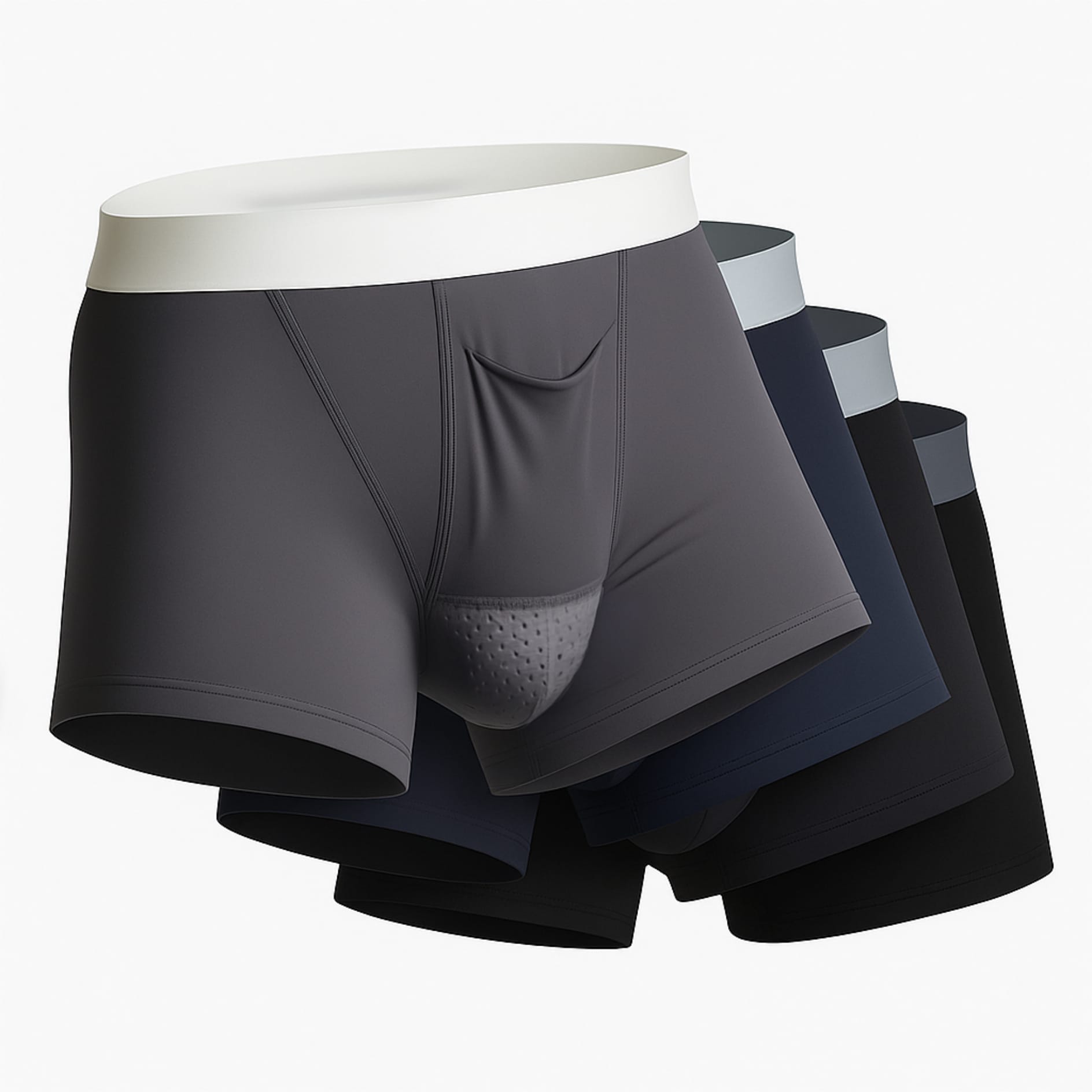
Choose Varicocele Support Designed for Cooling, Lift, and Daily Comfort
You’ve seen why regular underwear often falls short. Now view the purpose-built option made to reduce heaviness, improve support, and feel comfortable enough for everyday wear.