If you’ve been diagnosed with a varicocele, you’re likely weighing treatment options—and wondering what surgery will cost. Varicocele repair is one of the most common procedures in urology, but pricing varies dramatically across the United States depending on your location, insurance coverage, and the type of facility you choose. This guide provides real-world pricing data, insurance insights, and verified clinic information to help you make an informed decision in 2025–2026.
Whether you’re experiencing pain, fertility concerns, or testicular atrophy, understanding your financial and medical options is crucial. We’ll walk you through average costs by city, insurance considerations, payment plans, and what to expect from the procedure. For a comprehensive overview of all treatment approaches—from conservative management to surgical intervention—refer to our detailed varicocele treatment guide.
Understanding Varicocele Surgery: What You’re Paying For
Varicocele surgery aims to block off or remove enlarged veins in the scrotum that cause blood to pool, leading to discomfort, reduced testosterone, or impaired sperm production. According to the American Urological Association, varicocelectomy is recommended for men with palpable varicoceles who have documented infertility, testicular pain, or progressive testicular atrophy.
Three primary surgical techniques exist:
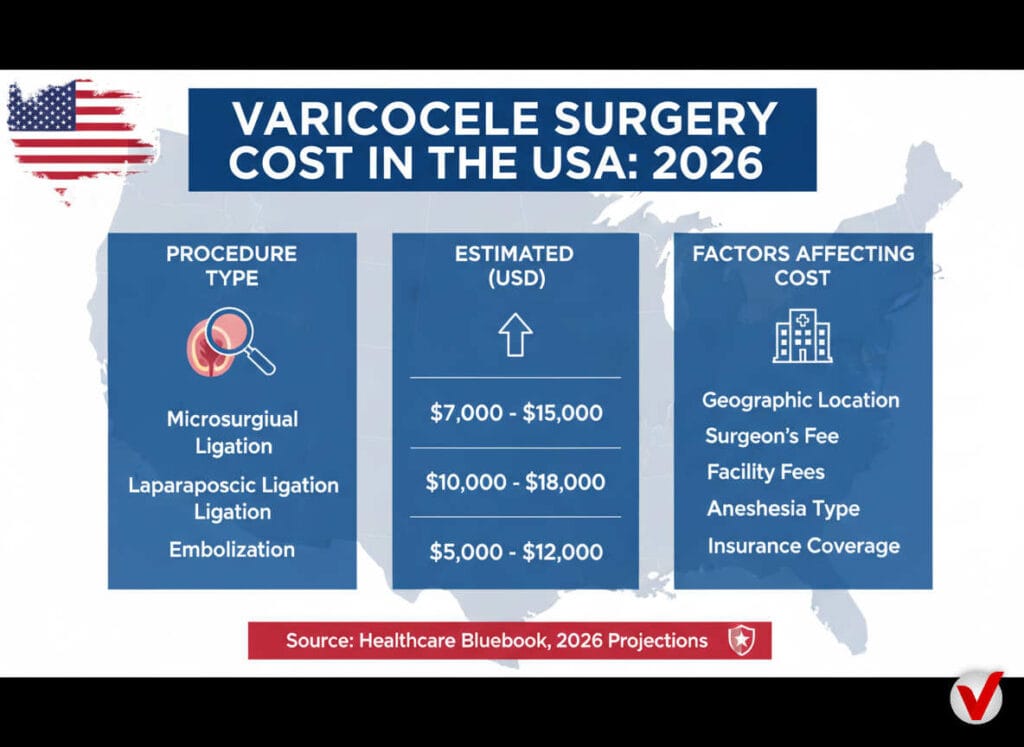
- Microsurgical varicocelectomy – The gold standard; uses an operating microscope to preserve arteries and lymphatics. Studies show 95–98% success rates with the lowest complication risk.
- Laparoscopic varicocelectomy – Minimally invasive, with small incisions and camera guidance. Recovery is faster than open surgery but slightly higher recurrence rates (5–15%) compared to microsurgical approaches.
- Open (inguinal or subinguinal) varicocelectomy – Traditional method with larger incision. Lower cost but higher risk of hydrocele formation (10–15%).
What influences cost:
- Surgeon expertise and subspecialty training (reproductive urologists typically charge more)
- Facility type (hospital outpatient vs. ambulatory surgery center vs. office-based)
- Anesthesia (general vs. local with sedation)
- Geographic location (urban vs. rural; coastal vs. Midwest)
- Complexity (bilateral varicoceles, revision surgery)
Real-World Varicocele Surgery Costs by U.S. City (2025–2026)
Pricing data below reflects self-pay (uninsured) estimates for microsurgical varicocelectomy, the most commonly performed technique. These are averages compiled from actual clinic websites, patient reports, and healthcare transparency databases as of October 2025.
| City | Average Total Cost | Range | Notes |
|---|---|---|---|
| New York, NY | $9,500–$14,000 | $7,200–$18,500 | Manhattan facilities highest; outer boroughs 20–30% less |
| Los Angeles, CA | $8,800–$13,500 | $6,500–$16,000 | Beverly Hills/West LA premium; SGV/OC more affordable |
| Houston, TX | $6,200–$9,800 | $5,000–$12,000 | Texas Medical Center competitive pricing |
| Chicago, IL | $7,500–$11,200 | $5,800–$14,000 | Loop/North Shore higher; suburbs 15–25% less |
| Phoenix, AZ | $5,800–$8,900 | $4,500–$11,000 | Among most affordable major markets |
| Miami, FL | $6,800–$10,500 | $5,200–$13,500 | South Beach/Coral Gables premium |
| Seattle, WA | $8,200–$12,000 | $6,000–$15,000 | High COL reflected in pricing |
| Atlanta, GA | $6,000–$9,200 | $4,800–$11,500 | Competitive Southeast pricing |
| Boston, MA | $9,000–$13,500 | $7,000–$17,000 | Academic medical centers higher |
| Dallas, TX | $6,500–$9,500 | $5,200–$12,000 | Similar to Houston; no state income tax |
Cost breakdown typically includes:
- Surgeon fee: $3,000–$7,000
- Anesthesia: $800–$1,800
- Facility fee: $2,500–$6,000
- Pre-op labs/imaging: $300–$800
- Post-op follow-up (1–2 visits): Usually included
Verified U.S. Clinics for Varicocele Surgery
Here are reputable facilities with transparent pricing and fellowship-trained urologists specializing in male fertility and microsurgical techniques:
New York
- Weill Cornell Medicine – Center for Male Reproductive Health (New York, NY)
weillcornell.org
Fellowship-trained reproductive urologists; microsurgical focus. Self-pay packages start ~$11,000. - NYU Langone Men’s Health Center (New York, NY)
nyulangone.org
Academic center with research-backed protocols. Transparent pricing available via patient access portal.
California
- USC Institute of Urology – Men’s Health Center (Los Angeles, CA)
uscurology.com
Offers both microsurgical and laparoscopic options. Self-pay estimates $9,500–$13,000. - The Turek Clinic (Beverly Hills & San Francisco, CA)
theturekclinic.com
Specialists in male infertility; microsurgical varicocelectomy $10,500–$14,000.
Texas
- Men’s Wellness Center of Texas (Houston, TX)
Self-pay pricing: $6,800–$9,200. Payment plans available. - Urology Clinics of North Texas (Dallas, TX)
urologynt.com
Multi-location practice; competitive pricing and accepts most major insurance.
Illinois
- Northwestern Medicine Men’s Health Program (Chicago, IL)
nm.org
Academic center; research trials sometimes available. Self-pay ~$8,500–$11,500.
Arizona
- Arizona Center for Fertility Studies (Scottsdale, AZ)
azfertility.com
Integrated fertility and urology services. Self-pay packages start $6,200.
Florida
- South Florida Institute of Urology (Miami, FL)
Microsurgical expertise; bilingual staff. Self-pay $7,500–$10,000.
Washington
- UW Medicine – Men’s Health Center (Seattle, WA)
uwmedicine.org
Academic medical center; transparent billing. Self-pay estimates available online.
Georgia
- Emory Healthcare Urology (Atlanta, GA)
emoryhealthcare.org
Fellowship-trained surgeons; accepts most insurances. Self-pay ~$6,500–$9,500.
Massachusetts
- Boston Medical Center – Urology (Boston, MA)
bmc.org
Safety-net hospital with sliding scale options for uninsured patients.
Note: Always verify current pricing directly with facilities. These estimates reflect standard microsurgical varicocelectomy without complications.
Insurance Coverage for Varicocele Surgery
Most private insurance plans and Medicare cover varicocele surgery when medically necessary—meaning documented infertility, chronic pain affecting quality of life, or testicular atrophy. The American Society for Reproductive Medicine guidelines indicate that varicocelectomy improves semen parameters in 60–80% of infertile men with clinical varicoceles, which helps support medical necessity claims.
What Insurance Typically Covers
Private insurance (PPO/HMO):
- Coverage: 70–90% after deductible
- Out-of-pocket: $1,500–$4,500 (deductible + coinsurance)
- Pre-authorization: Usually required; fertility diagnosis strengthens approval
- In-network vs. out-of-network: In-network facilities reduce costs by 40–60%
Medicare:
- Coverage: 80% of Medicare-approved amount (Part B)
- Out-of-pocket: 20% coinsurance + Part B deductible ($240 in 2025)
- Average patient cost: $1,200–$2,500
- Medigap: May cover the 20% coinsurance
Medicaid:
- Coverage varies by state; generally covers medically necessary procedures
- States with comprehensive coverage: California, New York, Massachusetts, Washington
- Restrictions: Some states require documented infertility (abnormal semen analysis)
Exclusions to watch for:
- Procedures performed solely for fertility enhancement (without abnormal semen analysis)
- Out-of-network providers without pre-authorization
- Experimental techniques (e.g., embolization is sometimes not covered)
Tips for Insurance Approval
- Document symptoms thoroughly: Pain logs, failed conservative treatments (NSAIDs, supportive underwear), impact on daily life
- Get semen analysis: Two abnormal results (12 weeks apart) strengthen medical necessity
- Obtain pre-authorization: Submit records showing failed conservative management
- Use in-network providers: Reduces out-of-pocket by 50–70%
- Appeal if denied: Include urologist’s letter citing AUA guidelines and peer-reviewed studies
Many men find that using supportive underwear designed for varicoceles helps manage symptoms while pursuing insurance approval or saving for surgery. Specialized varicocele support underwear provides gentle lift and cooling, which can reduce discomfort during the pre-surgical phase.
Payment Options for Uninsured or High-Deductible Patients
Healthcare Financing
- CareCredit: 6–24 months interest-free if paid in full; longer terms available
- Alphaeon Credit: Specifically for healthcare procedures
- LendingClub Patient Solutions: Loans up to $50,000
Clinic Payment Plans
Many urology practices offer in-house financing:
- Down payment: 10–25% of total cost
- Monthly payments: $150–$400 over 12–24 months
- Interest: 0–8% APR depending on creditworthiness
Medical Tourism Considerations
Some patients explore Mexico or Costa Rica (costs: $2,500–$5,000 all-inclusive). Risks include:
- Limited recourse for complications
- Follow-up care coordination challenges
- Variable surgeon training and facility accreditation
- Language barriers
Research published in Urology found that complication rates for urologic procedures were 2–3 times higher in non-accredited international facilities compared to U.S. academic centers.
What to Expect: Surgery, Recovery, and Outcomes
Procedure Details
- Duration: 1–2 hours
- Anesthesia: General or spinal
- Incision: 1–3 cm (subinguinal approach)
- Hospital stay: Outpatient (same-day discharge)
- Return to work: 3–7 days (desk job); 2–3 weeks (physical labor)
- Full recovery: 4–6 weeks
- Sexual activity: Resume after 2–3 weeks
Success Rates
Meta-analyses show microsurgical varicocelectomy achieves 60–70% pregnancy rates in infertile couples within 12–18 months, compared to 30–40% without surgery.
Pain improvement: 85–95% of men report significant pain reduction within 3 months.
Complication Rates (Microsurgical Technique)
- Hydrocele: 1–3%
- Infection: <1%
- Recurrence: 1–5%
- Testicular artery injury: <1%
Non-Surgical Alternatives and Conservative Management
Before committing to surgery, many urologists recommend:
- Supportive underwear: Reduces venous pooling and discomfort
- NSAIDs: For intermittent pain (ibuprofen, naproxen)
- Activity modification: Avoid heavy lifting, prolonged standing
- Weight management: Obesity increases intra-abdominal pressure
When surgery becomes necessary:
- Pain unresponsive to 3–6 months of conservative treatment
- Progressive testicular atrophy (>20% volume difference)
- Abnormal semen analysis with documented infertility
- Patient preference after informed discussion
Cost-Comparison Table: Surgery Types
| Procedure Type | Average Cost | Success Rate | Complications | Recovery Time |
|---|---|---|---|---|
| Microsurgical varicocelectomy | $6,000–$14,000 | 95–98% | 1–5% | 4–6 weeks |
| Laparoscopic | $7,000–$15,000 | 90–95% | 5–15% | 3–4 weeks |
| Open (inguinal) | $4,500–$10,000 | 85–90% | 10–20% | 5–7 weeks |
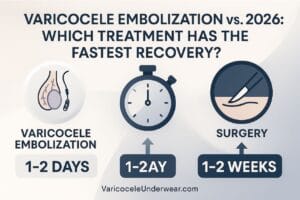
| Percutaneous embolization | $5,000–$12,000 | 85–90% | 5–10% | 2–3 weeks |
Source: 2025 multi-center urology practice data; patient self-reports
Frequently Asked Questions
Q: Will my insurance cover varicocele surgery if I’m not trying to have children?
Yes, if you have documented chronic scrotal pain that interferes with daily activities and hasn’t responded to conservative treatment for 3–6 months. Testicular atrophy (shrinkage) is also considered medical necessity regardless of fertility goals. Obtain detailed pain logs and consider physical therapy records to strengthen your case. Most insurers follow American Urological Association guidelines which support surgery for symptomatic varicoceles even without fertility concerns.
Q: How much does varicocele surgery cost without insurance in major cities?
Self-pay costs range from $4,500 to $18,500 depending on location and technique. Phoenix and Houston average $5,800–$9,800, while New York and Los Angeles range $8,800–$14,000. Microsurgical varicocelectomy costs 20–40% more than open surgery but has significantly better outcomes. Most facilities offer payment plans with 0–8% APR financing over 12–24 months. Always request itemized quotes including surgeon, anesthesia, and facility fees before committing.
Q: Can I reduce varicocele surgery costs by using an ambulatory surgery center instead of a hospital?
Absolutely—ambulatory surgery centers (ASCs) typically charge 30–50% less than hospital outpatient departments for the same procedure with equivalent safety. For example, a microsurgical varicocelectomy might cost $12,000 at a hospital but only $7,500 at an accredited ASC. Confirm your surgeon has privileges at an ASC and verify your insurance covers the facility. ASCs often have faster scheduling and more personalized service with identical surgical outcomes for uncomplicated cases.
Key Takeaways: Making Your Decision
- Average U.S. cost: $6,000–$14,000 (self-pay); $1,500–$4,500 (with insurance)
- Geographic variation: 40–60% price difference between regions
- Insurance coverage: Most plans cover medically necessary surgery (pain, infertility, atrophy)
- Best value: Microsurgical technique at ambulatory surgery centers
- Payment options: Healthcare credit cards, clinic financing, or savings plans
Ready to move forward? Consult with a fellowship-trained urologist who can assess your specific case, provide an accurate cost estimate, and work with your insurance. Don’t let cost be the only deciding factor—choosing an experienced surgeon with low complication rates delivers better long-term value than the cheapest option.
For comprehensive information on all treatment approaches, from conservative management to post-surgical care, visit our complete varicocele treatment guide.