Dealing with persistent testicular discomfort creates a stressful feedback loop between physical pain and mental anxiety that exhausts both body and mind. When enlarged veins in the pampiniform plexus pool blood, the resulting dull ache and heavy dragging sensation trigger an involuntary alarm in your nervous system. Living with varicocele and chronic pain anxiety means you are constantly monitoring minor twinges in the groin, wondering if sitting, standing, or exercising will trigger another flare. This vigilance keeps the brain on high alert, causing the pelvic floor to contract and amplifying every ache. Breaking the stress ache cycle requires a dual approach that addresses both vascular stagnation and neural hypersensitivity. By combining somatic mechanical relief with the psychological management of scrotal pain, you can down-regulate sympathetic arousal, release muscular guarding, and restore daily comfort without feeling trapped by constant discomfort.
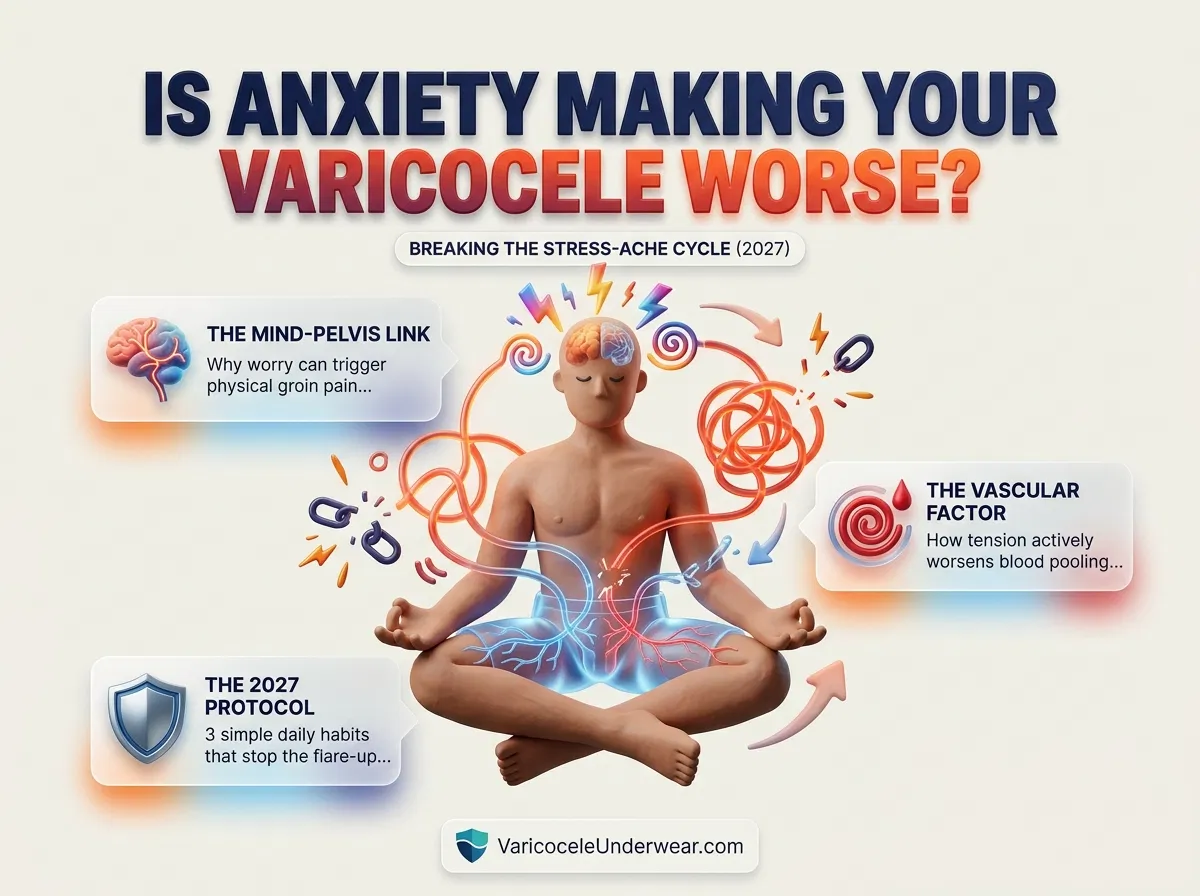
To understand why this condition feels so consuming, one must examine the neurological cross-talk between the scrotum and the spinal cord. A varicocele occurs when faulty venous valves allow blood to pool backward into the pampiniform plexus, increasing hydrostatic pressure within the spermatic cord. This distension irritates sensory fibers running through the genital branch of the genitofemoral nerve, the ilioinguinal nerve, and the pudendal nerve network. These sensory fibers do not just transmit dull throbbing; they broadcast distress signals straight to the dorsal horn of your spinal cord. Because the pelvic nerves share pathways with your sympathetic fight-or-flight circuits, physical aches quickly produce systemic worry. Clinical evaluations of varicocele and mental health show that men enduring continuous vascular ache experience sustained nervous system excitation, transforming localized vein swelling into generalized somatic distress.
Hyper-Vigilance and Nervous System Sensitization
When scrotal pain lingers for months, the peripheral nervous system undergoes a profound shift known as central sensitization. Under continuous stimulation, spinal neurons lower their firing thresholds, causing the dorsal horn to amplify faint sensory inputs. Gentle friction from clothing or ordinary abdominal pressure from bending over, which would normally pass unnoticed, gets registered by the brain as an intense threat. This neurological wind-up triggers chronic hyper-vigilance, an exhausting mental state where you constantly anticipate the next wave of soreness. In response to this perceived danger, the body engages in involuntary muscular bracing. The levator ani and cremaster muscles tighten around the spermatic cord, constricting local blood vessels and reducing oxygen delivery. Peer-reviewed research published in The Journal of Pain demonstrates that pain catastrophizing and hyper-vigilant attention directly magnify visceral pain processing, locking the lower pelvis in a continuous spasm.

Discover specialized varicocele underwear designed for daily comfort, support, and recovery — a more targeted option for men who want support without compromise.
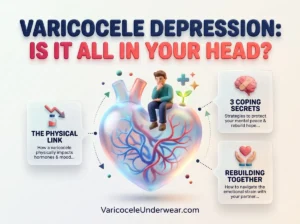
Discover the Recommended OptionThe psychological toll extends beyond basic discomfort, directly attacking a man’s sense of masculine security and future well-being. Coping with the emotional toll of a varicocele diagnosis often involves private fears about semen parameters, testosterone decline, and potential surgical failures. When an ache flares up during a workday or social event, the brain does not merely register a physical sensation; it connects that ache to existential dread about fertility and sexual performance. This cognitive spiral floods the bloodstream with stress hormones like cortisol and noradrenaline. Elevated stress chemistry tightens vascular walls, reduces venous compliance, and aggravates venous pooling. The resulting physical pressure increases the testicular ache, confirming your worst fears and reinforcing the belief that your body is failing. Breaking this mental loop demands identifying these catastrophic thoughts before they trigger an autonomic cascade.
Breaking the Chronic Pain and Anxiety Cycle
To interrupt this self-sustaining loop, medical treatment must address vascular mechanics and neural hypersensitivity simultaneously. Contemporary urological guidelines recommend conservative, multimodal management as the primary line of care for chronic scrotal discomfort. If you only manage stress through relaxation while gravity continues to pull down on swollen veins, nociceptive fibers will keep firing distress signals. Conversely, if you only wear tight athletic supporters that smash scrotal contents against the pubic bone without calming your nervous system, muscular tension in the pelvic floor will maintain the ache. True recovery happens when you de-escalate the sympathetic nervous system while providing targeted physical decompression. The following clinical comparison outlines how physical triggers feed neurological anxiety and how targeted interventions disrupt each stage of the cycle.
| Physiological Component | Chronic Pain Mechanism | Nervous System Feedback Loop | Intervention Target |
|---|---|---|---|
| Venous Stasis | Blood pooling in dilated pampiniform plexus causes vascular wall stretch | Triggers continuous C-fiber nociceptive signaling to the spinal cord | Scrotal elevation and cooling to relieve gravitational backpressure |
| Muscular Guarding | Involuntary hypertonicity of the cremaster and levator ani muscles | Compacts the spermatic cord, escalating local tissue ischemia and ache | Diaphragmatic breathing and pelvic floor somatic down-training |
| Central Sensitization | Dorsal horn wind-up lowers sensory activation thresholds | Normal tactile contact feels painful (allodynia) or exaggerated (hyperalgesia) | Cognitive reframing, desensitization, and sensory re-education |
| Hyper-Vigilant Anxiety | Preoccupation with scrotal sensations and fear of worsening pathology | Activates sympathetic fight-or-flight tone, releasing cortisol and adrenaline | Mindfulness, cognitive tracking, and somatic safety cues |
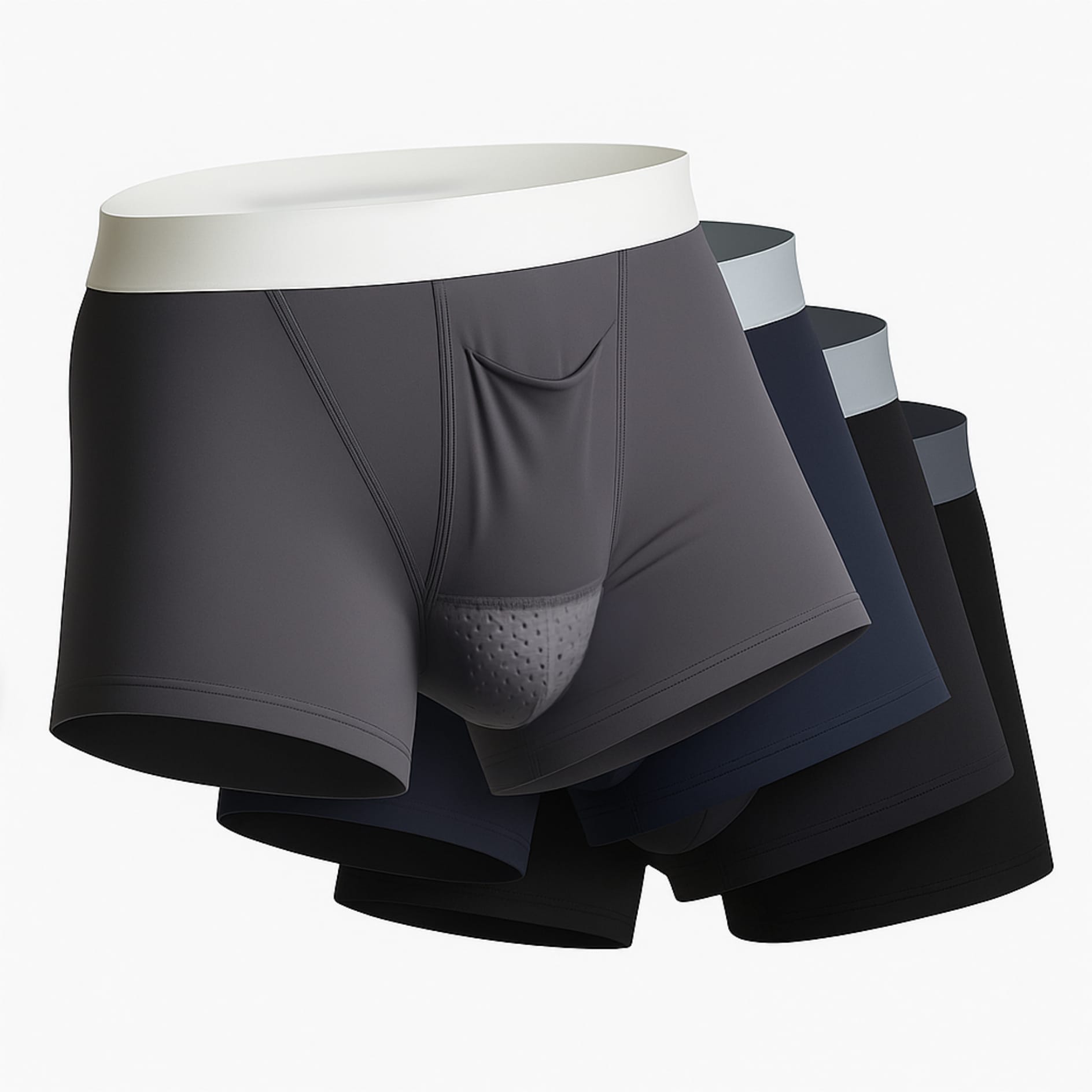
Relieving somatic chronic pain starts with interrupting the constant physical pull that feeds your brain’s threat detectors. When standing or sitting for long hours, gravity pulls blood downward into incompetent pampiniform veins, stretching delicate vascular walls and generating relentless nociceptive alarms. Stepping into soothing varicocele pain relief underwear provides an immediate therapeutic shift by delivering an anatomical upward lift. This targeted lift unloads hydrostatic pressure from the spermatic cord, encourages venous drainage, and eliminates the heavy dragging sensation that keeps nerves firing. As mechanical strain disappears, peripheral sensory fibers stop bombarding the dorsal horn, signaling the brain that the physical threat has ended. Comparing specialized garments with conventional briefs in evaluations of the best varicocele underwear demonstrates that proper scrotal elevation calms hyperactive cremasteric reflexes, allowing the surrounding pelvic tissues to release chronic muscular tension.
Psychological Tools for Managing Scrotal Pain
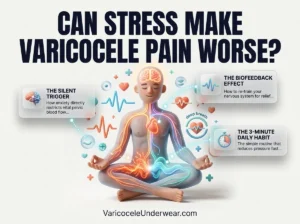
Once mechanical support removes the physical trigger, psychological tools can systematically retrain the overactive nervous system. Clinical practitioners utilize biofeedback and stress management techniques for pain to help patients recognize subtle spikes in pelvic floor tension before an ache intensifies. Biofeedback monitors surface electromyography (sEMG) data from the perineum, teaching you to intentionally drop the pelvic floor during stressful moments. Pairing this biofeedback awareness with diaphragmatic breathing creates a direct brake on sympathetic nervous activity. When you breathe deeply into your lower abdomen, the pelvic diaphragm descends, expanding pelvic space and relaxing the pudendal nerve pathways. Practicing this somatic release for ten minutes each morning and evening reconditions the brain to view scrotal sensations without panic, breaking the conditioned link between mental stress and testicular pain.
Sustained recovery requires shifting your mental framework from fear-based avoidance to calm physical confidence. When an intermittent ache occurs, avoid probing or obsessively palpating the scrotum, as frequent checking signals panic to the cerebral cortex and increases neural sensitivity. Instead, acknowledge the sensation neutrally as harmless vascular congestion rather than structural damage. Gradually re-engage in regular walking and low-impact exercise without anticipating pain, teaching your nervous system that normal movement is safe. Combine proper scrotal elevation, cooling habits to dissipate trapped heat, and progressive muscular relaxation to keep tissue perfusion optimal. By managing your thoughts, relaxing the pelvic floor, and providing continuous mechanical relief to congested veins, you quiet the central nervous system and reclaim your daily life from chronic scrotal discomfort.
Related Articles


Choose Varicocele Support Designed for Cooling, Lift, and Daily Comfort
You’ve seen why regular underwear often falls short. Now view the purpose-built option made to reduce heaviness, improve support, and feel comfortable enough for everyday wear.