You found a varicocele. Your doctor mentioned surgery. But you are wondering: can I fix this without going under the knife?
This question affects roughly 15% of adult men and up to 35% of men dealing with infertility. The good news? Not every varicocele requires surgical intervention. For many men, especially those with mild symptoms or low-grade varicoceles, lifestyle modifications and conservative management offer real relief.
This article examines what science actually says about non-surgical varicocele treatment in 2025. You will learn which lifestyle changes have evidence behind them, which supplements are worth considering, and when surgery becomes the better choice.
For a complete overview of all treatment pathways, including surgical options, see our comprehensive varicocele treatment guide.
What Is Varicocele and Why Do Men Seek Alternatives to Surgery?
A varicocele is an enlargement of veins within the scrotum, similar to varicose veins in the legs. Blood pools in these veins instead of flowing efficiently back to the heart.
Quick Facts About Varicocele
| Fact | Data |
|---|---|
| Prevalence in adult men | 15-20% |
| Prevalence in men with infertility | 35-40% |
| Most common side affected | Left (80-90%) |
| Average age of diagnosis | 15-25 years |
Why men avoid surgery:
- Concern about complications (though rare)
- Mild or intermittent symptoms
- Cost and recovery time
- Preference for conservative approaches first
- Varicocele causing no fertility issues
According to Mayo Clinic guidance, treatment is not always necessary. Many varicoceles are asymptomatic and require only monitoring.
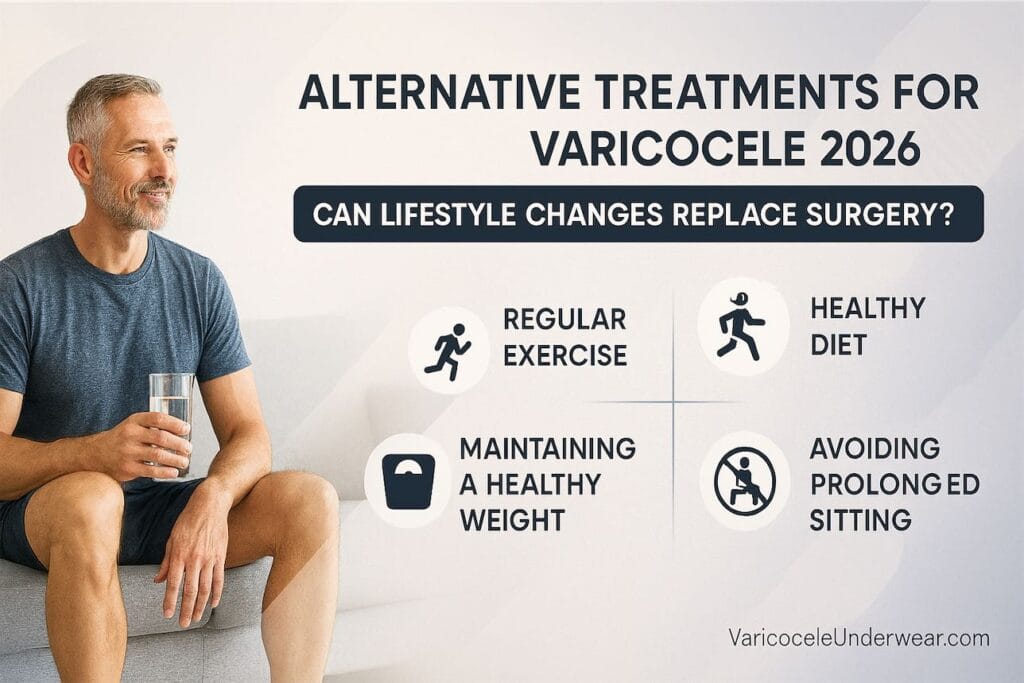
Can Lifestyle Changes Actually Cure Varicocele?
Here is the honest answer: lifestyle changes cannot reverse the physical vein enlargement that defines a varicocele. The dilated veins will not shrink back to normal through diet, exercise, or supplements.
However, lifestyle modifications can:
- Reduce pain and discomfort by 40-60% in mild cases
- Slow progression of symptoms
- Improve sperm parameters in some men
- Make daily life more comfortable
What Clinical Evidence Shows
A 2022 study in the Andrologia journal found that men who combined lifestyle modifications with conservative management reported significant symptom improvement over 6 months. The key factors? Weight management, reduced heat exposure, and proper scrotal support.
The bottom line: Lifestyle changes work best for symptom management, not cure. They serve as a first-line approach for Grade I varicoceles or as complementary support alongside medical treatment.
Proven Lifestyle Changes for Varicocele Symptom Relief
Exercise and Physical Activity
What helps:
- Low-impact cardiovascular exercise (swimming, walking, cycling with padded seat)
- Core strengthening to improve blood flow
- Yoga poses that reduce pelvic congestion
What to avoid:
- Heavy weightlifting with Valsalva maneuver (breath holding during straining)
- Prolonged standing exercises
- High-impact activities that increase intra-abdominal pressure
Clinical Insight: A study published in Urology journal found that men who engaged in moderate aerobic exercise 30 minutes daily, 5 days per week, showed improved venous return and reduced scrotal discomfort.
Dietary Modifications
Your diet influences vascular health and inflammation levels. Consider these evidence-based changes:
Foods to emphasize:
- Bioflavonoid-rich foods (citrus fruits, berries, dark chocolate)
- Omega-3 fatty acids (fatty fish, walnuts, flaxseed)
- High-fiber foods to prevent constipation and straining
- Antioxidant-rich vegetables
Foods to limit:
- Excessive sodium (increases fluid retention)
- Processed foods with trans fats
- Excessive alcohol (impairs circulation)
Temperature Management and Scrotal Cooling
Heat damages sperm and worsens varicocele symptoms. The testicles naturally hang outside the body to stay 2-4°C cooler than core temperature.
Practical cooling strategies:
| Action | Implementation |
|---|---|
| Avoid hot tubs/saunas | Limit to under 15 minutes, infrequent use |
| Laptop placement | Use desk or cooling pad, never on lap |
| Loose clothing | Cotton boxers, breathable fabrics |
| Cool showers | End with cool water on scrotal area |
| Avoid prolonged sitting | Take breaks every 45-60 minutes |
Supportive Underwear: A Non-Invasive Aid
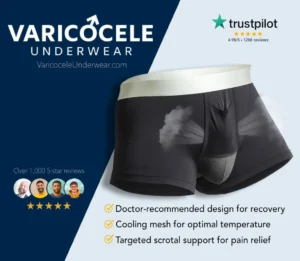
One of the most practical non-surgical interventions is proper scrotal support. Supportive underwear reduces venous pooling by holding the testicles in a stable, slightly elevated position.
Many urologists recommend supportive briefs as a first-line conservative treatment for symptomatic varicocele. The varicocele support underwear with cooling technology combines gentle compression with temperature regulation, addressing two key symptom triggers simultaneously.
Benefits of specialized support underwear:
- Immediate reduction in dragging sensation
- Decreased pain during physical activity
- Better temperature regulation
- Non-invasive and reversible
Natural Supplements for Varicocele: What Does Science Say?
Supplements cannot cure varicocele, but certain compounds may support vascular health and reduce symptoms.
Supplements With Some Evidence
| Supplement | Proposed Mechanism | Evidence Level |
|---|---|---|
| Horse Chestnut Extract | Reduces venous inflammation | Moderate |
| Vitamin E | Antioxidant, improves blood flow | Moderate |
| Coenzyme Q10 | Supports cellular energy, sperm health | Moderate |
| Zinc | Essential for testosterone and sperm production | Strong for fertility |
| L-Carnitine | Improves sperm motility | Moderate |
| Bioflavonoids (Diosmin/Hesperidin) | Strengthens vein walls | Moderate for venous insufficiency |
Important considerations:
- Always consult your doctor before starting supplements
- Quality varies significantly between brands
- Supplements are not FDA-regulated for varicocele treatment
- Allow 3-6 months to assess effectiveness
According to research indexed on PubMed, horse chestnut extract (Aescin) has shown benefit for venous insufficiency, though specific varicocele studies remain limited.
Comparing Non-Surgical vs. Surgical Treatment Outcomes
When should you choose lifestyle management versus surgery? This comparison helps clarify.
Treatment Comparison Table
| Factor | Conservative/Lifestyle Management | Surgical Repair |
|---|---|---|
| Best for | Grade I, mild symptoms, no fertility concern | Grade II-III, fertility issues, significant pain |
| Success rate (pain relief) | 40-60% report improvement | 85-95% report improvement |
| Sperm improvement | Variable, often minimal | 60-70% show improvement |
| Time to see results | 3-6 months | 3-6 months post-surgery |
| Risks | None significant | Minor surgical risks (<5%) |
| Cost | Low | Moderate to high |
| Reversibility | Fully reversible | Permanent |
When Surgery Becomes the Better Choice
Conservative management is not appropriate for everyone. You should consider surgical intervention when:
- Fertility is a priority and semen analysis shows declining parameters
- Pain persists or worsens despite 3-6 months of conservative management
- Testicular atrophy is present (shrinkage of affected testicle)
- Grade III varicocele with visible scrotal veins
- Quality of life significantly impacted
The American Urological Association recommends surgical repair for men with palpable varicocele, documented infertility, and abnormal semen parameters.
Real Patient Experience: A 6-Month Conservative Management Timeline
Patient Profile: 28-year-old male, Grade I left varicocele, mild discomfort after exercise, normal semen analysis.
Month-by-Month Progress
| Month | Interventions | Symptom Score (1-10) | Notes |
|---|---|---|---|
| Baseline | None | 6/10 | Aching after workouts |
| Month 1 | Supportive underwear, reduced heavy lifting | 5/10 | Noticeable improvement |
| Month 2 | Added swimming 3x/week, dietary changes | 4/10 | Less discomfort during day |
| Month 3 | Horse chestnut supplement, cooling practices | 3/10 | Exercise tolerance improved |
| Month 6 | Continued all interventions | 2/10 | Occasional mild awareness only |
Outcome: This patient avoided surgery through consistent lifestyle modifications. He continues monitoring annually with his urologist.
Note: Individual results vary. This case represents a mild varicocele with optimal response to conservative management.
When to See a Doctor
Schedule an appointment if you experience:
- New or worsening scrotal pain
- Visible changes in testicle size
- Fertility concerns after 6-12 months of trying to conceive
- Symptoms not improving after 3-6 months of lifestyle changes
- Any sudden severe pain (possible emergency)
Frequently Asked Questions
Can varicocele go away on its own without treatment?
No, varicoceles do not resolve spontaneously. The enlarged veins are a structural issue that persists once developed. However, symptoms can fluctuate. Many men live comfortably with small varicoceles that never require treatment. Regular monitoring ensures any progression is caught early.
What is the best natural remedy for varicocele pain?
Supportive underwear provides the most immediate relief for most men. Combining scrotal support with cool compresses after activity, anti-inflammatory foods, and avoiding prolonged standing offers a practical approach. These methods reduce symptoms without side effects, though they cannot eliminate the underlying vein enlargement.
How long should I try lifestyle changes before considering surgery?
Urologists typically recommend a 3 to 6 month trial of conservative management for mild cases. If symptoms persist, worsen, or if fertility is your primary concern, surgical evaluation becomes appropriate. Document your symptoms throughout this period to give your doctor useful information for decision-making.
Key Takeaway
Lifestyle changes cannot cure varicocele, but they can significantly reduce symptoms and delay or prevent the need for surgery in men with mild to moderate cases. The combination of proper scrotal support, temperature management, targeted exercise, and dietary improvements offers a practical first-line approach.
If you have Grade I varicocele with mild symptoms and no fertility concerns, a supervised trial of conservative management is reasonable. Track your progress, maintain regular check-ups, and remain open to surgical options if needed.
Your next step? Start with the simplest intervention: proper supportive underwear combined with heat avoidance. Give it 4-6 weeks while tracking symptoms. Then add dietary and exercise modifications systematically.
For more detailed information on all treatment options, including surgical procedures and recovery expectations, visit our complete varicocele treatment guide.
Have questions about your specific situation? Leave a comment below or consult with a urologist who can evaluate your individual case. This article provides general guidance but cannot replace personalized medical advice.