If you have a varicocele, you know the dull ache, heaviness, and discomfort that comes with it. You have probably tried different remedies. But have you considered something as simple as drinking more water?
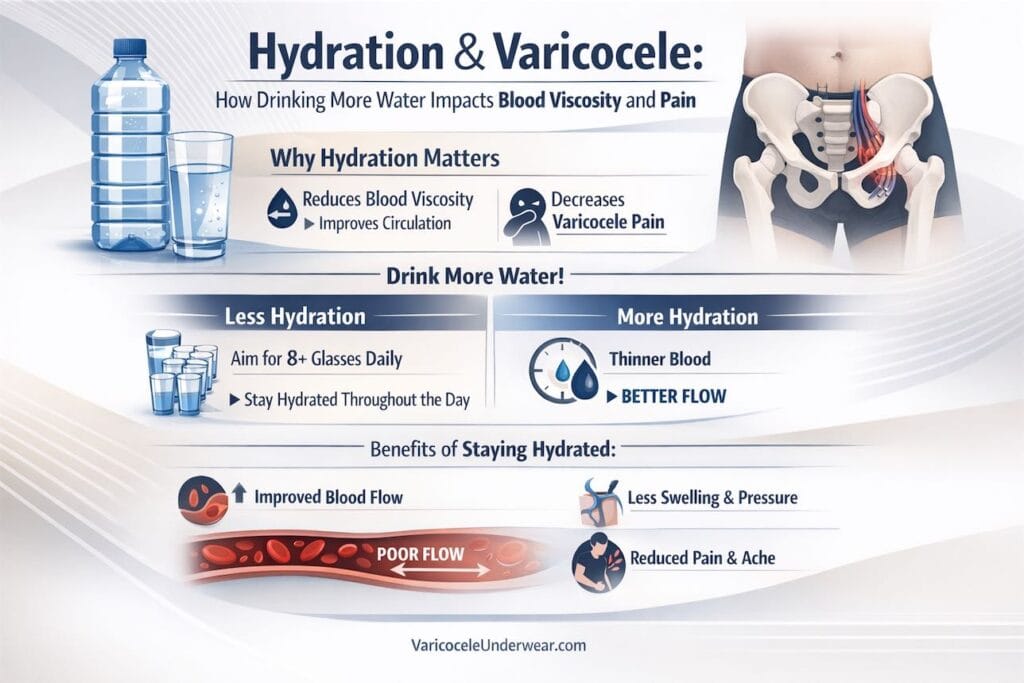
Here is the connection: dehydration thickens your blood. Thicker blood flows more slowly through already dilated, sluggish veins. This can worsen the pooling and pressure that causes varicocele pain.
This article explains exactly how hydration affects blood viscosity, what the research says, and practical steps to reduce your symptoms through better fluid intake. Whether you are managing symptoms conservatively or exploring treatment options, understanding hydration’s role gives you another tool for relief.
For a complete overview of varicocele causes, grades, and management approaches, see our Complete Varicocele Guide.
What Is Blood Viscosity and Why Does It Matter for Varicocele?
Blood viscosity refers to how thick or sticky your blood is. Think of it like the difference between water and honey. Thicker blood requires more force to pump through your vessels.
How Blood Thickness Affects Varicocele Symptoms
In a varicocele, the valves in your testicular veins do not work properly. Blood pools and flows backward instead of returning efficiently to your heart. When your blood is thicker due to dehydration:
- Pooling worsens because sluggish blood accumulates faster
- Venous pressure increases in the already stretched veins
- Pain and heaviness intensify as the scrotum becomes more congested
- Temperature rises in the testicle due to poor circulation
Research published in Clinical Hemorheology and Microcirculation confirms that even mild dehydration significantly increases blood viscosity, reducing flow through small vessels.
Does Dehydration Make Varicocele Pain Worse?
Short answer: Yes, it likely does.
When you are dehydrated, your plasma volume drops. Your blood becomes more concentrated with red blood cells, proteins, and other components. This directly increases viscosity.
What Happens in Your Body When Dehydrated
| Hydration Status | Blood Viscosity | Effect on Varicocele |
|---|---|---|
| Well-hydrated | Normal, flows easily | Reduced pooling, less pressure |
| Mildly dehydrated | 10-15% thicker | Increased congestion, mild discomfort |
| Moderately dehydrated | 20%+ thicker | Significant pain increase, heavy feeling |
| Severely dehydrated | Very thick | Maximum symptom intensity |
A 2019 study in the European Journal of Applied Physiology found that losing just 2% of body weight through fluid loss caused measurable increases in blood viscosity and reduced venous return.
Real Patient Experience
“I work construction and used to get terrible varicocele flare-ups by afternoon. My urologist suggested tracking my water intake. Once I started drinking consistently throughout the day instead of just at meals, my pain dropped noticeably within two weeks. It is not a cure, but it takes the edge off.” — Marcus, 34, Grade II varicocele

Discover specialized varicocele underwear designed for daily comfort, support, and recovery — a more targeted option for men who want support without compromise.
Discover the Recommended OptionHow Much Water Should You Drink With Varicocele?
There is no magic number, but research-backed guidelines provide a solid starting point.
Daily Hydration Recommendations
The National Academies of Sciences recommends approximately:
- 3.7 liters (125 oz) total daily fluid intake for adult men
- This includes fluids from all beverages and food
- About 80% typically comes from drinks
Factors That Increase Your Needs
You need more water if you:
- Exercise regularly or do physical labor
- Live in hot or humid climates
- Consume caffeine or alcohol (both are diuretic)
- Take medications that increase urination
- Have a physically demanding job
Hydration Tracking Chart
| Time of Day | Recommended Intake | Notes |
|---|---|---|
| Morning (6-9am) | 16-24 oz | Rehydrate after sleep |
| Mid-morning | 8-16 oz | Before physical activity |
| Lunch | 8-16 oz | With meal |
| Afternoon | 16-24 oz | Peak dehydration risk |
| Evening | 8-16 oz | Moderate to avoid nighttime urination |
What Are the Signs You Are Not Drinking Enough Water?
Many men walk around chronically dehydrated without realizing it. Your body gives clear signals.
Early Dehydration Signs
- Dark yellow or amber urine (should be pale yellow)
- Thirst (already indicates mild dehydration)
- Dry mouth or lips
- Fatigue in the afternoon
- Headaches, especially later in the day
Signs Linked to Worsening Varicocele Symptoms
Pay attention if you notice:
- Varicocele pain that peaks in hot weather
- Symptoms worse on days with less fluid intake
- Relief after drinking several glasses of water
- Pain that correlates with dark urine color
Beyond Water: Other Factors That Affect Blood Viscosity
Hydration is important, but it works alongside other lifestyle factors.
Blood Viscosity Influences
| Factor | Effect on Viscosity | Recommendation |
|---|---|---|
| Hydration | Major impact | 3+ liters daily |
| Sodium intake | High sodium thickens blood | Limit processed foods |
| Omega-3 fatty acids | Reduces viscosity | Fish, walnuts, flaxseed |
| Physical activity | Improves flow | Regular movement |
| Alcohol | Dehydrating, thickens blood | Moderate consumption |
| Smoking | Significantly thickens blood | Quit if possible |
Foods That May Help Blood Flow
- Fatty fish (salmon, mackerel)
- Garlic and onions
- Dark leafy greens
- Berries rich in antioxidants
- Beets and beet juice
- Turmeric
Can Hydration Replace Medical Treatment for Varicocele?
No. Hydration is supportive, not curative.
Let me be direct: drinking more water will not fix the faulty valves causing your varicocele. It will not shrink the dilated veins. If you have fertility concerns or severe symptoms, you need proper medical evaluation.
However, hydration works as part of a conservative management approach that includes:
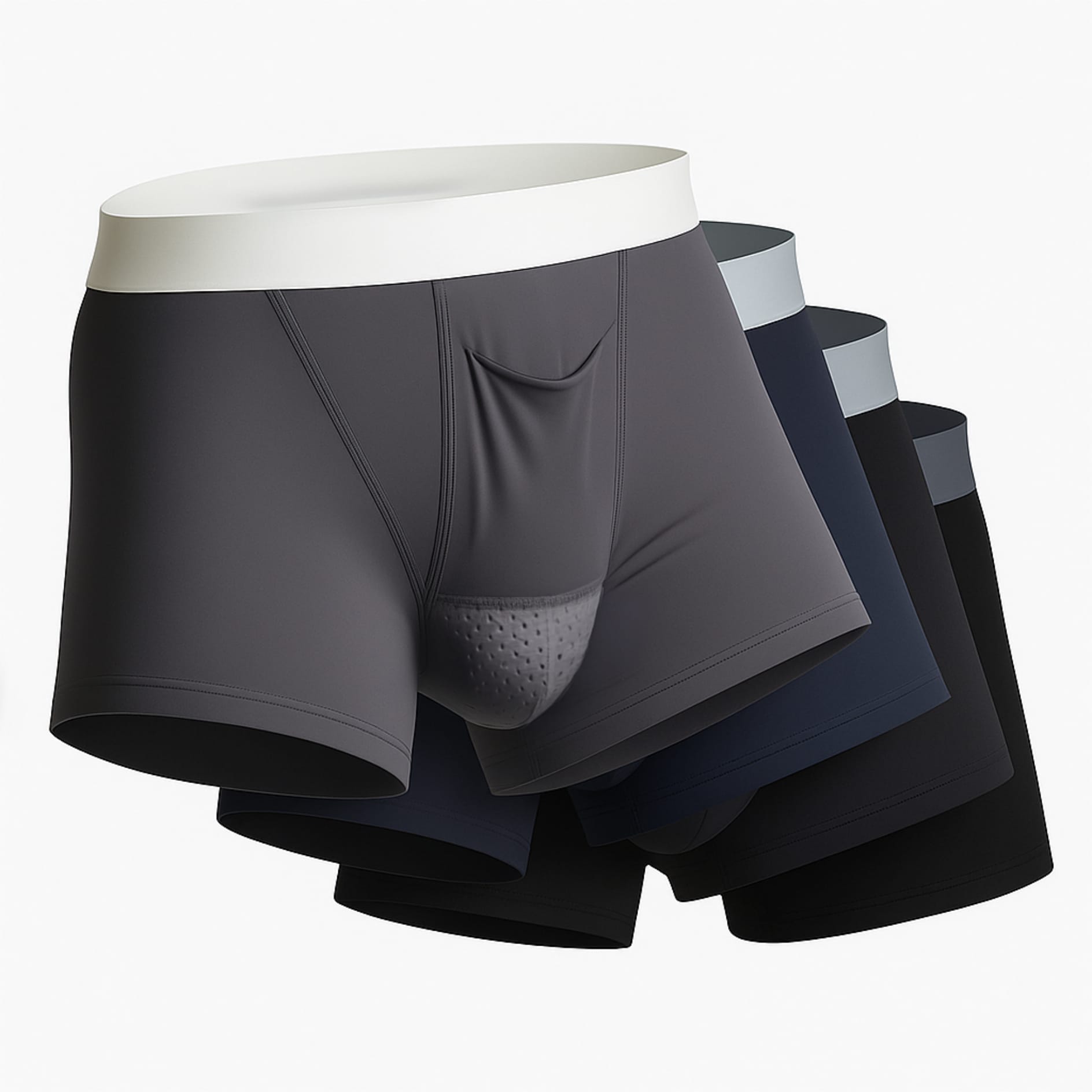
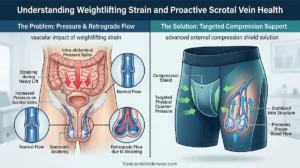
- Scrotal support: Wearing supportive underwear reduces pooling and eases discomfort. Purpose-designed varicocele support underwear provides gentle elevation and cooling
- Avoiding prolonged standing: Reduces venous pressure
- Cold therapy: Helps with acute flare-ups
- Anti-inflammatory diet: Reduces overall inflammation
Think of hydration as one piece of a larger symptom management puzzle.
Practical Tips: How to Stay Hydrated for Varicocele Relief
Knowing you should drink more water and actually doing it are different challenges. Here are strategies that work.
Building Hydration Habits
- Start your day with 16 oz of water before coffee or food
- Keep a water bottle visible at your desk or work area
- Set phone reminders every 2 hours initially
- Track intake using a simple app or journal
- Flavor water naturally with lemon, cucumber, or mint if plain water is unappealing
What Counts Toward Your Daily Intake
- Plain water (best choice)
- Herbal tea
- Sparkling water
- Water-rich fruits and vegetables
- Diluted fruit juice
What Works Against You
- Excessive caffeine (more than 4 cups coffee)
- Alcohol
- High-sodium foods
- Sugary drinks (cause fluid shifts)
When to See a Doctor About Varicocele
Hydration helps manage symptoms, but certain situations require medical attention.
Seek Evaluation If You Experience
- Sudden increase in pain or swelling
- Visible changes in testicle size
- Fertility difficulties after 6-12 months of trying
- Pain that does not respond to conservative measures
- New symptoms after age 40 (requires ruling out other causes)
The Mayo Clinic recommends evaluation for any scrotal mass or testicular discomfort, as proper diagnosis is essential.
Frequently Asked Questions
How quickly can better hydration reduce varicocele pain?
Most men notice changes within 3-7 days of consistent adequate hydration. The improvement is gradual rather than immediate. You may first notice that afternoon pain peaks become less intense, or that symptoms on hot days are more manageable. Track your water intake and pain levels for two weeks to identify patterns.
Does drinking cold water help varicocele more than room temperature water?
Both hydrate equally. Cold water may provide temporary local relief if you drink it and notice some cooling effect, but the temperature does not significantly change blood viscosity. The total volume you drink matters more than temperature. Choose whatever temperature helps you drink more consistently.
Can overhydration harm varicocele symptoms?
Excessive water intake, called hyponatremia, is rare but possible. Symptoms include nausea, headache, and confusion. For most men, this only occurs with extreme intake (over 1 liter per hour for extended periods). Drinking 3-4 liters spread throughout the day is safe for healthy adults without kidney problems.
Key Takeaways
Proper hydration will not cure your varicocele, but it directly affects how your blood flows through those already compromised veins. Thicker blood from dehydration means more pooling, more pressure, and more pain.
The practical steps are straightforward: aim for 3+ liters of fluids daily, monitor your urine color, and combine hydration with other conservative measures like scrotal support and movement throughout the day.
If symptoms persist despite lifestyle changes, consult a urologist to discuss whether intervention makes sense for your situation.
Your next step: Track your water intake for one week alongside your pain levels. Many men discover a clear connection they never noticed before.
Have questions about managing varicocele symptoms? Share your experience in the comments below or explore our resources for additional guidance.
Related Articles

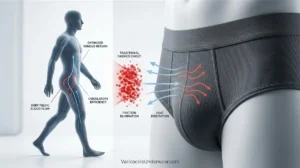

Choose Varicocele Support Designed for Cooling, Lift, and Daily Comfort
You’ve seen why regular underwear often falls short. Now view the purpose-built option made to reduce heaviness, improve support, and feel comfortable enough for everyday wear.