Varicocele pain can turn restful nights into uncomfortable struggles. About 2% to 10% of men with varicocele experience testicular pain, and sleep position plays a measurable role in overnight symptom management. This guide provides medically supported postural strategies to reduce discomfort and support natural healing during sleep.
You’ll learn which positions promote optimal blood drainage, how body positioning affects scrotal temperature, and practical steps to minimize morning pain and heaviness.
How Does Sleep Position Affect Varicocele Symptoms?
Sleep position directly influences blood flow patterns in the pampiniform plexus. When you lie flat or in certain positions, gravity either assists or hinders venous drainage from the scrotum.
Research on nocturnal scrotal temperature found that side sleeping raises scrotal temperature by 0.54-0.65°C compared to back sleeping. Higher temperatures increase testicular stress and can worsen varicocele-related discomfort. Poor drainage overnight keeps dilated veins under pressure, which may contribute to the dull, aching, or throbbing pain characteristic of symptomatic varicocele.
The good news: adjusting your sleep posture can improve venous return and reduce morning symptom intensity.
What Is the Best Sleeping Position for Varicocele?
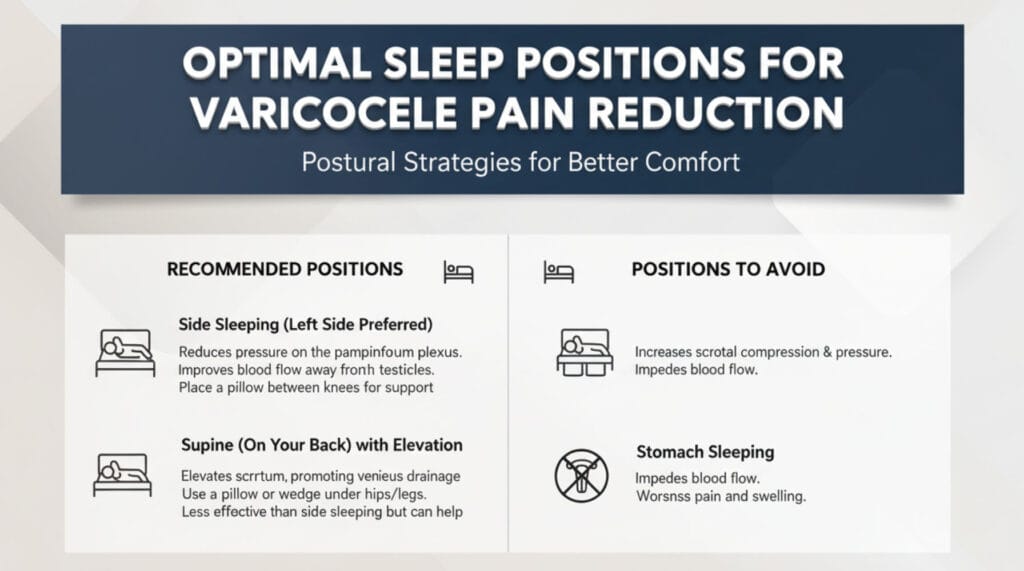
Back sleeping with slight leg elevation offers the most consistent benefit for varicocele drainage.
Back Position Benefits
- Gravity assists blood flow from the scrotum toward the heart
- Lower scrotal temperatures compared to side sleeping
- Reduces venous pooling overnight
- Minimizes compression on the affected side
To optimize this position:
- Place a pillow or folded towel under your knees
- Elevate legs 2-3 inches above heart level
- Avoid excessive elevation that strains your lower back
- Keep your sleeping environment cool (65-68°F ideal)
Conservative treatment approaches for painful varicocele include scrotal elevation, which you can maintain throughout the night with proper positioning. This non-invasive strategy works alongside other natural varicocele management methods to provide symptom relief.
Can You Sleep on Your Side With Varicocele?
Yes, but side sleeping requires strategic positioning to avoid worsening symptoms.

Discover specialized varicocele underwear designed for daily comfort, support, and recovery — a more targeted option for men who want support without compromise.
Discover the Recommended OptionSide Sleeping Guidelines
Always sleep on the opposite side of your varicocele. If you have left-sided varicocele (most common), sleep on your right side. This positioning prevents compression of already-dilated veins.
Try this approach:
- Lie on the side opposite your varicocele
- Place a pillow between your knees
- Slightly bend your top leg
- Check vein fullness after 5 minutes in position
If the varicocele feels warmer or more engorged after side sleeping, switch back to the back position. Side sleeping shows higher nocturnal scrotal temperatures, which may not suit everyone with symptomatic varicocele.
Should You Avoid Stomach Sleeping?
Stomach sleeping creates the worst conditions for varicocele management.
This position:
- Compresses the scrotum against the mattress
- Restricts blood flow and increases venous pressure
- Elevates scrotal temperature
- Prevents natural vein drainage
Men who habitually sleep on their stomachs often report increased varicocele symptoms and morning discomfort. If you wake up with a warm, engorged scrotum, your sleep position likely contributed to overnight blood pooling.
What Additional Nighttime Strategies Reduce Pain?
Beyond position alone, several complementary practices enhance overnight varicocele management.
Pre-Sleep Drainage Techniques
- Perform 5-10 minute legs-up-the-wall pose before bed
- Lie with pelvis elevated to drain accumulated blood
- Allow veins to decompress after a full day of standing
Temperature Management
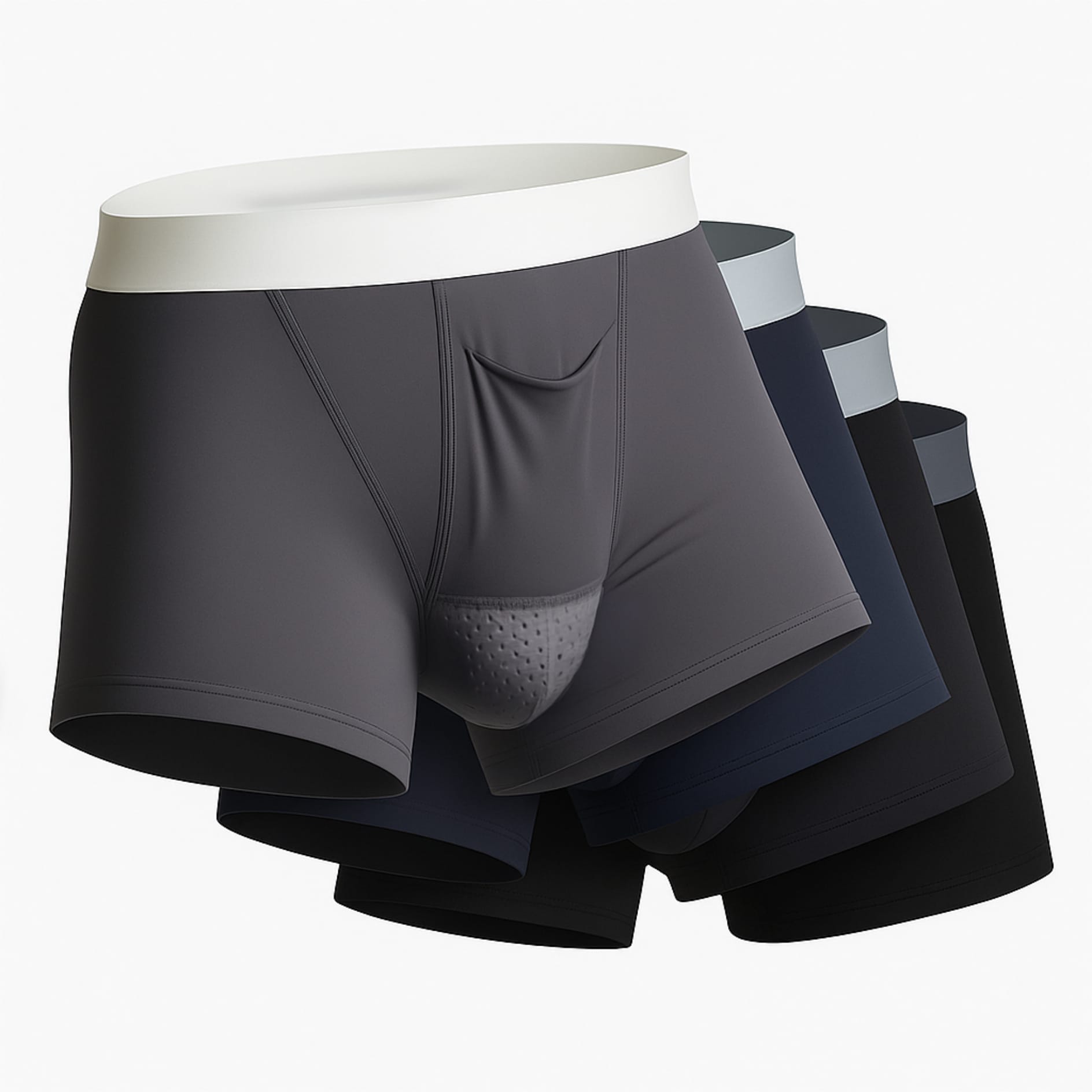
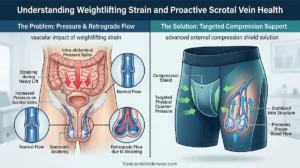
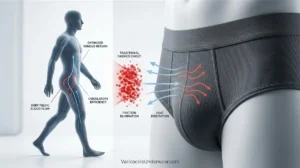
Keep your sleeping area cool and avoid restrictive clothing. Specialized supportive underwear designed for varicocele can provide gentle elevation and cooling throughout the night without constricting waistbands.
Position Variation
Don’t remain locked in one position all night. Natural movement during sleep is healthy and helps prevent stiffness. The goal is to start in an optimal position and return to it when you wake during the night.
Comparison of Sleep Positions for Varicocele
When Should Conservative Measures Include Medical Evaluation?
Sleep position adjustments work as part of conservative management, which resolves pain in 4-15% of men without further intervention. However, persistent symptoms warrant professional assessment.
Consider medical evaluation if:
- Pain persists beyond 3-6 months despite postural changes
- Symptoms worsen or become sharp/stabbing
- You notice testicular size differences
- Fertility concerns accompany pain
Conservative treatments including scrotal elevation and NSAIDs should precede surgical options. Varicocelectomy resolves approximately 80% of painful varicocele cases when conservative measures fail and candidates are carefully selected.
Practical Implementation Guide
Start with these steps tonight:
- Assess your current sleeping habits – Note which position you naturally prefer and morning symptom patterns
- Prepare your sleep environment – Gather elevation pillows, adjust room temperature, remove restrictive sleepwear
- Practice back sleeping – Begin on weekends when you can adjust without time pressure
- Test alternative positions – If back sleeping proves difficult, try side sleeping on the correct side
- Monitor results – Track morning symptom intensity to identify which positions help most
Give each positional change 5-7 nights before evaluating effectiveness. Your body needs time to adapt to new sleep patterns.
FAQ
Does sleeping position permanently fix varicocele?
No, sleep position alone cannot reverse varicocele. However, optimal positioning reduces overnight venous pooling, lowers scrotal temperature by up to 0.65°C, and decreases morning pain intensity. This strategy works best as part of comprehensive conservative management alongside activity modification, supportive garments, and inflammation control.
Why do I wake up with worse varicocele symptoms in the morning?
Morning symptom intensity often reflects overnight blood accumulation in scrotal veins. Poor sleep position, extended periods without drainage, and elevated nocturnal scrotal temperatures all contribute to morning heaviness and discomfort. Back sleeping with leg elevation promotes drainage throughout the night and typically results in more comfortable mornings.
How long should I try positional changes before seeing results?
Most men notice symptom improvements within 5-10 days of consistent optimal positioning. Dramatic changes may occur sooner, but allow at least two weeks before determining effectiveness. If you see no benefit after four weeks of proper positioning combined with other conservative measures, medical consultation is appropriate as only 4-15% of painful varicocele cases resolve with conservative treatment alone.
Related Articles
Choose Varicocele Support Designed for Cooling, Lift, and Daily Comfort
You’ve seen why regular underwear often falls short. Now view the purpose-built option made to reduce heaviness, improve support, and feel comfortable enough for everyday wear.