If you’ve noticed one testicle feels smaller than the other or you’ve been diagnosed with a varicocele, you’re not alone—and you’re right to have questions. Testicular size changes can be concerning, especially when they affect fertility, hormone production, or your overall confidence. Varicoceles, which are enlarged veins in the scrotum affecting approximately 15% of all men and up to 40% of men with infertility, are a common yet often misunderstood condition.
In this article, we’ll explore the connection between varicoceles and testicular atrophy (shrinkage), what the latest research tells us about why this happens, and what treatment options can help. Whether you’re experiencing symptoms now or simply want to understand your diagnosis better, you’ll learn evidence-based information to guide your next steps. For a comprehensive overview of varicocele causes, symptoms, and management, see our Complete Varicocele Guide.
What Is Varicocele and How Common Is Testicular Shrinkage?
A varicocele is an abnormal enlargement of the pampiniform plexus—the network of veins that drain blood from the testicles. Similar to varicose veins in the legs, these dilated veins can impair blood flow, increase scrotal temperature, and potentially damage testicular tissue over time.
Key Statistics:
- Studies show that 40-80% of men with varicoceles experience some degree of testicular volume reduction, typically on the affected side
- Left-sided varicoceles account for 85-90% of cases due to anatomical differences in venous drainage
- The size discrepancy between testicles can range from subtle (1-2 mL) to significant (more than 20% volume difference)
Testicular atrophy doesn’t happen overnight. The process is gradual, often developing over months or years, which is why many men don’t notice changes until they’re evaluated for fertility concerns or pain.
Why Does Varicocele Cause Testicular Shrinkage?
Understanding the mechanism behind testicular atrophy helps explain why treatment timing matters. Several interconnected factors contribute to size reduction:
Increased Scrotal Temperature
The testicles normally maintain a temperature 2-4°F cooler than core body temperature for optimal sperm production. Varicoceles disrupt this thermoregulation by pooling warm venous blood around the testicles, creating a consistently elevated local environment. This chronic heat exposure can damage Sertoli cells (which support sperm development) and Leydig cells (which produce testosterone).
Oxidative Stress and Cellular Damage
Impaired venous drainage leads to accumulation of metabolic waste products and increased oxidative stress within testicular tissue. Free radicals damage DNA in developing sperm and can trigger programmed cell death (apoptosis) in testicular cells, gradually reducing overall tissue volume.
Hypoxia (Reduced Oxygen Supply)
Blood pooling in varicocele veins means less efficient oxygen delivery to testicular tissue. This chronic low-oxygen state impairs cellular metabolism and can lead to progressive tissue atrophy over time.
Hormonal Disruption
Some research suggests varicoceles may affect the hypothalamic-pituitary-gonadal axis, potentially reducing local testosterone production and growth factors necessary for maintaining normal testicular size and function.
Clinical Evidence: What Research Shows About Size Changes
Recent studies provide clear evidence of the varicocele-shrinkage connection and the potential for reversal with treatment:
| Study Parameter | Findings | Source |
|---|---|---|
| Testicular Volume Difference | Men with varicoceles showed average 2.5-5 mL volume reduction on affected side | World Journal of Men’s Health, 2020 |
| Recovery After Surgery | 70-80% of adolescents showed “catch-up” growth within 6-12 months post-varicocelectomy | Journal of Urology, 2019 |
| Fertility Improvement | 60-70% improvement in semen parameters after treatment in men with atrophy | Fertility and Sterility, 2021 |
Important Note: While testicular size can improve after treatment, especially in younger men, complete reversal isn’t guaranteed. The degree of recovery depends on the duration and severity of the varicocele, patient age, and individual healing response.
How to Measure and Monitor Testicular Size
If you’re concerned about size changes, accurate measurement helps establish a baseline and track progress. Here’s what healthcare providers use:
Professional Assessment Methods
Orchidometer: A string of oval beads (Prader orchidometer) ranging from 1-25 mL that doctors compare against each testicle for volume estimation.
Ultrasound: The gold standard for precise measurement. A scrotal ultrasound provides:
- Exact testicular dimensions (length, width, height)
- Calculated volume (typically 15-25 mL per testicle in adults)
- Visualization of varicocele severity
- Assessment of blood flow patterns
At-Home Monitoring
While not a substitute for professional evaluation, you can track changes by:
- Gentle monthly self-examination (best done after a warm shower)
- Noting any firmness changes, heaviness, or visible vein prominence
- Documenting symptoms (pain, aching, fertility concerns)
When to Seek Immediate Evaluation:
- Sudden, significant size change
- New testicular pain or swelling
- Palpable lumps or hard areas
- Associated symptoms (fever, nausea, redness)
Varicocele Grades and Their Impact on Testicular Size
Varicoceles are classified into grades based on physical examination findings, and severity correlates with atrophy risk:

Discover specialized varicocele underwear designed for daily comfort, support, and recovery — a more targeted option for men who want support without compromise.
Discover the Recommended Option| Grade | Clinical Findings | Atrophy Risk | Detection Method |
|---|---|---|---|
| Grade 1 | Palpable only during Valsalva maneuver (bearing down) | Low to moderate | Physical exam with straining |
| Grade 2 | Palpable at rest without Valsalva | Moderate to high | Physical exam at rest |
| Grade 3 | Visible through scrotal skin (“bag of worms” appearance) | High | Visual inspection |
| Subclinical | Not palpable; detected only by ultrasound or Doppler | Variable | Imaging studies only |
Research indicates that Grade 2 and 3 varicoceles carry the highest risk for progressive testicular atrophy and fertility impairment, though even subclinical varicoceles can impact sperm parameters in some men.
Treatment Options: Can You Reverse Testicular Shrinkage?
The good news: intervening early, especially in adolescents and younger men, offers the best chance for testicular growth recovery and fertility preservation.
Varicocelectomy (Surgical Repair)
Several surgical approaches exist, all aimed at ligating (tying off) the affected veins:
Microsurgical Varicocelectomy: Uses surgical microscope for precision; lowest recurrence rate (1-2%) and fewest complications. Performed through small inguinal or subinguinal incision.
Laparoscopic Varicocelectomy: Minimally invasive approach using small abdominal incisions; good visualization but slightly higher recurrence than microsurgical.
Open High Ligation (Palomo or Ivanissevich): Traditional approach through groin incision; effective but higher hydrocele risk.
Success Rates for Size Recovery:
- Adolescents: 70-80% show catch-up growth within 12 months
- Adults under 30: 40-60% show measurable improvement
- Adults over 35: 20-40% show improvement; primary benefits are fertility and symptom relief
Varicocele Embolization
A minimally invasive radiological procedure where a catheter is threaded through a vein (usually in the groin or neck) to the affected testicular vein. Coils or sclerosing agents block blood flow to the varicocele. Similar success rates to surgery with faster recovery, though slightly higher recurrence (5-10%).
Conservative Management
For men with mild symptoms or those not concerned about fertility:
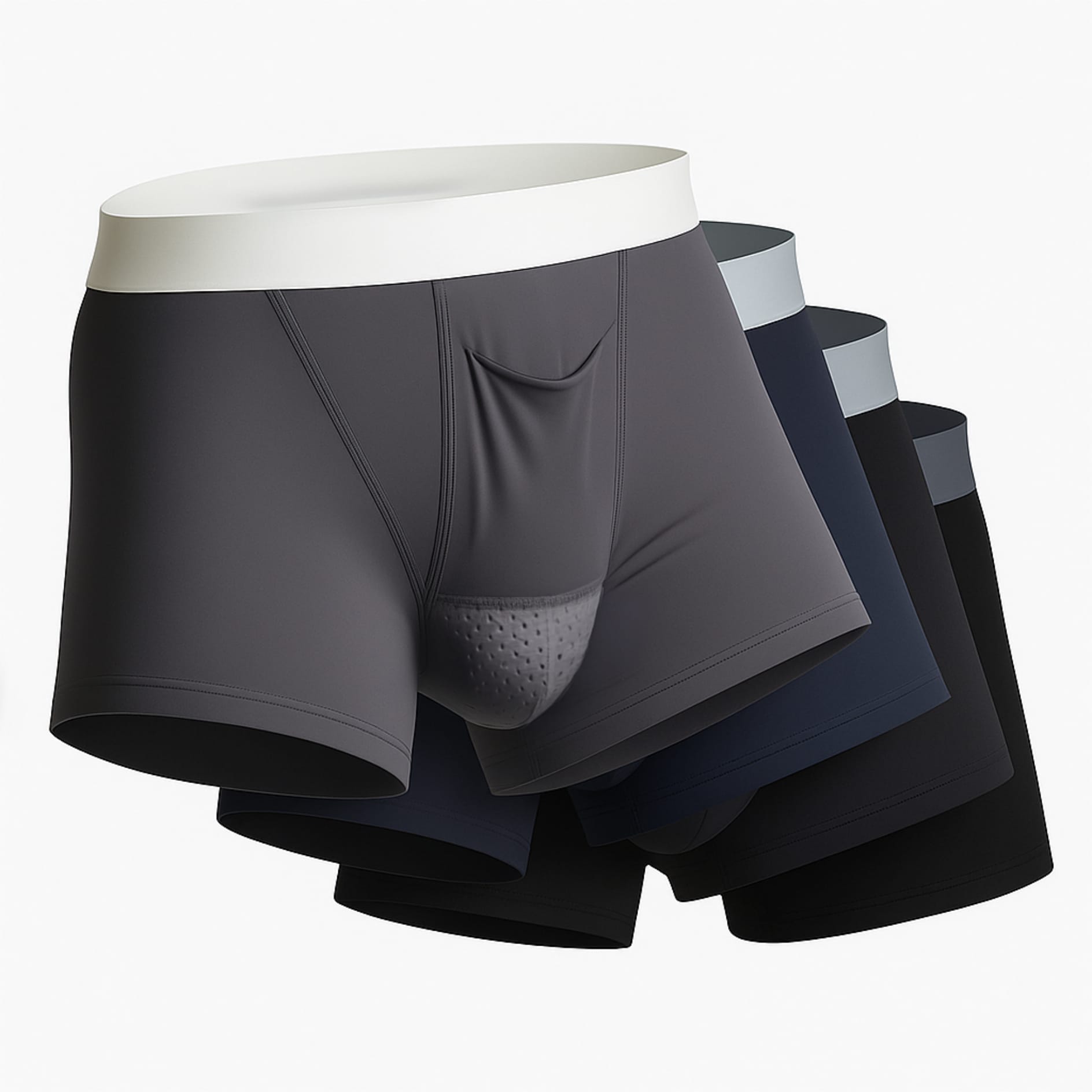
Supportive Underwear: Specially designed supportive underwear can provide scrotal support, reduce discomfort, and may help with temperature regulation. Products like Varicocele Support and Cooling Underwear offer non-invasive symptom relief through gentle support and moisture-wicking fabrics.
Lifestyle Modifications:
- Avoid prolonged sitting or standing
- Maintain healthy weight
- Wear breathable, non-restrictive clothing
- Apply cold packs for acute discomfort
Antioxidant Supplementation: Some evidence suggests supplements like Vitamin C, Vitamin E, and Coenzyme Q10 may reduce oxidative stress, though they don’t address the underlying vein problem.
Age Matters: Treatment Timing and Expectations
Your age significantly influences both the urgency of treatment and potential for recovery:
Adolescents (Ages 12-18)
Why Early Treatment Matters: Testicles undergo significant growth during puberty. A varicocele during this critical period can permanently impair development.
Clinical Approach: Most pediatric urologists recommend intervention if there’s:
- Greater than 20% volume difference between testicles
- Grade 2-3 varicocele with documented progressive atrophy
- Abnormal semen analysis (in older adolescents)
Recovery Potential: Excellent—up to 80% show catch-up growth.
Young Adults (Ages 18-35)
Primary Concern: Fertility preservation and optimization.
Clinical Approach: Treatment recommended for:
- Documented infertility with abnormal semen analysis
- Testicular pain affecting quality of life
- Progressive testicular atrophy
- Partner attempting conception
Recovery Potential: Good for fertility parameters; moderate for size improvement.
Older Adults (Ages 35+)
Realistic Expectations: Size recovery less likely, but fertility improvements still possible if sperm production hasn’t completely ceased.
Clinical Approach: Treat if causing significant symptoms or fertility concerns; otherwise observation may be appropriate.
Beyond Size: Other Important Considerations
While testicular volume is measurable and concerning, it’s important to understand the broader implications:
Fertility Impact
Testicular size correlates with sperm production capacity, but even men with significant atrophy may still have adequate sperm counts for natural conception or assisted reproduction. Varicocele repair improves semen parameters in approximately 60-70% of cases, regardless of whether size fully normalizes.
Hormone Production
The Leydig cells producing testosterone are relatively resilient. Most men with varicoceles maintain normal testosterone levels, though some studies suggest varicoceles may contribute to age-related testosterone decline.
Psychological Impact
The emotional toll of noticing physical changes shouldn’t be minimized. Many men experience anxiety, reduced sexual confidence, or body image concerns. These are valid feelings that should be discussed with healthcare providers.
Visual Guide: Normal vs. Varicocele-Affected Testicle
[Table: Comparative Assessment]
| Characteristic | Normal Testicle | Varicocele-Affected Testicle |
|---|---|---|
| Volume | 15-25 mL | Often 10-20% smaller on affected side |
| Consistency | Firm, uniform | May feel softer; veins palpable |
| Temperature | Cooler than body core | Often warmer due to blood pooling |
| Appearance | Smooth scrotal skin | Possible visible vein engorgement (Grade 3) |
| Sensation | No discomfort | May have dull ache, heaviness, especially after standing |
Frequently Asked Questions
Can a varicocele cause both testicles to shrink?
While varicoceles typically affect one side (usually the left), bilateral varicoceles occur in approximately 10-15% of cases and can impact both testicles. However, even with a unilateral varicocele, systemic effects like increased scrotal temperature may potentially influence the unaffected side, though this is less common and usually less severe.
How quickly does testicular shrinkage occur with varicocele?
Testicular atrophy from varicocele is typically a gradual process occurring over months to years, not weeks. The rate depends on varicocele severity, individual biology, and age. Adolescents may show more rapid changes due to interference with developmental growth, while adult-onset atrophy tends to progress more slowly. Regular monitoring through self-examination and periodic ultrasounds helps track any changes.
Will treating my varicocele definitely restore my testicle to normal size?
Recovery potential varies significantly by age and duration of the varicocele. Adolescents and young adults have the best chance—up to 70-80% show measurable improvement within 6-12 months. However, adults, especially those over 35 or with long-standing varicoceles, may see more limited size recovery even though fertility parameters often improve. Complete reversal isn’t guaranteed, but early intervention maximizes your chances for optimal outcomes.
Conclusion: Taking Action for Your Testicular Health
Varicocele-related testicular shrinkage is real, measurable, and in many cases, at least partially reversible with appropriate treatment. The key takeaways:
- Early intervention matters most, especially for adolescents and men planning future fertility
- Accurate diagnosis through physical exam and ultrasound establishes baseline measurements
- Treatment options range from conservative supportive measures to surgical repair, each with specific success rates
- Recovery potential depends on your age, varicocele severity, and duration of the condition
- Fertility and quality of life often improve after treatment, even when complete size normalization doesn’t occur
If you’ve noticed testicular size differences or have been diagnosed with a varicocele, don’t wait to seek evaluation. A consultation with a urologist specializing in male fertility and varicocele management can provide personalized guidance based on your specific situation.
Remember, taking care of your reproductive health isn’t just about physical parameters—it’s about preserving your fertility options, managing symptoms, and maintaining your overall well-being and confidence.
Next Steps:
- Schedule an evaluation with a urologist if you haven’t already
- Consider supportive measures like specialized varicocele underwear for symptom management
- Explore our Complete Varicocele Guide for additional information on all aspects of varicocele management
Related Articles
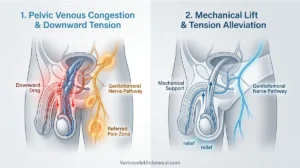
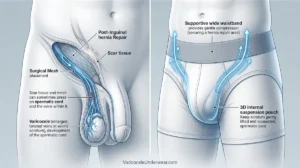


Choose Varicocele Support Designed for Cooling, Lift, and Daily Comfort
You’ve seen why regular underwear often falls short. Now view the purpose-built option made to reduce heaviness, improve support, and feel comfortable enough for everyday wear.