Men with varicocele often face a difficult choice when testosterone levels drop. Should you start testosterone replacement therapy (TRT) or fix the varicocele first? This decision affects your fertility, hormone balance, and long-term health. Research shows that varicocele repair increases testosterone by 34-123 ng/dL in men with low hormone levels, while TRT can permanently damage sperm production. This guide examines hormone optimization strategies for varicocele patients, weighing surgical repair against testosterone therapy based on 2026 clinical evidence.
Does Varicocele Lower Testosterone Levels?
Varicocele directly impairs Leydig cell function, the testicular cells responsible for testosterone production. The condition creates elevated scrotal temperatures and oxidative stress that damage hormone-producing tissue.
Clinical data reveals the testosterone impact:
- Men with varicocele show significantly lower testosterone compared to healthy controls
- Approximately 15% of all men have varicocele, but prevalence increases to 35-40% in infertile populations
- Hypogonadal symptoms (low energy, reduced libido, muscle loss) often accompany varicocele
- The severity correlates with varicocele grade, though even grade 2 varicoceles affect hormone production
The hypothalamic-pituitary-gonadal axis responds to reduced testosterone by increasing FSH and LH hormones, attempting to stimulate more production. This compensatory mechanism eventually fails as Leydig cell damage progresses. Understanding how varicocele affects fertility and hormone function helps men make informed treatment decisions before permanent damage occurs.
How Much Does Varicocele Surgery Increase Testosterone?
Meta-analysis of surgical outcomes demonstrates consistent testosterone improvements after varicocele repair. The magnitude depends on baseline levels and surgical technique.
Post-Surgery Testosterone Changes
| Patient Group | Average T Increase | Statistical Significance |
|---|---|---|
| All varicocele patients | 34-35 ng/dL | p < 0.05 |
| Hypogonadal men (low T) | 105-123 ng/dL | p < 0.0001 |
| Eugonadal men (normal T) | Minimal increase | Less significant |
| Bilateral repair | 115+ ng/dL | p < 0.0001 |
Microsurgical varicocelectomy produces the best results, with 60-80% of hypogonadal patients achieving normal testosterone levels within 3-6 months post-surgery. The procedure also decreases FSH and LH by 0.78 mIU/ml and 0.48 mIU/ml respectively, indicating restored testicular function rather than compensatory hormone production.
Testosterone normalization brings practical benefits: improved sexual function, increased muscle mass, better mood stability, and preserved fertility potential. These changes occur without the fertility risks associated with exogenous testosterone.
When Should You Choose Varicocele Repair Over TRT?
The treatment decision hinges on fertility goals, age, varicocele characteristics, and baseline testosterone levels. Surgical repair offers distinct advantages for specific patient profiles.
Varicocele surgery is the primary recommendation when:
- You plan to have children now or in the future
- Testosterone levels are below 300 ng/dL with palpable varicocele
- Age under 50 with clinically significant varicocele (grade 2-3)
- Abnormal semen parameters accompany low testosterone
- You want to avoid lifelong hormone therapy
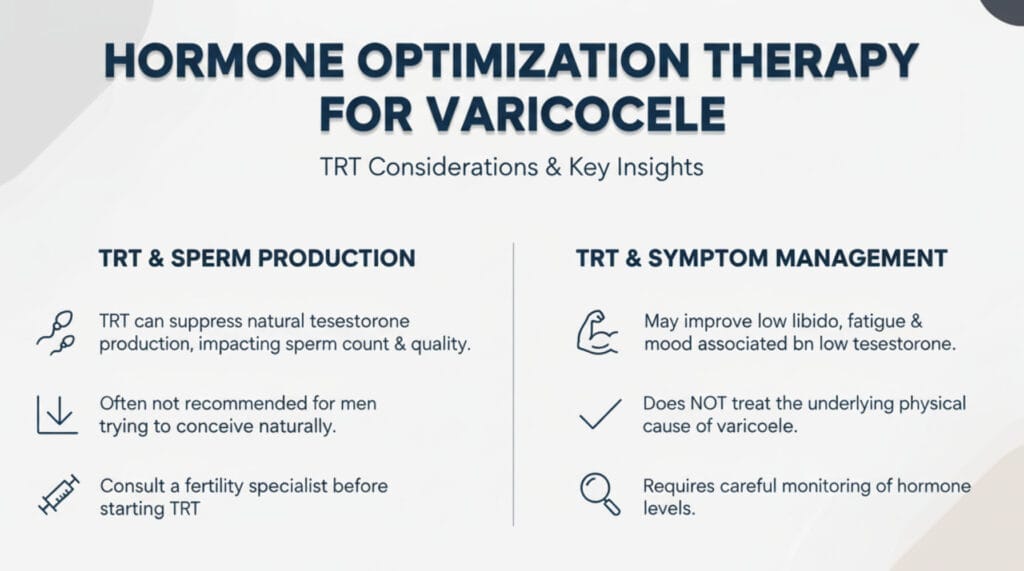
TRT suppresses natural testosterone production through negative feedback on the hypothalamic-pituitary axis. Sperm production decreases or stops entirely in most men on TRT, with no guarantee of recovery after discontinuation. This creates permanent infertility risk.
The microsurgical approach delivers testosterone improvements comparable to TRT in hypogonadal varicocele patients, with the added benefit of maintaining or improving fertility. Success rates favor surgery in younger men with moderate to severe varicocele grades.
For men managing varicocele symptoms during treatment consideration, supportive underwear with cooling technology provides non-invasive relief from discomfort and testicular heaviness.
What Are the Risks of TRT With Untreated Varicocele?
Combining TRT with untreated varicocele creates compounding fertility and health risks. Testosterone therapy causes testicular atrophy and azoospermia in most users, while varicocele continues damaging remaining testicular function.
TRT Side Effects in Varicocele Patients
Fertility impacts:
- Complete or severe reduction in sperm production
- Testicular shrinkage (atrophy) from disuse
- Permanent spermatogenic dysfunction in some cases
- Inability to recover fertility even after stopping TRT
Cardiovascular and metabolic risks:
- Polycythemia (excessive red blood cell production)
- Elevated blood pressure
- Increased cardiovascular event risk
- Fluid retention and swelling
Hormonal complications:
- Dependency on exogenous testosterone
- Suppressed natural hormone production
- Difficulty discontinuing therapy
- Mood changes and irritability
The critical issue: TRT masks hypogonadism symptoms without addressing the underlying varicocele pathology. Testicular damage progresses silently while exogenous testosterone maintains normal serum levels. If you later decide to father children, recovery becomes difficult or impossible.
Clinical guidelines recommend against TRT for infertile couples attempting conception. Men with varicocele-induced hypogonadism should explore surgical options first, reserving TRT only for cases where surgery fails or is contraindicated.
Can You Combine Varicocele Surgery With Hormone Therapy?
Sequential treatment strategies exist for complex cases. Some men benefit from varicocele repair followed by selective hormone optimization if testosterone remains suboptimal.
The standard protocol:
- Perform varicocelectomy and monitor testosterone recovery for 3-6 months
- Assess final testosterone levels and symptom resolution
- Consider alternative hormone therapies if levels remain below 300 ng/dL
- Explore clomiphene citrate or hCG therapy before committing to TRT
Clomiphene and human chorionic gonadotropin (hCG) stimulate natural testosterone production without suppressing spermatogenesis. These medications work through different mechanisms than TRT, preserving fertility while improving hormone levels.
Recent 2025 guidelines on TRT adverse effects specifically note that varicocele repair should be attempted before initiating testosterone replacement in appropriate candidates. This approach maximizes natural hormone recovery while maintaining reproductive options.
Starting TRT before attempting varicocele surgery essentially eliminates the fertility preservation benefit of surgical repair. The sequence matters significantly for long-term outcomes.
Frequently Asked Questions
How long does it take for testosterone to increase after varicocele surgery?
Most men see testosterone improvements within 3-6 months post-surgery. Peak increases typically occur at 6 months, with hormone levels stabilizing by 12 months. Baseline testosterone, varicocele grade, and surgical technique influence recovery speed. Monthly blood work helps track progress.
Will my testosterone return to normal if I stop TRT after varicocele surgery?
Recovery is unpredictable and not guaranteed. Some men regain natural production within 3-12 months of stopping TRT, while others experience permanent suppression. Duration of TRT use, dosage, and individual physiology determine outcomes. Discontinuing TRT without medical supervision creates additional risks.
Can varicocele surgery fail to improve testosterone levels?
Surgery improves testosterone in 60-80% of hypogonadal patients, meaning 20-40% see minimal benefit. Factors affecting success include: severity of Leydig cell damage, presence of other hypogonadism causes, age over 50, and surgical complications. Even without testosterone improvement, fertility parameters often benefit from repair.