You just received your semen analysis results. The numbers look confusing. Your doctor mentioned varicocele, and now you’re wondering what all this means for your fertility.
You’re not alone. Approximately 40% of men with primary infertility have a varicocele, and many struggle to understand how this condition affects their test results. This guide breaks down exactly what DNA fragmentation, morphology, and other semen parameters reveal about your reproductive health when varicocele is present.
If you’re new to understanding how varicocele impacts male fertility, our comprehensive guide on varicocele and fertility provides essential background information before diving into specific test interpretations.
By the end of this article, you’ll know how to read each parameter, understand what’s actually happening inside your body, and discover what steps you can take next.
What Is a Semen Analysis and Why Does Varicocele Affect It?
A semen analysis measures several factors that determine sperm quality and fertility potential. When varicocele is present, elevated scrotal temperature and oxidative stress directly damage developing sperm cells.
According to the World Health Organization’s 2021 laboratory manual, a standard semen analysis evaluates:
- Sperm concentration (millions per milliliter)
- Total motility (percentage moving)
- Morphology (percentage with normal shape)
- Volume (amount of ejaculate)
- pH and other chemical markers
Why Varicocele Changes Your Results
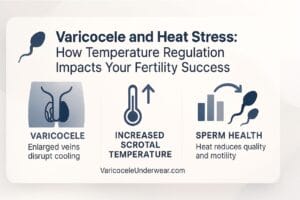
The enlarged veins in a varicocele create a pocket of pooled blood around the testicle. This pooling raises testicular temperature by 1-2°C above normal. Since sperm production requires cooler temperatures, this heat exposure damages sperm DNA and cellular structures during their 72-day development cycle.
[Table 1: WHO 2021 Semen Analysis Reference Values]
| Parameter | Lower Reference Limit |
|---|---|
| Volume | 1.4 mL |
| Concentration | 16 million/mL |
| Total motility | 42% |
| Progressive motility | 30% |
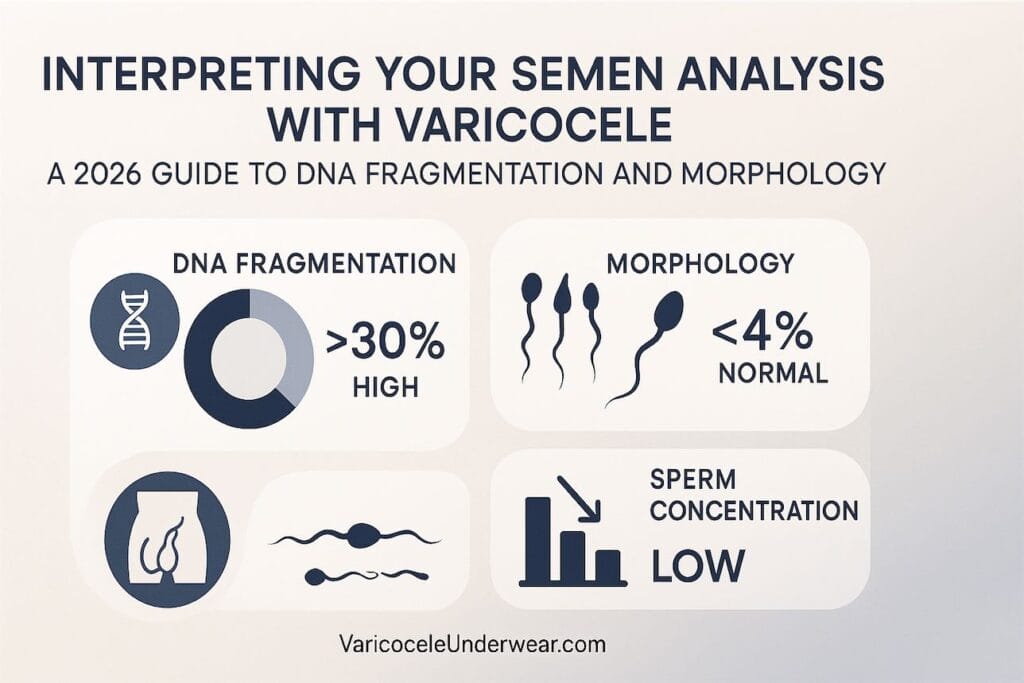
| Normal morphology | 4% |
| Total sperm number | 39 million |
If your results fall below these thresholds, varicocele could be a contributing factor.
How Varicocele Damages Sperm: The Science Behind Your Results
Understanding the damage mechanism helps you make sense of your specific test findings.
Oxidative Stress and Reactive Oxygen Species
Varicocele increases reactive oxygen species (ROS) in the testicular environment. These unstable molecules attack sperm cell membranes and DNA. A 2022 study in Andrology found that men with varicocele had 1.5 to 2 times higher ROS levels compared to men without the condition.
Heat-Related Cellular Damage
Elevated temperature affects:
- Spermatogenesis (sperm cell production)
- Mitochondrial function (energy production in sperm tails)
- Acrosome integrity (the cap that helps sperm penetrate the egg)
This explains why varicocele typically affects multiple parameters simultaneously rather than just one isolated factor.
Understanding DNA Fragmentation in Varicocele Patients
DNA fragmentation testing measures breaks and damage in sperm genetic material. This test isn’t always included in standard semen analysis but provides critical information for men with varicocele.
What Is Sperm DNA Fragmentation?
DNA fragmentation index (DFI) represents the percentage of sperm with damaged genetic material. Even sperm that look normal under a microscope and swim well can carry broken DNA.
[Table 2: DNA Fragmentation Index Interpretation]
| DFI Level | Classification | Fertility Impact |
|---|---|---|
| Less than 15% | Low fragmentation | Good fertility potential |
| 15-25% | Moderate fragmentation | Reduced natural conception rates |
| Greater than 25% | High fragmentation | Significant fertility challenges |
| Greater than 50% | Very high fragmentation | May require advanced interventions |
Why Varicocele Patients Often Have Elevated DFI
Research published in Fertility and Sterility demonstrated that men with clinical varicocele have DNA fragmentation rates averaging 20-30%, compared to 10-15% in men without varicocele.
The mechanisms behind this include:
- Direct oxidative damage to DNA strands
- Impaired DNA repair during sperm maturation
- Premature apoptosis (programmed cell death) activation
Should You Request This Test?
If your standard semen analysis shows borderline or normal results but you’re still experiencing infertility, DNA fragmentation testing can reveal hidden damage. Many fertility specialists now recommend this test for all varicocele patients, especially those considering treatment options.
What Does Abnormal Sperm Morphology Mean with Varicocele?
Morphology measures the percentage of sperm with normal shape. This parameter often shows the most significant abnormalities in varicocele patients.
The Strict Kruger Criteria Explained
Modern labs use Kruger strict criteria, where only sperm with perfectly formed heads, midpieces, and tails count as “normal.” Under these standards, 4% normal forms is the lower cutoff.
[Diagram Suggestion: Normal vs. Abnormal Sperm Morphology Types]
- Normal sperm structure
- Head defects (round, tapered, large, small)
- Midpiece defects (thick, thin, bent)
- Tail defects (coiled, double, short)
Varicocele-Specific Morphology Patterns
Men with varicocele commonly show:
- Tapered heads (54% of abnormal forms in one study)
- Amorphous heads (irregular, undefined shape)
- Cytoplasmic droplets (excess cellular material)
- Coiled tails (indicating maturation problems)
A 2023 analysis of 847 infertile men found that those with varicocele had 2.1 times higher rates of head abnormalities compared to controls.
Does Morphology Actually Predict Fertility?
Here’s what the evidence shows:
- Natural conception: Morphology below 4% reduces but doesn’t eliminate chances
- IUI success: Morphology significantly impacts outcomes
- IVF/ICSI: Morphology matters less when sperm is directly injected
If your morphology is low, don’t panic. This single parameter doesn’t define your fertility potential.
Reading Your Semen Analysis Results: A Parameter-by-Parameter Guide
Let’s walk through each result you’ll find on your report.
Concentration and Total Count
What it measures: How many sperm per milliliter and total sperm in the sample.
Varicocele impact: Most men with varicocele experience 20-40% reduction in sperm concentration. Severe cases can show oligospermia (low count) or azoospermia (no sperm).
What your numbers mean:
| Your Result | Category | Considerations |
|---|---|---|
| Greater than 40 million/mL | Above average | Good baseline |
| 16-40 million/mL | Normal range | Adequate for most purposes |
| 5-15 million/mL | Moderate oligospermia | May affect natural conception |
| Less than 5 million/mL | Severe oligospermia | Specialist evaluation needed |
Motility Assessment
What it measures: Percentage of moving sperm and quality of movement.
Your report will show:
- Total motility: All moving sperm
- Progressive motility: Sperm swimming forward effectively
- Non-progressive motility: Moving but not traveling forward
Varicocele typically reduces progressive motility by 15-25% due to mitochondrial damage in sperm tails.
Vitality Testing
What it measures: Percentage of live sperm cells.
Low motility with normal vitality suggests structural tail problems. Low motility with low vitality indicates sperm death, often from oxidative damage common in varicocele.
Case Study: Real Patient Journey with Varicocele Semen Analysis
Patient Profile:
- 34-year-old male
- Trying to conceive for 18 months
- Left-sided grade II varicocele diagnosed via ultrasound
Initial Semen Analysis Results:
| Parameter | Result | Reference |
|---|---|---|
| Volume | 3.2 mL | Normal |
| Concentration | 22 million/mL | Normal |
| Total motility | 38% | Borderline low |
| Progressive motility | 24% | Low |
| Morphology | 2% | Low |
DNA Fragmentation Test: 28% (elevated)
Intervention Timeline:
- Month 1-3: Lifestyle modifications (diet, temperature reduction, antioxidant supplementation)
- Began wearing supportive cooling underwear designed for varicocele symptom management
- Month 3-6: Continued conservative management while awaiting repeat testing
Six-Month Follow-Up Results:
| Parameter | Initial | 6 Months | Change |
|---|---|---|---|
| Progressive motility | 24% | 34% | +42% |
| Morphology | 2% | 4% | +100% |
| DNA fragmentation | 28% | 21% | -25% |
Outcome: Natural conception achieved at month 8.
This case illustrates that some varicocele patients can improve parameters through non-surgical approaches, though results vary significantly between individuals.
Can Varicocele Treatment Improve Your Semen Parameters?
The short answer: yes, in most cases. But timing and realistic expectations matter.
Evidence for Surgical Repair
A meta-analysis of 17 studies involving over 1,500 men found that varicocelectomy improved:
- Sperm concentration by an average of 9.7 million/mL
- Total motility by approximately 10-12 percentage points
- Morphology by 2-3 percentage points
The American Urological Association guidelines recommend considering surgical repair when varicocele is palpable, semen parameters are abnormal, and the female partner has normal fertility or correctable issues.
Timeline for Improvement
| Timeframe | What to Expect |
|---|---|
| 0-3 months | Minimal changes (sperm take 72 days to develop) |
| 3-6 months | Initial improvements in motility and concentration |
| 6-12 months | Peak improvements typically achieved |
| 12+ months | Plateau in most parameters |
Factors Affecting Treatment Response
Not everyone responds equally. Better outcomes are associated with:
- Younger age (under 40)
- Higher pre-treatment concentration
- Shorter duration of infertility
- Lower grade varicocele
- Absence of other fertility factors
Non-Invasive Support Options for Symptom Management
While evaluating treatment options or waiting for surgical scheduling, several approaches can help manage symptoms and potentially support sperm health.
Temperature Reduction Strategies
Since heat is a primary mechanism of damage, reducing scrotal temperature makes physiological sense. Options include:
- Avoid prolonged sitting (especially on heated seats)
- Limit hot tub and sauna use
- Choose loose-fitting clothing
- Use supportive underwear with cooling features
Specifically designed varicocele support underwear with cooling technology can provide compression to reduce blood pooling while incorporating temperature management features. Many men find this helps with daily discomfort while potentially creating a more favorable environment for sperm development.
Antioxidant Supplementation
Evidence supports certain supplements for reducing oxidative stress:
- Vitamin C: 500-1000mg daily
- Vitamin E: 400 IU daily
- Coenzyme Q10: 200-400mg daily
- L-carnitine: 1-2g daily
Always discuss supplementation with your healthcare provider before starting.
Lifestyle Modifications
Basic changes that support testicular health:
- Maintain healthy body weight (obesity increases scrotal temperature)
- Stop smoking (directly increases DNA fragmentation)
- Limit alcohol (affects hormone balance)
- Manage stress (impacts testosterone production)
Frequently Asked Questions
How often should I repeat my semen analysis if I have varicocele?
Most specialists recommend baseline testing, then follow-up every 3-6 months if monitoring conservative management or post-treatment. Since sperm development takes approximately 72 days, testing more frequently won’t show meaningful changes. If results are severely abnormal, your urologist may recommend additional specialized testing like DNA fragmentation analysis or hormone panels before repeating the standard analysis.
Can I have normal semen analysis results but still have fertility problems from varicocele?
Yes, this scenario is more common than many realize. Standard semen analysis parameters can appear normal while DNA fragmentation remains elevated, reducing conception chances. Additionally, sperm function tests measuring ability to bind and penetrate eggs may reveal problems not detected on routine analysis. If you’ve been trying to conceive for over 12 months with normal results, request DNA fragmentation testing and consider a fertility specialist evaluation.
Does varicocele grade correlate with semen analysis abnormalities?
Generally, higher grade varicoceles (larger, more palpable) tend to cause more significant semen parameter abnormalities, but this relationship isn’t absolute. Some men with grade III (large) varicoceles maintain normal fertility, while others with grade I (small) varicoceles show severe abnormalities. The duration of varicocele presence, bilateral versus unilateral involvement, and individual susceptibility all influence your specific results.
Key Takeaway
Your semen analysis with varicocele tells a specific story about sperm health, but it’s not the complete picture of your fertility potential. DNA fragmentation and morphology abnormalities are common with varicocele and often improve with appropriate intervention.
Focus on understanding your results in context, not in isolation. Request DNA fragmentation testing if it wasn’t included. Discuss treatment options ranging from lifestyle modifications and supportive measures to surgical repair with a qualified urologist or reproductive medicine specialist.
The next step is yours: bring this guide to your next appointment, ask specific questions about your parameters, and work with your healthcare team to create a plan that addresses your individual situation.
Reviewed for medical accuracy | Last updated: January 2026
This content is for educational purposes only and does not replace professional medical advice. Always consult a qualified healthcare provider regarding your specific condition.