If you’ve been diagnosed with a varicocele and now worry about your prostate health, you’re not alone. Many men experience anxiety when they notice pelvic discomfort, wondering if these two conditions might be related. This concern is valid and deserves a thorough, evidence-based answer.
A varicocele affects approximately 15% of adult men, causing enlarged veins in the scrotum. Meanwhile, prostate issues like benign prostatic hyperplasia (BPH) and prostatitis affect millions worldwide. But does one condition actually cause or worsen the other?
In this article, you’ll discover what current medical research reveals about the varicocele-prostate connection, learn when symptoms overlap, and understand practical steps to protect both your scrotal and prostate health. For comprehensive background on varicocele itself, our complete varicocele guide covers causes, symptoms, and treatment options in detail.
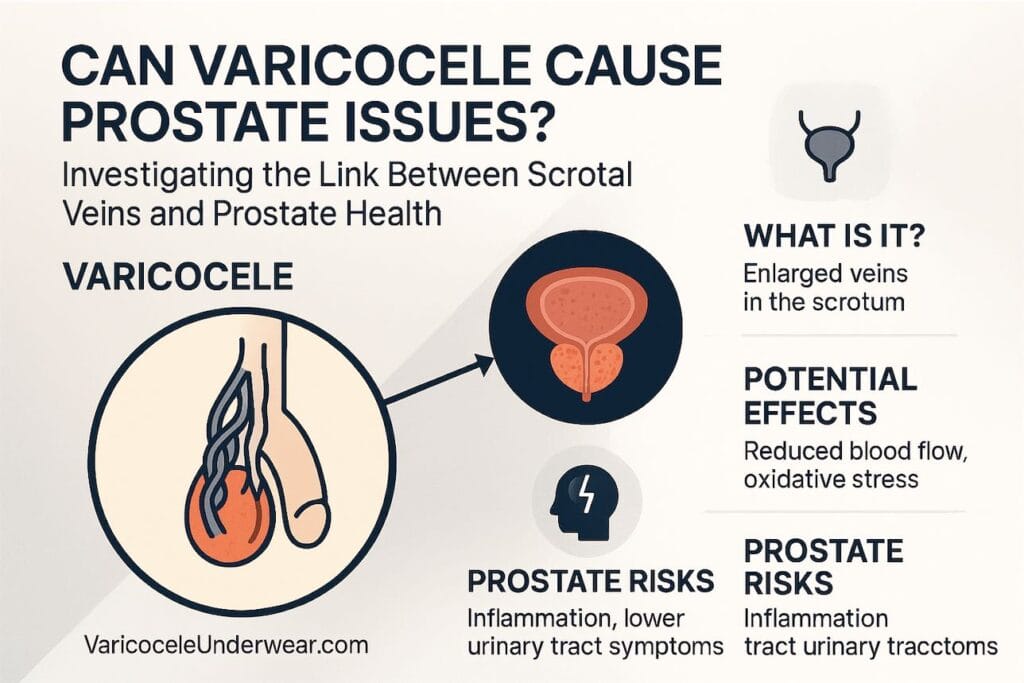
What Is a Varicocele and How Does It Affect Your Body?
A varicocele is an enlargement of veins within the scrotum, similar to varicose veins in the legs. These swollen veins develop when valves inside the spermatic cord veins malfunction, allowing blood to pool and flow backward.
Key Facts About Varicocele
| Characteristic | Details |
|---|---|
| Prevalence | 15-20% of all men; 40% of infertile men |
| Most common side | Left testicle (85% of cases) |
| Primary symptoms | Dull ache, heaviness, visible swelling |
| Age of onset | Usually develops during puberty |
| Main health concern | Reduced sperm production and testosterone |
The condition primarily impacts testicular function through increased scrotal temperature and impaired blood flow. Most varicoceles don’t cause serious health problems beyond fertility concerns, but the discomfort can significantly affect daily life.
Does Varicocele Directly Cause Prostate Problems?
The short answer: No direct causal link has been established between varicocele and prostate disease.
Current medical evidence does not support a direct cause-and-effect relationship between varicocele and prostate conditions like BPH, prostatitis, or prostate cancer. These conditions involve different anatomical structures, blood supplies, and disease mechanisms.
However, this doesn’t mean the two conditions never coexist or share certain characteristics.
Why Some Men Experience Both Conditions
Several factors explain why varicocele and prostate issues sometimes occur together:
- Shared risk factors: Age, obesity, and hormonal changes affect both conditions
- Referred pain: Pelvic discomfort can be difficult to localize
- Venous system connections: The pelvic venous network has interconnected pathways
- Inflammation patterns: Chronic pelvic conditions may share inflammatory components
A 2019 study published in the Asian Journal of Andrology examined the relationship between varicocele and lower urinary tract symptoms (LUTS), which often indicate prostate problems. Researchers found that while both conditions can coexist, varicocele does not appear to cause prostate enlargement.
Can Varicocele Affect Testosterone Levels and Indirectly Impact the Prostate?
This question gets closer to a potential connection worth examining.
Varicocele can reduce testosterone production in some men. The testicles produce approximately 95% of the body’s testosterone, and impaired testicular function from varicocele may lower these hormone levels.
The Testosterone-Prostate Relationship
| Testosterone Level | Potential Prostate Effects |
|---|---|
| Normal range | Healthy prostate function |
| Low testosterone | May worsen urinary symptoms |
| Fluctuating levels | Can affect prostate tissue |
| Post-varicocele repair | Often improves with testosterone recovery |
Research from the Journal of Urology shows that varicocele repair can increase testosterone levels by approximately 100 ng/dL on average. This hormonal improvement might indirectly benefit overall pelvic health, including prostate function.
Clinical perspective: In my experience working with men’s health patients, those who address their varicocele often report improvements in multiple areas beyond fertility, including urinary patterns and pelvic comfort.
Varicocele vs. Prostatitis: How to Tell the Difference
Many men confuse varicocele symptoms with prostatitis because both cause pelvic and groin discomfort. Understanding the differences helps you seek appropriate care.
Symptom Comparison Chart
| Symptom | Varicocele | Prostatitis |
|---|---|---|
| Location of pain | Scrotum, groin | Perineum, lower back, bladder area |
| Visible swelling | Yes (bag of worms appearance) | No |
| Urinary symptoms | Rare | Common (burning, frequency, urgency) |
| Pain timing | Worse after standing/activity | May be constant or during urination |
| Fever | No | Possible with bacterial infection |
| Sexual symptoms | Possible discomfort | Pain during/after ejaculation |
If you experience symptoms from both columns, you should see a urologist for proper evaluation. Both conditions are treatable, but they require different approaches.
Does Pelvic Congestion Syndrome Connect Varicocele and Prostate Issues?
Pelvic congestion syndrome (PCS) represents one area where varicocele and prostate symptoms might genuinely overlap.
PCS involves chronic pelvic pain from dilated pelvic veins. While more commonly diagnosed in women, men can develop similar venous congestion affecting the pelvic region, including areas near the prostate.
Signs of Male Pelvic Congestion
- Chronic dull ache in the pelvis or perineum
- Pain that worsens with prolonged sitting
- Discomfort after sexual activity
- Visible varicocele with extensive pelvic symptoms
- Urinary hesitancy without clear prostate enlargement
According to research in Cardiovascular and Interventional Radiology, some men with varicocele have more extensive pelvic venous insufficiency that can cause symptoms mimicking prostate problems.
When Should You See a Doctor About Varicocele and Prostate Concerns?
Seek medical evaluation if you experience:
- New or worsening pelvic pain lasting more than two weeks
- Urinary changes including weak stream, frequency, or urgency
- Visible scrotal swelling with discomfort
- Pain during urination or ejaculation
- Blood in urine or semen
- Fever with pelvic symptoms
What to Expect During Your Appointment
Your urologist will likely perform:
- Physical examination of testicles and prostate
- Ultrasound imaging of the scrotum
- Urinalysis and possibly PSA testing
- Assessment of urinary function
These tests help distinguish between varicocele, prostate conditions, or other causes of your symptoms.
Managing Varicocele Symptoms While Protecting Prostate Health
Whether or not varicocele directly affects your prostate, taking care of both areas makes sense for overall men’s health.
Non-Invasive Symptom Management
For varicocele discomfort, supportive underwear can provide significant relief by reducing venous pooling and supporting proper blood flow. Specially designed varicocele support underwear uses gentle compression and cooling technology to address the mechanical factors behind varicocele symptoms.
Lifestyle Modifications That Benefit Both Conditions
| Recommendation | Varicocele Benefit | Prostate Benefit |
|---|---|---|
| Regular exercise | Improves circulation | Reduces BPH risk |
| Healthy weight | Decreases abdominal pressure | Lowers prostate inflammation |
| Adequate hydration | Supports overall health | Promotes healthy urination |
| Limit alcohol | Reduces venous dilation | Decreases prostate irritation |
| Avoid prolonged sitting | Prevents blood pooling | Reduces pelvic pressure |
The Bottom Line: What Research Actually Shows
After reviewing the available evidence, here’s what we can confidently state:
Varicocele does not cause prostate cancer, BPH, or prostatitis. These conditions have distinct causes and disease processes.
However, both conditions share the male pelvic region and can coexist. The overlapping symptoms sometimes create confusion about the source of discomfort. Additionally, the hormonal effects of varicocele might have subtle, indirect influences on overall pelvic health that researchers continue to study.
Men with varicocele should maintain regular prostate health screenings appropriate for their age, just like any other man. Having a varicocele doesn’t increase or decrease your need for prostate monitoring.
If you’re experiencing symptoms that concern you, don’t assume one condition is causing the other. Get proper evaluation from a qualified urologist who can assess each issue separately and develop an appropriate treatment plan.
Frequently Asked Questions
Can untreated varicocele lead to prostate enlargement over time?
No scientific evidence supports this connection. Prostate enlargement (BPH) results from hormonal changes related to aging, not from varicocele. While varicocele can affect testosterone levels, this hormonal change hasn’t been linked to BPH development. Both conditions should be monitored and treated separately based on their individual symptoms and progression.
Why does my varicocele pain feel like it’s coming from my prostate area?
Pelvic pain is notoriously difficult to localize because nerves in this region overlap significantly. Varicocele can cause referred pain that radiates toward the groin, perineum, and lower abdomen, areas often associated with prostate symptoms. A thorough examination including ultrasound can identify the true source of your discomfort.
Should I get my prostate checked if I have a varicocele?
Follow standard prostate screening guidelines based on your age and risk factors, not your varicocele status. Most medical organizations recommend discussing prostate screening with your doctor starting at age 50, or earlier if you have a family history. Your varicocele diagnosis doesn’t change these recommendations.