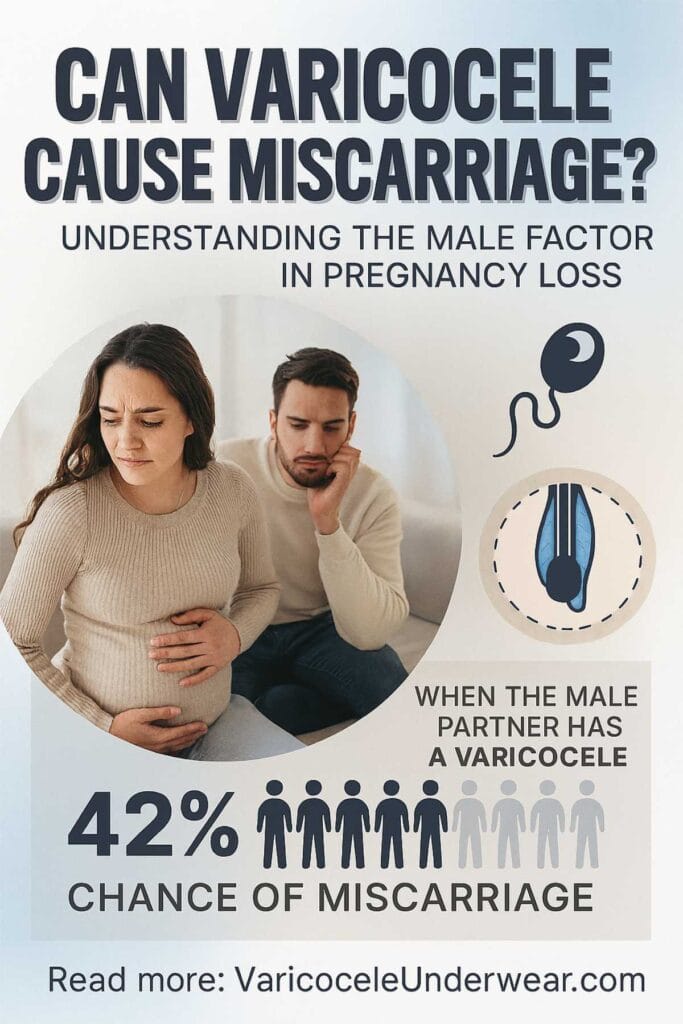
Miscarriage is often viewed as a “woman’s issue,” but research is shifting this narrative. If you or your partner has experienced repeated pregnancy loss and you have a varicocele diagnosis, you may wonder: could my condition be contributing? The answer is more nuanced than a simple yes or no.
Varicocele, a condition where veins in the scrotum become enlarged, affects approximately 15% of men and is present in up to 40% of men evaluated for infertility. While the direct link between varicocele and miscarriage is still being studied, emerging evidence points to an indirect connection through sperm DNA damage. This article breaks down what current science says, who should be concerned, and what can be done.
For a foundational understanding of how varicocele affects male fertility, see our comprehensive guide on varicocele and fertility.
How Does Varicocele Damage Sperm DNA?
Varicocele creates a hostile environment for sperm through several mechanisms that converge on one problem: oxidative stress.
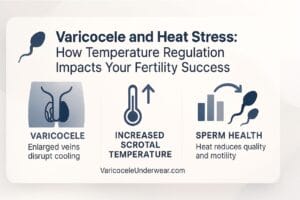
When veins in the scrotum malfunction, blood pools and raises testicular temperature. This disrupts the delicate balance sperm need to develop properly. The result is excessive production of reactive oxygen species (ROS), which are unstable molecules that attack sperm cells.
Here is what happens at the cellular level:
- Lipid peroxidation: ROS damages the fatty membranes protecting sperm
- DNA strand breaks: Both single and double-stranded breaks occur in sperm genetic material
- Chromatin damage: The proteins that package DNA become compromised
- Apoptosis: Damaged sperm die prematurely
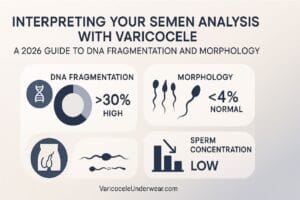
The DNA fragmentation rate in varicocele patients reaches approximately 32.4%, which is 2.6 times higher than men without the condition.
Can Damaged Sperm DNA Cause Miscarriage?
Yes, elevated sperm DNA fragmentation (SDF) is associated with increased miscarriage risk, according to multiple studies.
When sperm with fragmented DNA fertilizes an egg, the embryo inherits genetic instability. While the egg has some natural repair mechanisms, severe DNA damage overwhelms this capacity. The consequences include:
| Outcome | Mechanism |
|---|---|
| Implantation failure | Embryo cannot attach to uterine wall |
| Early pregnancy loss | Developmental arrest before 13 weeks |
| Chemical pregnancy | Very early miscarriage before clinical detection |
| Recurrent pregnancy loss | Two or more consecutive losses |
A 2019 meta-analysis found that men whose partners experienced recurrent pregnancy loss had significantly higher sperm DNA fragmentation compared to fertile controls. Double-stranded DNA breaks, measured by the Comet assay, were present in 85% of unexplained recurrent pregnancy loss cases.
Does Varicocele Directly Cause Miscarriage?
The relationship between varicocele and miscarriage is indirect but clinically relevant.
A 2025 systematic review examined controlled studies comparing pregnancy outcomes between men with and without clinical varicocele. The findings revealed no significant difference in time to achieve pregnancy (5.3 vs. 5.4 months). However, men with varicocele showed significantly lower live birth rates (71.2% vs. 76.4%; p=0.04).
A 2025 meta-analysis of 14 studies found that varicocelectomy (surgical repair) improved clinical pregnancy rates (OR: 1.38) and live birth rates (OR: 2.18), but miscarriage rates did not significantly differ between treated and untreated groups.
What This Means
Varicocele appears to reduce the likelihood of a successful pregnancy reaching live birth, though not through dramatically increased miscarriage alone. The condition affects overall reproductive success through multiple pathways including fertilization failure, implantation problems, and early embryonic loss.
When Should Men Get Tested for Sperm DNA Fragmentation?
The European Society of Human Reproduction and Embryology (ESHRE) recommends sperm DNA fragmentation testing in specific situations:
Test if:
- Your partner has experienced two or more miscarriages
- You have a clinical varicocele with abnormal semen parameters
- IVF or ICSI cycles have repeatedly failed
- Standard semen analysis is normal but infertility persists
Standard semen analysis measures sperm count, motility, and morphology but does not assess DNA integrity. A man can have normal-appearing sperm with significant underlying DNA damage.
Testing Methods:
- TUNEL assay
- Sperm Chromatin Structure Assay (SCSA)
- Sperm Chromatin Dispersion (SCD) test
- Comet assay (detects both single and double-strand breaks)
A DNA fragmentation index (DFI) above 30% is associated with significantly increased recurrent pregnancy loss risk.
Does Varicocele Repair Improve Pregnancy Outcomes?
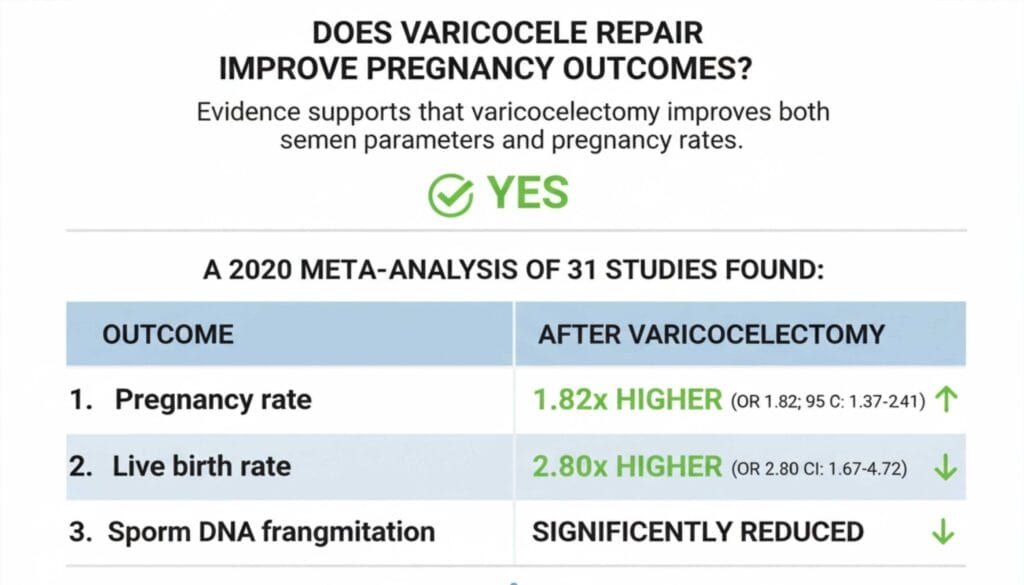
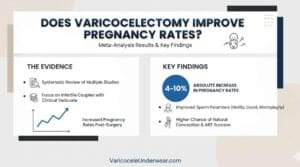
Yes. Evidence supports that varicocelectomy improves both semen parameters and pregnancy rates.
A 2020 meta-analysis of 31 studies found:
| Outcome | After Varicocelectomy |
|---|---|
| Pregnancy rate | 1.82x higher (OR 1.82; 95% CI: 1.37-2.41) |
| Live birth rate | 2.80x higher (OR 2.80; 95% CI: 1.67-4.72) |
| Sperm DNA fragmentation | Significantly reduced |
After surgery, sperm DNA fragmentation decreases by approximately 3.66% within 3 months and continues improving up to 6 months, which appears to be the optimal window for conception attempts.
For couples pursuing assisted reproduction, varicocelectomy before IVF/ICSI showed:
- Clinical pregnancy rate: 60% (treated) vs. 45% (untreated)
- Live birth rate: 46.2% vs. 31.4%
Non-Surgical Approaches to Support Testicular Health
While varicocelectomy remains the definitive treatment for significant varicocele, some men seek supportive measures for symptom management.
Lifestyle modifications that may reduce oxidative stress:
- Antioxidant supplementation (vitamins C, E, zinc, selenium)
- Avoiding testicular heat exposure (saunas, hot tubs, tight clothing)
- Weight management for men with BMI above 23.7 kg/m²
- Smoking cessation
- Limiting alcohol intake
Physical support: Wearing supportive underwear designed for varicocele may provide symptom relief and temperature regulation during daily activities, though it does not treat the underlying venous abnormality.
FAQ
Can a man with varicocele get his partner pregnant?
Yes. Many men with varicocele father children naturally. However, varicocele is found in 35-40% of men with primary infertility and up to 80% of men with secondary infertility (difficulty conceiving after a previous pregnancy). The condition does not prevent pregnancy but may reduce the likelihood of successful conception and live birth.
Should I get varicocele surgery if my partner had a miscarriage?
Surgery is typically recommended when clinical varicocele is present alongside abnormal semen parameters or elevated sperm DNA fragmentation. A single miscarriage is common (affecting 10-20% of recognized pregnancies), so testing is usually advised after two or more losses. Consult a urologist and reproductive endocrinologist to evaluate whether varicocelectomy is appropriate for your situation.
How long after varicocele repair should we try to conceive?
Research suggests that sperm DNA fragmentation reaches optimal improvement around 6 months after varicocelectomy. However, semen parameters begin improving within 3 months. For couples with time constraints, particularly when female partner age is a factor, discuss timing with your fertility specialist to balance sperm recovery against maternal age considerations.