You expected scrotal discomfort. But now your left leg aches, your groin feels heavy, and you’re wondering if something else is wrong.
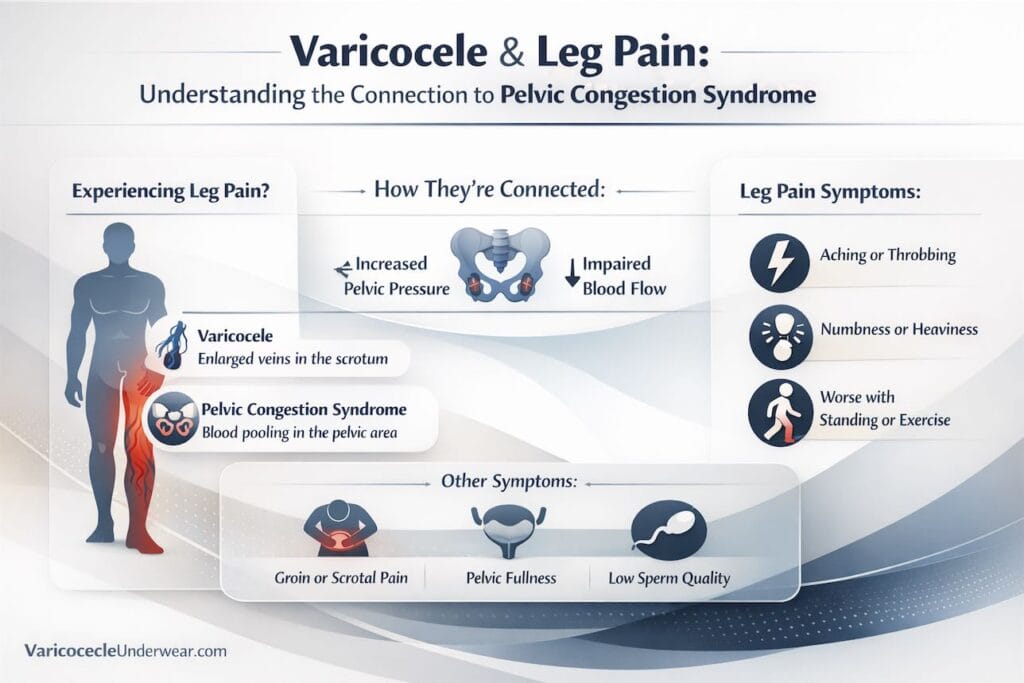
Here’s what many men don’t realize: varicocele and leg pain can share a common root cause called pelvic congestion syndrome (PCS). This vascular condition affects the veins throughout your pelvis, not just those around your testicles.
If you’re experiencing radiating discomfort that worsens after standing or activity, you’re not imagining things. About 15% of men with varicocele report referred pain extending into the thigh or groin area, according to clinical observations.
In this article, you’ll learn exactly how these conditions connect, which symptoms signal a bigger problem, and what treatment options actually work. For foundational knowledge about this condition, our complete varicocele guide covers the basics you need to understand first.
What Is Pelvic Congestion Syndrome in Men?
Pelvic congestion syndrome occurs when veins in the pelvic region become dilated and blood pools instead of flowing properly back to the heart. While this condition is more commonly diagnosed in women, recent research confirms men experience it too, often alongside varicocele.
Key Facts About Male Pelvic Congestion:
| Feature | Details |
|---|---|
| Primary cause | Incompetent venous valves |
| Most affected veins | Internal iliac, gonadal, and pudendal veins |
| Common age range | 25-55 years |
| Typical presentation | Varicocele + pelvic/leg discomfort |
| Often misdiagnosed as | Musculoskeletal pain, nerve issues |
The same venous insufficiency causing your varicocele can extend into pelvic veins, creating a network of congested vessels that produce pain in unexpected locations.
Can Varicocele Cause Leg Pain?
Short answer: Yes, but indirectly.
Varicocele itself affects the pampiniform plexus (the network of veins draining the testicle). However, these veins connect to larger pelvic veins. When venous pressure builds, it can cause:
- Referred pain into the inner thigh
- Heaviness or aching in the groin
- Discomfort radiating down the leg
- Worsening symptoms after prolonged standing
A 2023 retrospective study found that 22% of men with grade III varicocele reported concurrent leg or pelvic symptoms that improved after varicocele repair.
Clinical Pearl: “When a patient presents with varicocele and ipsilateral leg pain, I always evaluate for broader pelvic venous disease. These conditions rarely exist in isolation.” — Dr. Marc Goldstein, Weill Cornell Medicine
How Pelvic Congestion Syndrome Connects to Varicocele
Think of your pelvic veins as a highway system. When one exit is blocked or slowed, traffic backs up everywhere.
The Anatomical Connection
The left testicular vein drains into the left renal vein at a 90-degree angle. This anatomical quirk creates higher pressure on the left side, explaining why:
- 85-90% of varicoceles occur on the left
- Left-sided pelvic congestion is more common
- Left leg symptoms predominate in affected men
When the gonadal vein becomes incompetent, pressure can back up into connected pelvic veins, causing widespread venous congestion.
Recognizing Symptoms: Varicocele vs. Pelvic Congestion Syndrome
Many men struggle to distinguish between varicocele-only symptoms and broader pelvic venous disease. This comparison table helps clarify:
| Symptom | Varicocele Only | Varicocele + PCS |
|---|---|---|
| Scrotal heaviness | ✓ | ✓ |
| Visible scrotal veins | ✓ | ✓ |
| Pain after standing | ✓ | ✓ (more severe) |
| Inner thigh aching | Rare | Common |
| Groin/hip discomfort | Uncommon | Frequent |
| Lower back pain | Rare | Possible |
| Post-ejaculatory pain | Uncommon | More common |
| Relief when lying down | Moderate | Significant |
Red Flags Requiring Immediate Medical Attention
- Sudden onset of severe leg swelling
- Skin color changes in the leg
- Fever with pelvic pain
- New varicocele appearing after age 40 (right side especially)
Why Does Varicocele-Related Leg Pain Worsen at Certain Times?
Understanding your pain patterns helps confirm the vascular origin.
Pain typically increases with:
- Prolonged standing — gravity increases venous pooling
- End of workday — cumulative blood pooling effect
- Hot weather — heat dilates veins further
- Physical exertion — increased abdominal pressure
- Constipation — straining raises pelvic venous pressure
Pain usually improves with:
- Lying flat — removes gravitational stress
- Leg elevation — assists venous return
- Cool environments — mild vasoconstriction helps
- Supportive underwear — reduces venous distension
Diagnosing the Varicocele-Pelvic Congestion Connection
Getting the right diagnosis requires looking beyond the scrotum.
Standard Diagnostic Pathway
Step 1: Physical Examination
- Scrotal exam (standing and lying positions)
- Valsalva maneuver (bearing down)
- Leg and groin palpation
Step 2: Scrotal Ultrasound with Doppler
- Confirms varicocele presence and grade
- Measures vein diameter (>3mm suggests clinical significance)
- Detects venous reflux
Step 3: Pelvic Imaging (When PCS Suspected)
| Imaging Type | What It Shows | Best For |
|---|---|---|
| MR Venography | Detailed pelvic vein anatomy | Comprehensive assessment |
| CT Venography | Vein structure and obstructions | Ruling out compression syndromes |
| Pelvic Ultrasound | General venous dilation | Initial screening |
| Venography (invasive) | Real-time blood flow | Treatment planning |
The American Urological Association recommends comprehensive venous evaluation when symptoms extend beyond typical varicocele presentation.
Treatment Options for Varicocele with Pelvic Congestion
Treatment success depends on addressing the full extent of venous disease, not just the visible varicocele.
Conservative Management (First-Line)
Before considering surgical options, many men find meaningful relief through:
1. Supportive Underwear
Properly designed scrotal support reduces venous distension and limits blood pooling throughout the pelvic region. The Varicocele Support Cooling Underwear provides targeted compression while maintaining comfort for all-day wear.
2. Lifestyle Modifications
- Avoid prolonged standing (take sitting breaks every 30-45 minutes)
- Elevate legs when resting
- Maintain healthy weight (reduces abdominal pressure)
- Stay well-hydrated
- Manage constipation through fiber intake
3. Over-the-Counter Pain Relief
- NSAIDs (ibuprofen, naproxen) for flare-ups
- Avoid daily use without physician guidance
Interventional Treatments
When conservative measures fail, procedural options include:
Varicocele Embolization
A minimally invasive procedure where a radiologist inserts a catheter through a vein (usually in the groin or neck) and blocks the abnormal veins using coils or sclerosing agents.
| Aspect | Details |
|---|---|
| Success rate | 85-95% |
| Recovery time | 1-2 days |
| Anesthesia | Local with sedation |
| Can treat pelvic veins | Yes, in same session |
| Recurrence rate | 5-15% |
Surgical Varicocelectomy
Open or microsurgical ligation of dilated veins.
| Aspect | Details |
|---|---|
| Success rate | 90-99% (microsurgical) |
| Recovery time | 1-2 weeks |
| Anesthesia | General or regional |
| Addresses pelvic veins | Limited |
| Recurrence rate | 1-5% (microsurgical) |
Case Study: Combined Approach Success
Patient: 34-year-old construction worker
Presentation: Grade III left varicocele, chronic left inner thigh pain, scrotal heaviness
Initial management: 6 weeks supportive underwear + lifestyle changes — 40% improvement
Imaging: MR venography showed gonadal vein reflux + left internal iliac vein dilation
Treatment: Gonadal vein embolization with pelvic vein coiling
Outcome: 90% symptom resolution at 6-month follow-up
When to See a Specialist
Don’t wait if you experience:
- Leg pain persisting more than 4-6 weeks alongside varicocele
- Progressive worsening of symptoms
- Symptoms affecting work or daily activities
- Fertility concerns
- New symptoms after age 40
Which specialist to consult:
- Urologist — primary varicocele management
- Vascular surgeon — complex venous disease
- Interventional radiologist — embolization procedures
- Men’s health specialist — comprehensive symptom evaluation
Living with Varicocele and Leg Pain: Daily Management Tips
While pursuing diagnosis and treatment, these strategies help manage daily discomfort:
Morning Routine:
- Put on supportive underwear before getting out of bed
- Avoid hot showers (lukewarm is better for veins)
- Brief stretching to promote blood flow
Work Strategies:
- Use a standing desk with anti-fatigue mat
- Set reminders to shift positions every 30 minutes
- Keep legs uncrossed when sitting
- Consider compression socks for prolonged standing
Evening Recovery:
- Elevate legs for 15-20 minutes
- Cool (not cold) compress to scrotal area if aching
- Avoid heavy meals before bed (reduces abdominal pressure)
Frequently Asked Questions
Can varicocele cause pain that radiates to the thigh?
Yes. When varicocele occurs alongside pelvic congestion syndrome, referred pain commonly affects the inner thigh and groin. This happens because the same venous system drains both regions. Pain typically worsens after standing and improves with rest. If you notice leg symptoms with your varicocele, request pelvic imaging to evaluate for broader venous disease.
Is pelvic congestion syndrome in men serious?
Pelvic congestion syndrome is not life-threatening but can significantly impact quality of life. Left untreated, chronic venous insufficiency may worsen over time. The condition responds well to treatment, with most men experiencing substantial symptom relief after appropriate intervention. Early diagnosis prevents unnecessary suffering and complications.
Will varicocele surgery also fix my leg pain?
It depends on the extent of venous disease. Standard varicocelectomy addresses only the testicular veins. If pelvic vein congestion exists, you may need embolization that treats both the gonadal and pelvic veins simultaneously. Discuss comprehensive imaging with your doctor before surgery to ensure the treatment plan addresses all affected vessels.
Key Takeaways
- Varicocele and leg pain often share a common cause: pelvic venous congestion
- The left side is affected more frequently due to anatomical factors
- Symptoms worsen with standing and improve with rest and elevation
- Diagnosis may require pelvic imaging beyond standard scrotal ultrasound
- Treatment ranges from supportive underwear to minimally invasive embolization
- Addressing only the varicocele may leave pelvic symptoms unresolved
If your varicocele symptoms extend beyond the scrotum, speak with a urologist or vascular specialist about pelvic congestion syndrome. The right diagnosis leads to the right treatment.
Have questions about managing varicocele with leg pain? Share your experience in the comments below, or consult with a men’s health specialist for personalized guidance.