Leaving a varicocele untreated can result in permanent fertility damage, hormonal problems, and testicular shrinkage. Men with untreated varicoceles face reduced sperm quality, lower testosterone production, and progressive testicular atrophy that may become irreversible. This medically-reviewed guide examines the long-term consequences based on peer-reviewed clinical data.
Understanding how varicoceles develop and progress is essential for informed decision-making. For comprehensive background on diagnosis and treatment options, refer to our complete varicocele guide. Men experiencing early symptoms should consider supportive underwear designed for varicocele relief as a non-invasive first step to manage discomfort while evaluating treatment options.
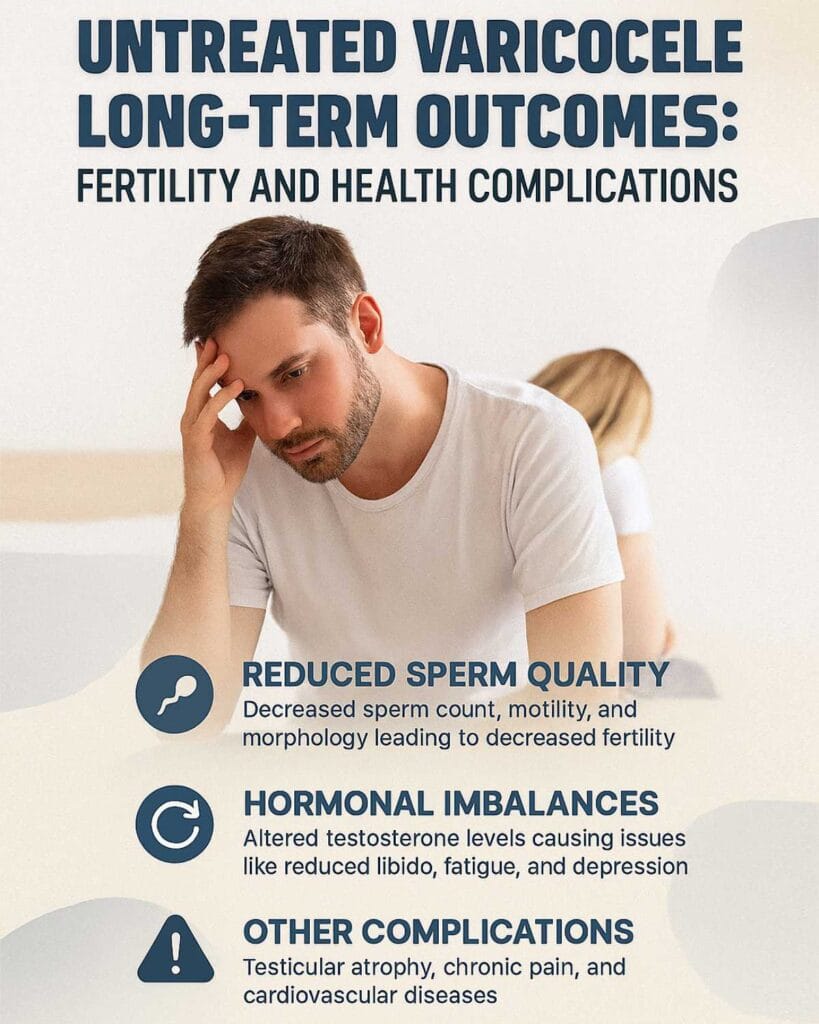
How Varicoceles Damage Fertility Over Time
Varicoceles impair male fertility through three interconnected biological pathways. Elevated scrotal temperature from venous pooling disrupts the cooler environment necessary for normal sperm production. Oxidative stress from accumulated reactive oxygen species damages sperm DNA, reducing viability and fertilization capacity. Hormonal imbalances caused by increased cortisol and prolactin levels further compromise spermatogenesis.
Clinical studies demonstrate men with varicoceles show 9-22% higher sperm DNA fragmentation rates compared to healthy controls. This damage manifests as:
- Reduced sperm count (oligospermia) making natural conception difficult
- Decreased sperm motility limiting ability to reach the egg
- Abnormal sperm morphology reducing fertilization success
- Progressive worsening of semen parameters if left untreated
Research from the International Brazilian Journal of Urology indicates 58% of men with palpable varicoceles and abnormal semen analysis show increased sperm DNA damage, versus 49% with normal semen parameters. The damage correlates directly with varicocele grade and duration.
Testosterone Reduction and Hormonal Consequences
Untreated varicoceles disrupt testosterone production through testicular dysfunction. Studies show hypogonadal men with varicoceles average testosterone levels below 300 ng/dL. The affected testicle produces less testosterone due to impaired Leydig cell function, resulting in measurable hormonal deficits.
Long-term hormonal complications include:
- Low libido and erectile dysfunction
- Chronic fatigue and mood disturbances
- Reduced muscle mass and bone density
- Impaired memory and concentration
Clinical trials in Translational Andrology and Urology demonstrate testosterone improvements following surgical repair, with hypogonadal patients experiencing increases from 219 ng/dL to 358 ng/dL at six months post-surgery. This evidence confirms varicoceles directly suppress testosterone biosynthesis, with effects normalizing after treatment in appropriately selected men.
Testicular Atrophy and Volume Loss
Progressive testicular shrinkage represents one of the most concerning long-term complications of untreated varicoceles. Venous congestion and chronic hypoxia cause gradual tissue damage that reduces testicular size over months to years.
Comparative studies reveal fertile men with varicoceles show average testicular volume differences of 3.1 mL between affected and unaffected sides, compared to only 1.6 mL in men without varicoceles. This atrophy may become permanent if intervention is delayed.
Testicular atrophy complications:
- Permanent loss of sperm-producing tissue
- Irreversible testosterone production decline
- Potential complete loss of testicular function
- Increased risk in adolescents affecting growth and development
When caught early, surgical correction can restore testicular volume in many patients. However, prolonged untreated varicoceles may result in tissue changes that cannot be reversed even after successful repair.
Chronic Pain and Quality of Life Impact
Varicocele-associated pain typically presents as dull, aching, or throbbing discomfort in the testicle, scrotum, or groin. The NIH reports approximately 2-10% of men with varicoceles seek medical attention specifically for pain management.
Pain characteristics include:
- Worsening with prolonged standing or physical activity
- Relief when lying down
- Progressive intensity over time
- Compression of neural fibers by dilated veins
The physical discomfort combines with psychological stress related to fertility concerns, creating cumulative negative effects on daily functioning and relationships. Men report reduced exercise capacity, sexual anxiety, and decreased overall well-being when managing untreated symptomatic varicoceles.
Natural History: What Happens Without Treatment
Varicoceles generally do not resolve spontaneously and typically remain stable or progress over time. The natural progression varies by individual factors including varicocele grade, age at onset, and baseline testicular function.
| Timeframe | Observed Changes |
|---|---|
| 6-12 months | Detectable semen parameter decline, possible pain onset |
| 1-2 years | Measurable testosterone reduction in susceptible men, progressive sperm DNA damage |
| 3-5 years | Testicular volume asymmetry becomes pronounced, fertility impact evident |
| 5+ years | Potential irreversible tissue damage, permanent hormonal deficits |
Adolescents face particular risks, as varicoceles detected during development can affect testicular growth and future reproductive potential. Early monitoring and intervention prevent complications that become harder to reverse in adulthood.
Treatment Outcomes vs. Observation
Clinical evidence strongly favors treatment for symptomatic varicoceles with documented fertility or hormonal impact. Research published in the American Medical Journal of Reproductive Health shows men undergoing varicocele repair demonstrate 38% higher clinical pregnancy rates compared to untreated controls.
Post-treatment improvements include:
- 7% average reduction in sperm DNA fragmentation
- Normalized testosterone levels in hypogonadal patients within 6-12 months
- Improved semen parameters including count, motility, and morphology
- Pain resolution in 70-80% of symptomatic cases
Conservative management with observation may be appropriate for small, asymptomatic varicoceles in men not seeking fertility. However, periodic monitoring remains necessary to detect progression requiring intervention.
FAQ
Can untreated varicoceles cause permanent infertility?
Yes, chronic untreated varicoceles can cause irreversible damage to sperm-producing tissue through oxidative stress and sustained elevated temperatures. Men with prolonged untreated varicoceles may develop permanent oligospermia or azoospermia, though early detection and treatment typically prevent this outcome.
Do all men with varicoceles develop low testosterone?
Not all men experience testosterone decline, but varicoceles impair Leydig cell function in susceptible individuals. Studies show men with baseline testosterone below 400 ng/dL face higher risk of measurable deficits. Those with normal testosterone levels may not show appreciable changes even with untreated varicoceles.
Is testicular atrophy from varicocele reversible?
Early-stage atrophy may reverse with surgical repair, particularly in adolescents and young adults. However, prolonged untreated varicoceles can cause permanent tissue loss that does not recover even after successful treatment. The reversibility window varies individually but generally decreases after 3-5 years of established atrophy.