You just had varicocele embolization and you’re home. Or you’re scheduled for the procedure next week and want to know exactly what’s coming. Either way, the first 24 hours after embolization are a distinct and manageable window that most post-procedure instructions cover only vaguely. “Take it easy” doesn’t tell you whether the dull ache you feel at hour 6 is normal, whether you should be worried about the swelling you noticed at hour 12, or exactly when you can eat, drive, shower, or take medication. This timeline answers all of it, hour by hour.
What Happens During Varicocele Embolization
Varicocele embolization is a minimally invasive, image-guided procedure performed by an interventional radiologist. A small catheter is inserted through a vein in the groin or neck, guided under X-ray fluoroscopy to the internal spermatic vein, and a blocking agent (coils, sclerosant foam, or a combination) is deployed to seal the refluxing vein. The procedure takes approximately 30-45 minutes and is performed under local anesthesia with or without conscious sedation.
Because no surgical incision of the scrotum or inguinal region is made, embolization has a fundamentally different recovery profile than open or laparoscopic varicocelectomy. Understanding this distinction helps set accurate expectations for the first 24 hours. For a detailed comparison of both approaches, the embolization vs. surgery recovery comparison covers the full timeline differences.
Step-by-Step: First 24 Hours After Embolization
Immediately Post-Procedure (0-2 Hours)
You will spend 30-60 minutes in a monitored recovery area. Your blood pressure, heart rate, and access site (groin or neck) will be checked regularly. Pressure will be applied to the catheter entry point to prevent bleeding. You may feel a mild ache in the left groin or scrotum as the embolization material settles. This is expected. You will be discharged home with a responsible adult accompanying you, particularly if sedation was used.

Discover specialized varicocele underwear designed for daily comfort, support, and recovery — a more targeted option for men who want support without compromise.
Discover the Recommended OptionHours 2-6: Getting Home and Settling
Do not drive. If sedation was given, your reaction time and judgment are impaired for 24 hours regardless of how alert you feel. Once home, lie down with your legs elevated for 2-3 hours. This reduces groin access site pressure and allows initial swelling to settle. You may eat normally once home; there are no dietary restrictions after embolization unless your radiologist specifies otherwise. Drink plenty of water to help clear the contrast dye used during the procedure through your kidneys.
Hours 6-12: The Discomfort Window
This is typically when post-embolization syndrome symptoms, if they occur, begin to emerge. Post-embolization syndrome is a predictable inflammatory response to the blocked vein and embolization material, producing low-grade fever (under 38.5°C), dull scrotal or pelvic ache, and general fatigue. This is normal and expected in up to 30% of patients. It is not infection and does not require antibiotics.
Take ibuprofen (400-600mg) with food if you have no contraindications. This is the most effective single medication for post-embolization pain and fever because it addresses both the pain and the inflammatory mechanism driving it. Paracetamol (acetaminophen) is an alternative if NSAIDs are contraindicated. Avoid aspirin unless specifically prescribed, as it impairs platelet function at the access site.
Hours 12-24: Rest, Monitor, and Recover
Sleep normally. You do not need to take any special sleeping position after embolization, but some men find that slightly elevating the legs with a pillow reduces overnight scrotal aching. Check the catheter access site before sleep: a small bruise or firmness is normal; a large expanding hematoma (blood pooling) is not, and warrants a call to your radiologist or an ER visit. Most patients sleep without significant difficulty by this stage.
| Time | Expected Experience | Action Required |
|---|---|---|
| 0-2 hrs | Recovery monitoring, mild groin ache | Stay in recovery area, do not drive |
| 2-6 hrs | Fatigue, mild scrotal ache, access site soreness | Lie down with legs elevated, hydrate |
| 6-12 hrs | Possible low-grade fever, dull pelvic discomfort | Ibuprofen with food, rest, monitor temperature |
| 12-24 hrs | Improving or stable symptoms, fatigue | Normal sleep, light activity only, check access site |
| 24 hrs | Most patients: mild soreness only | Resume normal daily activities, avoid heavy lifting for 1 week |
What Is Normal vs. What Requires a Doctor Call
Normal in the first 24 hours:
- Dull, achy scrotal or pelvic discomfort
- Low-grade fever under 38.5°C (101.3°F)
- Small bruise at catheter access site (groin or neck)
- Fatigue and low energy
- Mild nausea (contrast dye reaction)
- Scrotal fullness or swelling (mild)
Call your interventional radiologist or go to ER if:
- Fever above 38.5°C (101.3°F)
- Expanding hematoma or active bleeding at access site
- Severe, worsening scrotal pain not controlled by NSAIDs
- Sudden onset of severe back or flank pain
- Blood in urine beyond trace amounts
- Swelling of the entire leg on the side of access (possible DVT)
Medications and Pain Management Protocol
Most patients manage post-embolization discomfort with over-the-counter NSAIDs alone. Ibuprofen 400mg three times daily with food for 3-5 days is the standard approach recommended by most interventional radiology departments. Your radiologist may also prescribe a short course of naproxen or ketorolac for more significant pain. Prescription opioids are rarely needed after embolization and should be a red flag if offered routinely, as they suggest either an unusual procedure or an overly aggressive prescribing practice.
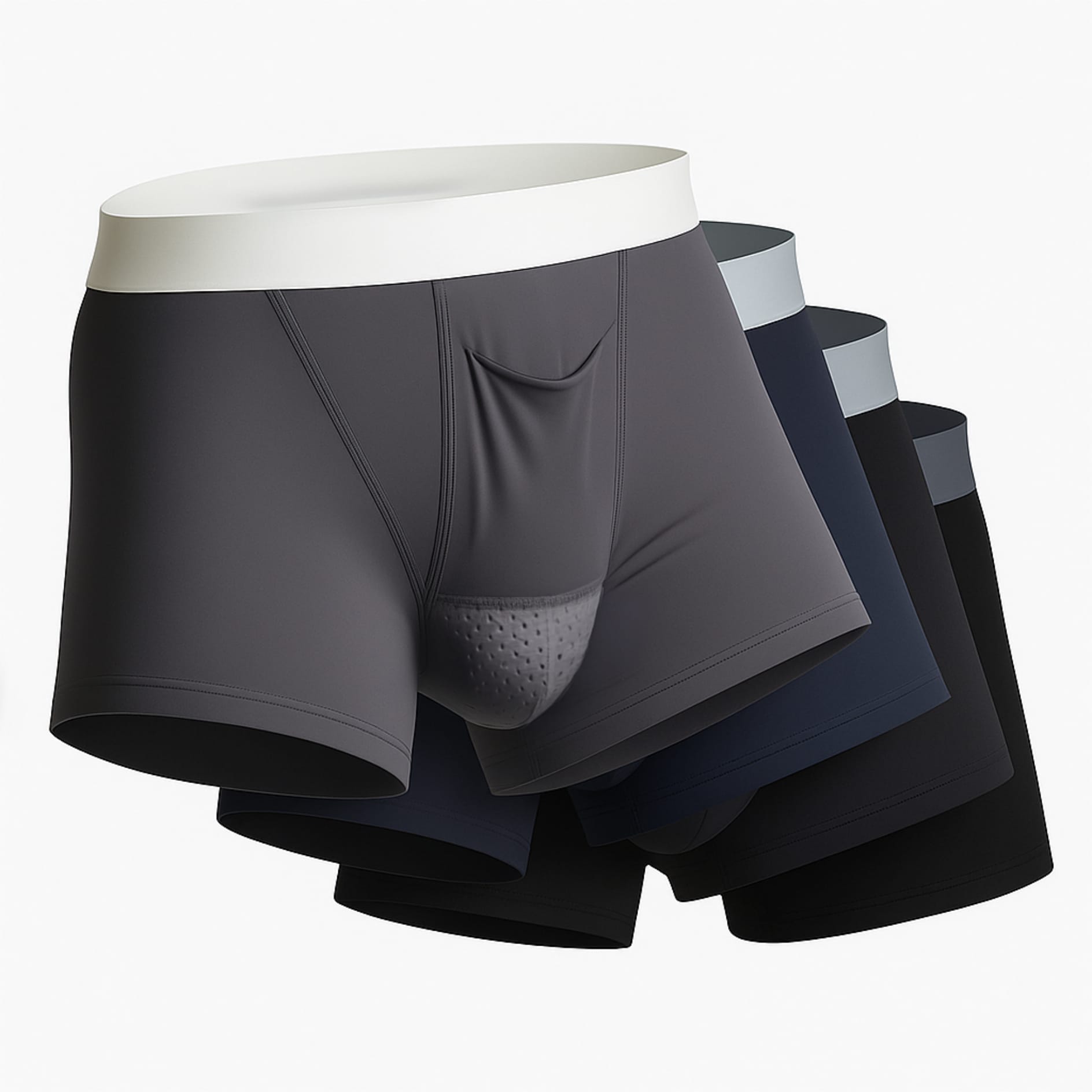
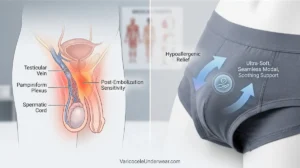
Wearing supportive varicocele underwear from the first post-procedure day significantly reduces mechanical discomfort from scrotal movement and provides the venous support that helps manage post-procedure swelling. Most interventional radiology departments provide a scrotal support recommendation; specific products designed for this purpose are more effective than standard athletic supporters.
FAQ: First 24 Hours After Varicocele Embolization
Can I shower on the same day as embolization?
Most protocols advise keeping the access site dry for 24-48 hours. A sponge bath or shower avoiding direct water contact with the access site dressing is acceptable from the same day. Full showering with water over the access site is typically permitted after 48 hours once the puncture site has sealed. Follow your specific radiologist’s instructions, as they may vary based on closure technique used.
Is it normal for my varicocele to still be visible after embolization?
Yes, completely. The embolized vein does not disappear immediately; it gradually fibroses (scars shut) over weeks to months. Visible or palpable veins within the first few days to weeks after embolization are expected. Clinical improvement in pain typically precedes the physical disappearance of the veins by 4-8 weeks. Doppler ultrasound at 3 months post-procedure confirms treatment success by demonstrating absence of retrograde flow.
When can I return to work after varicocele embolization?
Most men with desk-based jobs return to work within 24-48 hours of embolization. Physical labor or jobs requiring heavy lifting should be avoided for 7-10 days. If your job involves prolonged standing, wearing compression socks and scrotal support and scheduling sitting breaks in the first week post-procedure will reduce symptom burden during the return to work period.
Related Articles
Choose Varicocele Support Designed for Cooling, Lift, and Daily Comfort
You’ve seen why regular underwear often falls short. Now view the purpose-built option made to reduce heaviness, improve support, and feel comfortable enough for everyday wear.