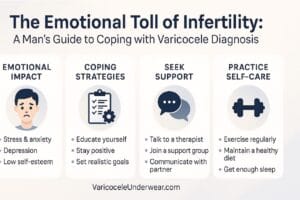
Varicocele affects more than fertility test results and scrotal veins. It affects relationships, intimacy, shared future plans, and the daily emotional reality of two people trying to build a life together. Many men find it easier to research treatment options for hours than to have an honest 10-minute conversation with their partner about what they’re dealing with. This guide is for those men. Not a script, but a practical framework for having honest, productive conversations about varicocele, male infertility, and what both of you actually need from each other through this process.
Why Men Delay These Conversations
The reluctance is almost universal and almost always rooted in the same core fears: fear of appearing less masculine, fear of disappointing a partner, fear that being honest about a health problem will change how someone sees you, and fear that acknowledging uncertainty about fertility outcomes will make the situation feel more real. These are understandable fears that deserve acknowledgment, not dismissal.
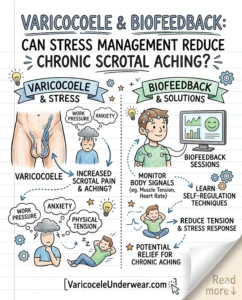
The problem is that delay consistently makes things worse. Partners who sense something is being withheld fill in the gaps with their own interpretations, often more catastrophic than the reality. Intimacy suffers under the weight of unspoken anxiety. And the man carrying the knowledge alone accumulates psychological burden that directly worsens the physical symptom experience – stress and pain sensitization in chronic scrotal pain are measurably connected, as detailed in the biofeedback and varicocele research. The emotional toll of varicocele diagnosis is significantly reduced when it is shared rather than carried alone.
What Your Partner Actually Needs to Know: A Practical Framework
Structure the conversation around three distinct areas, not all at once if that feels overwhelming, but addressed clearly over time:
1. What Varicocele Is (and Isn’t)
Your partner likely has no context for what a varicocele is. Explain it in plain terms: dilated veins in the scrotum, similar to varicose veins in legs, that affect blood flow and temperature around the testicle. Not cancer. Not an STI. Not caused by sexual behavior. A structural developmental issue that is common (15% of all men, 35-40% of men investigated for infertility) and, importantly, treatable. Having these facts clear in your own mind before the conversation makes you a more confident communicator and reassures your partner that you understand what you’re dealing with.

Discover specialized varicocele underwear designed for daily comfort, support, and recovery — a more targeted option for men who want support without compromise.
Discover the Recommended Option2. What It Means for Fertility (Honestly)
This is where many men either catastrophize (“I might not be able to have children”) or minimize (“It’s probably not a big deal”) depending on their emotional state. Neither serves the conversation. What’s actually true: varicocele impairs sperm quality in a proportion of affected men; treatment improves semen parameters in most men who have it; natural pregnancy rates after treatment are meaningful; and many couples where the man has varicocele conceive successfully, with or without treatment. Present what you know from your own evaluation: your semen analysis results, your doctor’s assessment, and the treatment options being considered. Specific numbers are more reassuring than vague uncertainty.
3. What You Need from Them Right Now
This is the part men most often skip, assuming their partner will know what’s helpful. They won’t, unless you tell them. Common needs that are reasonable to articulate:
- Not making fertility the main topic of every conversation
- Being involved in doctor’s appointments if that feels supportive rather than pressured
- Understanding that some days physical activity or sex may be uncomfortable without detailed explanation required each time
- Patience with the 3-6 month timeline between treatment and measurable fertility improvement
- Emotional support without reassurance-seeking cycles that increase rather than decrease anxiety for both parties
When You’re in an Active Fertility Treatment Process
If you are actively trying to conceive or pursuing assisted reproduction alongside varicocele treatment, the emotional stakes of the conversation change significantly. Both partners are now experiencing the fertility struggle, not just one. Research on male factor infertility consistently shows that women partner’s emotional distress is equal to or greater than the diagnosed man’s in many cases, and that couples who communicate openly about the process have significantly better relationship satisfaction and lower treatment dropout rates.
Practical shared decisions to discuss openly include: how many treatment cycles you’re willing to attempt, what assisted reproduction technologies you’re both open to if natural conception doesn’t occur, how to handle telling (or not telling) family members about the fertility process, and how to maintain intimacy when sex has become scheduled and outcome-focused rather than connected. The varicocele and miscarriage risk data is also worth reviewing together if recurrent pregnancy loss has been part of your experience, since sperm DNA fragmentation from varicocele is a known contributing factor.
Addressing the Impact on Sexual Intimacy Directly
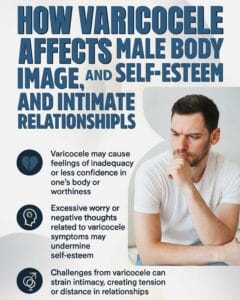
Varicocele affects sexual intimacy through multiple pathways: physical pain before, during, or after sex; reduced libido from testosterone suppression; performance anxiety related to fertility pressure; and the psychological weight of feeling like your body is “the problem.” These are real, they are common, and they are worth naming explicitly rather than hoping your partner notices and asks.

The question of whether a partner can notice varicocele during sex comes up frequently and is worth addressing proactively if it’s creating anxiety. Being the one to raise it demonstrates confidence and removes the mystery. Most partners are far less concerned about physical findings than men fear; the anxiety about the conversation is usually greater than the conversation itself.
If Your Partner Is Frustrated or Unsympathetic
Not all partner responses will be immediately supportive. Some partners have their own unprocessed grief about fertility timelines, feel frustrated by the uncertainty, or have difficulty engaging with medical discussions. If initial conversations are met with dismissal or frustration, resist the temptation to retreat into silence. Couples therapy with a therapist experienced in reproductive health challenges provides a structured space to have these conversations with professional facilitation. This is not a measure of relationship failure; it is a practical tool for navigating a genuinely stressful situation.
The psychosexual impact of varicocele on dating and relationships documents how variable partner responses can be and normalizes the full range of reactions, both yours and theirs. Understanding that your partner’s response reflects their own fears and coping style rather than their assessment of your worth as a person is a reframe that most couples find helpful with or without professional support.
FAQ: Talking to Your Partner About Varicocele
Should I tell a new partner about my varicocele before we try to conceive?
If you are in a relationship where children are a shared future goal, disclosing varicocele and its potential fertility implications before actively trying to conceive is both ethically appropriate and practically useful. It allows both partners to enter the fertility process with realistic expectations and ensures that a potential delay in conception is understood in context rather than experienced as an unexplained failure. Most partners respond to honest disclosure with support rather than rejection.
How do I explain why I’m in pain without making every conversation about my varicocele?
A single clear explanation given once is more effective than repeated fragmentary mentions. Something like: “I have a varicocele that causes a dull ache sometimes, particularly after standing or exercise. It’s not dangerous, I’m managing it, and it’s not always present – you’ll notice I sometimes shift positions or need to rest. You don’t need to ask every time; I’ll tell you if it’s significantly affecting me.” This sets a boundary on the topic while keeping the communication channel open.
My partner blames themselves when I’m in pain. How do I address that?
Partners sometimes interpret a man’s scrotal pain or discomfort during or after sex as something they caused. This misattribution is worth correcting directly and early. Explain clearly that varicocele pain is driven by venous pressure and physical activity, not by your partner’s actions. If post-ejaculation varicocele pain is occurring, name it specifically as a known varicocele symptom rather than leaving your partner to infer their own explanation from your discomfort.
Related Articles

Choose Varicocele Support Designed for Cooling, Lift, and Daily Comfort
You’ve seen why regular underwear often falls short. Now view the purpose-built option made to reduce heaviness, improve support, and feel comfortable enough for everyday wear.