You chose embolization because it promised a minimally invasive fix. No large incisions. Quick recovery. But now the symptoms have returned, and you are wondering what went wrong.
You are not alone. Studies show that varicocele recurrence after embolization occurs in approximately 4-11% of cases, depending on technique and patient anatomy. For some men, rates reach 15% or higher when collateral veins are present.
This article explains why coils and sclerosing agents sometimes fail, how to recognize true recurrence versus residual varicocele, and what treatment options exist when embolization does not work. Whether you are dealing with returning pain, fertility concerns, or just frustration, this guide provides evidence-based answers.
For a complete overview of all treatment approaches, see our comprehensive varicocele treatment guide.
What Is Varicocele Embolization and How Does It Work?
Varicocele embolization is a minimally invasive procedure performed by an interventional radiologist. A catheter is inserted through a vein in the groin or neck and guided to the internal spermatic vein using X-ray imaging.
Once positioned, the radiologist deploys coils, plugs, or sclerosing agents to block blood flow through the enlarged veins. The goal is to redirect blood through healthy veins and eliminate the varicocele.
Key components of embolization:
- Metal coils that physically occlude the vein
- Sclerosing foam or liquid that damages the vein lining
- Vascular plugs for larger vessel segments
- Combination approaches using multiple agents
The procedure typically takes 45-90 minutes with same-day discharge.
Why Does Varicocele Recur After Embolization?
Understanding why coils fail helps you make better decisions about next steps. Recurrence happens for several reasons, most related to anatomy or technical factors.
Collateral Veins and Anatomical Variants
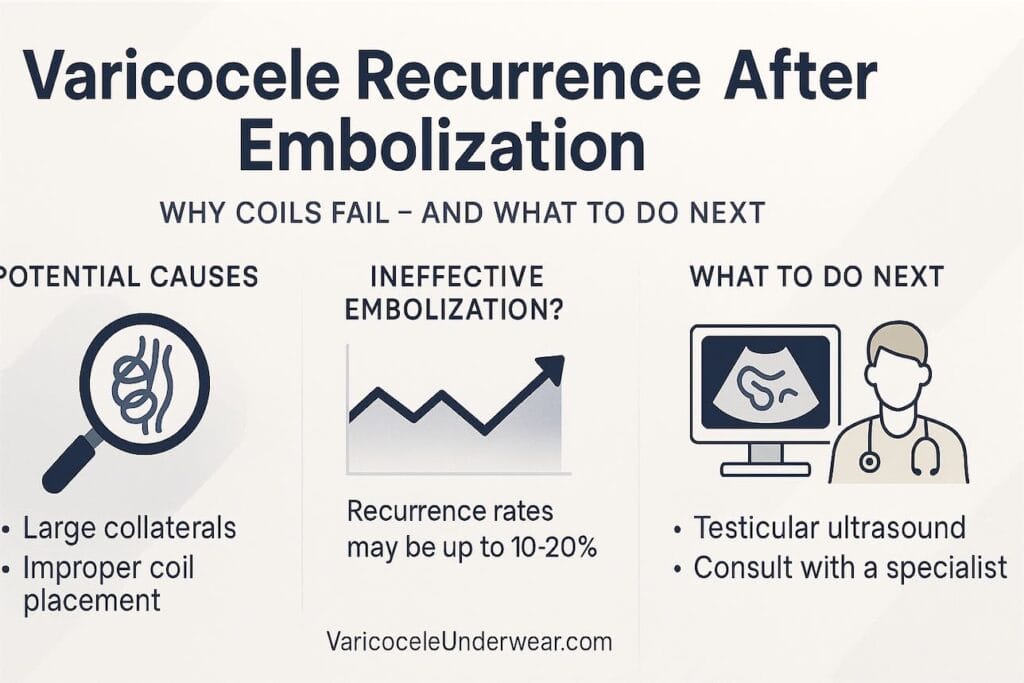
The human venous system is not a simple pipeline. Many men have parallel pathways, called collateral veins, that bypass the treated segment. According to research published in the Journal of Vascular and Interventional Radiology, unrecognized collaterals account for 60-70% of recurrence cases.
Common anatomical variants include:
- Duplicated internal spermatic veins
- Connections to renal capsular veins
- Retroperitoneal collateral networks
- External spermatic vein involvement
If these vessels are not identified and treated during the initial procedure, blood continues flowing to the varicocele through alternate routes.
Incomplete Embolization
Sometimes the treated segment reopens or recanalization occurs around the coils. This happens when:
- Coils migrate to a different location
- Sclerosing agent does not fully damage the vein wall
- Insufficient coils are placed
- Treatment covers too short a segment of the vein
Technical Failure During Initial Procedure
In approximately 5-10% of cases, the interventional radiologist cannot access or adequately treat the target vein due to venous spasm, anatomical difficulty, or equipment limitations.
Varicocele Embolization Recurrence Rates: What the Data Shows
| Study/Source | Recurrence Rate | Follow-up Period | Key Finding |
|---|---|---|---|
| Bechara et al., 2021 | 8.4% | 12 months | Higher rates with single-coil technique |
| Favard et al., 2020 | 11.2% | 24 months | Collaterals main cause |
| Shlansky-Goldberg, 2019 | 4-15% | Variable | Foam sclerotherapy shows lower recurrence |
| Meta-analysis (Cayan, 2022) | 9.8% average | Pooled data | Comparable to laparoscopic surgery |
These numbers reveal that embolization performs similarly to surgical options in most patients. However, certain patient groups face higher risk.
Higher recurrence risk factors:
- Grade III varicocele
- Bilateral varicocele
- Previous failed treatment
- Age under 20
- Multiple collateral vessels on imaging
How to Know If Your Varicocele Actually Recurred
Not every returning symptom means the varicocele is back. Before assuming treatment failed, consider these possibilities.
True Recurrence vs. Residual Varicocele
True recurrence means the varicocele resolved after treatment but returned later, usually through collateral pathways.

Discover specialized varicocele underwear designed for daily comfort, support, and recovery — a more targeted option for men who want support without compromise.
Discover the Recommended OptionResidual varicocele means the original varicocele never fully resolved, often due to incomplete treatment.
Persistence vs. Treatment Failure
Some men still feel veins after embolization. This does not always indicate failure. Small residual veins may remain without causing symptoms or affecting fertility.
Signs of clinically significant recurrence:
- Return of scrotal heaviness or aching
- Visible or palpable dilated veins
- Worsening semen parameters
- Testicular atrophy progression
Diagnostic Confirmation
Physical examination by a urologist remains the gold standard. Additional testing may include:
- Color Doppler ultrasound (most common)
- Venography (if repeat embolization considered)
- Semen analysis comparison
A scrotal ultrasound showing vein diameter greater than 3mm with reflux lasting more than 2 seconds confirms recurrence.
What Are Your Options After Failed Embolization?
When embolization fails, you have several evidence-based paths forward. The right choice depends on your symptoms, fertility goals, and previous treatment details.
Repeat Embolization
For many men, a second embolization procedure can succeed where the first failed. The interventional radiologist can target previously missed collateral veins using the knowledge gained from the initial attempt.
When repeat embolization makes sense:
- Identifiable collateral veins on imaging
- Technical issues with first procedure
- Patient prefers minimally invasive approach
- Good response initially before recurrence
Success rates for repeat embolization range from 70-85% when collaterals are the identified cause.
Microsurgical Varicocelectomy
This is considered the gold standard surgical approach with the lowest recurrence rates. A urologist uses an operating microscope to identify and ligate all abnormal veins while preserving arteries and lymphatics.
Microsurgical varicocelectomy advantages:
- Recurrence rate under 2% in experienced hands
- Lower complication rates than other surgical methods
- Preserves testicular blood supply
- Can address all collateral pathways
According to the American Urological Association, microsurgical subinguinal varicocelectomy offers the best outcomes for recurrent varicocele.
Laparoscopic or Open Surgical Repair
These approaches offer intermediate success rates between embolization and microsurgery.
| Surgical Approach | Recurrence Rate | Recovery Time | Best For |
|---|---|---|---|
| Microsurgical subinguinal | 1-2% | 1-2 weeks | Failed embolization, fertility focus |
| Laparoscopic | 5-15% | 1 week | Bilateral cases |
| Inguinal open | 5-10% | 2-3 weeks | Resource-limited settings |
| Retroperitoneal | 15-25% | 1-2 weeks | Rarely used today |
Conservative Management With Supportive Care
Not every recurrent varicocele requires repeat intervention. If symptoms are mild and fertility is not a concern, conservative management may be appropriate.
Supportive measures include:
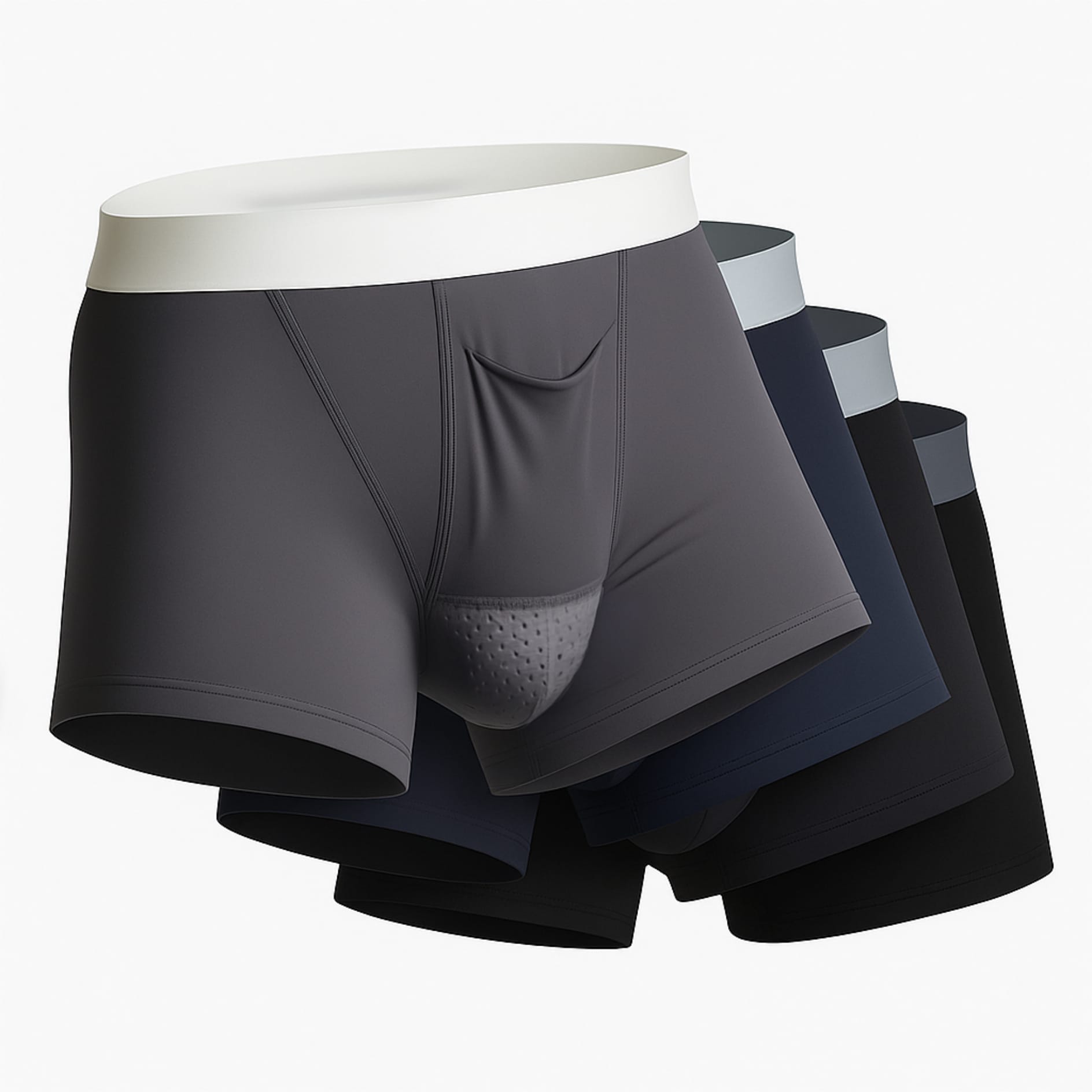
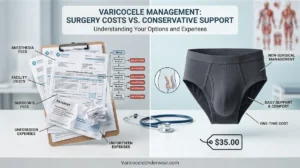
- Scrotal support underwear designed to reduce venous pooling
- Anti-inflammatory medications for pain
- Activity modification
- Regular monitoring with ultrasound
Many men find that proper scrotal support significantly reduces daily discomfort while they decide on or await further treatment.
Case Study: Failed Embolization to Successful Microsurgery
Patient: 31-year-old male with left grade III varicocele and abnormal semen parameters.
Initial treatment: Coil embolization with sclerotherapy. Initial improvement in symptoms and semen quality.
Timeline: Symptoms returned at 8 months. Ultrasound confirmed recurrence with 4.2mm vein diameter and 3+ second reflux.
Venography findings: Two collateral veins bypassing coiled segment, feeding into the varicocele from the renal capsule.
Intervention: Microsurgical subinguinal varicocelectomy. Surgeon identified and ligated 6 external spermatic veins and 4 internal spermatic veins, including the collateral pathways.
Outcome at 12 months:
- No palpable varicocele
- Sperm concentration improved from 8 million/mL to 22 million/mL
- Motility increased from 28% to 48%
- Pain resolved completely
This case illustrates why microsurgery often succeeds after embolization failure. Direct visualization allows the surgeon to address all venous pathways that catheter-based techniques may miss.
How to Prevent Varicocele Recurrence After Treatment
While no method guarantees 100% success, certain factors improve your odds of lasting results.
Choosing the Right Initial Treatment
For men with complex anatomy or grade III varicocele, microsurgery may be the better first choice. Discuss imaging findings with your doctor before deciding.
Selecting an Experienced Provider
Outcomes depend heavily on provider expertise. Ask about:
- Number of procedures performed annually
- Personal recurrence rates
- Fellowship training in male reproductive health (for surgeons)
- Interventional radiology certification (for embolization)
Post-Treatment Follow-Up
Schedule follow-up appointments at 3, 6, and 12 months. Early detection of recurrence allows prompt re-intervention before fertility or symptoms worsen.
Lifestyle Modifications
While not proven to prevent recurrence, these habits support overall venous health:
- Maintain healthy body weight
- Avoid prolonged standing or sitting
- Stay physically active
- Wear supportive underwear during exercise
Comparing Embolization vs. Surgery for Recurrent Varicocele
| Factor | Repeat Embolization | Microsurgery |
|---|---|---|
| Recurrence rate | 15-30% | 1-2% |
| Anesthesia | Local/conscious sedation | General or regional |
| Recovery time | 1-3 days | 1-2 weeks |
| Procedure time | 60-90 minutes | 2-3 hours |
| Cost | Generally lower | Generally higher |
| Best for | Identifiable collaterals | Complex anatomy, prior failures |
| Fertility improvement | Similar | Similar |
For men who have already failed one embolization, microsurgery typically offers the highest probability of permanent resolution.
Frequently Asked Questions
How soon after embolization can varicocele recur?
Recurrence can happen within weeks to years after embolization. Most cases appear within the first 12 months. Early recurrence (under 3 months) usually indicates incomplete treatment or missed collaterals. Late recurrence often results from recanalization or development of new collateral pathways over time.
Is a second embolization worth trying before surgery?
Repeat embolization can work if imaging shows specific treatable collateral veins. Success rates range from 70-85% in selected cases. However, if the first procedure failed due to complex anatomy or multiple collaterals, microsurgery typically offers better long-term results with lower overall recurrence risk.
Will varicocele recurrence affect my fertility permanently?
Not necessarily. Studies show that successful repair of recurrent varicocele improves semen parameters in 50-70% of men. The key is timely re-treatment before prolonged testicular damage occurs. Most fertility specialists recommend intervention within 6-12 months of confirmed recurrence if conception is a goal.
Key Takeaways
Varicocele recurrence after embolization affects roughly 1 in 10 men who undergo the procedure. Collateral veins, anatomical variants, and incomplete treatment explain most failures. If your varicocele returns, you have options: repeat embolization for accessible collaterals or microsurgery for the highest cure rates.
Work with a urologist experienced in male reproductive health to determine the best path forward. Many men achieve complete resolution and improved fertility after appropriate second-line treatment.
Do not let recurrence discourage you. The problem is fixable with the right approach.
Related Articles
Choose Varicocele Support Designed for Cooling, Lift, and Daily Comfort
You’ve seen why regular underwear often falls short. Now view the purpose-built option made to reduce heaviness, improve support, and feel comfortable enough for everyday wear.