If you have varicocele, you have probably searched for natural ways to manage your symptoms. Lately, intermittent fasting and autophagy have become hot topics in men’s health circles. But can going without food actually help those swollen veins in your scrotum?
This is a fair question. Varicocele affects 15% of all men and up to 40% of men with fertility problems. Many seek alternatives to surgery, especially when symptoms are mild. Understanding the complete picture of varicocele is the first step before exploring any lifestyle intervention.
In this article, you will learn:
- What autophagy actually does to blood vessels
- Current research on fasting and vascular health
- Whether intermittent fasting could realistically benefit varicocele
- Practical steps if you want to try this approach safely
Let us separate the science from the hype.
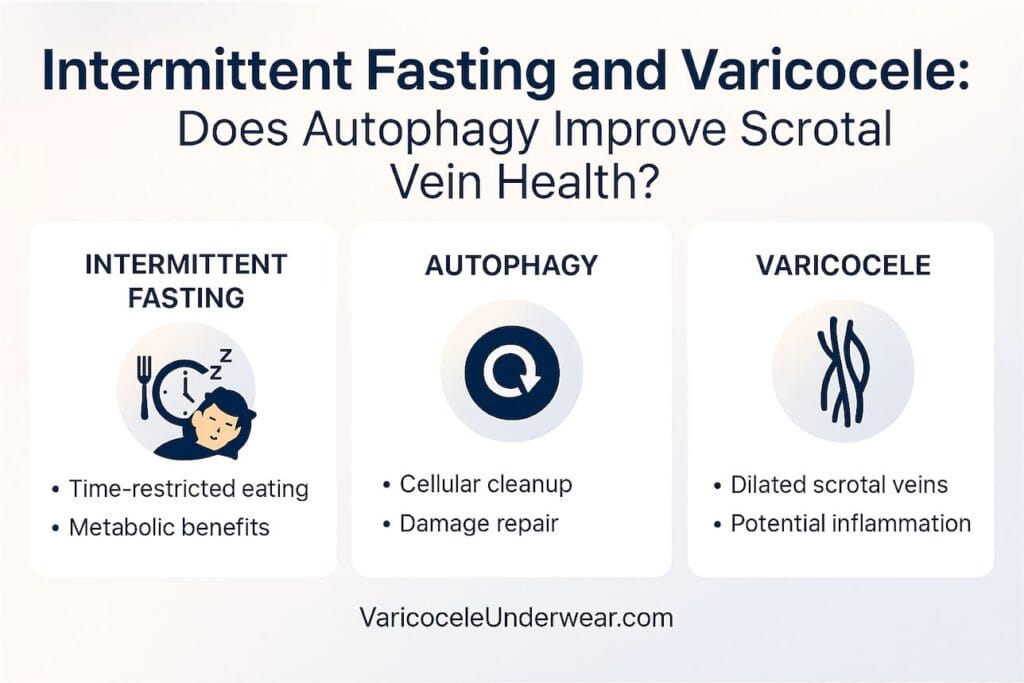
What Is Autophagy and Why Does It Matter for Veins?
Autophagy, from the Greek words for “self-eating,” is your body’s cellular recycling system. During periods of nutrient scarcity, cells break down damaged proteins and dysfunctional components. Think of it as a deep cleaning service for your cells.
Key autophagy functions include:
- Removing damaged mitochondria (cell powerhouses)
- Clearing misfolded proteins that cause inflammation
- Recycling cellular waste into usable materials
- Supporting tissue repair and regeneration
How Autophagy Affects Blood Vessels
Research published in Nature Reviews Cardiology shows autophagy plays a role in vascular health. When autophagy works properly, it helps:
| Vascular Benefit | How It Works |
|---|---|
| Endothelial function | Removes damaged cells lining blood vessels |
| Reduced oxidative stress | Clears harmful free radicals |
| Inflammation control | Eliminates pro-inflammatory debris |
| Smooth muscle health | Maintains vessel wall integrity |
For veins specifically, proper autophagy may help maintain the structural components that keep vessels from dilating abnormally.
Does Intermittent Fasting Trigger Autophagy?
Yes, but timing matters. Autophagy increases when your body runs low on nutrients, particularly glucose and amino acids.
When Does Autophagy Peak During Fasting?
Most research suggests autophagy begins ramping up after 24 to 48 hours of fasting. However, some studies indicate that metabolic shifts start earlier:
- 12 to 16 hours: Insulin drops, fat burning increases
- 18 to 24 hours: Autophagy begins to activate
- 24 to 48 hours: Autophagy reaches significant levels
- 48+ hours: Maximum autophagy activity
The popular 16:8 intermittent fasting protocol (16 hours fasting, 8 hours eating) may initiate early autophagy processes, though not at maximum levels.
Clinical Perspective: In my practice, patients often ask whether their 16-hour fast is “enough” for autophagy benefits. The honest answer is that we lack direct measurements of autophagy in living humans. Most data comes from animal studies or indirect biomarkers.
Can Autophagy Actually Improve Varicocele?
Here is where we need to be direct: No clinical studies have specifically tested intermittent fasting as a treatment for varicocele.
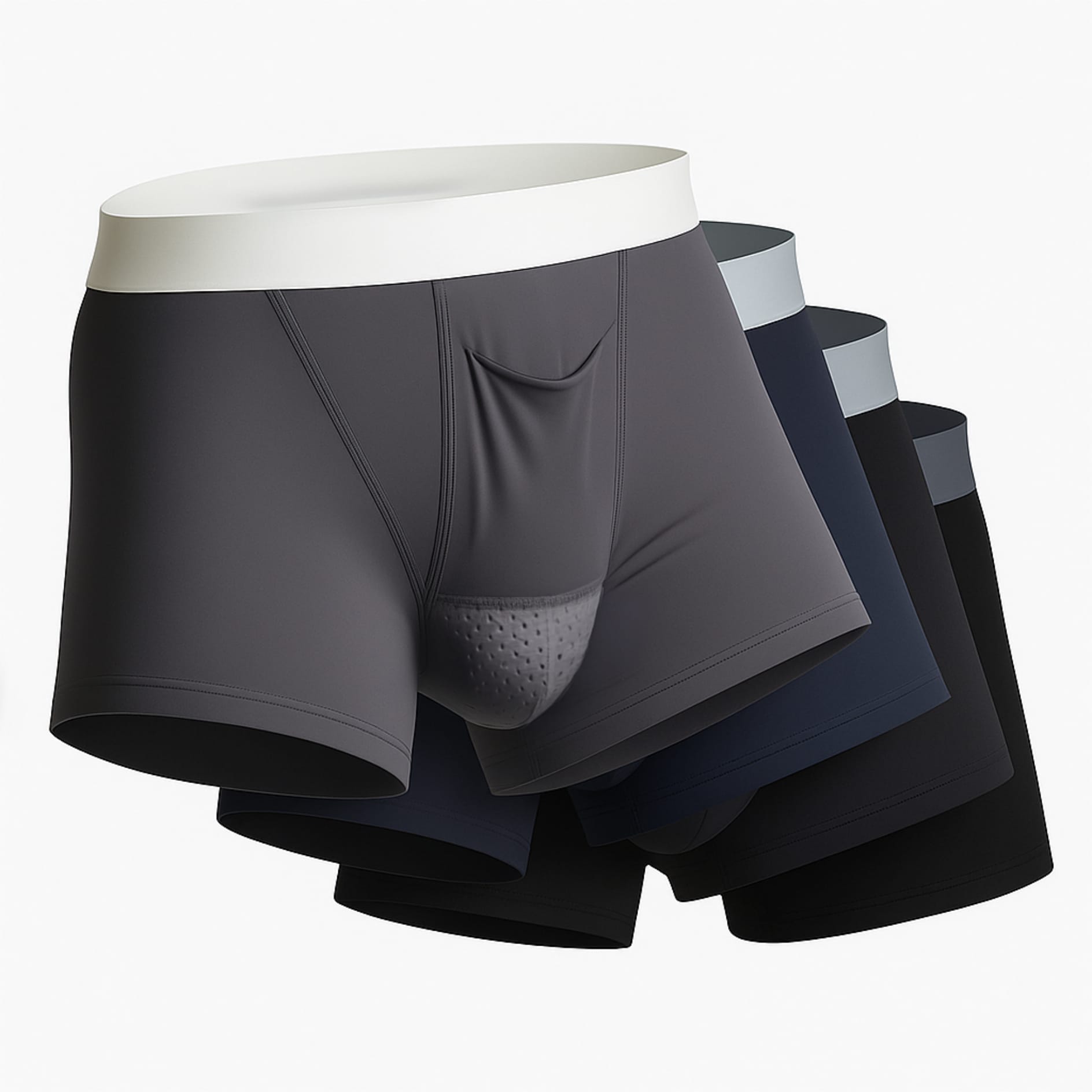
Discover specialized varicocele underwear designed for daily comfort, support, and recovery — a more targeted option for men who want support without compromise.
Discover the Recommended OptionHowever, we can examine related evidence.
What Research Exists on Autophagy and Venous Disease
A 2022 study in the Journal of Vascular Research found that autophagy dysfunction contributes to chronic venous insufficiency. When autophagy fails in vein walls, cells accumulate damage and veins lose their ability to maintain proper structure.
Theoretical benefits of enhanced autophagy for varicocele:
- Reduced venous wall damage: Clearing oxidative stress in vessel walls
- Better blood flow: Healthier endothelial cells improve circulation
- Lower inflammation: Less inflammatory buildup around affected veins
- Improved testicular environment: Reduced oxidative damage to sperm
The Gap Between Theory and Practice
Varicocele involves physical valve failure and vein dilation. Autophagy cannot repair a faulty valve or reverse significant vein enlargement. The condition requires blood to flow backward and pool, a mechanical problem that cellular cleanup alone cannot fix.
Intermittent Fasting and Male Fertility: What We Actually Know
Since many men with varicocele worry about fertility, this connection deserves attention.
A 2023 review in Reproductive Biology and Endocrinology examined fasting effects on male reproductive health:
| Factor | Effect of IF | Evidence Strength |
|---|---|---|
| Testosterone | Mixed results | Moderate |
| Sperm count | No clear benefit | Weak |
| Sperm motility | Possible improvement | Limited |
| Oxidative stress | Reduction seen | Moderate |
| Testicular temperature | No direct effect | None |
Important consideration: Extreme caloric restriction can actually harm testosterone levels and sperm production. Balance matters.
Real Patient Experience: A 34-Year-Old’s Fasting Experiment
Case study based on clinical observation patterns
Marcus, 34, had Grade II left varicocele with mild discomfort and borderline semen analysis results. After reading about autophagy online, he tried a 16:8 intermittent fasting protocol for four months.
His protocol:
- Eating window: 12 PM to 8 PM daily
- No calorie restriction during eating periods
- Maintained normal exercise routine
- Added supportive varicocele underwear for symptom management
Results after 4 months:
- Scrotal discomfort: 30% reduction (subjective)
- Ultrasound findings: No measurable change in vein diameter
- Semen analysis: Slight improvement in motility (42% to 48%)
- Energy levels: Improved
- Body fat: Reduced by 4%
Marcus’s takeaway: “Fasting did not cure my varicocele, but I feel better overall. The combination of fasting and supportive underwear helped manage daily discomfort without surgery.”
Should You Try Intermittent Fasting for Varicocele?
When It Might Help
Intermittent fasting could be a reasonable addition to your varicocele management plan if you:
- Have mild symptoms (Grade I or II)
- Want general health improvements alongside symptom management
- Are overweight (fat loss reduces scrotal heat)
- Tolerate fasting without excessive stress or fatigue
- Use it as a complement to, not replacement for, medical advice
When It Will Not Help
Do not expect intermittent fasting to:
- Replace surgical intervention for severe varicocele
- Reverse existing vein damage
- Cure infertility caused by varicocele
- Provide immediate symptom relief
Practical Fasting Protocol for Men With Varicocele
If you want to try intermittent fasting alongside your current management approach, here is a sensible starting point:
Week-by-Week Approach
Week 1-2: Start with 12:12 (12 hours fasting, 12 hours eating)
Week 3-4: Progress to 14:10
Week 5+: Move to 16:8 if tolerated
Foods to Prioritize During Eating Windows
| Food Category | Examples | Benefit for Vascular Health |
|---|---|---|
| Antioxidant-rich | Berries, dark leafy greens | Combat oxidative stress |
| Omega-3 sources | Salmon, sardines, walnuts | Reduce inflammation |
| Flavonoid-rich | Citrus, dark chocolate | Support vessel integrity |
| Zinc-rich | Oysters, beef, pumpkin seeds | Support testosterone |
| Hydrating foods | Cucumbers, watermelon | Maintain blood flow |
What to Avoid
- Extended fasts beyond 24 hours without medical supervision
- Combining fasting with intense exercise initially
- Ignoring hunger signals or severe fatigue
- Using fasting as an excuse to avoid medical evaluation
Complementary Approaches That Work Alongside Fasting
Non-Invasive Symptom Management
While exploring dietary interventions, physical support remains one of the most reliable ways to manage varicocele discomfort. Supportive underwear designed specifically for varicocele provides gentle compression that:
- Reduces scrotal sagging and pulling sensations
- Maintains cooler testicular temperatures
- Supports blood flow away from affected veins
- Allows comfortable daily activity
Many men find that combining lifestyle modifications with proper scrotal support offers the best daily symptom control without surgery.
Other Evidence-Based Lifestyle Factors
- Avoid prolonged sitting or standing: Alternate positions every 30-45 minutes
- Maintain healthy weight: Excess abdominal fat increases venous pressure
- Stay physically active: Regular moderate exercise supports circulation
- Manage heat exposure: Avoid hot tubs, saunas, and heated seats
When to See a Urologist Instead of Self-Managing
Intermittent fasting and lifestyle changes have limits. Seek professional evaluation if you experience:
- Persistent testicular pain lasting more than a few weeks
- Visible testicular shrinkage (atrophy)
- Declining semen analysis results over time
- Difficulty conceiving after 12 months of trying
- New or worsening symptoms despite lifestyle changes
According to the American Urological Association, treatment should be considered when varicocele causes documented fertility problems, pain that interferes with daily life, or testicular atrophy.
FAQ: Intermittent Fasting and Varicocele
Can intermittent fasting shrink varicocele veins?
No direct evidence supports this claim. Autophagy may support general vascular health, but it cannot reverse the physical valve damage or vein dilation that causes varicocele. Fasting might help reduce inflammation and oxidative stress around affected veins, but significant vein changes require surgical intervention.
How long should I fast to trigger autophagy for potential vein benefits?
Autophagy becomes significant after 24 to 48 hours of fasting, though early activation may begin around 16 to 18 hours. Most practical daily protocols use 16:8 fasting, which initiates some metabolic changes but does not reach maximum autophagy levels. Longer fasts carry risks and require medical supervision.
Is intermittent fasting safe for men with varicocele and fertility concerns?
Generally yes, when done moderately. Extreme caloric restriction can harm testosterone and sperm production. A 16:8 protocol with adequate nutrition during eating windows is considered safe for most healthy men. Consult your urologist before starting if you are actively trying to conceive.
Key Takeaway
Intermittent fasting triggers autophagy, which may support general vascular health. However, no clinical evidence proves it can treat or reverse varicocele. The condition involves structural problems, faulty valves and dilated veins, that cellular cleanup cannot fix.
If you want to try fasting, approach it as one part of a broader management strategy. Combine it with supportive underwear, regular movement, heat avoidance, and medical monitoring. For significant symptoms or fertility concerns, surgical options remain the most effective treatment.
Do not let online hype replace sound medical guidance. Try fasting for overall health if it suits you, but keep realistic expectations about what it can and cannot do for your varicocele.
Have you tried intermittent fasting with varicocele? Share your experience in the comments below, or consult with a urologist to discuss what approach makes sense for your specific situation.
Related Articles
Choose Varicocele Support Designed for Cooling, Lift, and Daily Comfort
You’ve seen why regular underwear often falls short. Now view the purpose-built option made to reduce heaviness, improve support, and feel comfortable enough for everyday wear.