Men with varicocele face more than physical symptoms. This condition affects body image, sexual confidence, and relationship quality in ways that often go unspoken. Research shows that 60% of adolescents with varicocele report psychological symptoms, with body image concerns ranking among their top three worries. Depression rates in varicocele patients measure nearly double those of healthy controls (28.8 versus 15.6 on the Hamilton Depression Rating Scale), and 45% report social isolation. What drives these numbers? The visible swelling, hormonal disruption, and uncertainty about fertility create a perfect storm for dating anxiety and sexual self-consciousness.
Understanding the psychological burden of varicocele requires looking beyond semen analysis and pain scores. This article examines how varicocele impacts dating confidence, intimate relationships, and sexual identity, backed by peer-reviewed studies and patient experiences.
How Does Varicocele Affect Body Image and Self-Esteem?
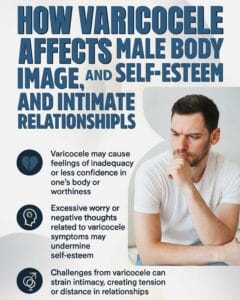
The visible nature of varicocele creates immediate body image challenges. Enlarged scrotal veins become a source of embarrassment, particularly in intimate situations. Young men describe feeling “less masculine” and worry about how partners perceive their appearance. One adolescent study participant stated that sexual partners mentioned his varicocele during intimacy, creating lasting insecurity.
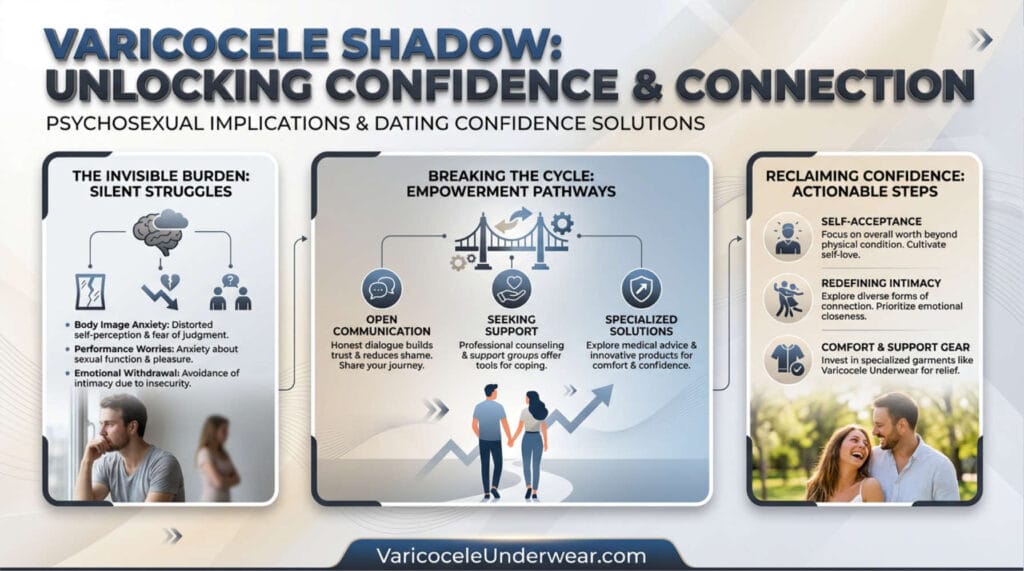
Body image dysfunction directly correlates with reduced intimacy frequency and quality in men. When someone feels self-conscious about genital appearance, they withdraw from physical closeness. Research on attachment and body image demonstrates that greater body image concerns link to less secure romantic attachment and more anxious relationship behavior. For men with visible grade 2 or 3 varicocele, this translates to avoiding intimate moments or feeling distracted by appearance worries during sex.
The impact extends beyond the bedroom. Studies show that 45% of varicocele patients isolate themselves socially. This withdrawal stems from perceived inadequacy and fear of judgment. The condition becomes a silent barrier to forming new relationships or deepening existing ones.
Can Varicocele Cause Low Testosterone and Sexual Dysfunction?
Yes. Varicocele disrupts testicular function through venous congestion and oxidative stress, damaging Leydig cells responsible for testosterone production. Clinical studies confirm that men with varicocele demonstrate significantly lower testosterone levels compared to controls, with young men ages 18 to 29 facing a five-fold higher risk of erectile dysfunction when varicocele is present.
Low testosterone manifests as:
- Reduced libido and sexual desire
- Difficulty achieving or maintaining erections
- Decreased energy and motivation
- Mood changes including irritability and depression
Research indicates that 60-80% of hypogonadal men with varicocele experience testosterone normalization after surgical repair. This hormonal connection explains why many men report improved sexual confidence post-treatment. The physical discomfort matters less than the restoration of hormonal balance that supports normal sexual function.
Testosterone deficiency creates a vicious cycle. Lower hormone levels reduce sexual desire, which decreases intimate encounters, which further damages self-esteem and relationship satisfaction. Breaking this cycle requires addressing the underlying varicocele.

Discover specialized varicocele underwear designed for daily comfort, support, and recovery — a more targeted option for men who want support without compromise.
Discover the Recommended OptionWhat Are the Psychosexual Implications for Men in Relationships?
Varicocele creates relationship strain through multiple pathways. A study of infertile varicocele patients found that 17.7% experienced divorce directly related to infertility concerns. Beyond fertility, the condition affects relationship dynamics through pain during intercourse, reduced sexual frequency, and communication breakdown.
Partners notice changes. Men with varicocele report avoiding sexual situations due to discomfort or self-consciousness about appearance. This avoidance gets misinterpreted as lack of attraction or emotional distance, creating conflict. Women may feel rejected when their partner withdraws physically, not understanding the underlying medical and psychological factors.
Dating Challenges for Single Men
Single men face unique obstacles. The timing of disclosure becomes anxiety-provoking: reveal too early and risk premature judgment; wait too long and feel deceptive. Many young men describe dreading intimate moments with new partners, worried about visible swelling or explaining the condition.
Social media discussions reveal that adolescents and young adults frequently ask online communities if their varicocele is “normal” or how to explain it during dating. This pattern shows how isolated men feel and how desperately they seek reassurance from others with shared experiences.
How Does Varicocele Treatment Improve Psychological Well-Being?
Treatment addresses both physical and psychological symptoms. Testosterone levels improve in 60-80% of men after varicocelectomy, which directly enhances sexual function and mood. Physical appearance improves as scrotal swelling decreases, reducing body image concerns.
Psychological improvements include:
- Reduced depression and anxiety symptoms
- Improved sexual confidence and performance
- Better relationship satisfaction
- Enhanced self-esteem and masculinity perception
One qualitative study found that successful treatment renewed emotional connections between partners who had struggled with infertility stress. Men reported feeling “whole again” and more confident in intimate situations after surgery.
Non-Invasive Support Options
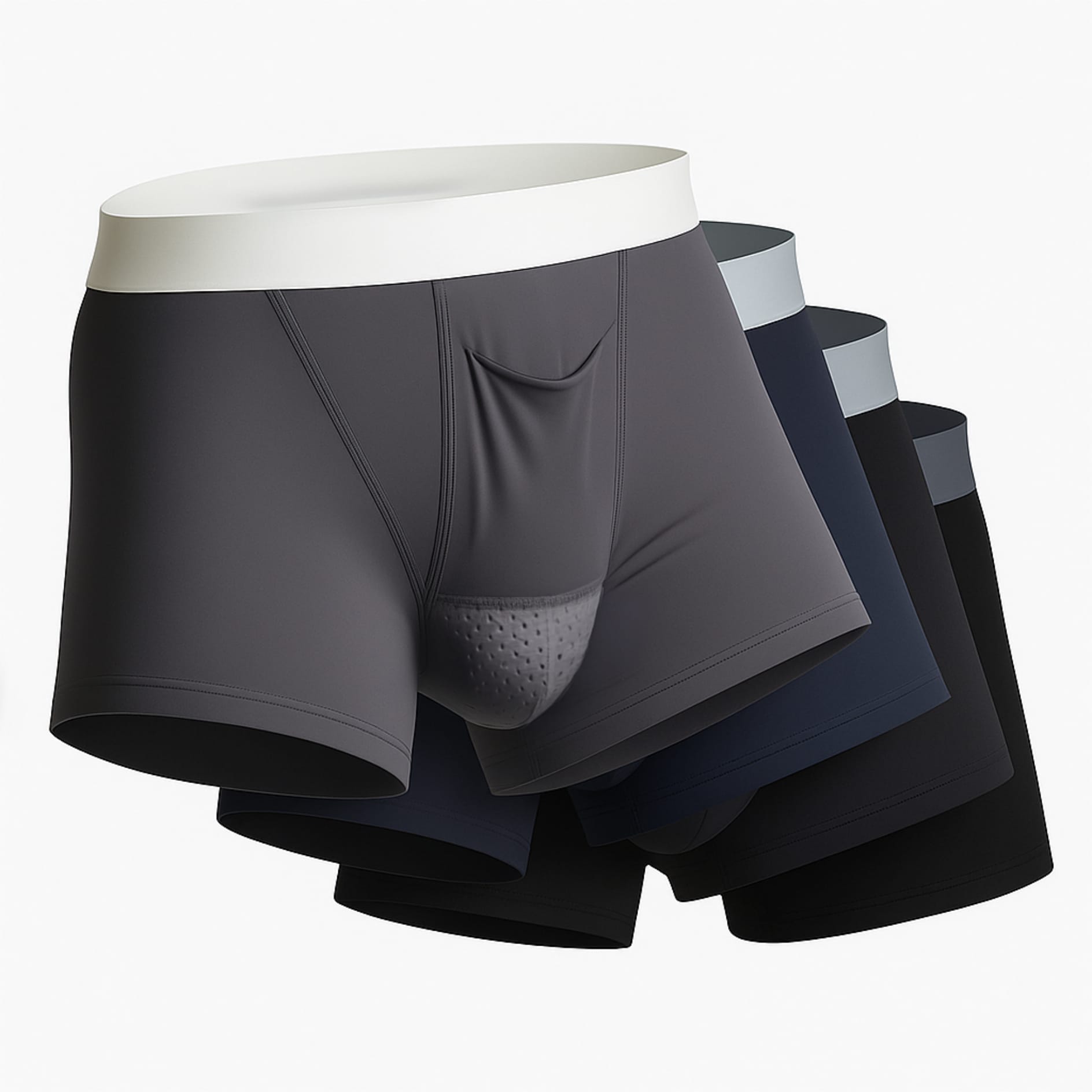
While considering treatment, supportive underwear designed for varicocele can provide symptom relief and psychological comfort. Specialized varicocele support underwear offers gentle compression and cooling to reduce discomfort, helping men stay active and confident throughout the day. This non-invasive approach addresses the daily physical reminders that fuel psychological distress.
Does Age Matter for Psychological Impact?
Adolescents and young adults face heightened vulnerability. Sexual identity formation occurs during these years, and varicocele directly interferes with this developmental process. A large portion of adolescent self-esteem derives from sexual identity, so conditions affecting genital appearance or function carry disproportionate psychological weight.
Younger men demonstrate more online help-seeking behavior, turning to forums for education, second opinions, and emotional support. They prioritize symptom control, particularly pain, aesthetics, and sexual function concerns. This differs from older men who focus primarily on fertility outcomes.
The uncertainty about future fertility creates anticipatory grief in young men. They imagine futures where they cannot conceive naturally, leading to depression and anxiety even before attempting pregnancy. Healthcare providers should address these concerns explicitly rather than dismissing them as premature.
What Questions Should You Ask Your Doctor?
When discussing varicocele and its psychological effects, prepare specific questions:
- How does my varicocele grade affect testosterone and sexual function?
- What percentage of patients report improved sexual confidence after treatment?
- Are my testosterone levels within normal range, or should we monitor them?
- What treatment timeline would minimize psychological distress?
- Can you refer me to a mental health professional familiar with male reproductive health?
Physicians trained in urology understand physical symptoms but may overlook psychological dimensions. Advocate for comprehensive care that addresses mental health alongside medical treatment. Studies confirm that changing negative perceptions and providing detailed information improves psychological outcomes in varicocele patients.
FAQ
Does having varicocele make it harder to date confidently?
Yes, varicocele affects dating confidence through visible appearance changes, body image concerns, and sexual performance anxiety. Studies show 45% of men with varicocele socially isolate themselves, and many adolescents report feeling embarrassed when partners notice scrotal swelling during intimate moments. Low testosterone from varicocele further reduces libido and erectile function, creating additional dating challenges.
Can varicocele treatment improve my sex life and relationship satisfaction?
Research demonstrates that 60-80% of men experience testosterone normalization after varicocele repair, which directly improves sexual function, libido, and erectile quality. Treatment also reduces visible scrotal swelling, addressing body image concerns that interfere with intimacy. Many patients report renewed emotional connections with partners and improved sexual confidence following successful treatment.
Should I tell dating partners about my varicocele?
Open communication builds trust in relationships. While timing depends on comfort level, disclosing varicocele before intimate situations prevents awkwardness and allows partners to understand any physical discomfort or appearance concerns. Many men find that honest conversations about the condition strengthen relationships rather than damage them, as transparency creates emotional intimacy and mutual understanding.
Related Articles
Choose Varicocele Support Designed for Cooling, Lift, and Daily Comfort
You’ve seen why regular underwear often falls short. Now view the purpose-built option made to reduce heaviness, improve support, and feel comfortable enough for everyday wear.