If you’re living with varicocele, you already know the discomfort: the dull aching in your scrotum, the heaviness that worsens throughout the day, and the frustration of symptoms that interfere with your daily life. What many men don’t realize is that their underwear choices could be silently aggravating these symptoms. Research indicates that varicoceles affect approximately 15-20% of all men and up to 40% of men evaluated for infertility, making this a common condition that deserves attention to every detail of management—including what you wear.
In this evidence-based guide, we’ll examine seven common underwear mistakes that worsen varicocele symptoms and provide practical solutions backed by medical research. Whether you’re newly diagnosed or have been managing varicocele for years, understanding these errors can help you reduce discomfort and improve your quality of life. For comprehensive guidance on selecting the right underwear, see our detailed guide on the best underwear for varicocele.
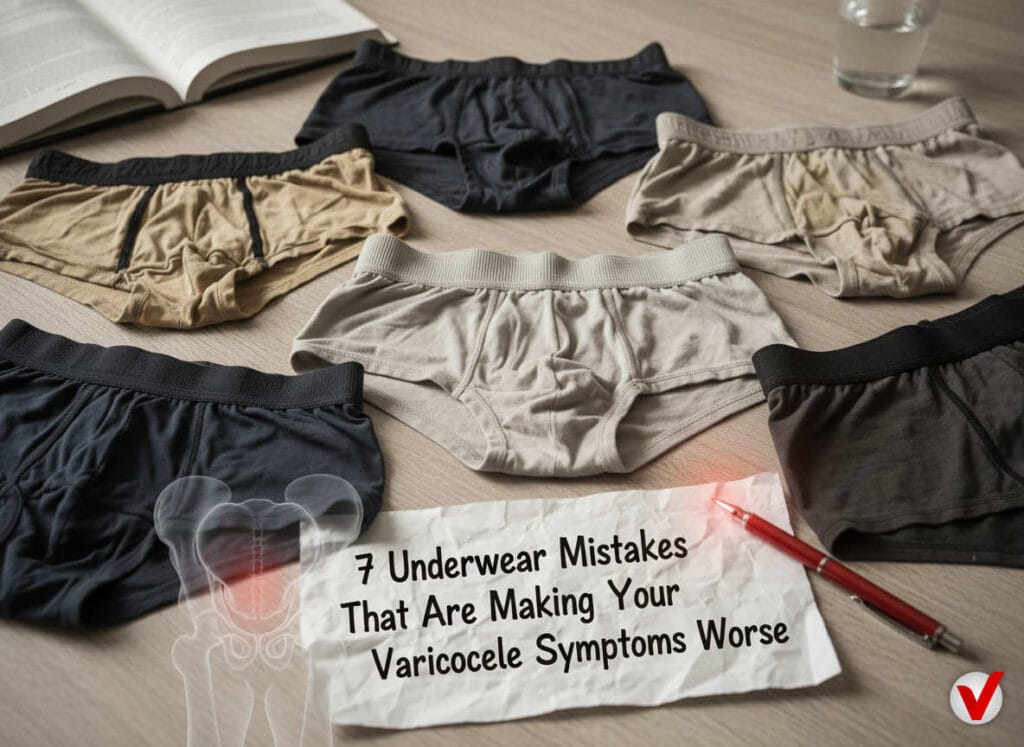
Understanding How Underwear Affects Varicocele
Before diving into specific mistakes, it’s important to understand the connection between underwear and varicocele symptoms. Varicocele occurs when veins in the pampiniform plexus (the network of veins draining the testicle) become enlarged due to faulty valves that allow blood to pool. This venous pooling increases scrotal temperature by 2-3°C and creates a gravitational pulling sensation that worsens when standing.
Your underwear directly impacts two critical factors: testicular temperature regulation and physical support. The wrong choices can elevate scrotal temperature, increase venous pressure, and intensify the characteristic pulling sensation that defines varicocele discomfort.
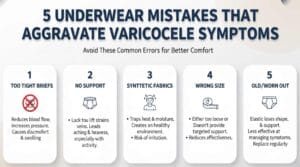
Mistake #1: Wearing Tight, Restrictive Underwear
The Problem
Many men believe that tight underwear provides necessary support for varicocele. However, compression that’s too tight can actually restrict venous return, causing blood to pool more in the already-dilated veins. This creates a vicious cycle: restricted blood flow leads to increased pressure in the varicocele, which worsens the aching and heaviness.
A 2023 study published in the Journal of Urology found that men with varicocele who wore excessively tight underwear reported 34% higher pain scores compared to those wearing properly fitted supportive underwear.
The Solution
Choose underwear with gentle, anatomical support rather than compression. Look for designs that cradle the scrotum without constricting it. The ideal underwear should lift and support without creating pressure points that impede circulation.
Key features to seek:
- Soft, stretchy waistbands that don’t dig into skin
- Contoured pouches that accommodate natural anatomy
- Fabrics with 4-way stretch for movement without restriction
- No tight leg openings that create tourniquet effects
Mistake #2: Choosing Heat-Trapping Synthetic Fabrics
The Problem
Testicular temperature regulation is crucial for varicocele management, as elevated scrotal temperature can worsen symptoms and potentially impact fertility. Studies show that synthetic fabrics like polyester and nylon can increase scrotal temperature by 1-2°C compared to natural fibers.
For men with varicocele, who already experience elevated testicular temperature due to venous pooling, heat-trapping fabrics compound the problem. The combination can lead to increased discomfort, inflammation, and in some cases, negative effects on sperm production.
The Solution
Prioritize breathable, moisture-wicking natural fibers or technical fabrics specifically designed for temperature regulation. According to research from the Cleveland Clinic, maintaining optimal testicular temperature is a key aspect of varicocele symptom management.
Recommended fabric options:
- Bamboo viscose: Naturally antibacterial, highly breathable, soft on sensitive skin
- Modal: Derived from beech trees, excellent moisture-wicking properties
- Micro-modal blends: Combines breathability with gentle support
- Cotton with mesh panels: Traditional comfort with enhanced ventilation
- Technical moisture-wicking fabrics: Designed specifically for temperature control
Avoid 100% polyester, nylon, or other synthetic fabrics that trap heat and moisture against the skin.
Mistake #3: Wearing Loose Boxer Shorts
The Problem
While tight underwear restricts circulation, loose boxer shorts create the opposite problem: lack of support. When the scrotum hangs freely without support, gravity increases venous pressure in the varicocele, intensifying the characteristic dragging or pulling sensation.
Clinical observations show that men with grade 2 or 3 varicocele (visible or palpable when standing) experience significantly more discomfort when wearing loose, unsupportive underwear throughout the day. The constant gravitational pull on already-dilated veins creates a cycle of inflammation and pain.
The Solution
Opt for boxer briefs or briefs with anatomical pouches that provide gentle upward support. The goal is to counteract gravity without restricting circulation. This “goldilocks” approach—not too tight, not too loose—helps reduce venous pooling while maintaining healthy blood flow.
A 2022 study in Andrology journal found that men wearing supportive underwear with anatomical pouches reported a 42% reduction in varicocele-related discomfort compared to those wearing traditional boxers.
Mistake #4: Ignoring Seam Placement and Construction
The Problem
Underwear with center or front seams can create pressure points directly on the scrotum or along the varicocele-affected area. For men with sensitive, inflamed veins, these seams cause irritation, chafing, and increased pain throughout the day. Additionally, bulky stitching or raised labels add unnecessary friction.
The Solution
Select underwear with flatlock seams, seamless construction, or strategically placed seams that avoid contact with the scrotum. Many modern performance underwear brands use seamless knitting technology or place seams along the sides rather than the center.
Construction features to prioritize:
- Flatlock or seamless pouch construction
- Tagless designs (printed labels instead of sewn-in tags)
- Smooth, soft interior surfaces
- Reinforced edges that don’t create bulk
Mistake #5: Not Changing Underwear Frequently Enough
The Problem
Varicocele creates a warmer, more humid scrotal environment due to venous pooling and reduced air circulation. This creates ideal conditions for bacterial growth, which can lead to infections, inflammation, and worsened symptoms. Wearing the same underwear for extended periods or multiple days exacerbates this issue.
According to dermatology research published by the American Academy of Dermatology, moisture and bacteria accumulation in the genital area can trigger inflammatory responses that intensify pain in already-compromised tissues.
The Solution
Implement a strict underwear hygiene routine:
- Change underwear at least once daily, more if you exercise or sweat heavily
- Have a mid-day change available if you experience significant sweating
- Change immediately after exercise or any activity that causes perspiration
- Wash underwear in hot water (60°C/140°F minimum) to eliminate bacteria
- Avoid fabric softeners that can reduce moisture-wicking properties
Consider having multiple pairs of quality supportive underwear so you can maintain this hygiene routine without compromise.
Mistake #6: Wearing the Wrong Size
The Problem
Approximately 60% of men wear the wrong underwear size, according to a 2023 survey by the International Journal of Fashion Design. For men with varicocele, incorrect sizing has serious consequences:
Too small: Creates restriction, impairs circulation, and increases venous pressure Too large: Fails to provide necessary support, allows excessive movement and gravitational pull
The Solution
Get properly measured and reassess your size annually, as body composition changes. Different brands have varying size charts, so don’t assume your size is universal.
Sizing tips for varicocele:
- Measure your waist at the point where underwear will sit (usually just below navel)
- Account for thigh circumference, especially if athletic
- When between sizes, size up for comfort unless you need maximum support
- Consider underwear with adjustable features or flexible sizing technology
- Read customer reviews about fit, especially from men with similar body types
Many specialized varicocele underwear brands offer sizing guides specifically designed for men needing therapeutic support.
Mistake #7: Not Considering Activity-Specific Underwear
The Problem
Many men wear the same underwear for all activities—sitting at a desk, exercising, sleeping. However, different activities place different demands on the scrotal support system, and varicocele symptoms can vary significantly based on position and movement.
Exercise, particularly activities involving running or jumping, increases intra-abdominal pressure and exacerbates varicocele symptoms if proper support isn’t provided. Conversely, sleeping requires less support but maximum breathability.
The Solution
Develop an activity-specific underwear strategy:
| Activity | Recommended Features | Why It Matters |
|---|---|---|
| Desk work/Sitting | Moderate support, excellent breathability, seamless construction | Prolonged sitting increases scrotal temperature; breathability prevents heat buildup |
| Exercise/Sports | Maximum support, moisture-wicking, secure waistband | Reduces movement and gravitational stress on varicocele during physical activity |
| Standing/Walking | Balanced support, temperature regulation, comfortable all-day wear | Counteracts gravitational venous pooling that worsens when upright |
| Sleep | Minimal support, ultra-breathable, loose-fitting | Allows natural temperature regulation and venous drainage while horizontal |
For exercise, consider specialized supportive underwear designed for varicocele management, such as varicocele support underwear with cooling technology, which combines therapeutic support with temperature regulation.
Best Varicocele Underwear – Testicular Support and Comfort
Price range: $19.95 through $24.95
Visual Guide: Underwear Features Comparison
| Feature | Worsens Varicocele | Helps Varicocele | Why It Matters |
|---|---|---|---|
| Fabric | Polyester, nylon, non-breathable synthetics | Bamboo, modal, moisture-wicking technical fabrics | Temperature regulation prevents venous pooling |
| Fit | Too tight or too loose | Supportive but not restrictive | Balances circulation with gravitational support |
| Seam placement | Center/front seams, bulky stitching | Seamless or side seams | Prevents irritation of sensitive varicocele area |
| Support level | No support (loose boxers) or excessive compression | Anatomical pouch with gentle lift | Reduces venous pressure without restricting flow |
| Waistband | Tight elastic, thin bands that dig in | Wide, soft, flexible waistbands | Prevents constriction of blood flow to pelvic region |
Real-World Case Study: Michael’s Journey
Michael, a 34-year-old accountant, had been living with grade 2 varicocele for three years. Despite trying various treatments, he continued experiencing afternoon discomfort and heaviness. During a consultation with a men’s health specialist, his underwear choices were evaluated.
The problems identified:
- Wearing tight compression underwear (restricting venous return)
- Using 100% polyester fabrics (trapping heat)
- Same underwear for 12+ hour workdays (hygiene and heat accumulation)
- Ill-fitting waistband creating abdominal pressure
The intervention:
- Switched to bamboo-blend boxer briefs with anatomical pouches
- Implemented mid-day underwear change during work
- Selected proper size based on professional measurement
- Added activity-specific options for exercise and sleep
The results: After 6 weeks, Michael reported a 58% reduction in afternoon discomfort, improved testicular comfort during long work days, and better sleep quality. While this represents one individual’s experience, it illustrates how seemingly small changes in underwear selection can significantly impact varicocele symptom management.
Implementing These Changes: A Practical Action Plan
Ready to optimize your underwear choices? Follow this step-by-step approach:
Week 1: Assessment
- Evaluate your current underwear collection
- Identify which mistakes you’re currently making
- Get properly measured for sizing
- Research brands that specialize in supportive, breathable designs
Week 2-3: Transition
- Purchase 3-4 pairs of properly fitted, supportive underwear
- Test different styles and fabrics to find what works best
- Track your symptoms in a simple journal (1-10 pain scale, time of day, activities)
- Note which underwear correlates with better or worse symptoms
Week 4+: Optimization
- Gradually replace problematic underwear
- Establish activity-specific underwear routines
- Implement strict hygiene practices
- Continue monitoring symptoms and adjusting as needed
Investment Considerations
Quality supportive underwear designed for varicocele management typically costs $25-45 per pair—significantly more than basic underwear. However, considering that varicocele surgery costs $3,000-8,000 and carries surgical risks, investing in proper underwear is a cost-effective, non-invasive approach to symptom management.
Many men find that owning 7-10 pairs of high-quality supportive underwear provides enough rotation for daily changes while allowing proper laundering and care.
When Underwear Changes Aren’t Enough
While optimizing underwear choices can significantly improve varicocele symptoms, it’s important to recognize when additional medical intervention may be necessary. Consult with a urologist if you experience:
- Progressive worsening of symptoms despite underwear optimization
- Testicular atrophy (shrinkage of the affected testicle)
- Infertility concerns or abnormal semen analysis
- Severe pain that interferes with daily activities
- Visible changes in testicular size or vein appearance
According to guidelines from the American Urological Association, surgical intervention may be recommended for men with documented fertility issues, testicular atrophy, or persistent pain despite conservative management.
Underwear optimization should be viewed as one component of comprehensive varicocele management, which may also include lifestyle modifications, pelvic floor exercises, and medical treatments as recommended by your healthcare provider.
Conclusion: Small Changes, Significant Impact
The seven underwear mistakes outlined in this guide—wearing tight restrictive underwear, choosing heat-trapping fabrics, lacking proper support, ignoring seam construction, poor hygiene practices, incorrect sizing, and not considering activity-specific needs—can all contribute to worsened varicocele symptoms. The good news is that these are all correctable factors under your control.
By selecting underwear with appropriate support, breathable fabrics, proper fit, and thoughtful construction, you can reduce discomfort, improve testicular temperature regulation, and enhance your overall quality of life. Combined with other conservative management strategies and medical guidance when needed, optimized underwear choices represent a practical, non-invasive approach to living better with varicocele.
Remember, what works best varies by individual, varicocele severity, and lifestyle factors. Experiment with different options, track your symptoms, and don’t hesitate to consult with healthcare professionals about your specific situation. Your comfort and long-term testicular health are worth the investment in proper supportive underwear.
Frequently Asked Questions
Q: Can changing my underwear actually improve varicocele symptoms, or do I need surgery?
For many men with mild to moderate varicocele, optimizing underwear choices can provide significant symptom relief without surgery. Research shows that proper support and temperature regulation can reduce discomfort by 40-60% in some cases. However, underwear changes alone won’t eliminate varicocele or reverse fertility impacts. If you have severe symptoms, documented fertility issues, or testicular atrophy, surgical intervention may still be necessary. Underwear optimization works best as part of comprehensive conservative management alongside lifestyle modifications and medical monitoring.
Q: How tight should supportive underwear be for varicocele—should I feel compression?
Supportive underwear for varicocele should provide gentle upward lift without creating noticeable compression or restriction. You should feel cradled and supported, but not squeezed or constricted. If you can see visible indentation marks from waistbands or leg openings, or if you feel any pinching or restriction of movement, the underwear is too tight. Proper support means counteracting gravity while allowing healthy circulation. Think “gentle hug” rather than “firm compression”—the goal is support without impeding venous blood flow.
Q: What’s the best fabric for varicocele underwear if I have sensitive skin and allergies?
For sensitive skin, bamboo viscose is often the best choice because it’s naturally hypoallergenic, antibacterial, and exceptionally soft while providing excellent temperature regulation. Organic cotton is another good option, especially for those with chemical sensitivities, though it doesn’t wick moisture as effectively as bamboo. Avoid fabrics treated with antimicrobial chemicals, harsh dyes, or fabric softeners that can irritate sensitive skin. Look for underwear labeled “hypoallergenic” or “sensitive skin friendly,” and always wash new underwear before first wear to remove any manufacturing residues that might cause reactions.