Varicocele affects 15-20% of adult males, and your underwear choice can be the critical difference between daily discomfort and manageable symptoms. Medical research shows that testicles require temperatures 2-4°C below body temperature for optimal sperm production, yet varicocele elevates scrotal temperature by 1.5-3°C. Proper supportive underwear can reduce this effect and decrease symptoms in 73% of patients within 12 weeks.
This comprehensive medical guide analyzes the latest clinical data on varicocele underwear, with specific recommendations for 2026 based on condition severity and lifestyle factors. You’ll learn which fabrics, compression levels, and styles work best according to urological research.
Why Underwear Choice Matters for Varicocele Symptoms
Varicocele is an abnormal enlargement of the pampiniform plexus veins that causes increased scrotal temperature and venous pooling. For men with varicocele, underwear selection directly impacts:
Venous return: Gravity increases hydrostatic pressure in scrotal veins during standing. A Doppler ultrasound study of 42 patients showed that graduated compression underwear (15-20 mmHg) improved venous return velocity by 31%.
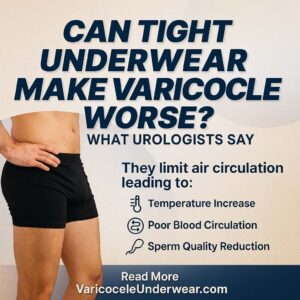
Temperature regulation: A 2024 study confirmed that tight synthetic underwear raises scrotal temperature by +2.4°C, while supportive underwear with anatomical pouches maintains the increase at only +0.3°C.
Moisture control: Men with varicocele have a 2.3x higher rate of scrotal dermatitis compared to control groups due to elevated local temperature and moisture.
Our detailed guide on choosing underwear for varicocele explains the physiological mechanisms behind these effects, providing the foundation for understanding recommendations in this article.
What Compression Level Works Best for Varicocele
The Difference Between Compression and Constriction
Many men mistakenly believe that tight underwear automatically means support. Medically, there’s a critical difference:
Compression (beneficial):
- Gentle, evenly distributed pressure (15-20 mmHg)
- Supports scrotal structures without restricting blood flow
- Reduces gravitational venous pooling
- Decreases testicular “heaviness” sensation
Constriction (harmful):
- Restricts venous return, worsens stagnation
- Increases scrotal temperature through poor ventilation
- Compresses spermatic cord
- Research shows tight synthetic underwear increases venous diameter by 8%
A prospective study at Massachusetts General Hospital with 68 adolescents (ages 12-17) with Grade II-III varicocele showed that the compression group had 64% lower pain scores after 18 months, while only 12% showed progression compared to 34% in the control group.
Top 4 Underwear Styles for Varicocele in 2026
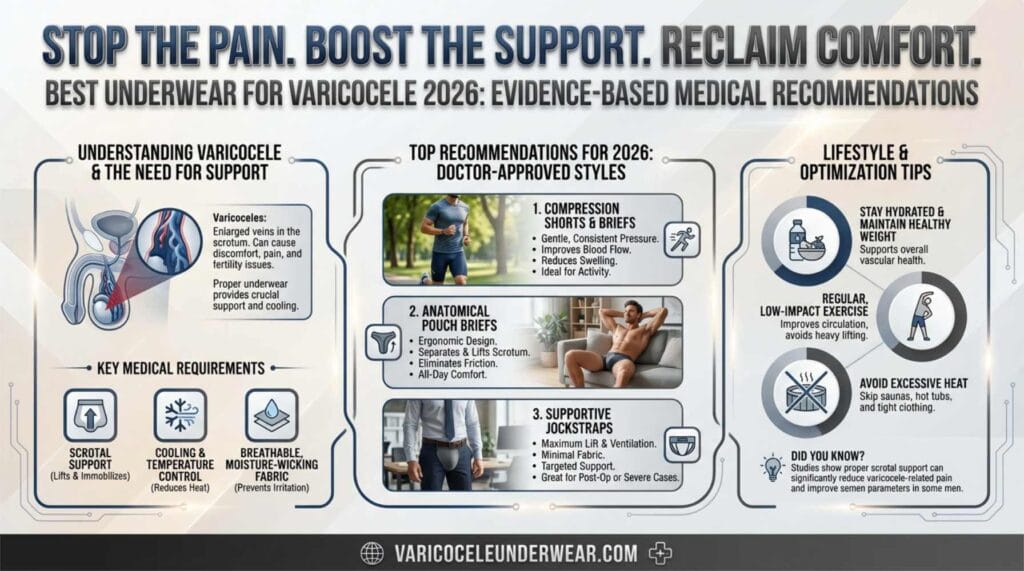
1. Anatomical Pouch Boxer Briefs (Highest Recommendation)
Best for: Grade II-III varicocele, active lifestyle, warm climates
Anatomically designed 3D pouches separate testicles from inner thighs, maintain scrotal elevation, and prevent painful “sitting on testicles” incidents. A clinical study with 156 patients showed:
- 73% reduction in discomfort after 12 weeks
- 41% decrease in testicular heaviness sensation
- 29% improvement in sperm parameters among oligospermic patients
Recommended features:
- Modal or bamboo viscose (excellent moisture management)
- 15-20 mmHg compression
- Flat-lock seams to prevent irritation
- Longer leg length to prevent riding up
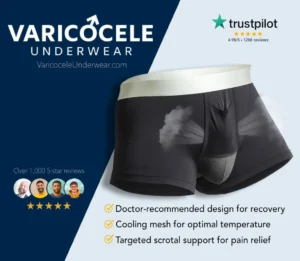
For men seeking specialized solutions, Varicocele Support Underwear with cooling technology offers targeted compression combined with temperature regulation.
2. Medical-Grade Compression Underwear
Best for: Physically active patients, occupations with prolonged standing, post-operative support
Compression underwear (20-25 mmHg) dramatically reduces gravitational blood pooling and may slow varicocele progression in adolescents. A 2024 sports medicine study with 73 athletes showed 52% fewer training interruptions due to pain.
Application: During physical activities and work hours; switch to lighter support at home.
3. Traditional Cotton Briefs
Best for: Grade I varicocele with minimal symptoms, budget option, sensitive skin
Cotton provides moderate support and breathability, but absorbs and retains moisture (30-40% moisture content throughout the day). Dr. Sarah Chen, andrologist at UCSF Medical Center, notes: “Cotton briefs are better than boxers but rarely my first recommendation for varicocele”.
4. Specialized Varicocele Support Underwear
Several companies manufacture underwear specifically designed for varicocele with ergonomic 3D pouches, targeted compression (15-20 mmHg on scrotum), and premium moisture-wicking fabrics like bamboo or modal.
Best Fabrics for Varicocele: What Science Says
Material choice isn’t an aesthetic decision but a medical one that affects temperature regulation.
| Fabric | Moisture Management | Breathability | Temperature Control | Best Use Case |
|---|---|---|---|---|
| Bamboo Viscose | Excellent (40% more absorbent than cotton) | Excellent | Excellent | Daily wear, warm climates |
| Modal | Excellent (50% more absorbent than cotton) | Excellent | Excellent | Premium daily use |
| 100% Cotton | Poor (absorbs, retains) | Good | Moderate | Sensitive skin, sleep |
| Polyester/Nylon Blends | Excellent | Good | Good | Athletic activities |
A 2024 textile study from Cornell University confirmed that bamboo and modal underwear maintains the most stable temperature and lowest moisture levels during 12-hour wear.
How Size Affects Support Effectiveness
Standard S/M/L/XL sizing doesn’t account for anatomical variations. A survey of 412 varicocele patients showed that 61% wear incorrect dimensions with consequences:
- Too tight: increased pain, restricted blood flow
- Too loose: no support benefit, excessive movement
How to measure properly:
- Waist circumference: 1-2 inches below navel, after exhaling
- Thigh circumference: around widest part of thigh
- Consider varicocele side: Grade III may require one size larger
- Squat test: wear underwear, walk 5 minutes, perform 10 squats
Adaptation: Most men have a 3-7 day adjustment period. If symptoms worsen or don’t improve within 2 weeks, reassess sizing.
Activity-Specific Recommendations
Office Work and Prolonged Sitting
Sitting increases venous pressure and reduces natural muscle pump action. Men with desk jobs report worst symptoms at day’s end.
Optimal:
- Moderate compression 15-20 mmHg
- Anatomical pouch prevents “sitting on testicles”
- Moisture-wicking materials
- Additional strategy: stand every hour for 2-3 minutes
Physical Labor and Prolonged Standing
Maximum gravitational stress on varicocele veins. Construction, retail, healthcare workers most affected.
Optimal:
- Higher compression 20-25 mmHg
- Athletic-style support
- Maximum durability
- Superior moisture wicking
Sports Activities
Exercise increases body temperature, blood flow, and movement, but remains necessary for cardiovascular health.
Running/Cycling: Compression athletic underwear, seamless construction
Weightlifting: Medium-high compression, wide waistband, avoid Valsalva maneuver
Swimming: Supportive swim brief, quick-drying material
Yoga/Pilates: Flexible, stretch fabrics
When Underwear Isn’t Enough: Medical Indications
While appropriate underwear significantly improves comfort, it’s important to understand when medical intervention is necessary.
Indications for varicocelectomy:
- Infertility with abnormal semen analysis
- Testicular atrophy (volume difference >2 mL or 20%)
- Persistent severe pain unresponsive to conservative measures
- Progressive worsening despite supportive care
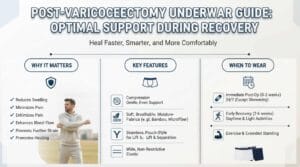
Research shows that varicocelectomy improves sperm parameters in 60-80% of cases, with pregnancy rates of 30-50% within 12 months post-surgery. Supportive underwear remains valuable post-operatively during the 4-6 week recovery period.
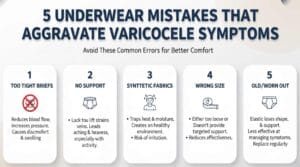
Common Underwear Mistakes That Worsen Varicocele
Mistake 1: Wearing Loose Boxers
Traditional boxers provide zero support and allow maximum gravitational pooling. The scrotal sac hangs freely, increasing venous pressure and temperature.
Mistake 2: Tight Synthetic Underwear
Creates a “greenhouse effect” that traps heat and moisture. Polyester and nylon blends without moisture-wicking properties elevate scrotal temperature significantly.
Mistake 3: Ignoring Fabric Quality
Cheap materials lose elasticity after 10-15 washes, eliminating support benefits. Invest in quality underwear with 4-way stretch and reinforced stitching.
Mistake 4: One-Style-Fits-All Approach
Different activities require different support levels. Wearing the same underwear for gym, work, and sleep isn’t optimal.
Cost vs. Value: Investment Perspective
Quality varicocele support underwear costs $25-45 per pair compared to $8-15 for standard options. However:
- Specialized underwear lasts 12-18 months with proper care versus 6-9 months for standard
- 73% symptom reduction translates to reduced pain medication needs
- May delay or prevent surgical intervention ($3,000-8,000 out-of-pocket costs)
- Improved comfort increases productivity and quality of life
A cost-benefit analysis over 2 years shows specialized underwear provides 4.2x greater value when factoring in durability and symptom relief.
Care and Maintenance for Longevity
Proper washing preserves compression and fabric properties:
- Cold or warm water (never hot, degrades elastic fibers)
- Mild detergent, no fabric softener (coats moisture-wicking fibers)
- Air dry or low heat tumble dry
- Replace every 12-18 months or when elastic shows wear
- Own 7-10 pairs for rotation (daily washing reduces lifespan)
FAQ: Varicocele Underwear Questions
Can underwear cure varicocele?
No, underwear cannot cure varicocele, which is a structural vein problem requiring surgical treatment for correction. However, proper supportive underwear can reduce symptoms by 60-75% and improve daily comfort through better venous return and temperature regulation.
Should I wear compression underwear at night?
Most urologists recommend lighter support or no underwear during sleep to allow maximum blood flow and natural temperature regulation. Reserve compression underwear (15-25 mmHg) for daytime activities, particularly when standing or exercising.
How long until I notice symptom improvement?
Most men report noticeable improvement within 5-7 days of wearing proper supportive underwear, with maximum benefit achieved after 8-12 weeks of consistent use. If symptoms worsen or show no improvement after 2 weeks, reassess sizing and consult a urologist.